

Fuel, Taxes and the Fracturing Household: When Regional Fire Reaches the Pakistani Kitchen

National stability is not secured only at borders. It is secured in kitchens, classrooms, and fuel stations.Pakistan today stands at a structural crossroads. The debate over economic reform, fiscal discipline, and revenue generation is often framed in the language of macroeconomics, deficits, reserves,

Procurement, Budget Leaks, and Audit Objections: The Hidden Cost of Financial Mismanagement in Government Programs

Public finance is not an abstract ledger of numbers. It is a moral and institutional commitment. Every rupee allocated in a national or provincial budget represents the collective sacrifice of citizens, whether through taxation, inflation, or deferred public services. When procurement processes are

Systemic Failures in Public Sector Hiring and the Quiet Erosion of Meritocracy

In every functioning state, recruitment into public service is more than an administrative routine. It is a moral contract between citizens and the institutions that govern them. When a young graduate prepares for a public service examination, when a professional applies for a
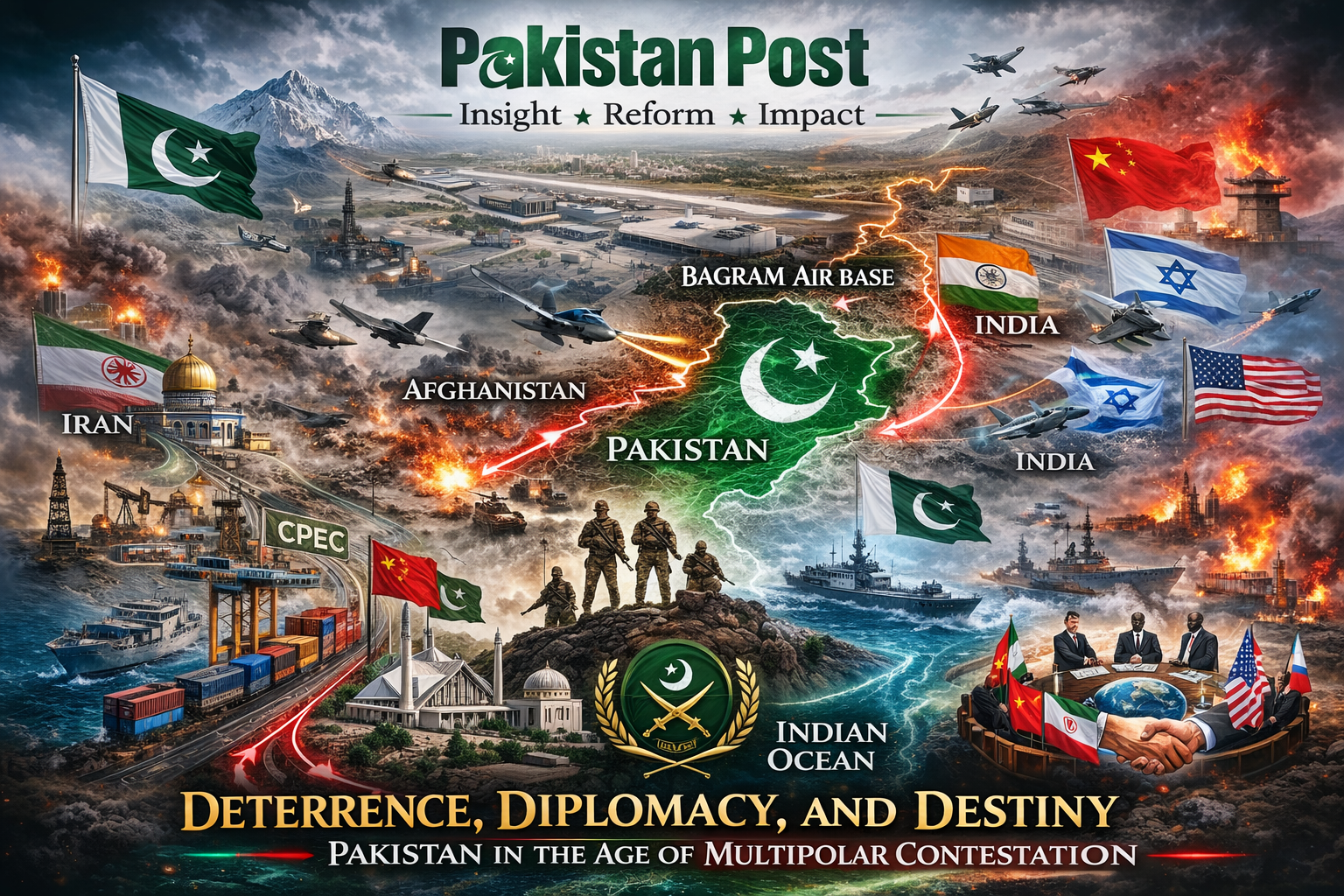
Deterrence, Diplomacy, and Destiny: Pakistan in the Age of Multipolar Contestation

Pakistan is not merely a geographic construct bounded by frontiers; it is a sovereign strategic actor shaped by history, sacrifice, and an enduring security consciousness. In moments of global turbulence, when alliances are recalibrated and power centers renegotiate influence, nations are tested not

Digital Food Ecologies, and the Reconfiguration of Dietary Identity in the Algorithmic Age

The contemsporary transformation of food culture cannot be understood without examining the digital behaviors of Generation Z, a cohort raised within algorithmic environments. For this generation, food exploration is inseparable from platform-mediated discovery. Meals are curated through short-form videos, influencer narratives, location-based recommendations,
Structural Slavery Through Regulatory Systems: Dependency Theory, Post-War Global Order, and the Metrics of Modern Dominance

The architecture of the post-Second World War international order was presented as a moral and institutional corrective to the violence of empire. The devastation of Europe and Asia demanded reconstruction; the collapse of old empires required new frameworks of governance; and the specter
China’s Mayor Economy, Performance Governance, and the Reversal of Extraction

Pakistan’s governance crisis is often framed as a uniquely Pakistani failure, rooted in culture, politics, or history. Yet comparative experience demonstrates that countries burdened with poverty, authoritarian legacies, and weak institutions have successfully transformed their governance systems by realigning incentives, authority, and accountability.
Pakistan’s strategic position in the contemporary global order
Pakistan’s strategic position in the contemporary global order is simultaneously a product of geography, history, and emergent systemic shifts. The post-World War II international system, anchored by U.S. unipolar dominance, dollar hegemony, and Western-led multilateral institutions, is increasingly strained by the rise of

Strategic Leverage and Sovereignty: Pakistan in an Era of Global Realignment

Pakistan’s diplomatic posture today is being shaped not by isolated crises, but by the convergence of multiple systemic stresses that are transforming the international order. The intensifying rivalry between the United States and China, persistent conflicts in South Asia, instability across the Middle

Geo‑Economic Shifts: Strategic Pathways for Pakistan’s Economic Autonomy and Stability
The global geo-economic and geopolitical environment in the mid-2020s is defined by unprecedented structural complexity, where traditional assumptions of unipolar stability are increasingly challenged by a multipolar world order. At the center of this transformation is the intensifying rivalry between the United States