
Digital Identity Powers Pakistan’s Next Era Of Public Governance

The next decisive contest among states will not be determined solely by industrial production, military inventories or macroeconomic indicators. Increasingly, it will be defined by the quality of institutions that can identify citizens securely, authenticate transactions instantly and deliver public services seamlessly across
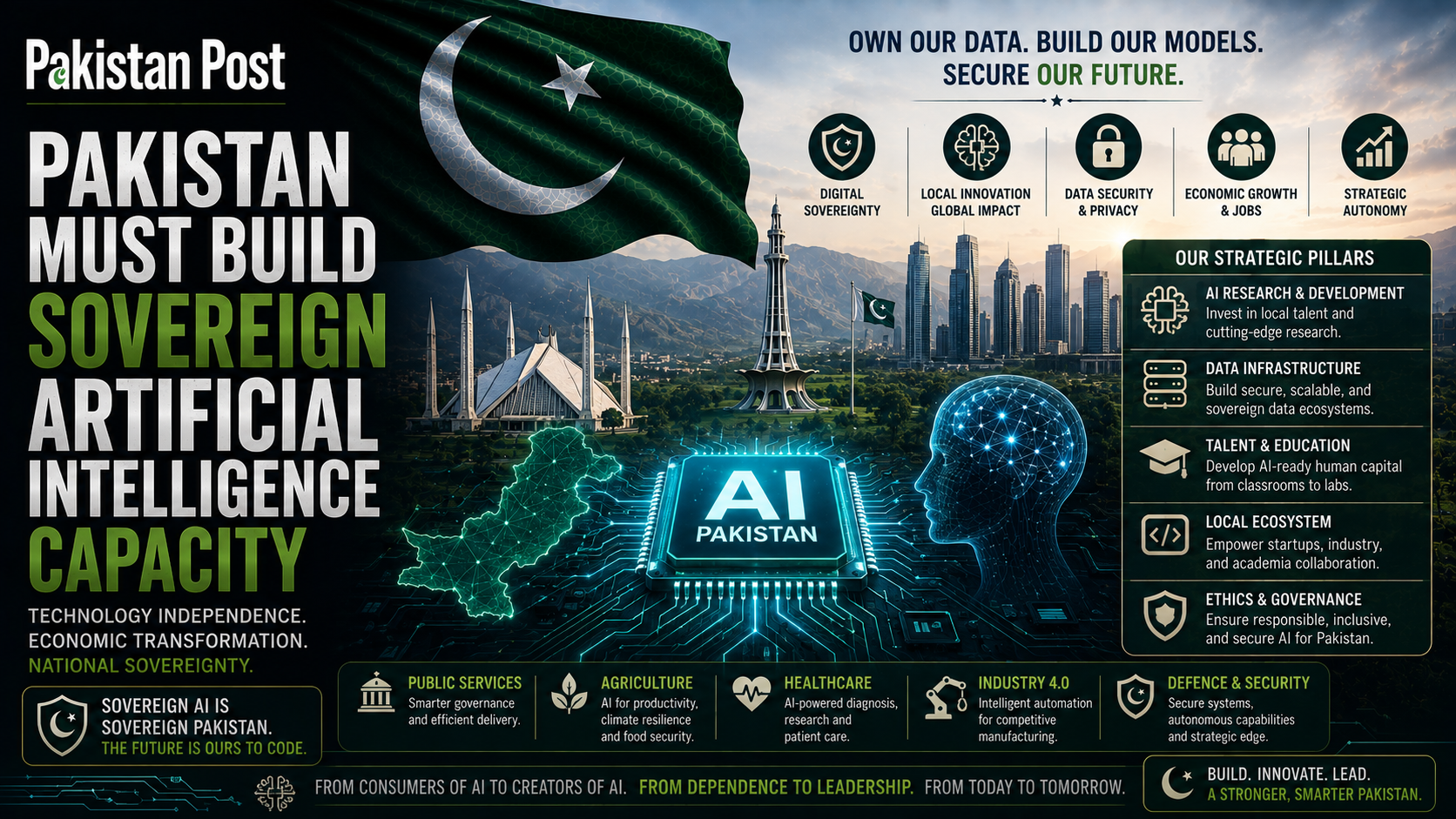
Pakistan Must Build Sovereign Artificial Intelligence Capacity
Pakistan stands at a defining technological crossroads where artificial intelligence is rapidly becoming a determinant of national power, economic productivity, institutional resilience and strategic autonomy. Nations that merely consume imported digital systems will increasingly surrender influence over their own economic decisions, public administration,
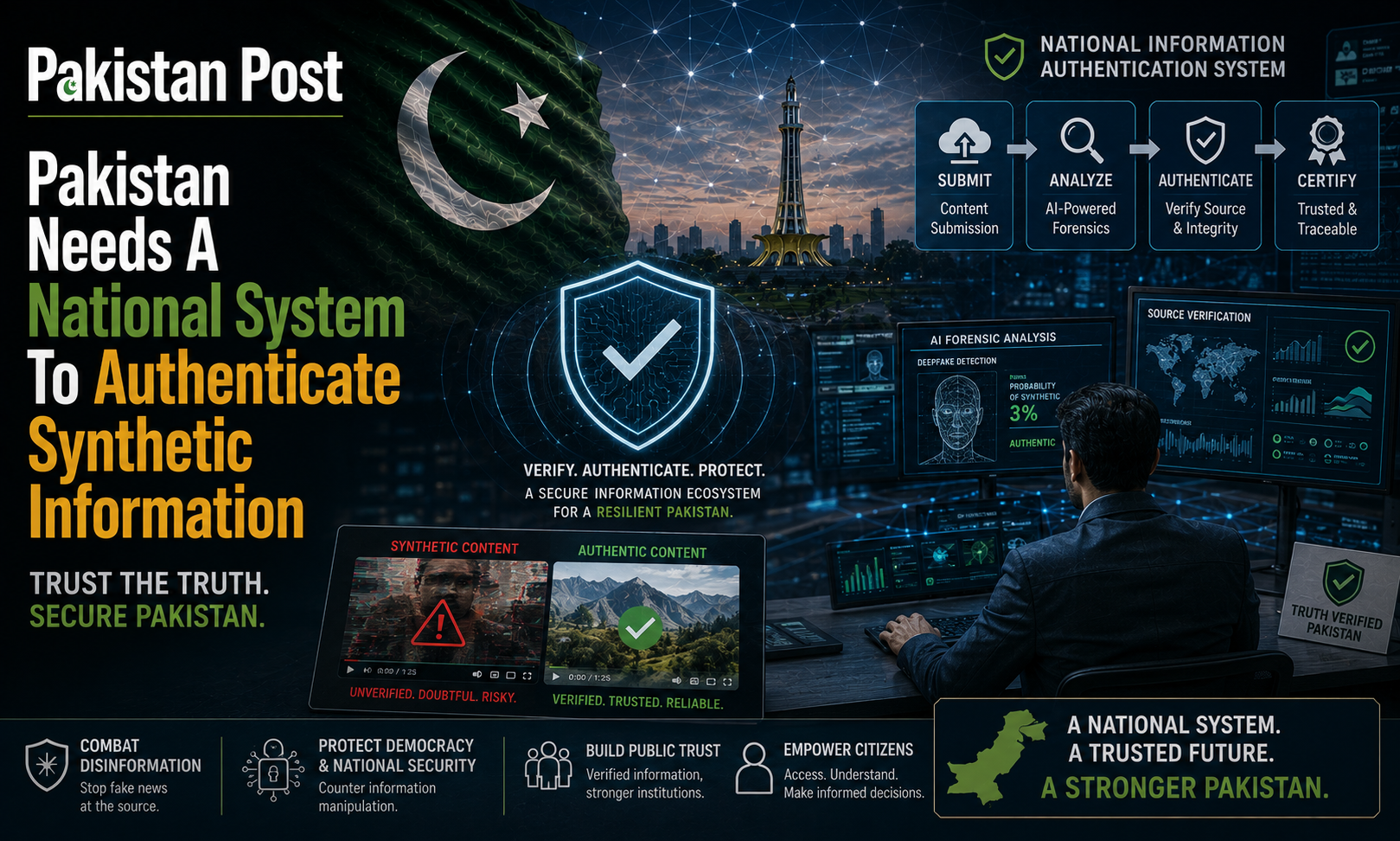
Pakistan Needs A National System To Authenticate Synthetic Information
The strategic problem posed by synthetic media is no longer whether Pakistan can distinguish an authentic recording from an artificial one. The more consequential question is whether the state, media institutions and society can establish what is credible quickly enough for verification to
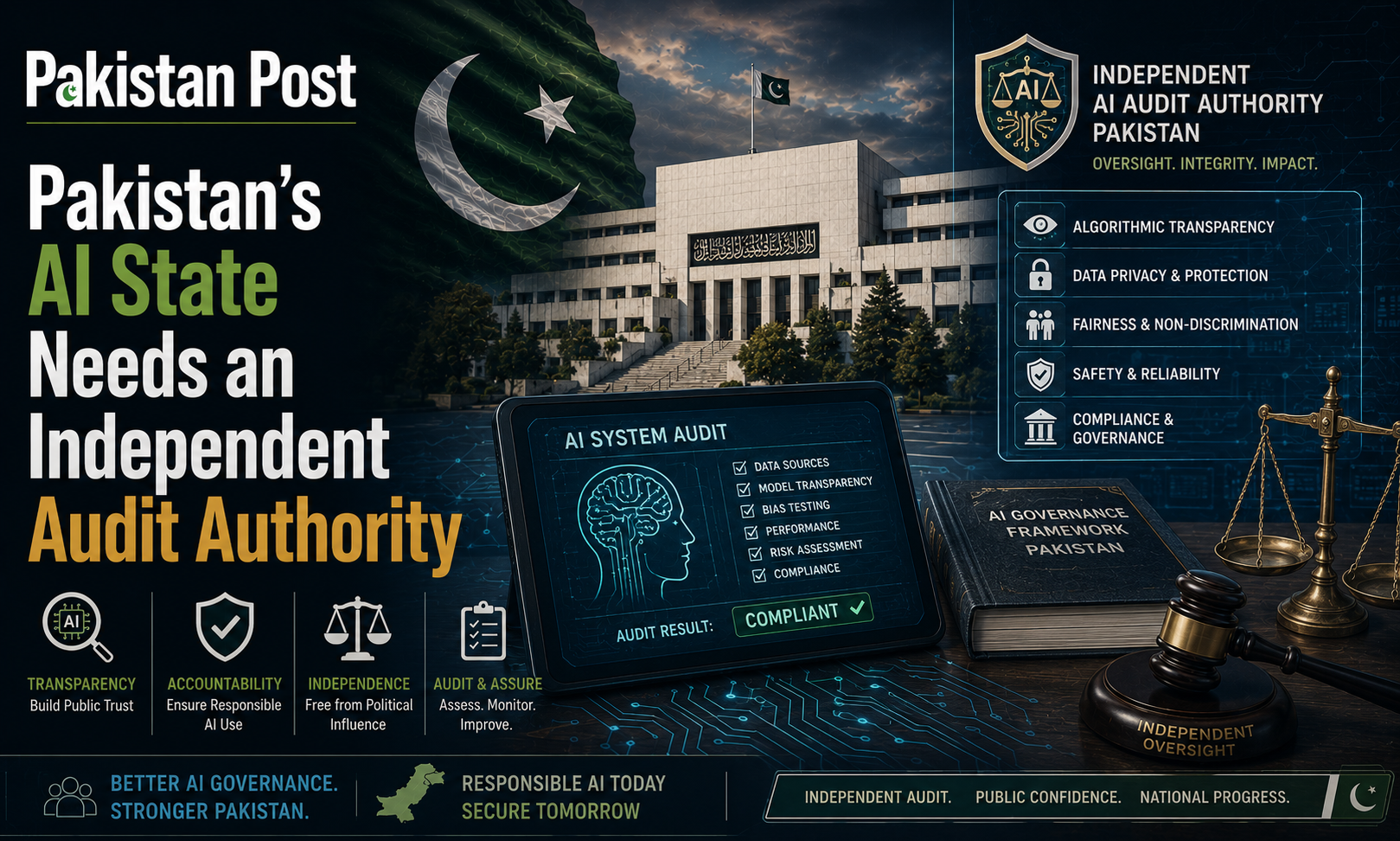
Pakistan’s AI State Needs an Independent Audit Authority
Artificial intelligence is moving from the laboratory into the machinery of the Pakistani state, and the central policy question is no longer whether government should use algorithms. It is who remains accountable when an algorithm influences a tax assessment, flags a financial transaction,

Quantum Computing Reshapes Global Power Through Strategic Technological Competition

Quantum computing is rapidly evolving from a laboratory pursuit into one of the defining strategic technologies of the twenty first century. While practical fault tolerant quantum computers remain under development, governments and multinational corporations increasingly regard quantum technologies as essential components of future

Pakistan Must Master Semiconductor Tools Before Manufacturing Chips
The global semiconductor race is no longer determined solely by which country manufactures the largest number of microchips. The decisive contest has shifted toward those who design, manufacture and control the sophisticated equipment required to produce those chips. Lithography systems, deposition machinery, etching

Pakistan Risks Automated Inequality Through Digital State
Pakistan’s digital governance agenda is accelerating at a pace that often exceeds its institutional capacity to regulate, audit, or even fully comprehend the systems being deployed. From biometric identity verification to algorithmic welfare distribution, from tax automation to predictive policing experiments, the state

Pakistan Faces Strategic Choice in Artificial Intelligence Era
Artificial intelligence is no longer a peripheral technology discussion in Pakistan’s policy circles. It has become a structural question about sovereignty, state capacity, and the future of governance itself. Yet much of the national discourse still treats AI as an extension of the

Cyber Warfare Redefining Sovereignty and Pakistan Defence Digital Architecture
Cyber warfare has moved beyond its earlier framing as an auxiliary instrument of intelligence gathering or low level disruption and has become a central arena of strategic competition among states. In the contemporary international security environment, the distinction between peace and conflict is

Artificial Intelligence Reshaping Global Power and Pakistan Policy Preparedness Assessment
Artificial intelligence is no longer a discrete technological domain confined to research laboratories or software industries; it has become a structuring force of global power, reshaping how states compete, govern, and project influence. The contemporary international order is increasingly defined not by the