
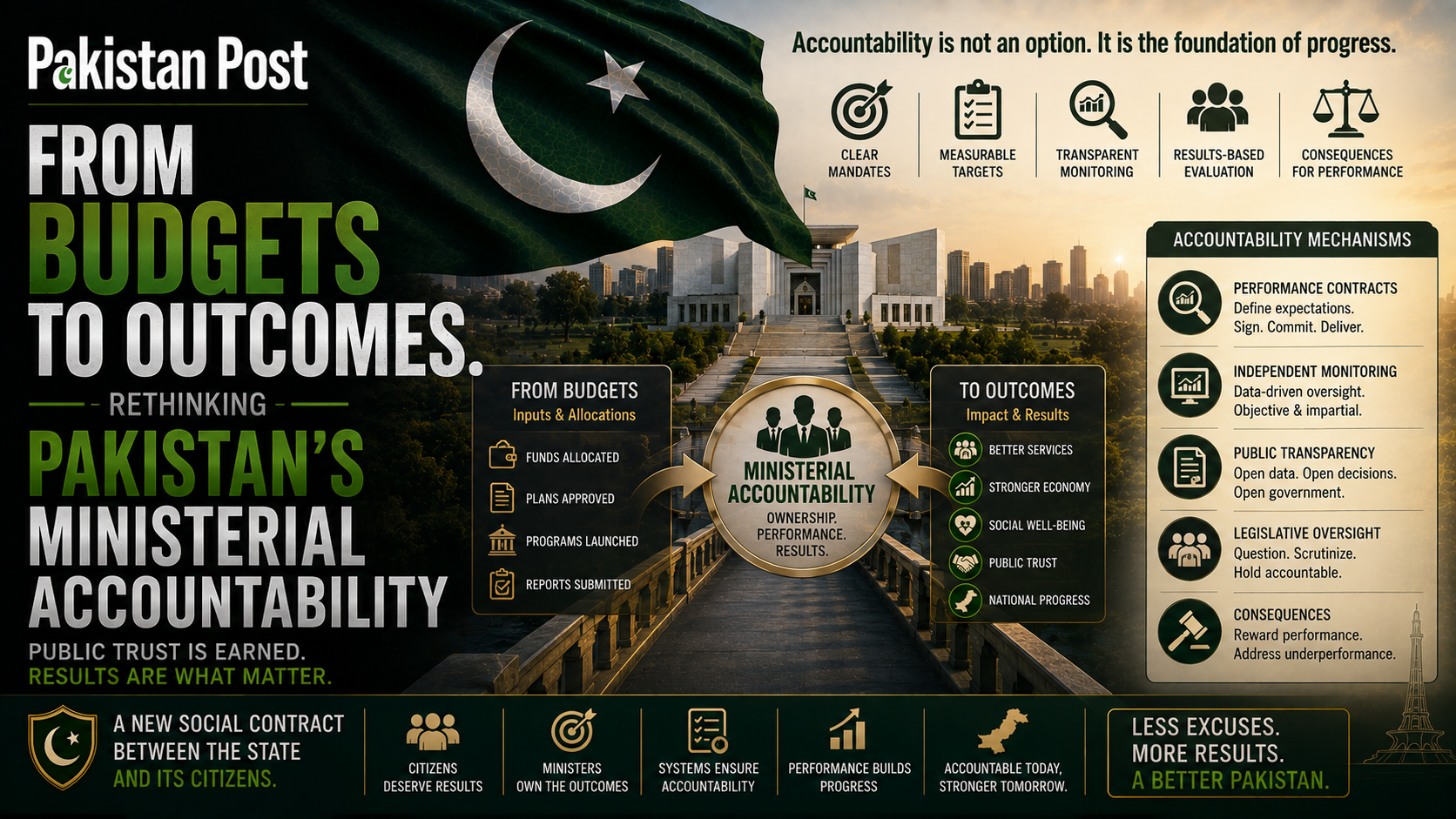
From Budgets To Outcomes. Rethinking Pakistan’s Ministerial Accountability

For decades, Pakistan’s governance architecture has measured administrative success through a familiar sequence. Ministries secure larger annual allocations, departments demonstrate budget utilisation, development schemes are inaugurated, procurement targets are completed and compliance reports are submitted through lengthy administrative channels. Yet citizens experience governance
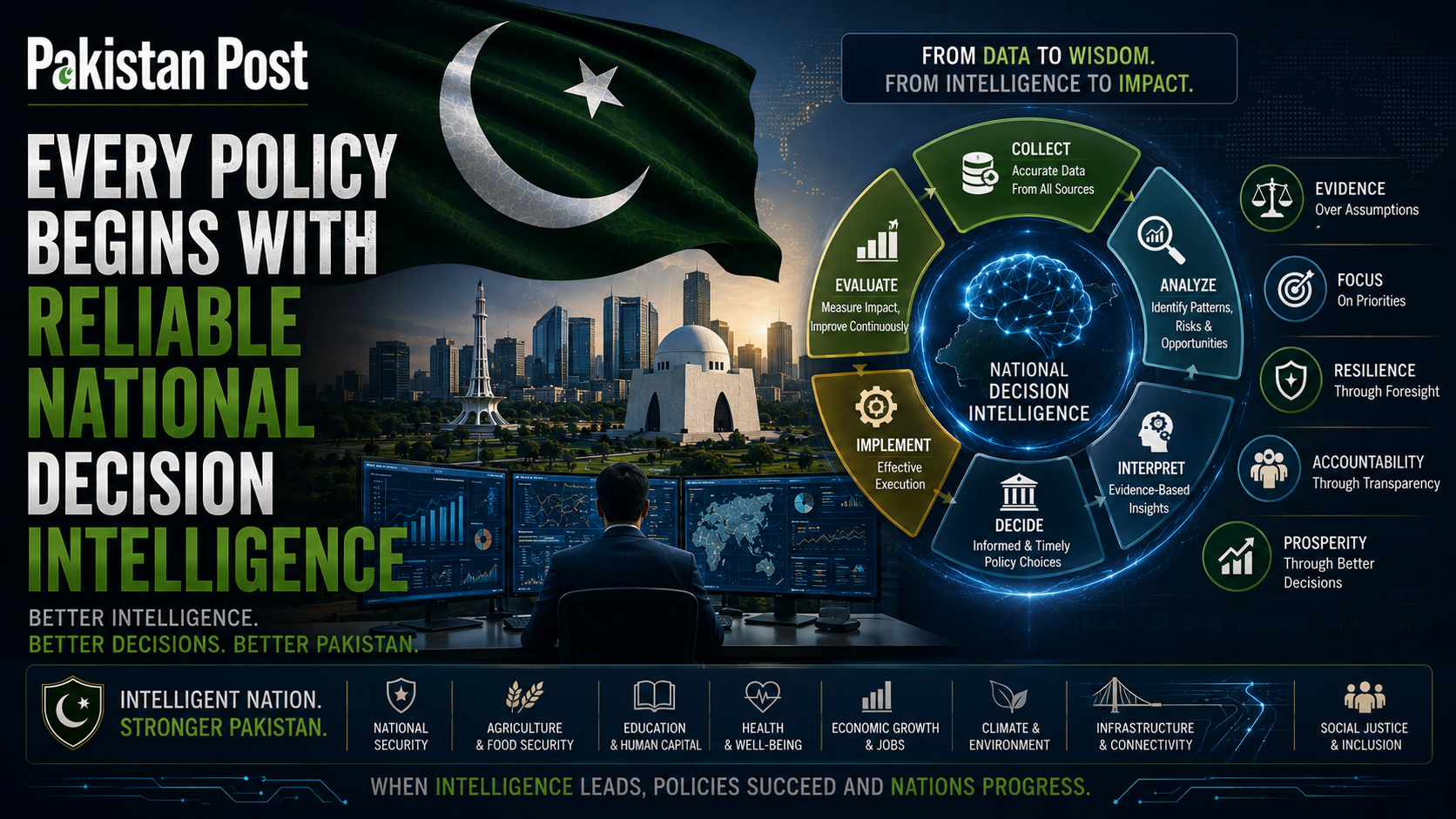
Every Policy Begins With Reliable National Decision Intelligence

No modern state governs effectively by instinct alone. Governments that consistently outperform their peers increasingly rely upon integrated intelligence architectures capable of transforming fragmented administrative information into continuous strategic decision making. Public policy has gradually evolved beyond periodic statistical reporting into an ecosystem
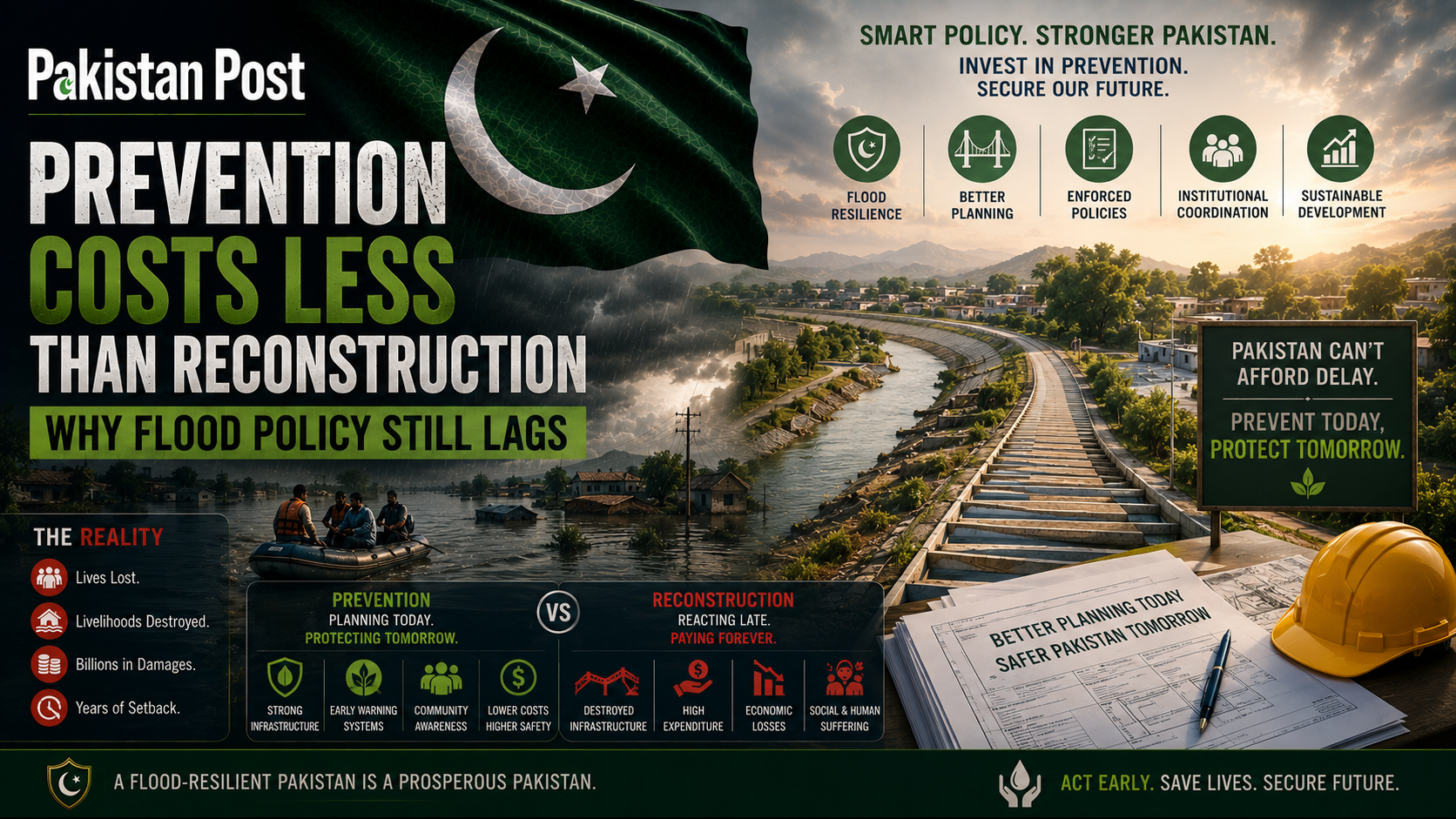
Prevention Costs Less Than Reconstruction Why Flood Policy Still Lags

For Pakistan, floods have ceased to be exceptional natural disasters. They have become predictable fiscal events that repeatedly erase years of public investment, interrupt agricultural production, damage strategic transport corridors, weaken energy distribution, disrupt educational continuity, overwhelm public health systems and reduce investor
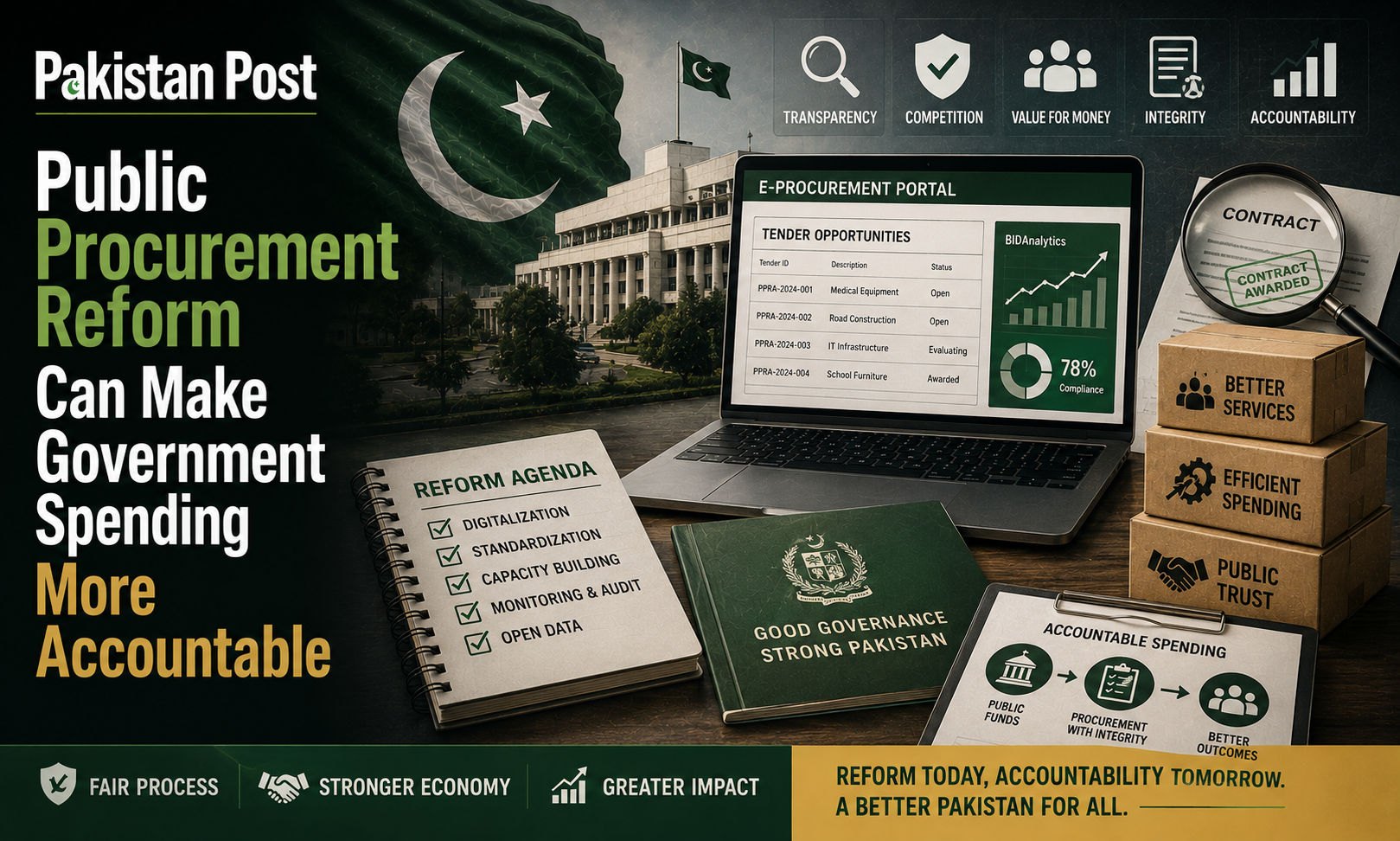
Public Procurement Reform Can Make Government Spending More Accountable
Pakistan’s public procurement system is often treated as an administrative back office, where tenders are advertised, bids are opened, contracts are awarded and files eventually move towards payment. That framing is increasingly inadequate. Procurement is one of the principal mechanisms through which the
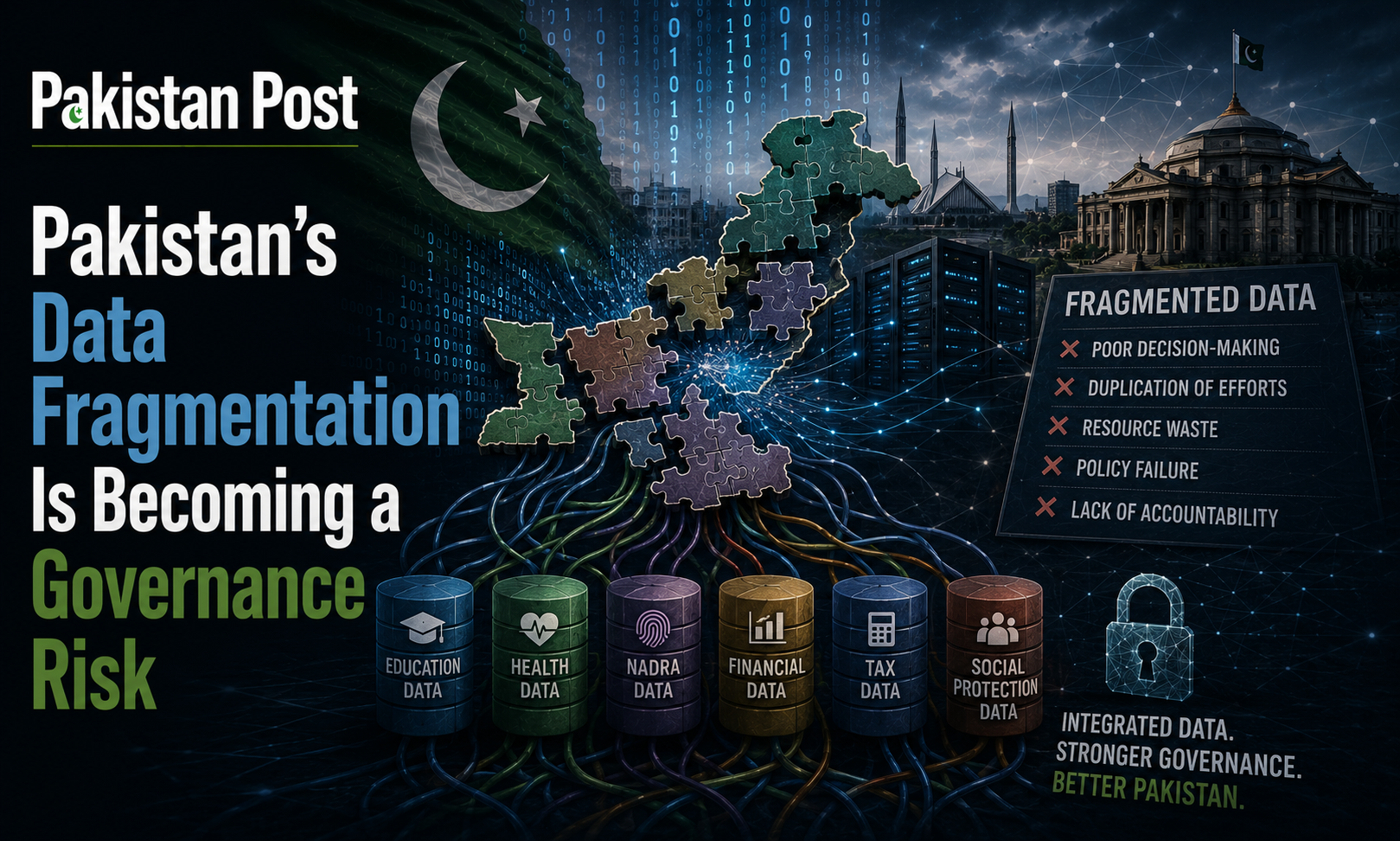
Pakistan’s Data Fragmentation Is Becoming a Governance Risk
Pakistan’s public administration is increasingly dependent on information that the state cannot reliably connect. Federal ministries maintain separate registries, provinces operate their own databases, local governments retain fragmented records, and autonomous institutions frequently develop parallel information systems to satisfy immediate administrative requirements. The
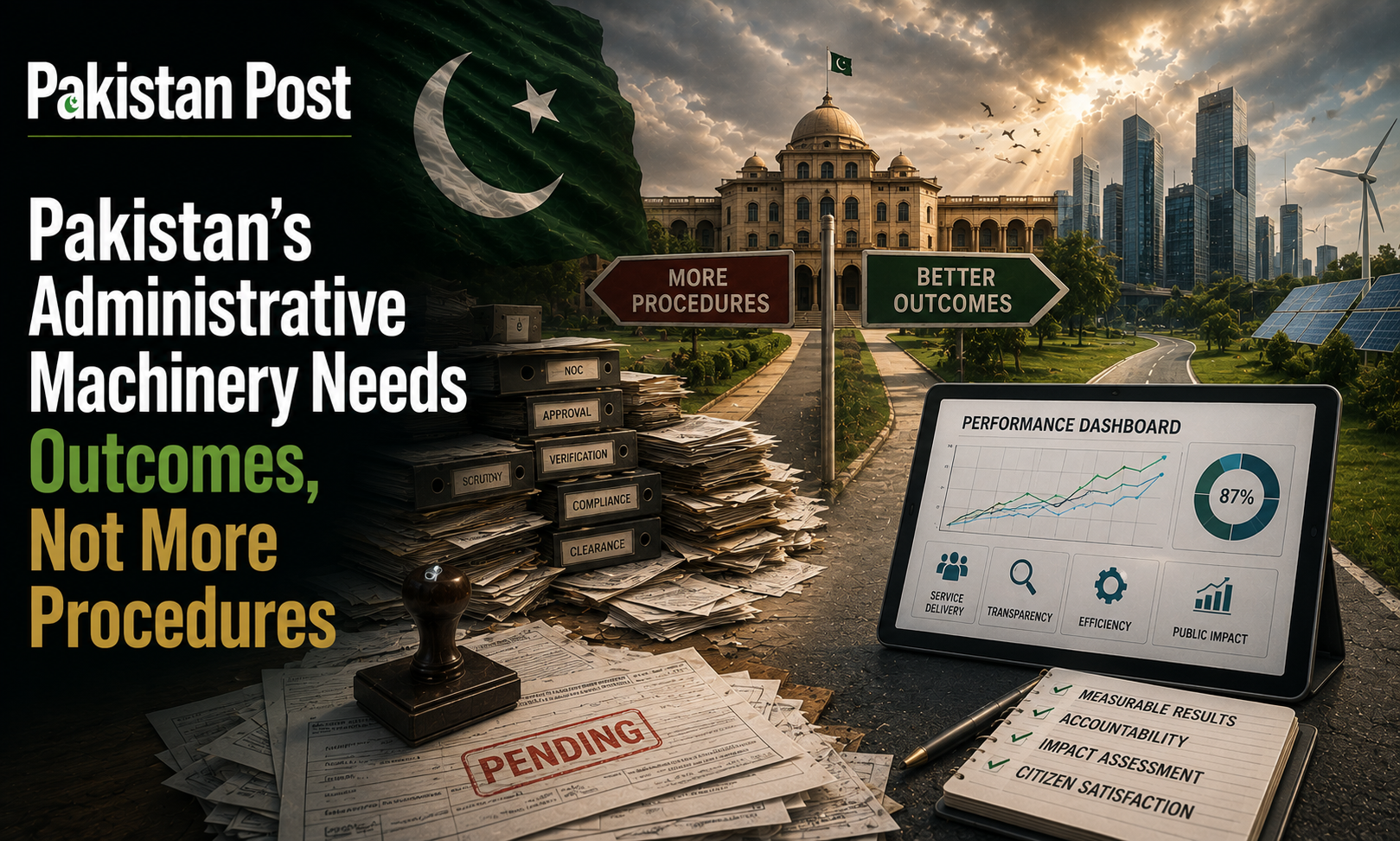
Pakistan’s Administrative Machinery Needs Outcomes, Not More Procedures
Pakistan’s administrative state has accumulated an extraordinary capacity to process paper without acquiring an equivalent capacity to demonstrate results. Files move, summaries circulate, meetings are convened, committees are constituted and approvals are recorded, yet the citizen encounters a different measure of government: whether
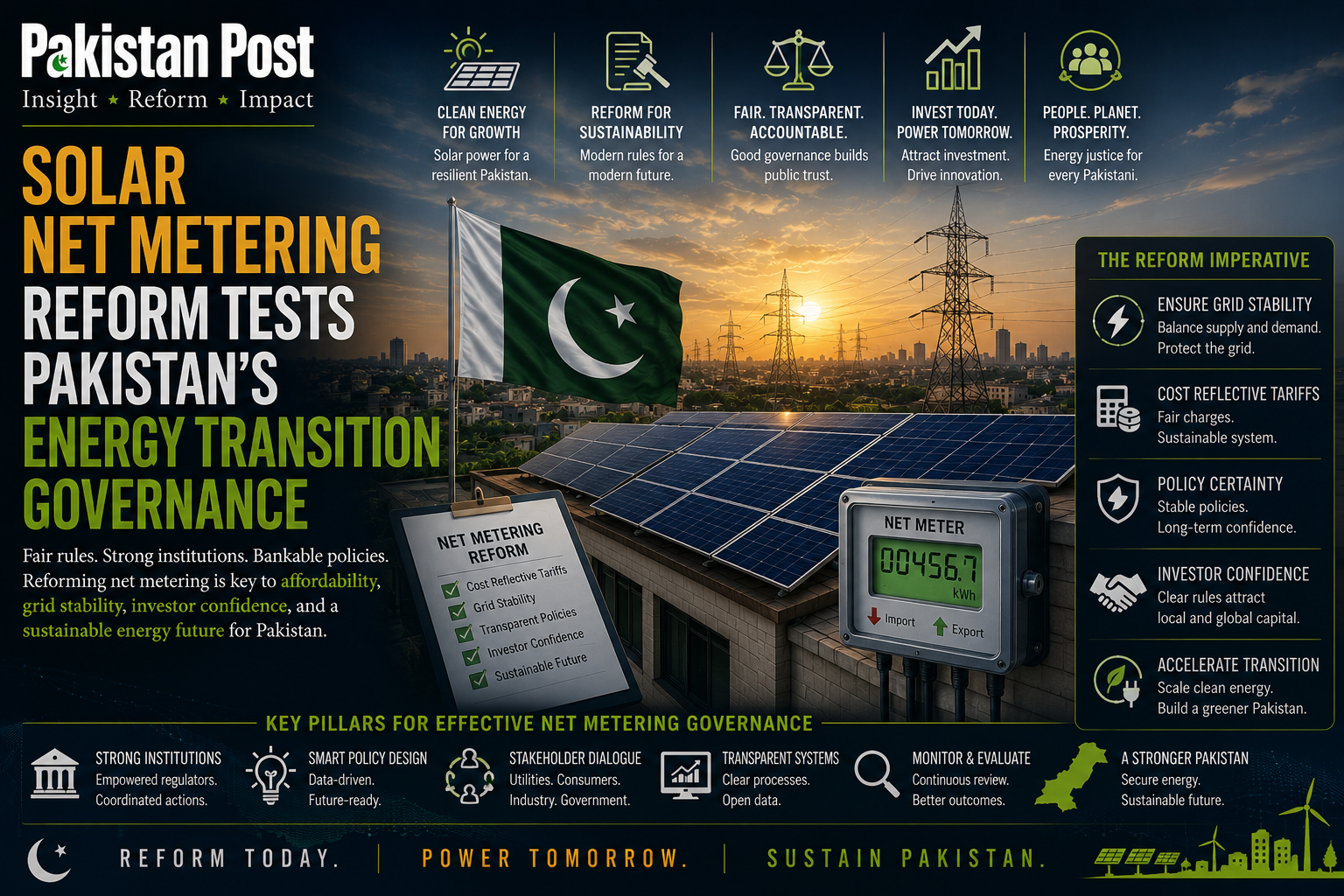
Solar Net Metering Reform Tests Pakistan’s Energy Transition Governance
Pakistan’s decision to reform its solar net metering framework has emerged as one of the country’s most consequential energy governance debates, illustrating how the transition toward cleaner electricity systems is no longer merely an environmental question but an institutional test of fiscal discipline,
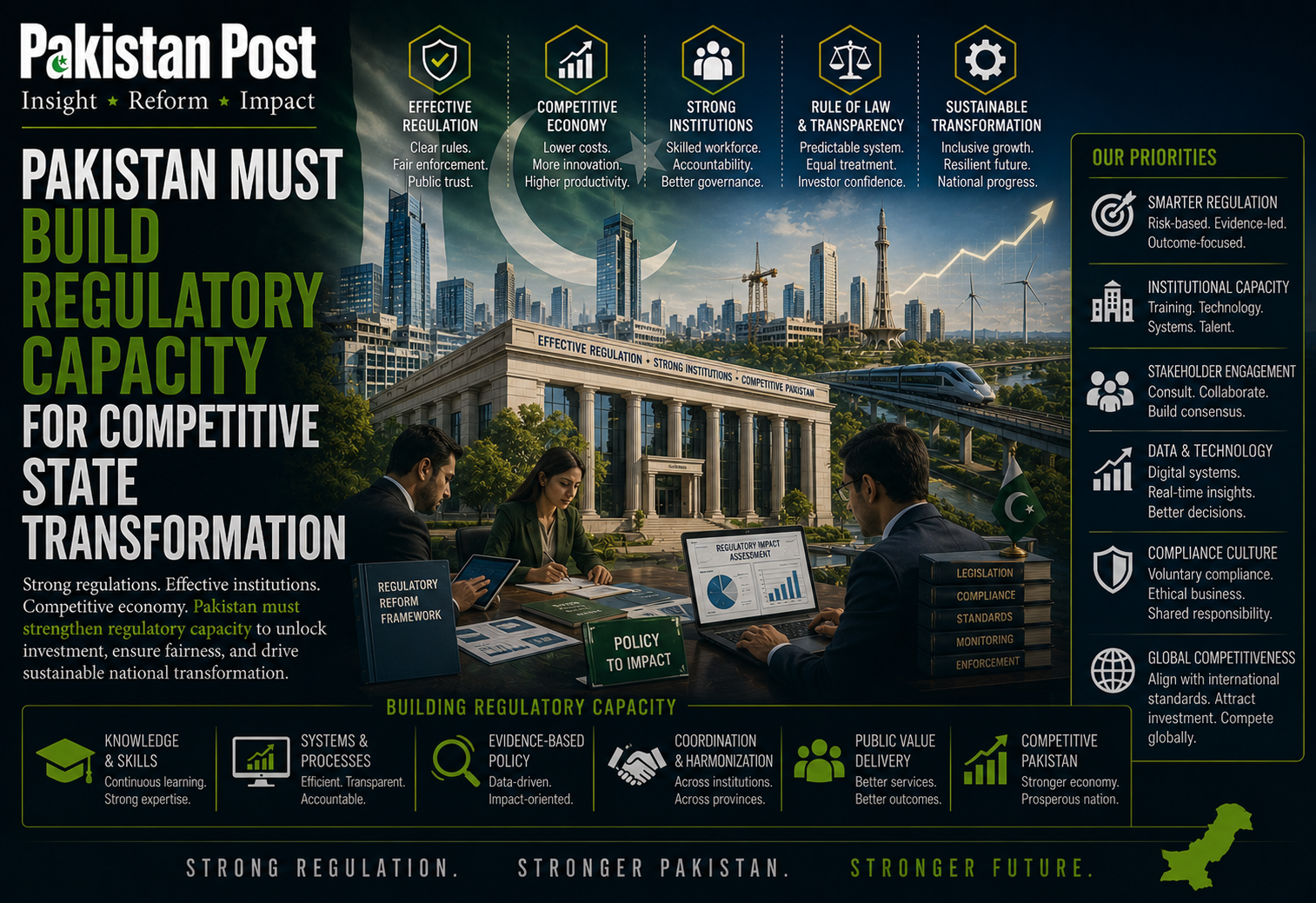
Pakistan Must Build Regulatory Capacity for Competitive State Transformation
Pakistan’s long-standing debate on national competitiveness has frequently revolved around taxation, infrastructure, labour costs, exchange rates, foreign investment incentives and export subsidies. Yet, the decisive variable that increasingly separates successful states from struggling economies is neither financial nor demographic. It is regulatory capacity.
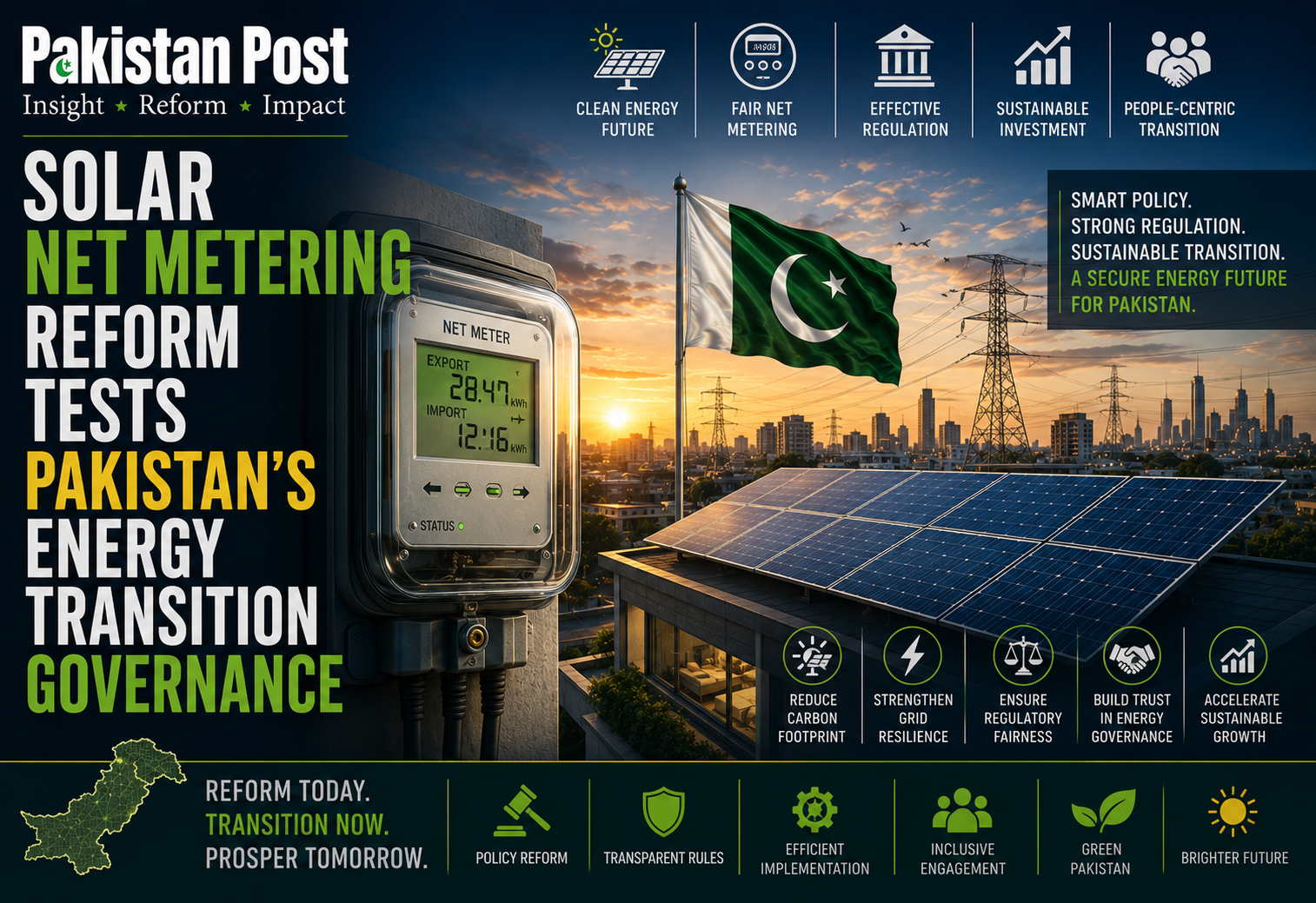
Solar Net Metering Reform Tests Pakistan’s Energy Transition Governance
Pakistan’s decision to reform its solar net metering framework has emerged as one of the country’s most consequential energy governance debates, illustrating how the transition toward cleaner electricity systems is no longer merely an environmental question but an institutional test of fiscal discipline,
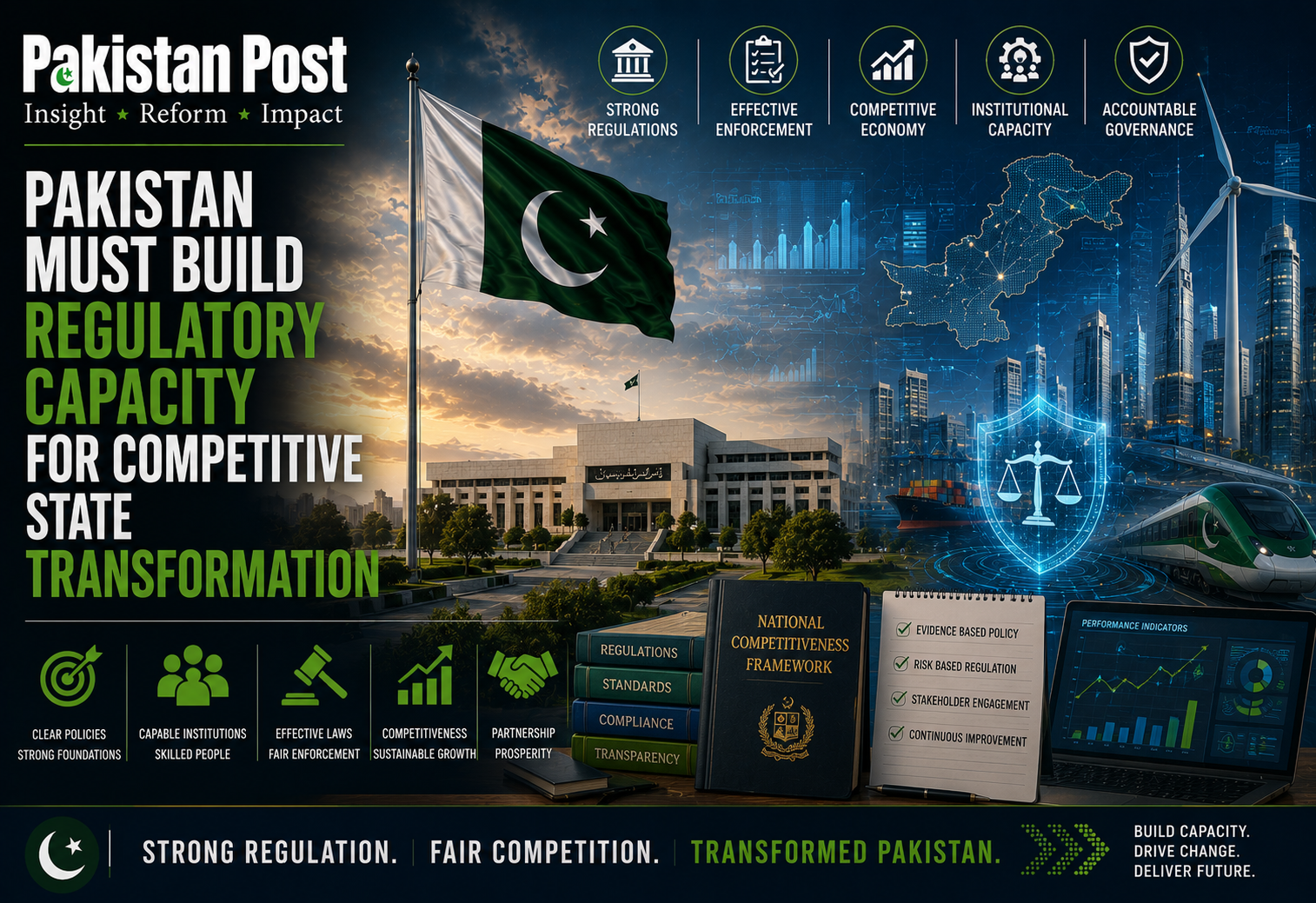
Pakistan Must Build Regulatory Capacity for Competitive State Transformation
Pakistan’s long-standing debate on national competitiveness has frequently revolved around taxation, infrastructure, labour costs, exchange rates, foreign investment incentives and export subsidies. Yet, the decisive variable that increasingly separates successful states from struggling economies is neither financial nor demographic. It is regulatory capacity.