
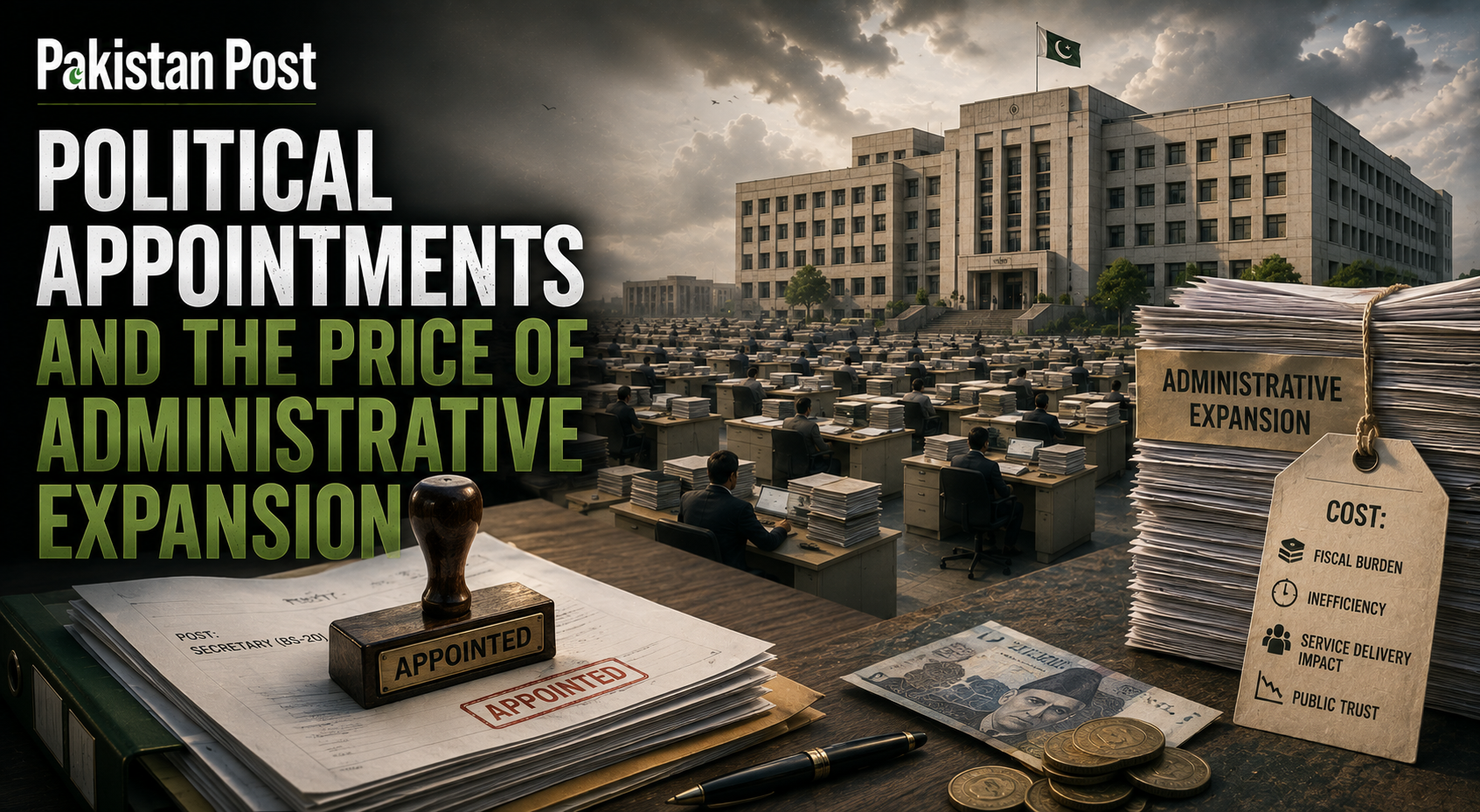
Political Appointments and the Price of Administrative Expansion

Every incoming government in Pakistan inherits a familiar political dilemma. It must simultaneously preserve parliamentary stability, accommodate coalition partners, reward loyal legislators, satisfy influential constituencies and project administrative competence. These objectives rarely coexist without tension. As governing coalitions become increasingly fragmented, ministerial portfolios,
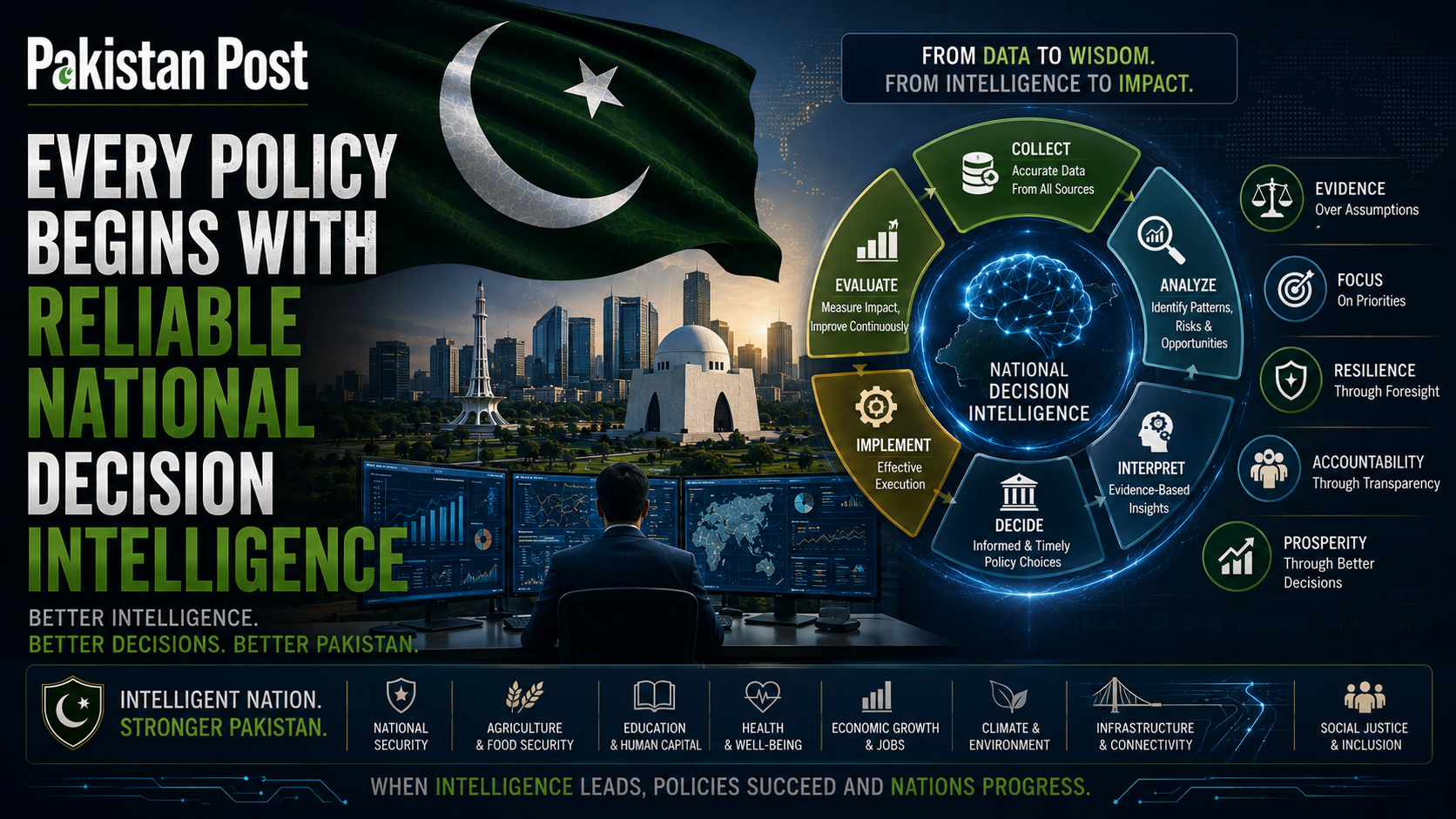
Every Policy Begins With Reliable National Decision Intelligence
No modern state governs effectively by instinct alone. Governments that consistently outperform their peers increasingly rely upon integrated intelligence architectures capable of transforming fragmented administrative information into continuous strategic decision making. Public policy has gradually evolved beyond periodic statistical reporting into an ecosystem
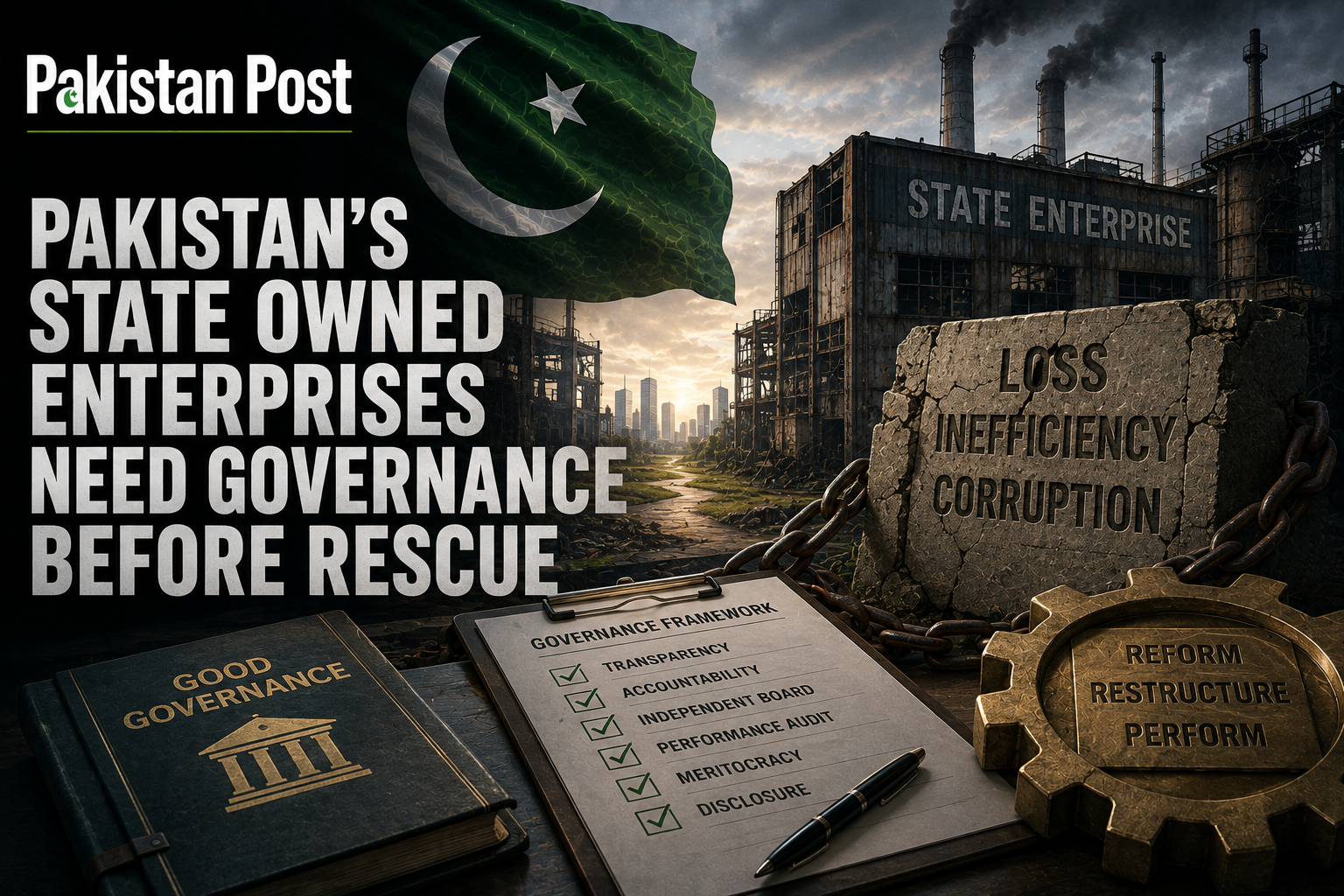
Pakistan’s State Owned Enterprises Need Governance Before Rescue
Pakistan’s state owned enterprise problem is no longer adequately described as a question of loss making companies requiring privatisation, refinancing or administrative restructuring. It is a problem of state capacity, ownership discipline and institutional incentives. The latest federal aggregate data show why. During
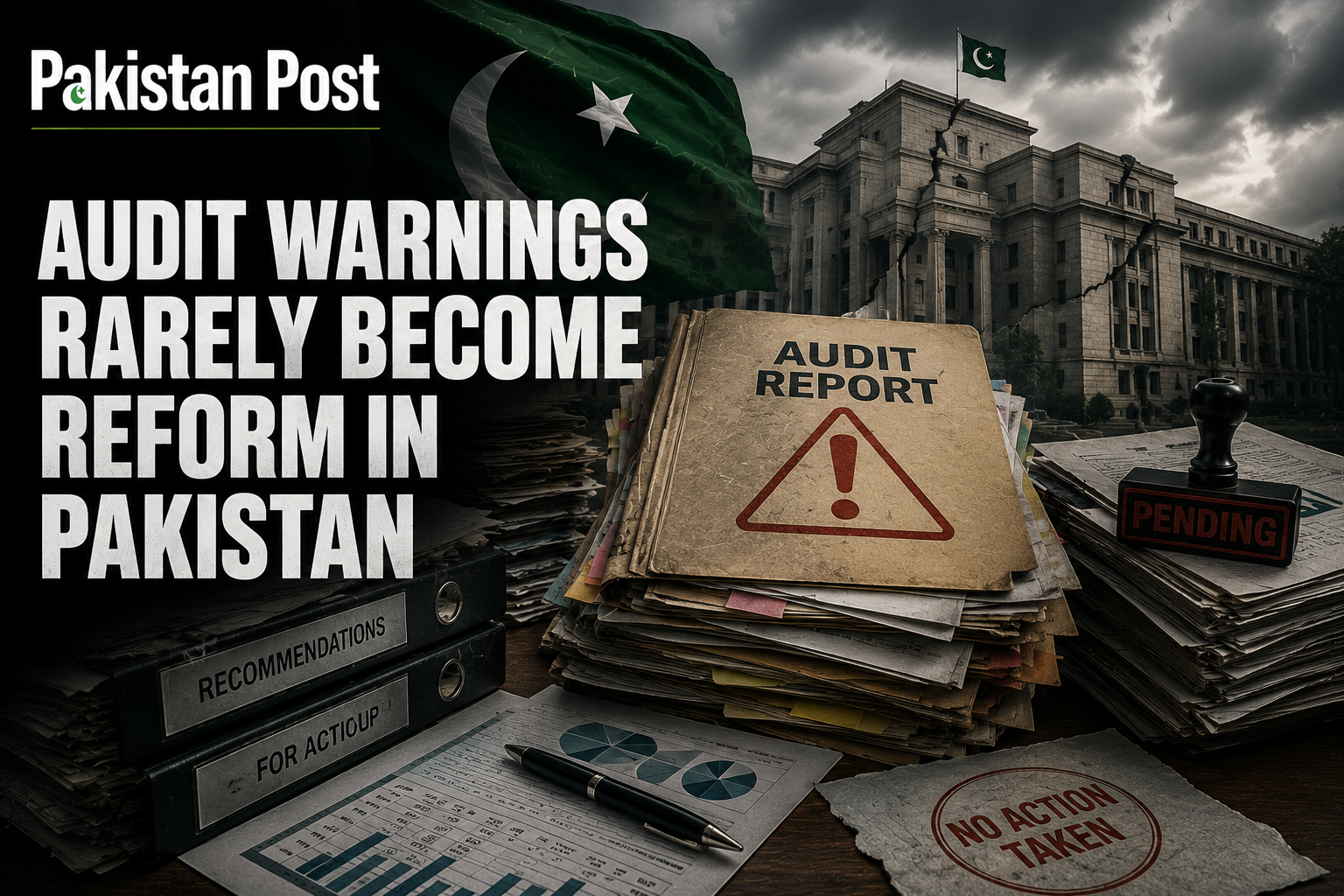
Audit Warnings Rarely Become Reform in Pakistan
Pakistan does not suffer from a shortage of warnings about public money. It has an extensive institutional machinery for discovering financial irregularities, documenting procurement weaknesses, identifying unauthorised expenditure and exposing administrative failures. The Auditor General of Pakistan continues to produce federal, provincial, sectoral,
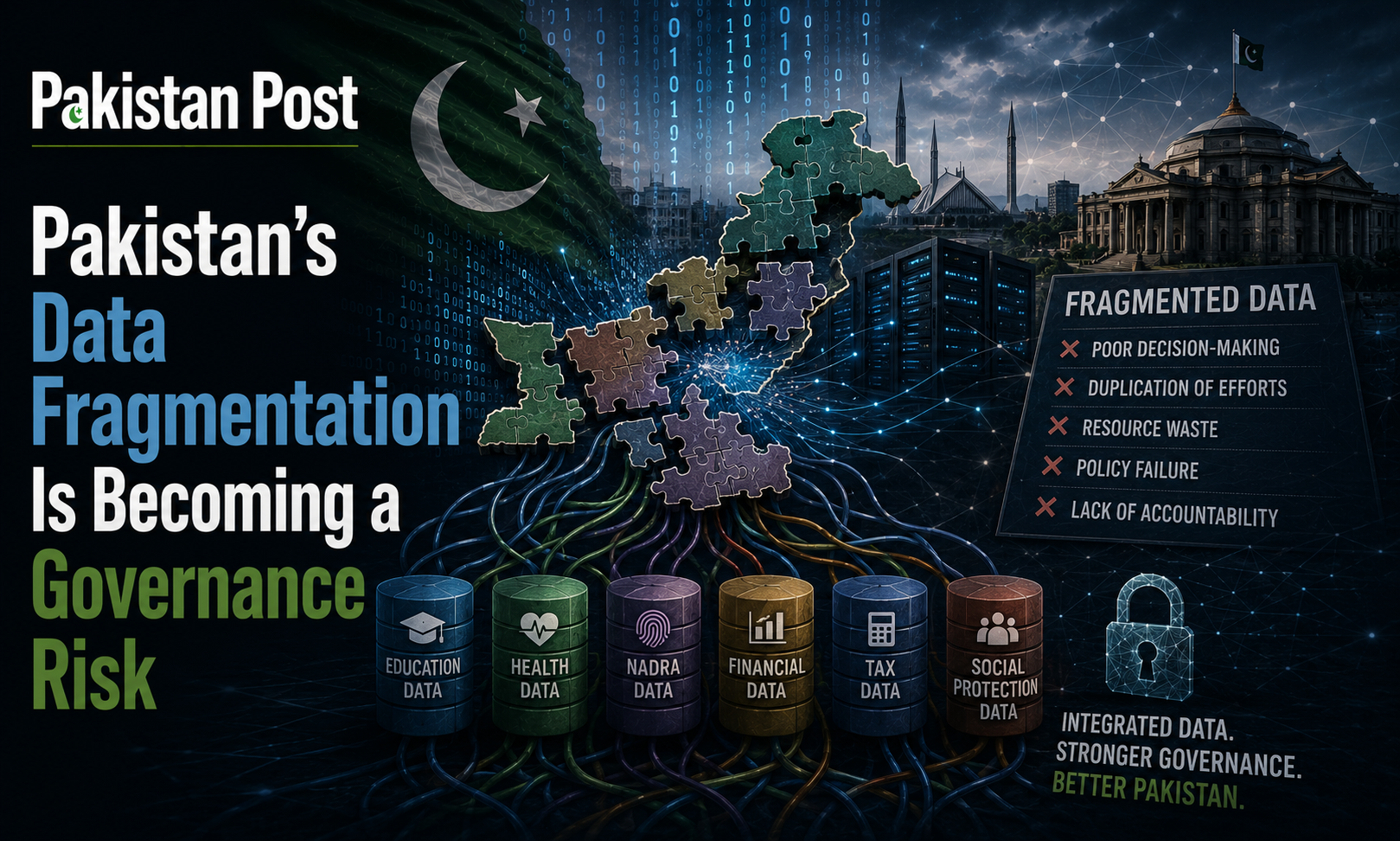
Pakistan’s Data Fragmentation Is Becoming a Governance Risk
Pakistan’s public administration is increasingly dependent on information that the state cannot reliably connect. Federal ministries maintain separate registries, provinces operate their own databases, local governments retain fragmented records, and autonomous institutions frequently develop parallel information systems to satisfy immediate administrative requirements. The

Pakistan’s Energy Crisis Reflects Decades of Governance Failure
Pakistan’s electricity sector no longer suffers primarily from inadequate generation. It suffers from institutional failure. The country today possesses generation capacity that frequently exceeds demand during large parts of the year, yet households continue to face expensive electricity, industries struggle with rising production

Energy Security, Governance Reform, Power Sector Crisis, Sustainable Energy Policy, Public Sector Accountability
Pakistan’s electricity sector no longer suffers primarily from inadequate generation. It suffers from institutional failure. The country today possesses generation capacity that frequently exceeds demand during large parts of the year, yet households continue to face expensive electricity, industries struggle with rising production
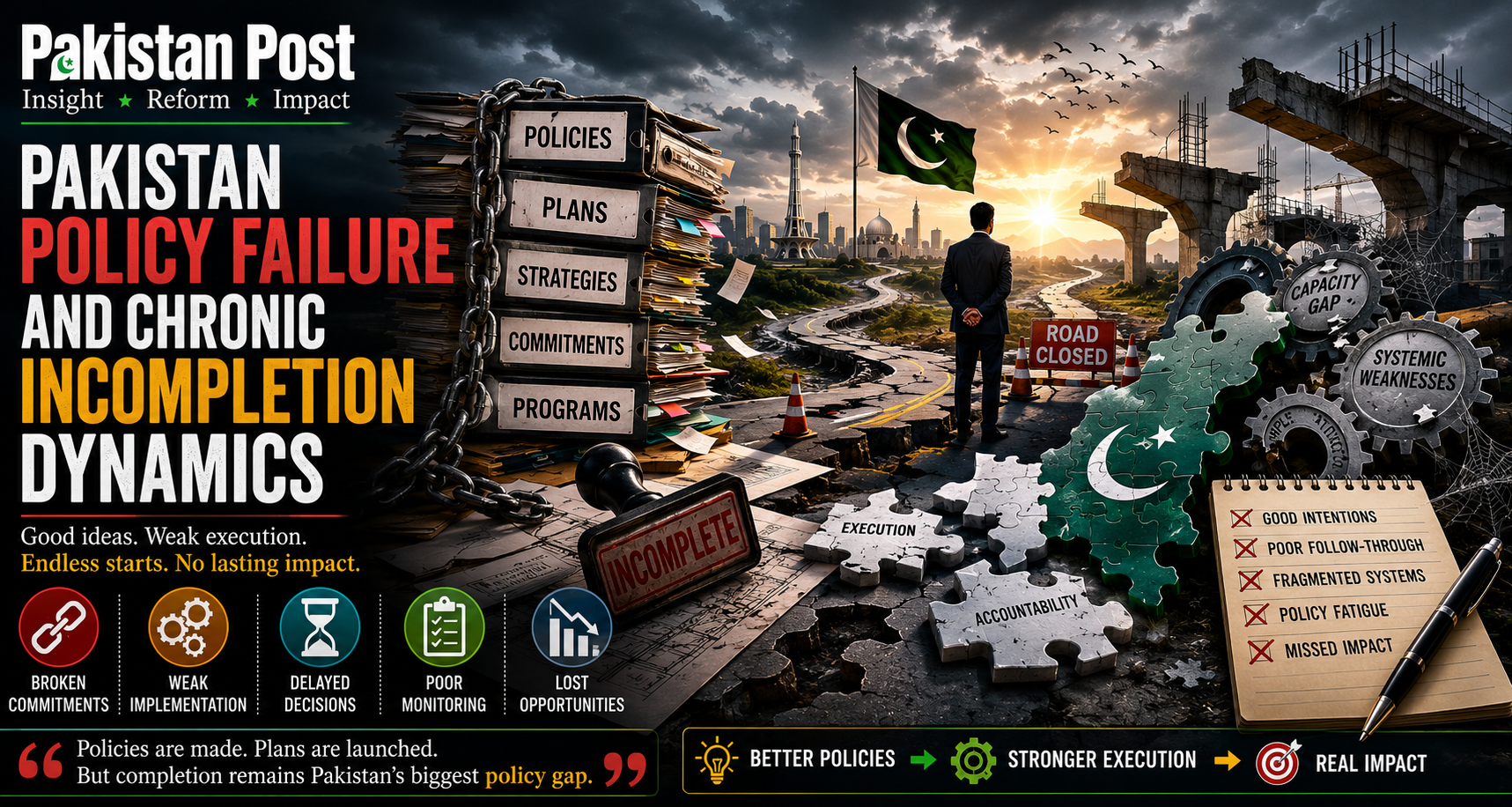
Pakistan Policy Failure and Chronic Incompletion Dynamics
Pakistan’s governance discourse has long revolved around a familiar complaint: there is no shortage of policy, only a shortage of implementation. Yet this framing, repeated across administrations and reform cycles, now risks obscuring a deeper structural condition. The problem is no longer simply

Accountability Deficit, Outcomes Without Institutional Delivery Credibility
Contemporary governance systems are increasingly characterized by a widening disjunction between policy articulation and measurable institutional delivery. This gap, often described as the accountability deficit, represents a structural condition in which states generate high volumes of policy announcements, reform frameworks, and strategic declarations,
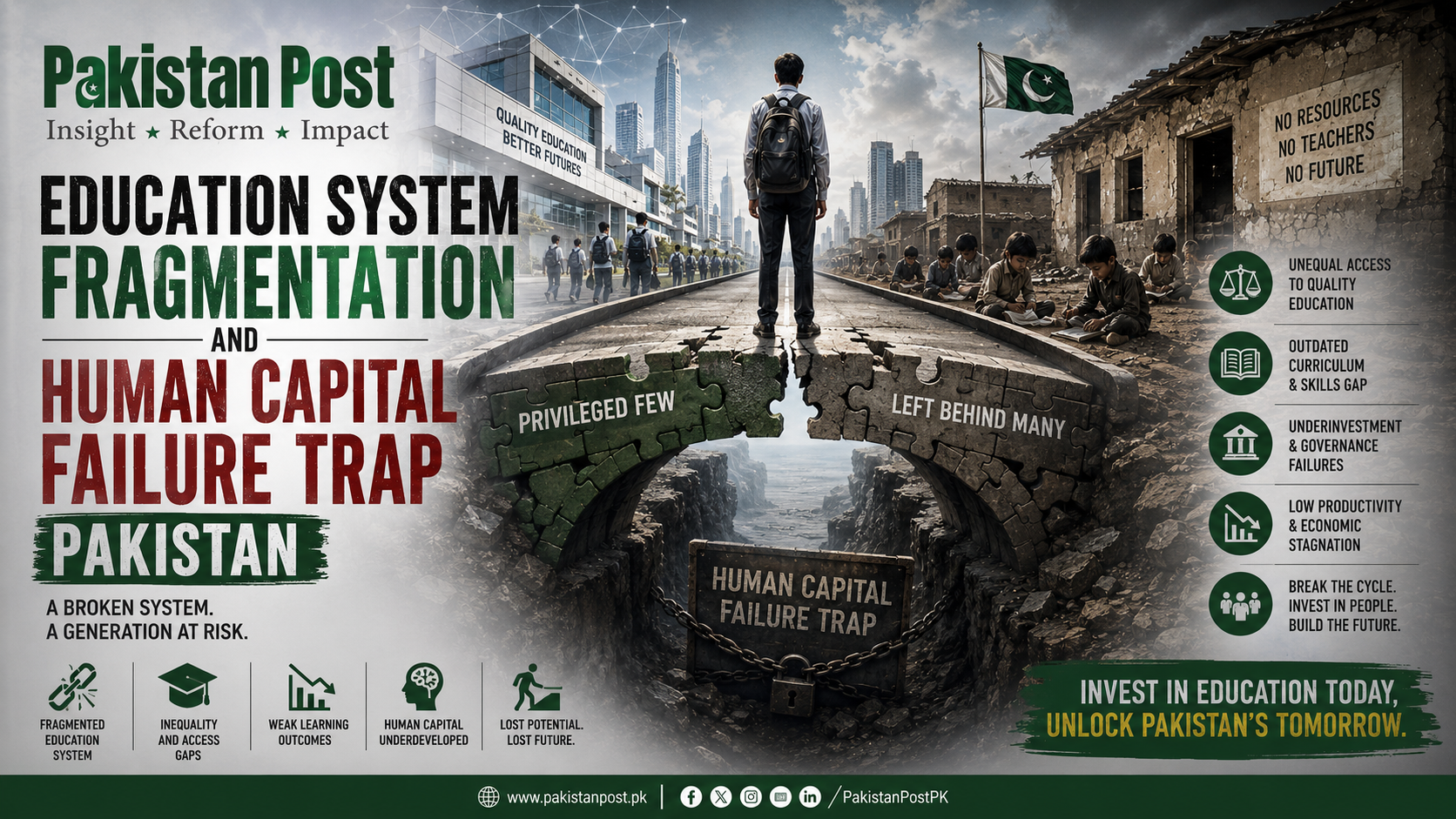
Education System Fragmentation and Human Capital Failure Trap Pakistan
Pakistan’s education system now operates as a structurally fragmented knowledge architecture, producing a widening disconnect between credential attainment and functional human capital formation. This disjunction has become a central constraint on national productivity, institutional capacity, and long-term economic competitiveness. While enrollment rates have