
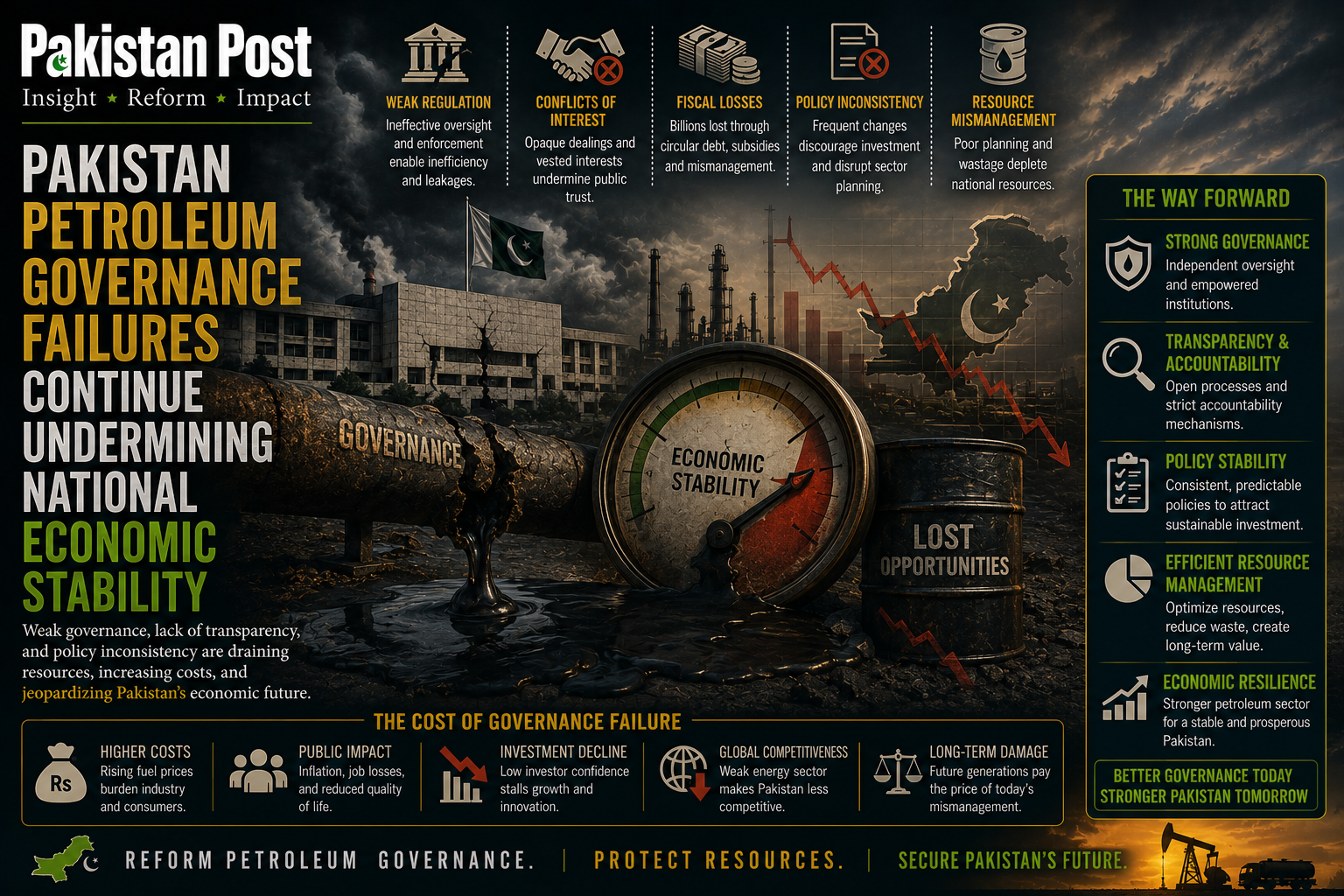
Pakistan Petroleum Governance Failures Continue Undermining National Economic Stability

Pakistan’s petroleum sector occupies a strategic position at the intersection of economic stability, national security, industrial competitiveness and public welfare. Every fluctuation in fuel availability or pricing immediately reverberates through transportation networks, agricultural production, electricity generation, manufacturing costs and household inflation. Despite repeated

Pakistan’s Energy Crisis Reflects Decades of Governance Failure

Pakistan’s electricity sector no longer suffers primarily from inadequate generation. It suffers from institutional failure. The country today possesses generation capacity that frequently exceeds demand during large parts of the year, yet households continue to face expensive electricity, industries struggle with rising production

Pakistan Petroleum Governance Failures Continue Undermining National Economic Stability
Pakistan’s petroleum sector occupies a strategic position at the intersection of economic stability, national security, industrial competitiveness and public welfare. Every fluctuation in fuel availability or pricing immediately reverberates through transportation networks, agricultural production, electricity generation, manufacturing costs and household inflation. Despite repeated

Energy Security, Governance Reform, Power Sector Crisis, Sustainable Energy Policy, Public Sector Accountability
Pakistan’s electricity sector no longer suffers primarily from inadequate generation. It suffers from institutional failure. The country today possesses generation capacity that frequently exceeds demand during large parts of the year, yet households continue to face expensive electricity, industries struggle with rising production
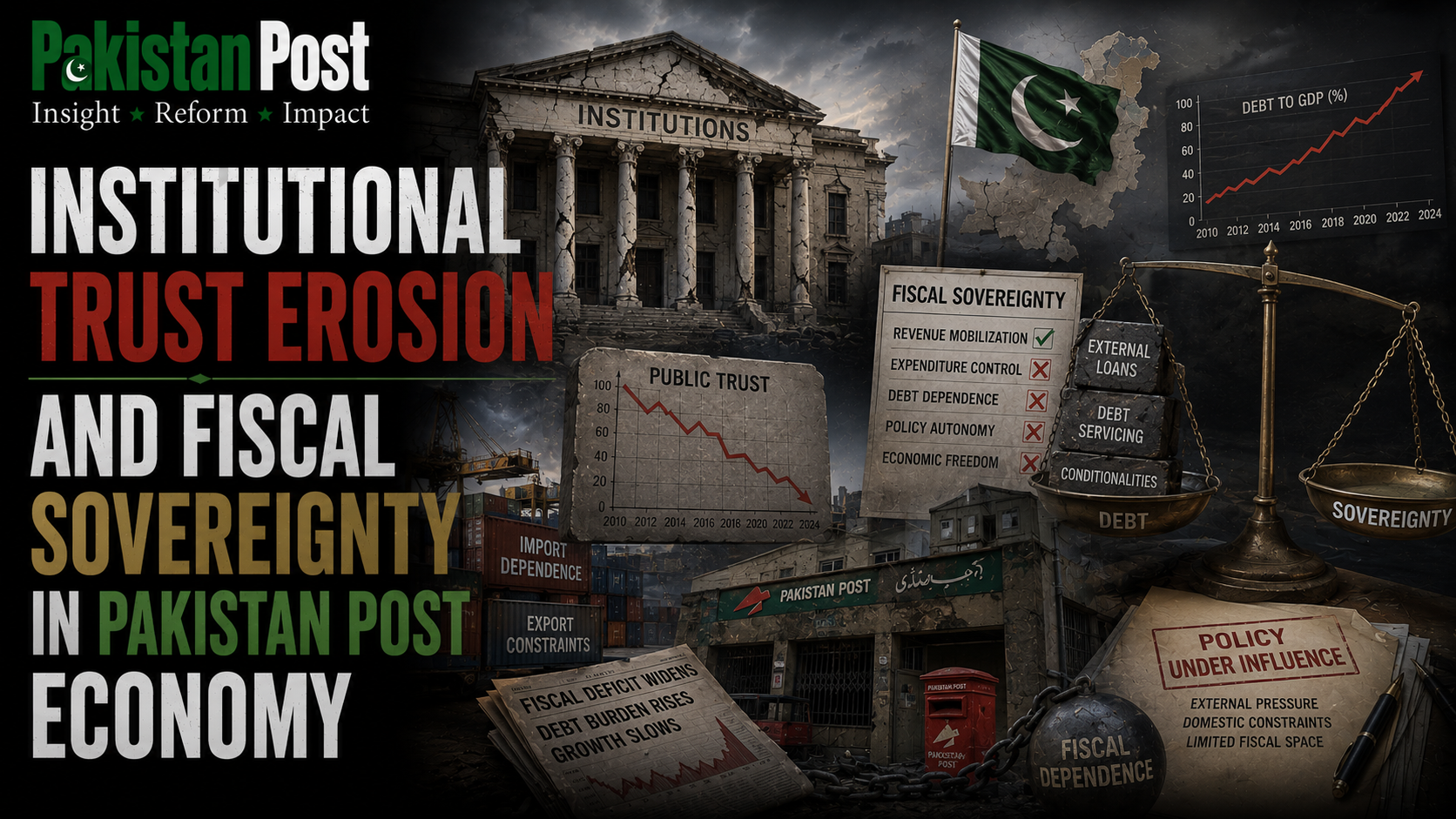
Institutional Trust Erosion and Fiscal Sovereignty in Pakistan Post Economy

In the evolving architecture of contemporary statecraft, institutional trust has become an increasingly decisive variable in determining fiscal sovereignty, governance resilience, and macroeconomic stability. For states operating under sustained external engagement with multilateral financial institutions, including the International Monetary Fund, the United Nations

Accountability Deficit, Outcomes Without Institutional Delivery Credibility
Contemporary governance systems are increasingly characterized by a widening disjunction between policy articulation and measurable institutional delivery. This gap, often described as the accountability deficit, represents a structural condition in which states generate high volumes of policy announcements, reform frameworks, and strategic declarations,
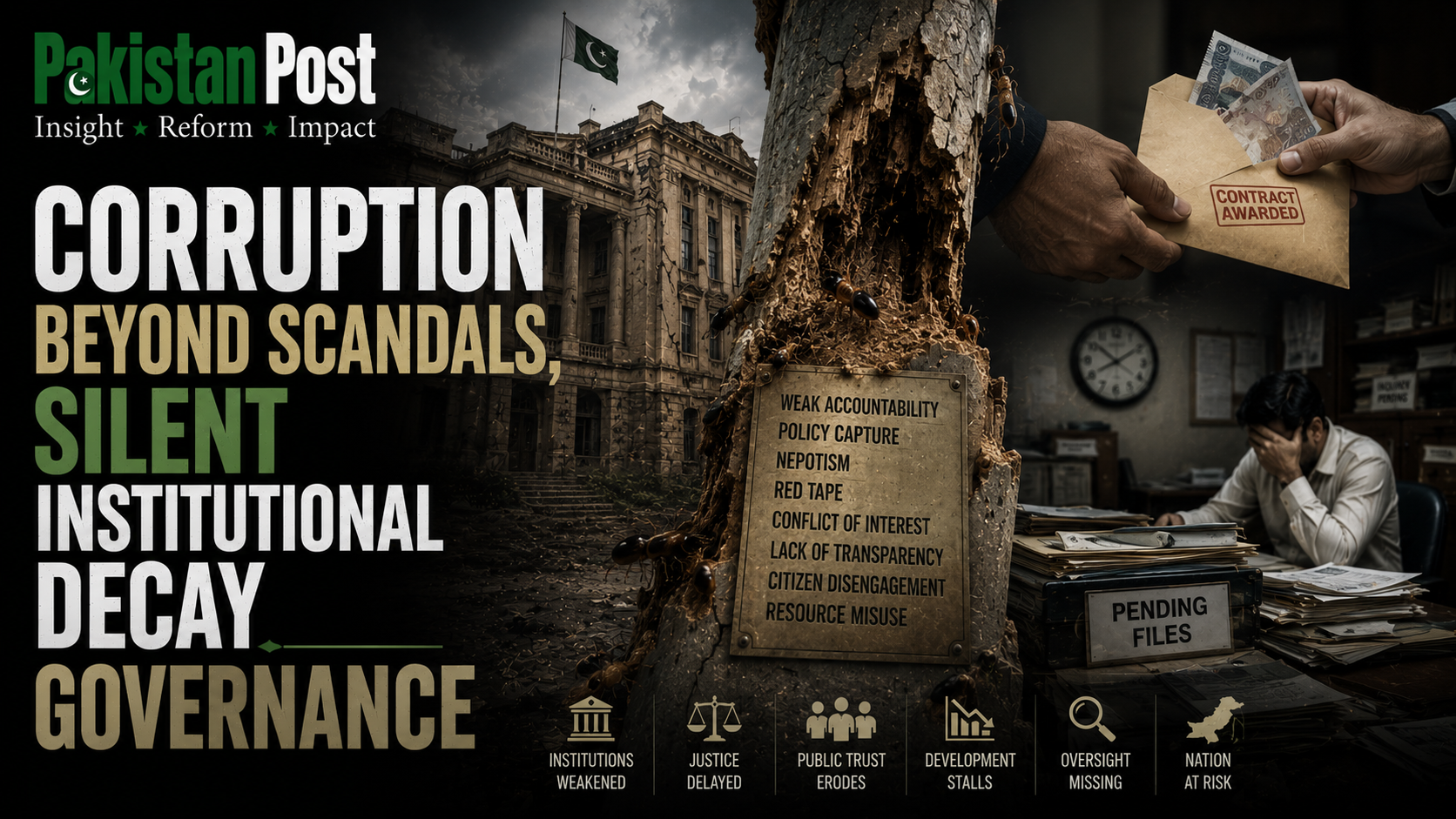
Corruption Beyond Scandals, Silent Institutional Decay Governance

In contemporary governance discourse, corruption is increasingly misread through an anachronistic lens that confines it to episodic scandals, financial misappropriation, and high visibility indictments. Yet in the structural reality of states operating under fiscal compression, external conditionalities, and institutional overstretch, corruption has mutated
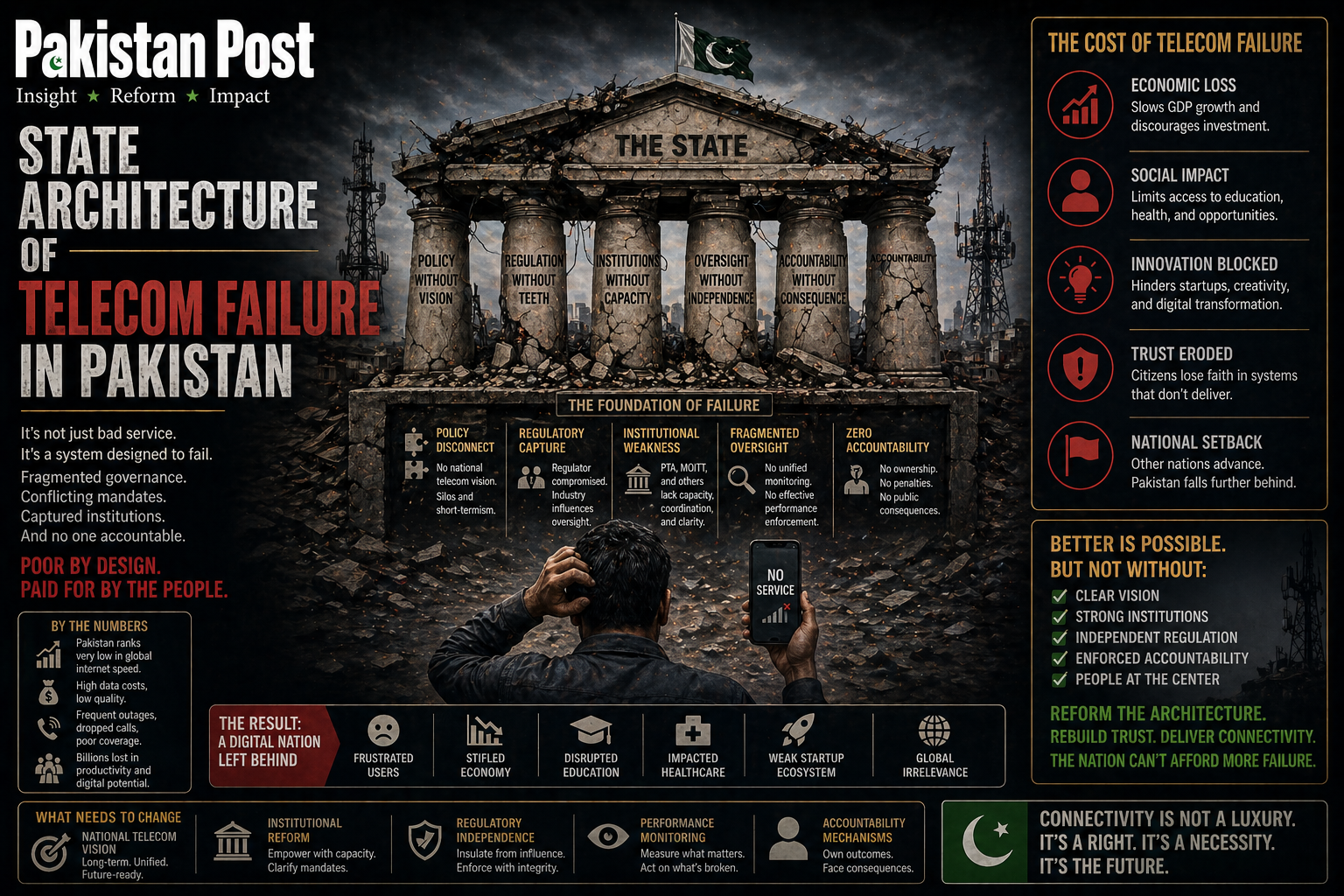
State Architecture of Telecom Failure in Pakistan

Pakistan’s telecommunications system is often described through the language of markets, competition, and service delivery, yet this framing conceals a more foundational reality, it is not merely a corporate sector with inefficiencies, but a state-structured ecosystem where governance fragmentation, regulatory asymmetry, and administrative

The Price Beneath the Pump
Petrol prices in Pakistan rise with a familiar rhythm, announced in late-night notifications, justified through global benchmarks, and absorbed reluctantly by a public already strained by inflation. The official explanation is always technical, international crude prices have shifted, the exchange rate has moved,
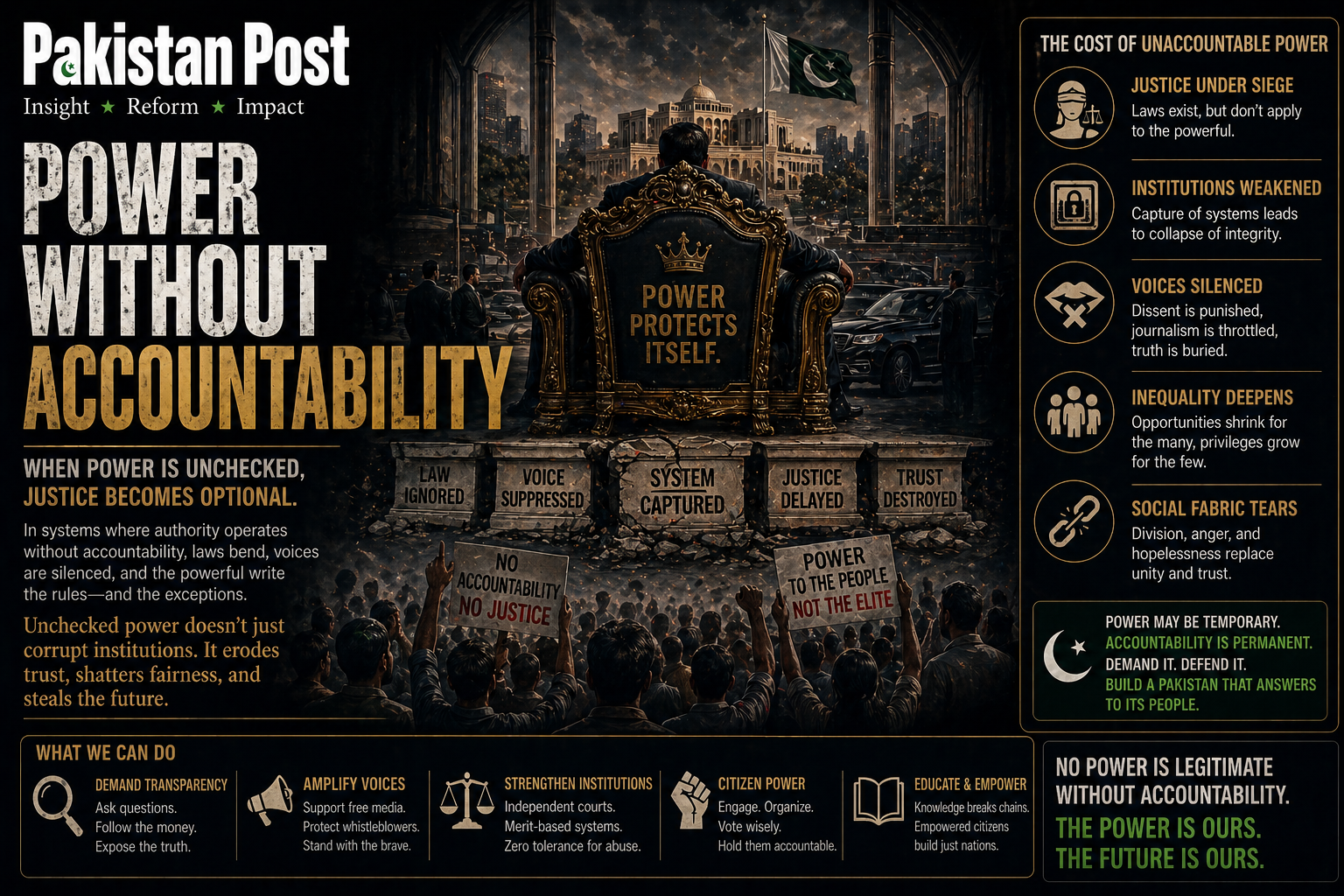
Power Without Accountability
In Pakistan’s rural and remote landscapes, electricity is not merely a utility, it is a negotiation, a hierarchy, and increasingly a site where governance fragmentation translates into everyday corruption. What appears on paper as a centralized power distribution system reveals, on the ground,