Institutional Trust Erosion and Fiscal Sovereignty in Pakistan Post Economy


In the evolving architecture of contemporary statecraft, institutional trust has become an increasingly decisive variable in determining fiscal sovereignty, governance resilience, and macroeconomic stability. For states operating under sustained external engagement with multilateral financial institutions, including the International Monetary Fund, the United Nations development frameworks, and bilateral strategic partners, sovereignty is no longer defined solely through territorial or constitutional parameters but through the degree of autonomous fiscal control retained within externally conditioned economic environments.
Pakistan’s present macroeconomic trajectory illustrates this tension with unusual clarity. As energy sector taxation expands under revenue augmentation imperatives and structural adjustment programmes deepen fiscal discipline requirements, the state finds itself navigating a complex intersection between domestic legitimacy and external compliance. The introduction of new energy taxes, tariff rationalization mechanisms, and subsidy restructuring frameworks, often aligned with IMF conditionalities, has generated both fiscal relief and socio-economic friction. Yet beneath these visible policy adjustments lies a more profound structural issue, namely the erosion of institutional trust as a central pillar of economic governance.
Institutional trust, in this context, refers not merely to public perception of government credibility but to the functional reliability of state institutions to execute policy with consistency, predictability, and transparency. When this trust erodes, fiscal sovereignty becomes increasingly contingent, as external actors gain disproportionate influence over domestic policy design and implementation. This dynamic does not manifest through overt coercion but through conditional financing frameworks, technical advisory mechanisms, and performance-based disbursement structures that gradually recalibrate internal policy autonomy.
The contemporary fiscal environment is therefore characterized by a subtle but persistent shift from sovereign discretion to managed compliance. Energy taxation reforms, for instance, are frequently justified under the necessity of stabilizing external accounts and meeting deficit reduction targets. However, their implementation often exposes structural inefficiencies in tax administration, energy distribution networks, and regulatory enforcement capacity. These inefficiencies dilute the intended fiscal gains, thereby reinforcing dependence on continued external support.
At the institutional level, this creates a feedback loop in which weak implementation capacity necessitates further external oversight, which in turn further constrains domestic policy flexibility. Over time, this loop contributes to what may be described as conditional sovereignty, where policy autonomy exists in formal terms but remains operationally constrained by fiscal imperatives and institutional limitations.
The energy sector occupies a central position in this configuration. As one of the most fiscally sensitive sectors, it is frequently used as a primary adjustment lever in macroeconomic stabilization strategies. New energy taxes and tariff adjustments are introduced to address revenue shortfalls and reduce circular debt accumulation. Yet the structural inefficiencies embedded within the sector, including transmission losses, fragmented governance, and delayed billing cycles, reduce the effectiveness of these measures. Consequently, fiscal stabilization becomes reliant not solely on policy design but on the state’s capacity to enforce implementation integrity.
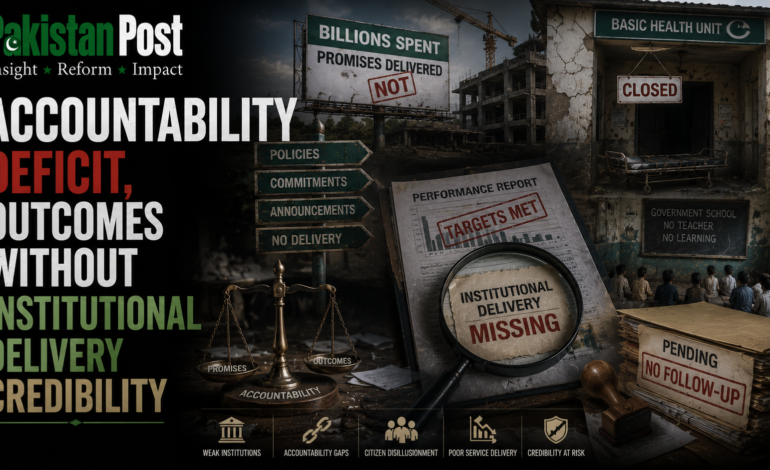
This implementation gap is where institutional trust becomes critically relevant. When citizens and market actors perceive inconsistency between policy announcements and actual execution, compliance weakens, resistance increases, and informal economic behaviors expand. These responses further undermine revenue collection efficiency, thereby weakening fiscal sovereignty from within rather than through external pressure alone.
International financial institutions interpret such gaps through the lens of governance risk. While macroeconomic indicators such as deficit ratios, foreign exchange reserves, and primary balance improvements may signal short-term stabilization, persistent implementation inefficiencies raise concerns about reform durability. This creates a paradox in which compliance with external conditionalities does not necessarily translate into sustainable institutional strengthening.
The United Nations development frameworks similarly emphasize governance effectiveness, institutional capacity building, and inclusive economic resilience. However, the translation of these normative frameworks into operational outcomes depends heavily on domestic administrative coherence. When institutional fragmentation persists, global governance objectives intersect with local implementation constraints, producing partial alignment rather than full convergence.
At the core of this systemic challenge lies a structural deficit in administrative continuity. Policy environments characterized by frequent shifts in priorities, overlapping mandates, and fragmented coordination mechanisms are unable to sustain long-term reform trajectories. In such environments, fiscal sovereignty becomes episodic, expanding during periods of stability and contracting during periods of adjustment pressure.
This episodic nature of sovereignty is further intensified by the increasing complexity of global economic interdependence. Energy markets, currency fluctuations, and capital flows are now deeply integrated into transnational systems, reducing the capacity of individual states to independently manage macroeconomic volatility. For countries undergoing structural adjustment, this integration creates both opportunity and constraint, enabling access to external financing while simultaneously increasing exposure to conditional policy frameworks.
The erosion of institutional trust exacerbates these vulnerabilities. When institutions fail to demonstrate consistent execution capacity, external actors increasingly rely on standardized conditional mechanisms rather than discretionary engagement. This shift reduces policy flexibility while increasing procedural predictability, effectively substituting negotiated sovereignty with rule-based compliance structures.
From a governance perspective, this transformation raises critical strategic questions. The first concerns the sustainability of fiscal reforms that are externally anchored but internally weakly implemented. The second concerns the long-term implications of relying on external stabilization mechanisms without corresponding institutional deepening. The third concerns the extent to which policy credibility can be restored in environments where implementation gaps have become systemic rather than incidental.
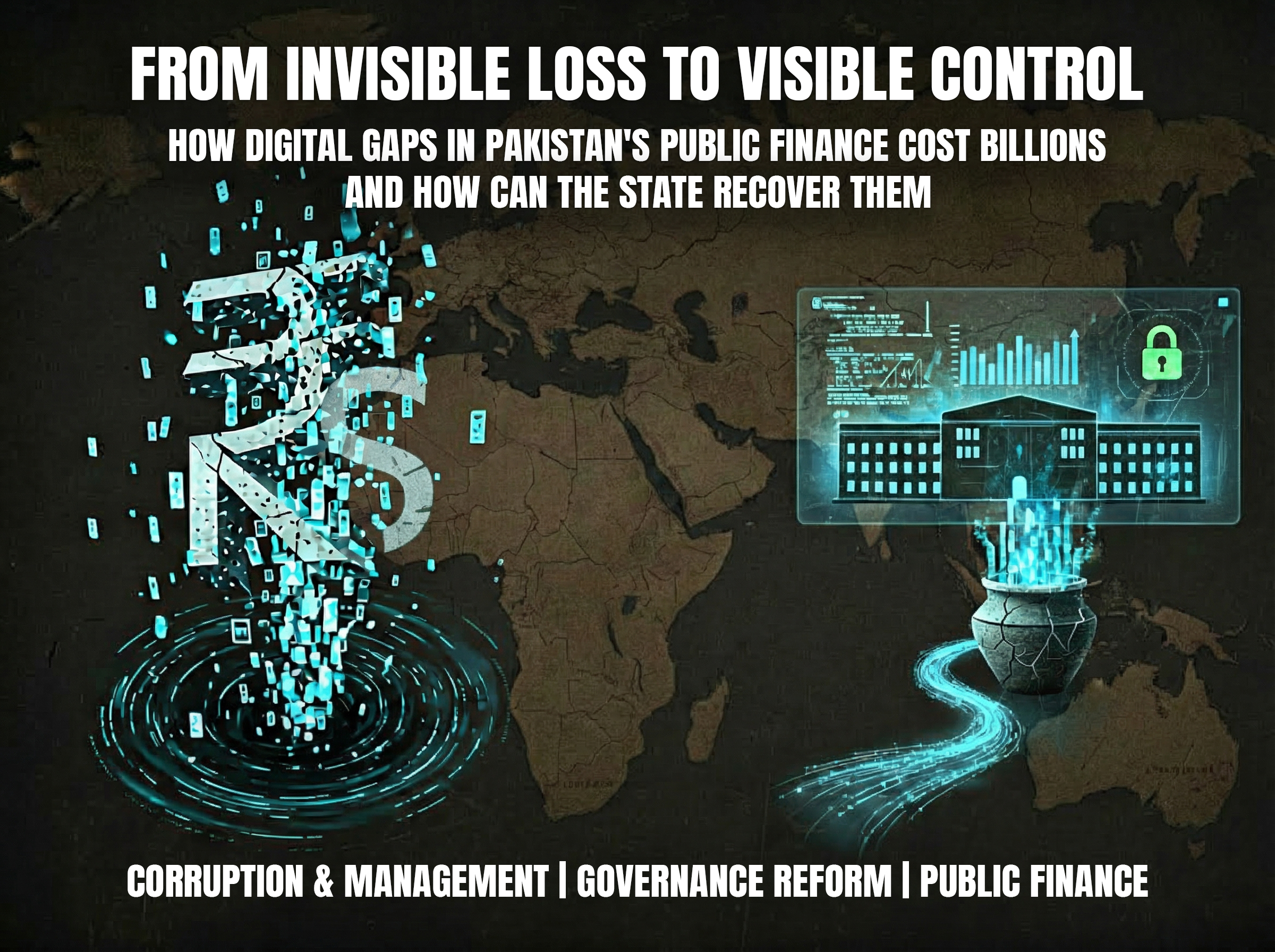
Addressing these challenges requires a multidimensional recalibration of governance architecture. First, institutional capacity must be strengthened not only in technical terms but also in terms of execution discipline. This involves integrating real-time monitoring systems across revenue, energy, and financial management institutions to ensure transparency and reduce discretionary leakage.
Second, fiscal reforms must be embedded within longer-term institutional development frameworks rather than short-term stabilization cycles. This includes aligning energy taxation policies with structural efficiency improvements in distribution networks, enforcement mechanisms, and data integration systems.
Third, accountability mechanisms must be restructured to prioritize outcome verification over procedural reporting. At present, institutional performance is often evaluated through activity-based indicators that do not accurately reflect delivery efficiency. A shift toward outcome-based evaluation would enhance both domestic trust and external credibility.
Fourth, inter-agency coordination must be elevated from informal cooperation to formalized operational integration. Fragmented governance structures create gaps that are frequently exploited by inefficiency and delay. Integrated governance platforms would reduce these gaps and enhance policy coherence.
Fifth, communication strategies must be recalibrated to reduce the divergence between policy announcement and implementation visibility. Transparency in execution timelines, progress reporting, and corrective measures is essential to rebuilding institutional trust across both domestic and international stakeholders.
The broader strategic implication is that fiscal sovereignty is increasingly inseparable from institutional credibility. In a global environment where capital allocation, credit ratings, and investment flows are highly sensitive to governance indicators, the ability of a state to maintain autonomous fiscal control depends not only on economic size or resource base but on institutional reliability.
Pakistan’s current trajectory illustrates both the risks and opportunities embedded within this dynamic. On one hand, external engagement provides critical fiscal stabilization support and access to reform expertise. On the other, persistent implementation gaps risk embedding conditional dependence into long-term governance structures. The balance between these forces will determine the future contours of fiscal sovereignty.
Ultimately, the erosion of institutional trust is not merely a governance issue but a structural economic constraint. It shapes how policies are interpreted, how reforms are implemented, and how sovereignty is exercised in practice. Without restoring this trust through systemic institutional strengthening, fiscal reforms will continue to generate partial outcomes, external dependence will remain entrenched, and sovereignty will remain formally intact but operationally constrained.
The challenge, therefore, is not simply to design better policies but to build institutions capable of delivering them with consistency, transparency, and resilience. Only then can fiscal sovereignty transition from a conditional arrangement into a stable and self-sustaining national capability.
A Public Service Message