
Customs Modernization, Legal Harmonization, and Institutional Compliance in Pakistan’s External Trade Architecture

The evolution of external trade governance in Pakistan reflects a structured shift from administratively fragmented regulatory practices toward a consolidated legal and procedural framework aligned with international trade standards. This transformation is primarily driven by the need to enhance predictability, reduce transaction costs,
Controlled Maritime Dominance and the Rewriting of Deterrence in the Strait of Hormuz

The evolution of maritime security doctrine in the twenty first century reflects a decisive movement away from the rigid binaries of war and peace toward a more fluid spectrum of calibrated control. Within this shifting doctrinal landscape, the concept of controlled maritime dominance
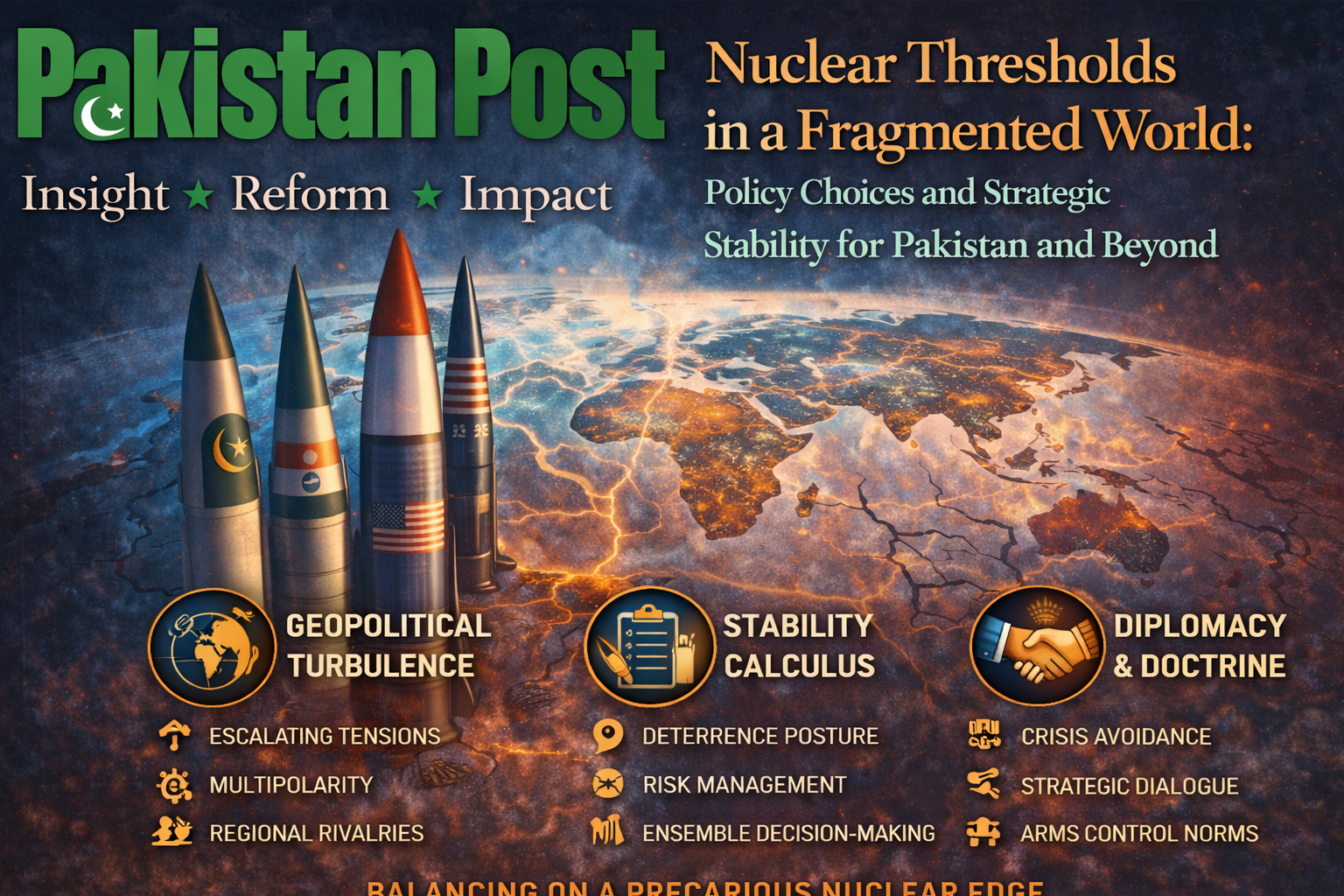
Nuclear Thresholds in a Fragmented World: Policy Choices and Strategic Stability for Pakistan and Beyond

The nuclear question has returned to the center of global strategic though not as a distant abstraction but as an immediate and structuring force shaping policy choices, economic alignments, and the psychological climate of nations. For policymakers and analysts observing the current geopolitical
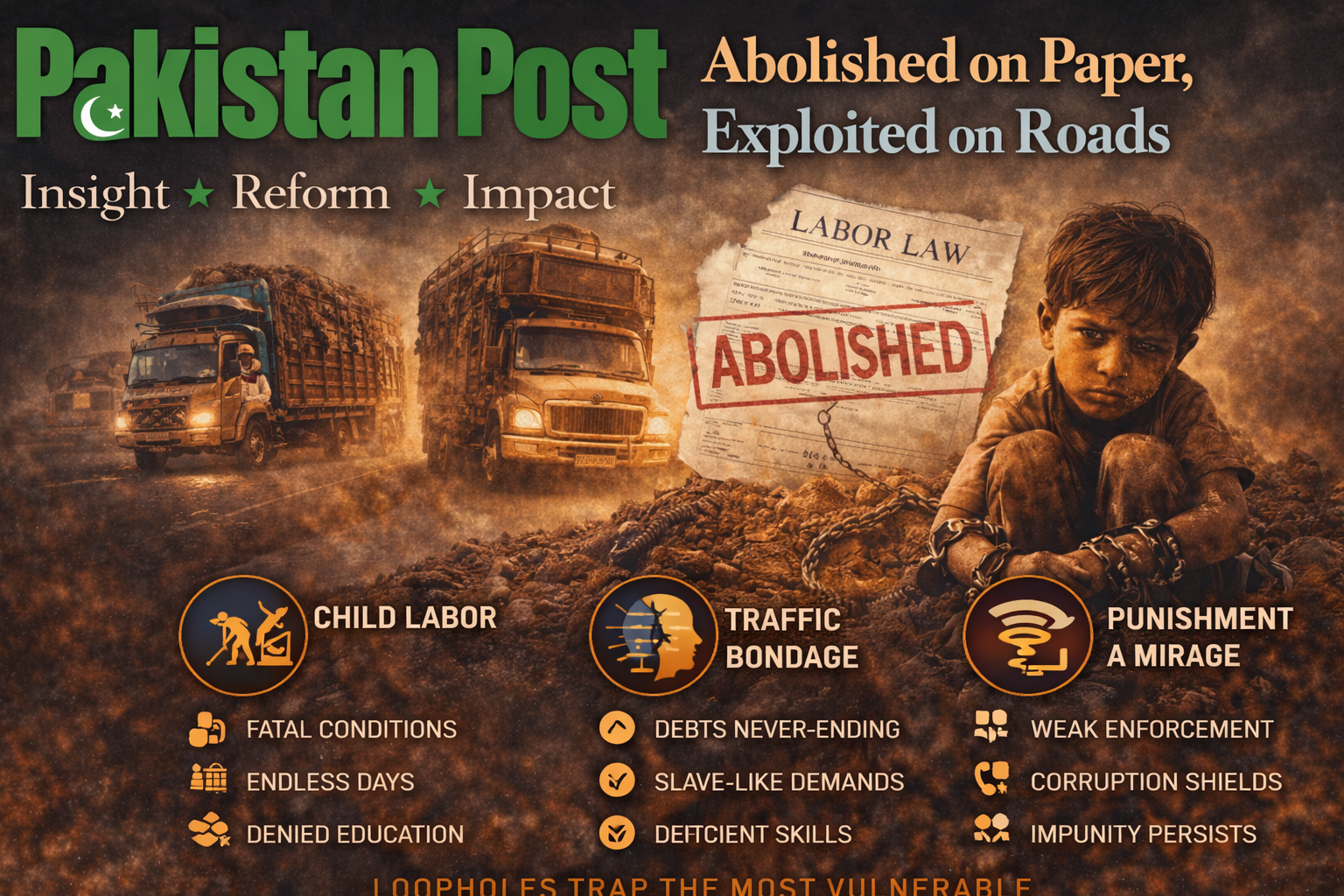
Abolished on Paper, Exploited on Roads
There is a dangerous illusion shaping the current economic narrative, one that exists comfortably in policy documents but collapses the moment it encounters lived reality. Relief is announced, fares are declared reduced or abolished, petroleum pricing is adjusted with official justification, and yet

Reforming Pakistan’s Oil and Gas Governance for Market Transparency and Resilience

Pakistan’s oil and gas sector has long been at the center of national economic debates with its performance influencing consumer prices fiscal stability industrial competitiveness and overall macroeconomic health. Today the imperative to reform this sector is more urgent than ever because global
Strengthening Pakistan’s Energy Security in Response to Global Oil Supply Shocks
Pakistan stands at a critical juncture in its energy policy framework as international developments in the Strait of Hormuz have sent shockwaves through global energy markets. The recent surge in oil prices, fueled by disruptions to shipping routes and heightened geopolitical tensions, underscores
Ramzan Under Pressure: Policy Gaps, Urban Strain and the Case for Vigilant Governance
Ramzan in Pakistan is more than a month of fasting; it is a period that tests the resilience of urban systems, social cohesion, and governance structures. While citizens engage in spiritual reflection and communal solidarity, the practical realities of city life, including traffic
Financial Integrity and Public Dignity: Rethinking the Mass Blocking of Bank Accounts in Pakistan
Financial regulation is not an abstract exercise conducted in air-conditioned boardrooms. It travels through neighborhoods, pension lines, village branches, biometric machines, and worn hands that have worked for decades. When thousands of bank accounts are temporarily blocked across the country in the name
China’s Mayor Economy, Performance Governance, and the Reversal of Extraction
Pakistan’s governance crisis is often framed as a uniquely Pakistani failure, rooted in culture, politics, or history. Yet comparative experience demonstrates that countries burdened with poverty, authoritarian legacies, and weak institutions have successfully transformed their governance systems by realigning incentives, authority, and accountability.
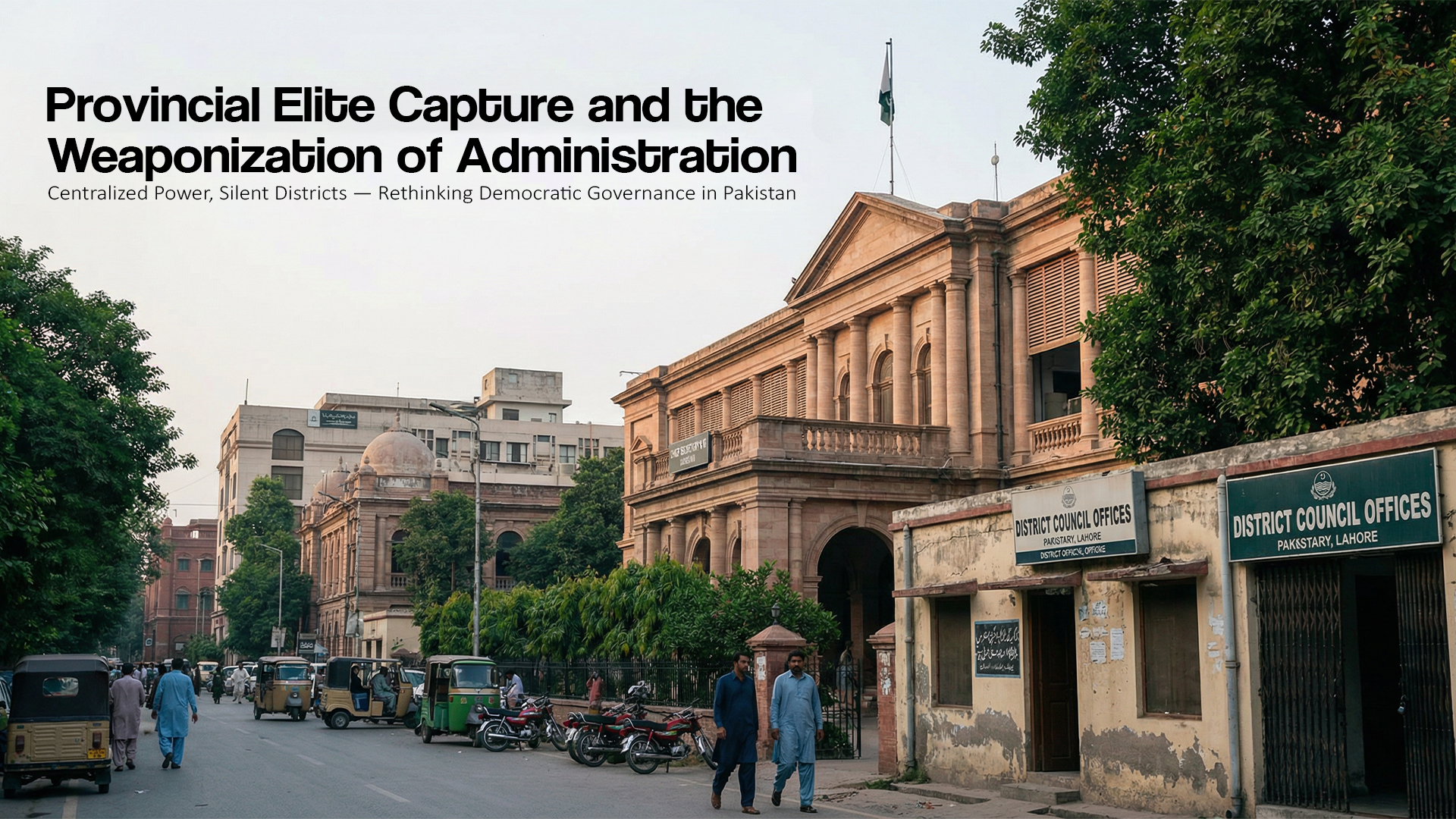
Provincial Elite Capture and the Weaponization of Administration

By Ijaz Naser Pakistan’s governance dilemma is frequently framed as a struggle between a powerful center and marginalized provinces. This framing has become politically convenient, emotionally resonant, and rhetorically dominant. Yet it obscures a more uncomfortable truth: while provinces have gained greater fiscal