
China’s Mayor Economy, Performance Governance, and the Reversal of Extraction

Pakistan’s governance crisis is often framed as a uniquely Pakistani failure, rooted in culture, politics, or history. Yet comparative experience demonstrates that countries burdened with poverty, authoritarian legacies, and weak institutions have successfully transformed their governance systems by realigning incentives, authority, and accountability. Among these cases, China stands out not because it represents an ideological model Pakistan should replicate wholesale, but because it resolved a problem that Pakistan has failed to address: how to make local governance work for development rather than extraction.
China’s transformation did not occur simply because of centralized planning or authoritarian discipline. It occurred because the Chinese state fundamentally restructured the relationship between the center, provinces, cities, and districts. The old Maoist command economy collapsed under its own inefficiencies, but what replaced it was not unregulated capitalism. It was a system in which local governments were empowered as active agents of development, operating within a clear national framework and judged by measurable outcomes.
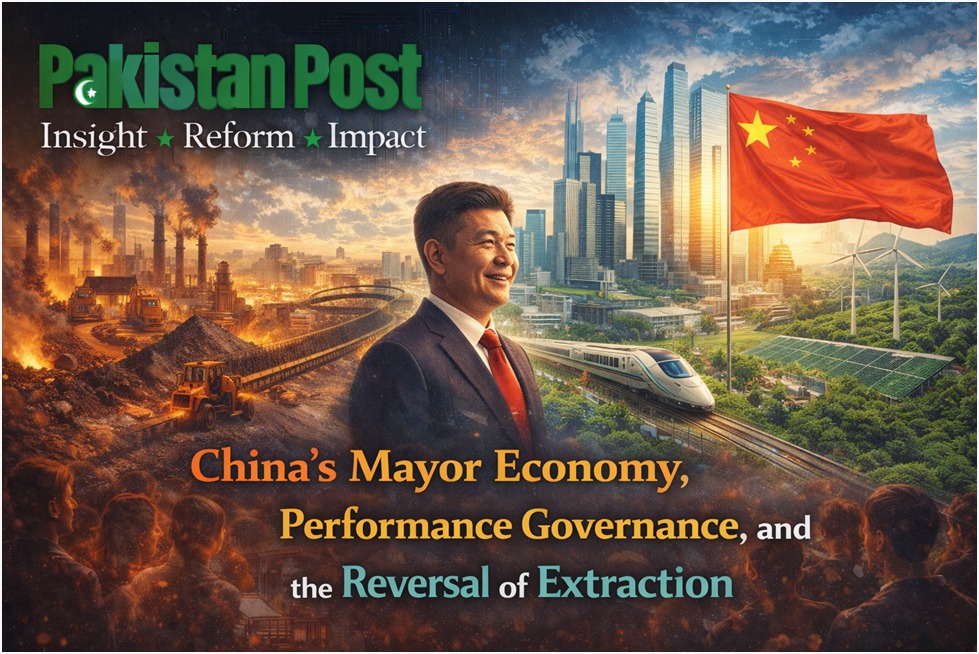
At the heart of this transformation lies what is commonly described as the “mayor economy.” In China, cities and districts are not passive administrative units waiting for instructions from higher authorities. They are dynamic centers of economic planning, industrial policy, infrastructure development, and service delivery. The mayor is not a ceremonial figure nor a mere bureaucrat. He is the chief executive of the city, responsible for economic growth, employment creation, urban planning, education, health services, and social stability.
This authority is real, not symbolic. Mayors control land-use decisions, industrial zones, municipal enterprises, local financing vehicles, and major infrastructure projects. They coordinate local bureaucracies rather than being subordinated to them. They are expected to innovate, attract investment, and deliver results. Failure is not abstract; it has career consequences.
Crucially, China aligned authority with responsibility. Local leaders are granted power because they are held accountable for outcomes. Performance evaluation is systematic and relentless. Economic growth, job creation, infrastructure completion, environmental management, and social order are tracked and assessed. While political loyalty matters, it is insufficient on its own. A mayor who fails to deliver stagnates or is removed.
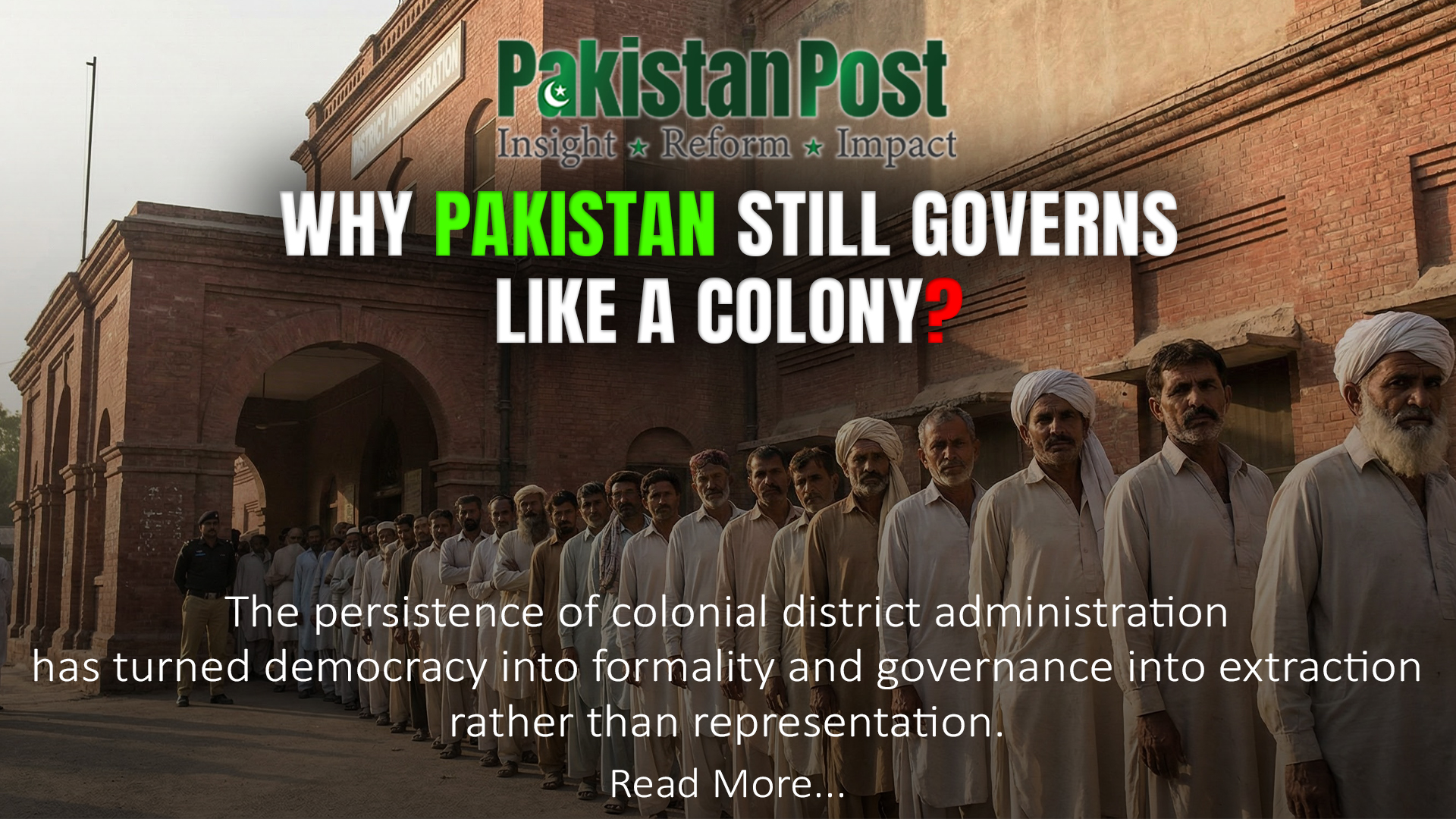
This alignment stands in stark contrast to Pakistan’s district governance. In Pakistan, the Deputy Commissioner wields authority without responsibility and bears responsibility without autonomy. He executes directives but does not design policy. He manages crises but does not plan development. His performance is evaluated informally, often politically, and rarely on the basis of long-term outcomes. As a result, rational behavior dictates compliance rather than innovation.
China’s system also differs fundamentally in fiscal architecture. Local governments in China are not fiscally starved administrative shells. They have access to predictable transfers and retain significant control over locally generated revenues. This allows long-term planning. Infrastructure projects, industrial parks, education investments, and healthcare facilities are designed as integrated development strategies rather than ad hoc schemes.
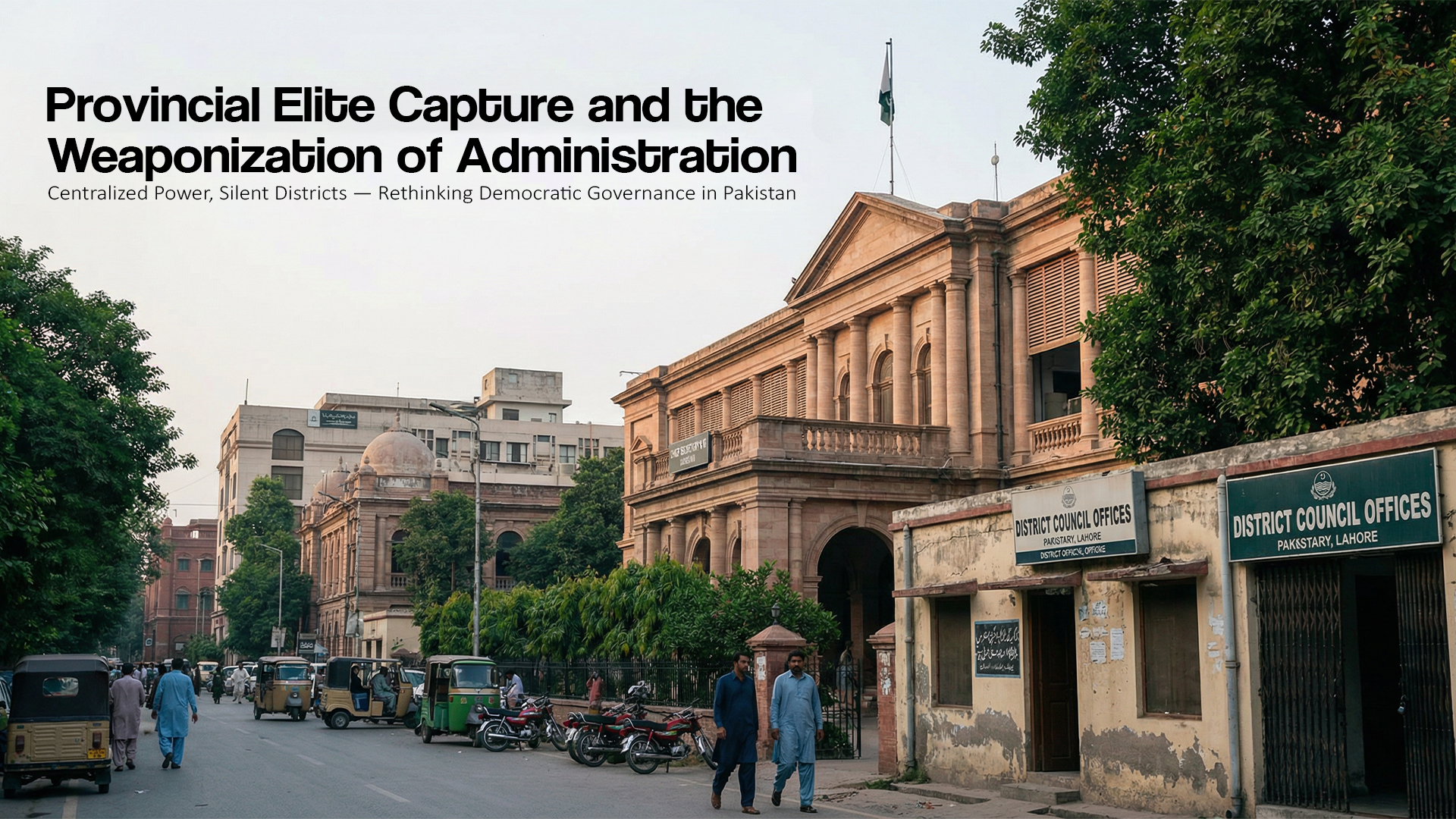
Pakistan’s districts, by contrast, are fiscally powerless. Even when development funds are allocated, they are controlled by provinces and executed through bureaucracy. Districts cannot plan multi-year projects because they lack budget certainty. They cannot prioritize local needs because allocations are politically mediated. The result is fragmentation, inefficiency, and waste.
China also understood that development is not purely economic. Local leaders are responsible for social stability, which includes employment, access to services, and grievance management. Governance failures are treated as risks to national stability, not merely administrative shortcomings. This creates an incentive to address problems early and locally rather than suppress them through coercion.
In Pakistan, governance failures are often met with administrative force rather than institutional reform. Protests are controlled, not resolved. Grievances are managed, not addressed. This reactive approach deepens mistrust and fuels polarization. China’s experience demonstrates that stability achieved through performance is more sustainable than stability imposed through control.
Another critical element of China’s system is experimentation. Local governments are encouraged to pilot policies within broad national parameters. Successful experiments are scaled up; failures are abandoned. This iterative process allows governance to evolve in response to changing conditions. Authority is decentralized enough to permit learning, yet centralized enough to maintain coherence.
Pakistan’s DC system discourages experimentation. Innovation carries risk, and risk threatens career security. As a result, administrators default to precedent, procedure, and compliance. Governance becomes static, even as social and economic realities change rapidly.
It is important to acknowledge that China’s system operates within a single-party political structure, whereas Pakistan is a constitutional democracy. This difference matters. Pakistan cannot and should not adopt China’s political model. However, governance effectiveness does not depend on authoritarianism; it depends on institutional design. Pakistan can adapt the functional elements of China’s system—local executive authority, performance-based evaluation, fiscal empowerment, and policy experimentation—within a democratic framework.
This adaptation would require replacing the DC-centric model with elected district executives, whether designated as mayors or district governors. These executives must have fixed five-year terms to ensure policy continuity and planning stability. They must possess real authority over district administration, including development planning, municipal services, education, health coordination, and land use regulation.
Performance evaluation must be institutionalized. District executives should be assessed on clear indicators: employment generation, education outcomes, health access, infrastructure delivery, environmental management, and fiscal discipline. These indicators must be transparent and publicly reported, allowing citizens to judge performance alongside higher authorities.
Fiscal reform is essential. National Finance Commission transfers must not terminate at the provincial level. A constitutionally mandated share must flow directly to districts through transparent, formula-based mechanisms. Without fiscal autonomy, local executives will be symbolic figures, vulnerable to provincial manipulation.
The Chinese experience also highlights the importance of aligning national priorities with local incentives. Pakistan’s federal government can set strategic goalsindustrialization, export growth, human capital development, climate resiliencewhile districts determine how best to achieve them locally. This creates ownership rather than compliance.
One of the most profound lessons from China is that development is driven by empowered localities, not centralized micromanagement. Beijing did not build Shenzhen; local leadership did, within a national framework that rewarded success. Pakistan’s economic stagnation is partly a consequence of denying districts the space to become engines of growth.
Critics often argue that empowering districts risks fragmentation or corruption. Yet Pakistan’s current system has already produced fragmentation and corruption at higher levels. Centralized extraction does not prevent abuse; it merely concentrates it. Transparency and accountability, not control, are the antidotes.
China’s system also demonstrates that stability does not require suppressing local autonomy. On the contrary, stability emerges when citizens see tangible improvements in their lives. Employment, education, healthcare, and infrastructure create legitimacy. Legitimacy reduces conflict. Pakistan’s reliance on administrative coercion reflects a failure to deliver legitimacy through performance.
The DC system, as it currently operates, cannot deliver this legitimacy. It was never designed to do so. It is a system optimized for obedience, not outcomes. Retaining it while expecting democratic and developmental results is a contradiction.
Pakistan stands at a moment where incremental reform is insufficient. The challenge is structural. The country must decide whether it wishes to remain governed by a colonial logic of extraction, repurposed to serve domestic elites, or whether it will adopt a governance model that empowers people, rewards performance, and aligns authority with responsibility.
China’s experience does not offer a template, but it offers proof. It proves that local empowerment within a coherent national framework can transform societies. It proves that governance design matters. It proves that poverty, size, or complexity are not excuses for failure.
For Pakistan, the lesson is clear. Without dismantling the DC-centric administrative order and replacing it with empowered, accountable local leadership, no amount of policy reform at the top will succeed. Development cannot be commanded; it must be built from the ground up.
A system that serves only its bosses will inevitably collapse under the weight of its own contradictions. A system that serves its people, by contrast, generates resilience. Pakistan’s choice is not between China and democracy. It is between extraction and performance, stagnation and transformation.
A Public Service Message