
Pakistan’s strategic position in the contemporary global order

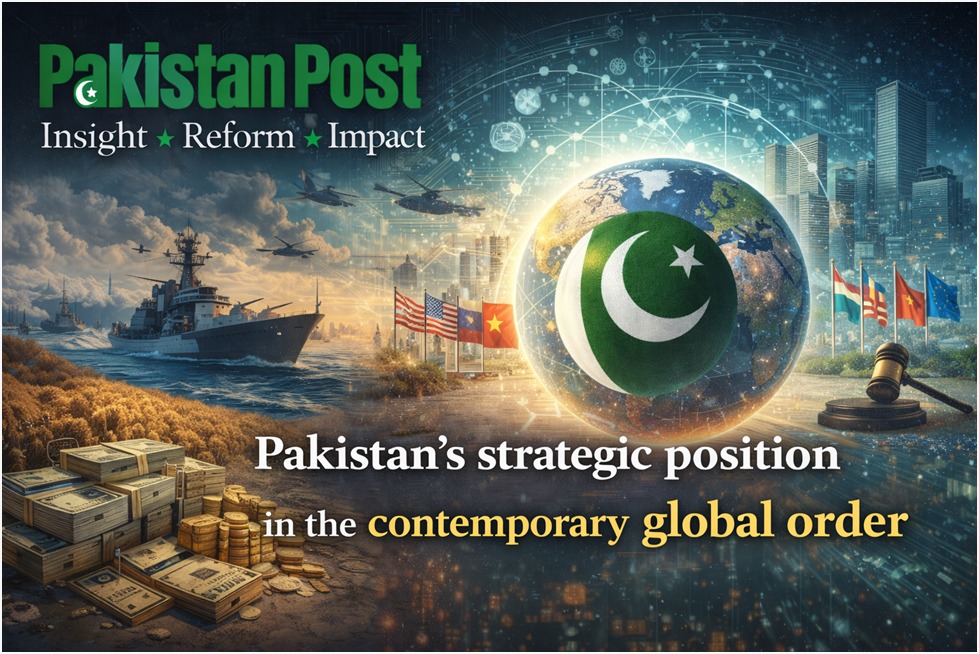
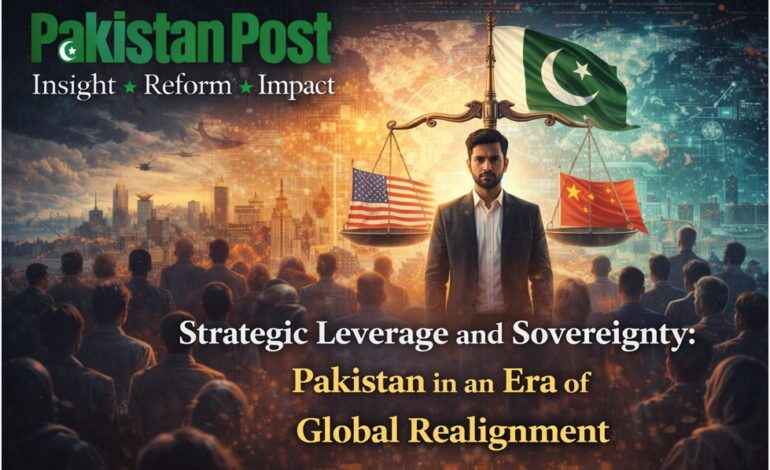
Pakistan’s strategic position in the contemporary global order is simultaneously a product of geography, history, and emergent systemic shifts. The post-World War II international system, anchored by U.S. unipolar dominance, dollar hegemony, and Western-led multilateral institutions, is increasingly strained by the rise of China and other emerging powers, alongside regional dynamics in South Asia, the Middle East, and the Indian Ocean. This systemic transformation, while creating opportunities for Pakistan to assert influence, also imposes a narrow and historically consequential window for action. Decisions taken in the next decade will shape the country’s economic stability, security posture, and geopolitical relevance for generations. In particular, Pakistan’s capacity to navigate U.S.-China rivalry, safeguard economic corridors such as the China-Pakistan Economic Corridor (CPEC), and maintain internal coherence in the face of public misperception represents both a challenge and a unique strategic advantage.
The Indian Ocean, a theater of global commerce and strategic mobility, has assumed critical importance in the current geopolitical calculus. China’s maritime operations, primarily designed to secure energy imports from the Middle East and Africa, reflect Beijing’s dependence on stable maritime supply chains. Initiatives under the Belt and Road framework, with CPEC as a central component, emphasize infrastructure development, port security, and logistical corridors that bypass traditional chokepoints such as the Strait of Malacca. Pakistan’s facilitation of Gwadar Port as a commercial and strategic hub not only provides China with critical access to the Arabian Sea but also elevates Pakistan to a position of regional leverage. The uninterrupted operation of these corridors is essential to Chinese energy security and, by extension, to the stability of Sino-Pakistani strategic partnership. For Pakistan, this creates a dual responsibility: to ensure operational continuity while navigating the broader implications of Chinese strategic reach in the Indian Ocean.
The United States, by contrast, maintains a robust naval and strategic presence in the Indian Ocean and South Asia, integrating its maritime dominance with financial and economic leverage. The dollar’s continued primacy enables the U.S. to implement sanctions, restrict access to capital markets, and shape international trade flows, a strategy increasingly evident in its approach to Russia, Venezuela, and other resource-rich nations. This approach, while designed to preserve U.S. influence, inadvertently pressures secondary actors like Pakistan to navigate competing demands. Engagement with the United States can provide technological assistance, investment flows, and intelligence-sharing opportunities, but over-reliance risks compromising strategic autonomy and may conflict with Pakistan’s commitments to China. Maintaining calibrated engagement is therefore essential, enabling Pakistan to derive benefits from the West while preserving core security and economic interests.
Beyond the U.S.-China dynamic, regional military postures present additional complexities. India’s maritime modernization, nuclear-capable missile programs, and participation in U.S.-aligned frameworks such as the Quadrilateral Security Dialogue illustrate potential avenues for escalation. The Persian Gulf, with its intertwined security and energy imperatives, adds another layer of complexity, as Pakistan must account for potential disruptions to trade and energy flows arising from regional tensions. Pakistan’s strategic calculus must therefore integrate conventional deterrence, asymmetric capabilities, and maritime situational awareness, ensuring that any regional conflict does not cascade into Pakistan’s domestic security environment.
Domestically, the Pakistani military remains central to national security and strategic decision-making. The army’s leadership is acutely aware of the delicate balance required between economic integration with China and engagement with the United States and Europe. Military planners recognize that safeguarding CPEC, ensuring maritime security, and maintaining regional deterrence are intertwined with Pakistan’s broader economic and political sovereignty. Yet, public perception often diverges from strategic realities. Segments of the population, driven by historical memory and ideological frameworks rooted in anti-Western narratives, sometimes view the army’s engagement with the U.S. or other Western powers as a moral compromise or subservience to foreign interests. This disconnect necessitates a sophisticated domestic communication strategy, bridging the gap between technical strategic planning and public understanding, emphasizing national interest and sovereignty rather than ideological framing.
The emerging international financial order compounds these strategic challenges. The United States’ national debt, now approaching $38 trillion, introduces uncertainty into global financial flows and the reliability of the dollar as a coercive and stabilizing instrument. At the same time, measures to control energy resources, trade sanctions, and extraterritorial legal actions illustrate the U.S.’s willingness to impose systemic costs on secondary actors. For Pakistan, heavily reliant on dollar-denominated debt and external financing, this context necessitates diversified financial strategies, including currency swap arrangements, alternative settlement mechanisms, and enhanced foreign exchange reserve management. Failure to adapt could constrain policy flexibility and reduce Pakistan’s ability to maneuver in the event of regional or global crises.
Economic integration with China, primarily through CPEC, offers both opportunity and dependency. While Chinese infrastructure investment provides critical industrial, energy, and transport capacity, it also imposes structural obligations. A significant proportion of debt servicing and project execution remains tied to Chinese firms, creating vulnerabilities in the event of strategic recalibration by Beijing. Strategic foresight requires Pakistan to complement Chinese engagement with broader economic diversification, targeting ASEAN, African, and Central Asian markets, alongside enhanced industrial value addition domestically. This approach ensures that economic dependencies do not translate into strategic vulnerabilities, preserving the country’s autonomy in decision-making.
Policy recommendations for Pakistan must therefore integrate multiple dimensions. Militarily, Pakistan should continue modernizing conventional forces, enhancing missile and naval deterrence, and integrating asymmetric capabilities to counter regional threats. Maritime domain awareness and logistic infrastructure along key sea lines of communication must be prioritized, safeguarding both CPEC and broader energy flows. Diplomatically, Pakistan should pursue multivector engagement: fostering strategic cooperation with China, maintaining functional relations with the U.S. and Europe, and strengthening regional forums such as SCO and ECO to diversify influence and partnerships. Economically, debt management reforms, fiscal discipline, and export-led industrialization remain central to sustaining sovereignty and mitigating exposure to external shocks.
Equally important is strategic communication at the domestic level. The military and political establishment must proactively explain the rationale behind policy choices, emphasizing sovereignty, national interest, and long-term stability. Bridging the gap between technical decision-making and public understanding reduces the risk of internal polarization and enhances the credibility of Pakistan’s strategic posture. By cultivating informed public discourse, the state can ensure societal cohesion, enabling consistent implementation of foreign and security policies even under conditions of global uncertainty.
In conclusion, Pakistan’s geographic, economic, and strategic position places it at the nexus of an emerging multipolar order. The country’s ability to influence outcomes in the Indian Ocean, South Asia, and the Middle East depends on a coordinated strategy integrating military modernization, economic resilience, diplomatic agility, and domestic legitimacy. By securing maritime energy corridors, maintaining credible deterrence, diversifying economic partnerships, and managing public perception, Pakistan can navigate the narrow window presented by the transition from unipolarity to multipolarity. Strategic autonomy, grounded in pragmatic diplomacy and robust defense capabilities, remains the cornerstone for national security, economic stability, and sustained influence in a world increasingly defined by contestation between the established powers of the past and the emerging powers of the future. The coming decade offers Pakistan an extraordinary opportunity: to act as a stabilizer, a conduit for energy and commerce, and a strategic partner capable of shaping regional and global outcomes without becoming a pawn in the conflicts of greater powers.
A Public Service Message