Provincial Elite Capture and the Weaponization of Administration

By Ijaz Naser
Pakistan’s governance dilemma is frequently framed as a struggle between a powerful center and marginalized provinces. This framing has become politically convenient, emotionally resonant, and rhetorically dominant. Yet it obscures a more uncomfortable truth: while provinces have gained greater fiscal and administrative autonomy over time, that autonomy has not been translated into democratic empowerment at the grassroots. Instead, it has facilitated the rise of powerful provincial elites who have captured state resources and authority, reproducing within provinces the same extractive structures once imposed by colonial rule.
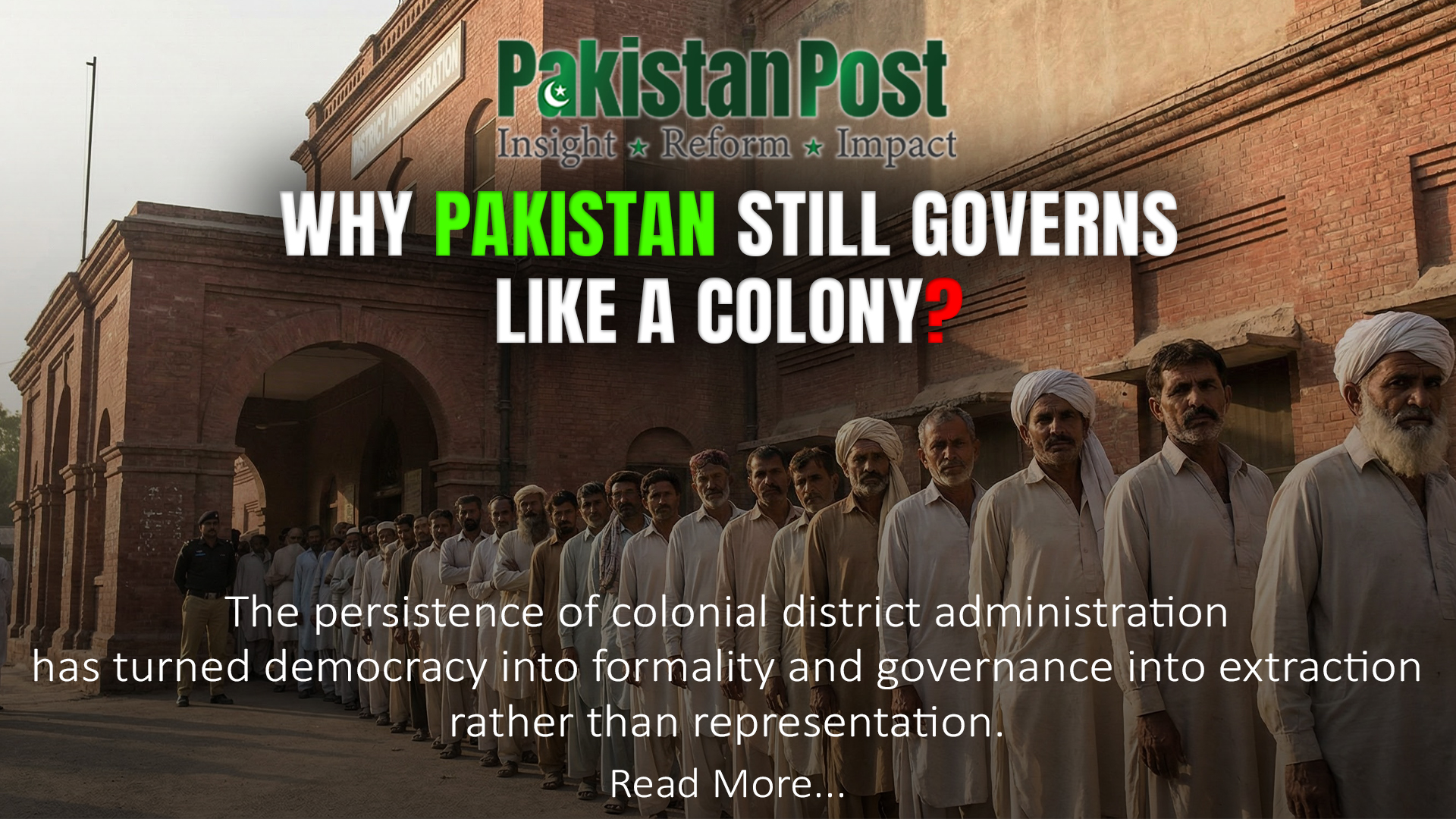
The Deputy Commissioner system sits at the heart of this transformation. Originally designed to serve imperial interests, the DC has been repurposed to serve provincial political masters. The logic, however, remains unchanged. Authority flows downward; accountability flows upward. The citizen remains peripheral, a subject rather than a stakeholder. What has changed is not the structure, but the identity of those who benefit from it.
Provincial autonomy in Pakistan has expanded significantly, particularly after successive National Finance Commission Awards and the Eighteenth Constitutional Amendment. Provinces now command a greater share of national resources and exercise expanded legislative authority. In principle, this shift should have strengthened democracy by bringing decision-making closer to the people. In practice, it has entrenched a new layer of elite domination.
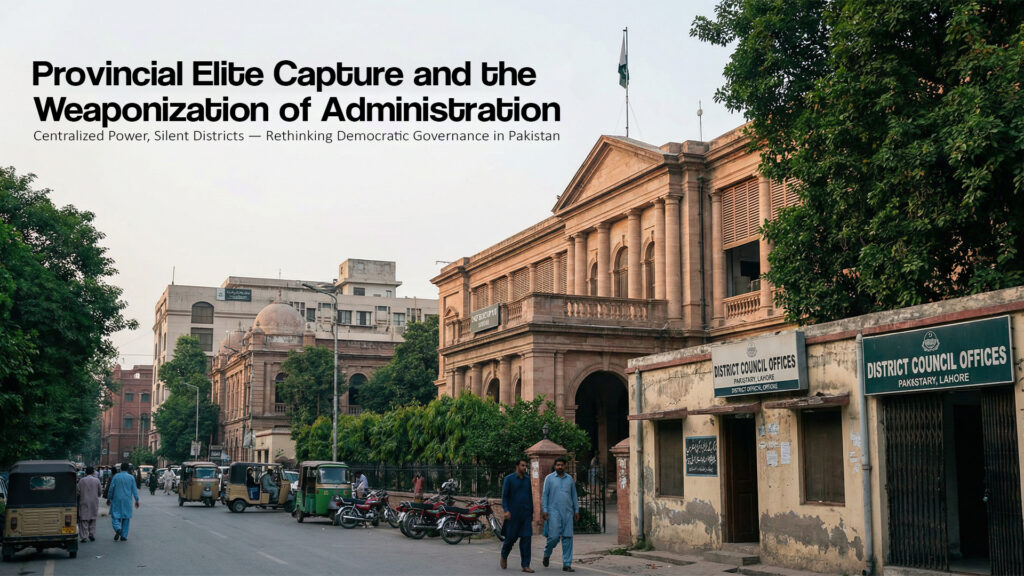
Provincial governments act as centralized power hubs. Budgetary allocations, development planning, administrative appointments, and policy implementation are tightly controlled from provincial capitals. Districts, despite being the primary sites where citizens interact with the state, remain administratively subordinate and politically voiceless. The DC system ensures that this hierarchy functions smoothly.
The Deputy Commissioner’s institutional incentives are clear. His appointment, posting, and survival depend entirely on provincial leadership and senior bureaucracy. Transfers are frequent and often punitive. Career progression is determined not by service outcomes but by perceived loyalty, compliance, and political reliability. In such an environment, independence is irrational. Obedience is rewarded; initiative is risky.
This incentive structure transforms the DC from an administrator into an enforcer. Provincial priorities—often shaped by political expediency rather than developmental logic—are implemented at the district level regardless of local context. Whether the issue is land acquisition, pricing controls, policing strategies, or development project placement, decisions flow downward without consultation. Districts execute; they do not decide.
This has profound implications for resource distribution. Provinces receive funds through the NFC Award, ostensibly to ensure equitable development across their territories. Yet the absence of mandatory, transparent district-level fiscal devolution allows provincial governments to concentrate resources where political returns are highest. Capital cities, electoral strongholds, and elite-dominated regions receive disproportionate investment, while peripheral districts remain chronically underfunded.
Over time, this has produced stark inequalities within provinces. Access to quality education, healthcare, infrastructure, and employment opportunities varies dramatically between districts. These disparities are not the result of geographic inevitability or cultural deficiency; they are policy outcomes shaped by centralized decision-making and elite capture. Districts without political leverage are structurally marginalized.
The DC system enables and normalizes this inequality. Because districts lack elected executive leadership, they cannot advocate effectively for their interests. They cannot negotiate budgets, design development strategies, or hold implementers accountable. Citizens have no platform to contest decisions or demand redress. Grievances accumulate without institutional resolution.
This vacuum is filled by informal power structures. Local strongmen, tribal leaders, sectarian actors, and criminal networks step in to mediate between citizens and the state. They provide access, protection, or services in exchange for loyalty. Governance becomes personalized and transactional. The state’s legitimacy erodes, replaced by fragmented authority.
In such an environment, extremism is not an anomaly; it is a rational response to exclusion. When formal institutions fail to deliver justice or opportunity, alternative systems gain appeal. Extremist groups exploit governance failures, presenting themselves as providers of order, identity, and purpose. This dynamic is particularly pronounced in districts that experience sustained neglect and administrative coercion.
Provincial elites often respond to these symptoms by intensifying control rather than reforming structures. Policing is militarized. Administrative powers are expanded. Dissent is framed as disloyalty. Yet these measures address symptoms, not causes. They deepen alienation and reinforce the perception that the state exists to control rather than serve.
At the political level, provincial leadership frequently redirects public frustration toward the federation. Governance failures are framed as consequences of inadequate federal transfers, discriminatory policies, or centralized oppression. While intergovernmental tensions are real, this narrative conveniently absolves provincial authorities of responsibility for internal inequities. It transforms legitimate demands for district-level empowerment into constitutional confrontations.
This dynamic is dangerous. It weakens national integration by converting administrative failure into political grievance. It legitimizes unconstitutional demands under the guise of autonomy. It fractures consensus and erodes the authority of the state. The very autonomy that was intended to strengthen federalism becomes a tool for fragmentation.
The irony is that provincial elites resist the very reforms they demand from the center. While advocating decentralization at the national level, they block it within provinces. Local governments are delayed, dissolved, or hollowed out. Fiscal powers are retained. Bureaucratic control is preserved. Democracy is selectively applied.
This selective democratization reveals the true function of the DC system in contemporary Pakistan. It is not a neutral administrative mechanism; it is a political instrument. It allows provincial elites to govern without accountability, extract resources without transparency, and suppress dissent without electoral consequence. It converts governance into management and citizens into variables.
The consequences extend beyond development failure. They shape political culture. When people are denied agency at the local level, they disengage from formal politics. Voter turnout declines. Civic trust erodes. Political participation becomes symbolic rather than substantive. Democracy survives procedurally but dies experientially.
This erosion of democratic culture has long-term implications. It produces a population that views the state as alien and leadership as self-serving. It weakens social cohesion. It fuels polarization. It undermines the very foundations of constitutional order.
Pakistan’s provincial elite capture mirrors the colonial experience in an unsettling way. Just as the British governed India through intermediaries who served imperial interests, contemporary elites govern through administrative systems that serve their own. The logic of extraction persists, even if the beneficiaries have changed.
Breaking this cycle requires confronting uncomfortable truths. Provincial autonomy without district empowerment is not democracy; it is decentralization of extraction. Administrative control without electoral accountability is not stability; it is coercion. Development without participation is not progress; it is accumulation.
The Deputy Commissioner system, as currently structured, is incompatible with democratic governance. It centralizes authority, distorts incentives, and suppresses accountability. Reforming it is not an administrative adjustment; it is a political transformation. It requires redistributing power downward, accepting uncertainty, and trusting citizens.
Provincial elites will resist such reform because it threatens entrenched interests. But the cost of inaction is higher. Continued elite capture will deepen inequality, fuel unrest, and weaken the federation. The state cannot indefinitely govern against its own people.
True provincial empowerment must begin at the district level. Elected local executives with real authority, transparent fiscal transfers, and accountable administration are not luxuries; they are necessities. Without them, Pakistan will continue to reproduce the colonial logic of control under a democratic façade.
This is not merely a governance choice. It is a question of survival. A state that serves only its elites cannot endure. A federation that excludes its districts cannot remain united. Pakistan’s future depends on whether it chooses representation over extraction, participation over control, and democracy in substance rather than in name.
A public service message