Pakistan and the Emergence of System Shaping Statecraft in Contemporary Geopolitics


The evolving contours of international diplomacy are increasingly challenging the traditional understanding of power as direct control exercised through military dominance, coercive bargaining, or formal treaty-based alliances. A growing body of state behavior suggests a transition toward a more complex model of influence in which outcomes are shaped less through visible acts of pressure and more through the construction of enabling environments, alignment of incentives, and embedding of institutional frameworks that structure the behavior of multiple actors over time. Within this emerging paradigm, Pakistan’s reported facilitative role in Iran related regional understandings provides a useful case for examining whether global statecraft is shifting from visible power politics toward a more subtle architecture of systems engineering.
In classical international relations theory, power is often conceptualized as the ability of one state to compel another to act in ways it would not otherwise choose. This conception, rooted in realist traditions, privileges military capability, economic sanctions, and diplomatic coercion as primary instruments of influence. However, contemporary geopolitical realities increasingly demonstrate that influence is often exercised indirectly through the shaping of conditions within which decisions are made rather than through direct imposition of those decisions. This includes the creation of economic dependencies, the design of infrastructure networks, the structuring of trade routes, and the development of institutional frameworks that guide long term state behavior.
The Pakistan Iran diplomatic interface, particularly where Pakistan is perceived to have played a facilitative or mediating role in reducing tensions or enabling dialogue, reflects this broader shift in international practice. Rather than acting as a dominant power imposing outcomes, Pakistan’s influence in such contexts is better understood as a function of its ability to connect systems, reduce friction between actors, and provide channels through which communication and coordination can occur. This form of influence is not based on unilateral control but on relational positioning within a broader network of interdependent states.
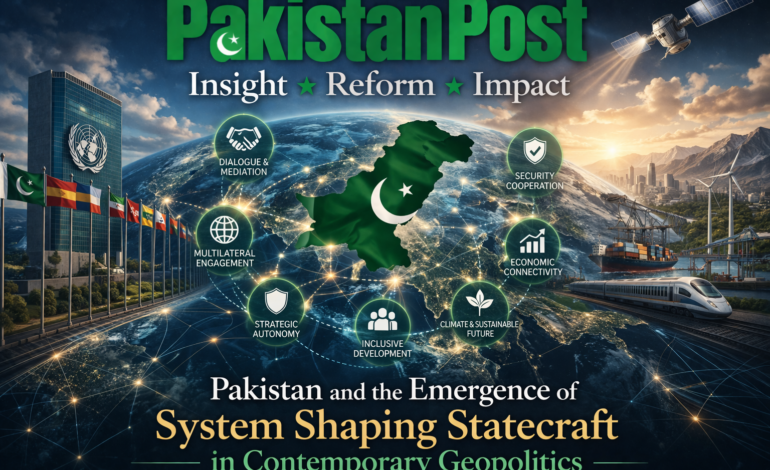
The concept of alignment driven influence is central to this emerging model. Alignment refers to the process by which states adjust their policies, expectations, and strategic behaviors in response to perceived systemic incentives rather than direct coercion. In the context of Pakistan’s regional diplomacy, alignment operates through multiple layers including economic interdependence, security coordination, energy connectivity, and geopolitical proximity. By facilitating dialogue between Iran and other regional actors, Pakistan contributes to the creation of an alignment structure in which mutual interests become more visible and transaction costs of cooperation are reduced.
Environment shaping represents another critical dimension of this evolving form of statecraft. Unlike traditional diplomacy, which focuses on negotiating specific outcomes between states, environment shaping involves altering the broader conditions under which such negotiations take place. This can include reducing tensions through confidence building measures, facilitating trade flows that increase interdependence, or supporting regional connectivity projects that create shared economic stakes. In this sense, Pakistan’s role can be interpreted as contributing to the stabilization of a regional environment in which diplomatic engagement becomes more feasible and less costly.
Institutional embedding further deepens this transformation by ensuring that temporary diplomatic understandings are translated into more durable frameworks of cooperation. Institutions provide continuity, predictability, and structure to interstate relations, reducing reliance on ad hoc negotiations and crisis driven diplomacy. In regions characterized by historical mistrust and periodic conflict, institutional mechanisms can play a stabilizing role by embedding cooperation within formal or semi formal arrangements that persist beyond individual political cycles. Pakistan’s engagement in regional multilateral platforms and connectivity initiatives contributes to this process of embedding by linking diplomatic outcomes to broader institutional architectures.
The interplay of these three mechanisms alignment, environment shaping, and institutional embedding suggests a departure from traditional conceptions of power politics. Instead of direct control, influence is increasingly exercised through systemic positioning. States that are able to connect different actors, facilitate flows of information and resources, and embed cooperation within durable frameworks gain a form of structural influence that is less visible but potentially more enduring than conventional power projection.
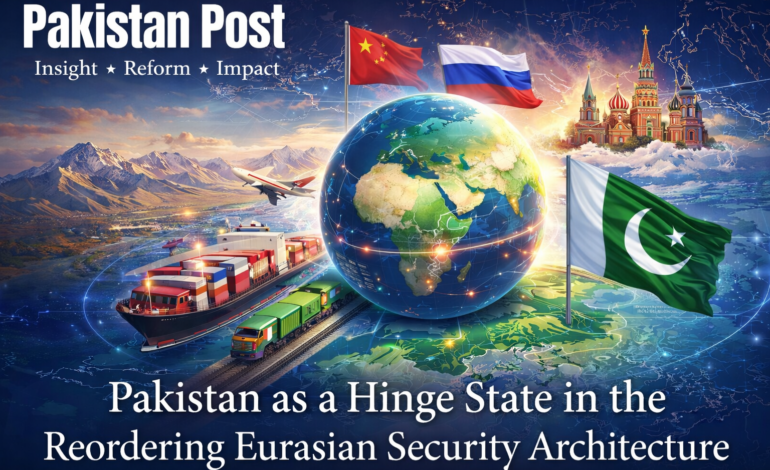
In the case of Pakistan, this role is partly a function of geography and partly a function of strategic positioning. Situated at the intersection of South Asia, the Middle East, and Central Asia, Pakistan occupies a spatial position that naturally connects multiple regional systems. This geographic reality is amplified by its participation in infrastructure development initiatives and regional connectivity projects that further enhance its role as a transit and linkage state. As a result, Pakistan is increasingly positioned not as a terminal power but as an intermediary node within a broader regional system.
The Iran related diplomatic environment provides a useful illustration of how such node based influence operates. In situations where direct engagement between primary actors is constrained by political tensions or historical mistrust, intermediary states can play a crucial role in facilitating communication, reducing misperceptions, and creating pathways for incremental cooperation. This does not necessarily involve direct control over outcomes but rather the ability to structure interactions in ways that make certain outcomes more likely than others.
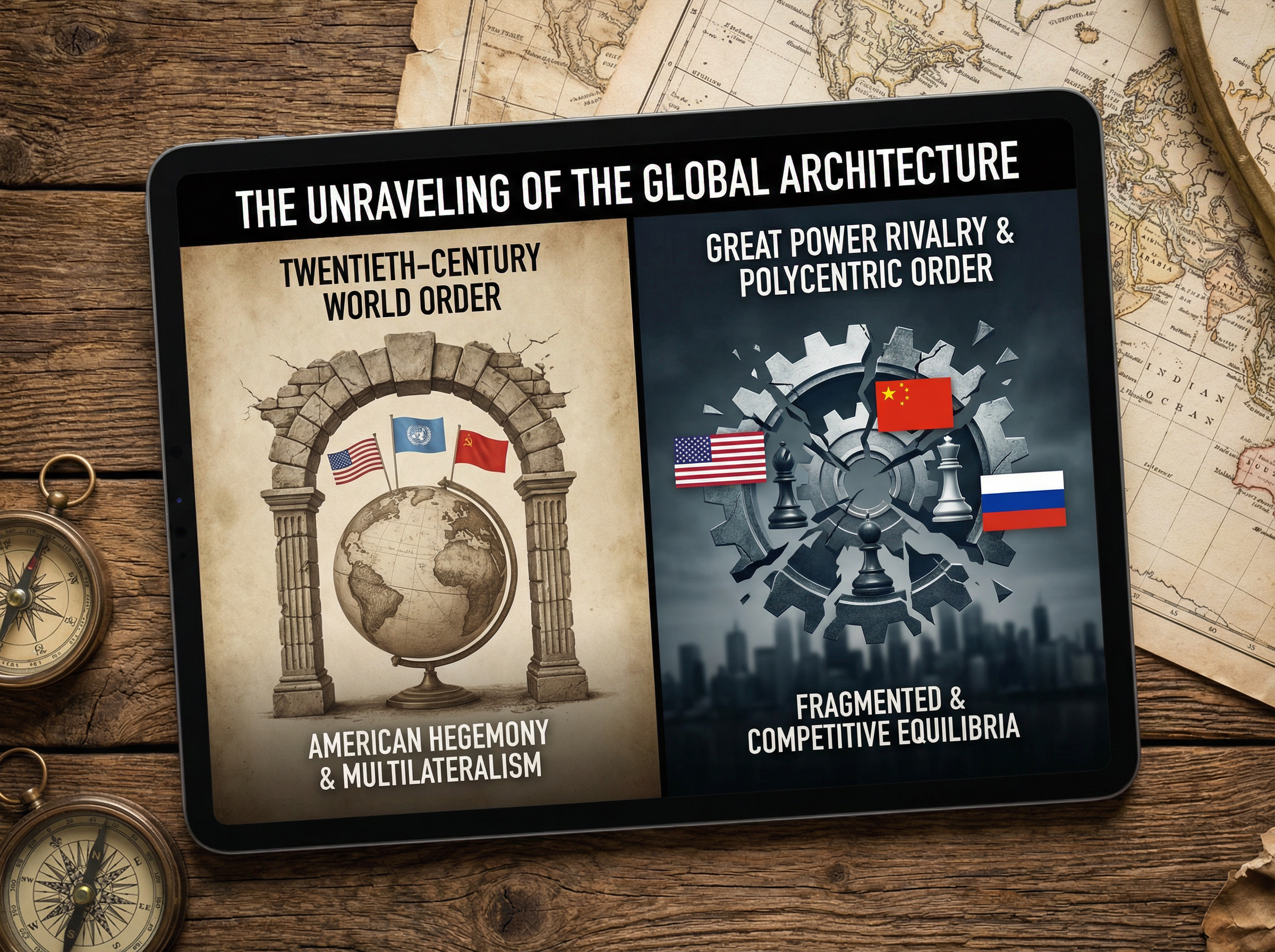
From a macro systemic perspective, this shift reflects broader changes in the architecture of global geopolitics. The increasing complexity of international interdependence, combined with the proliferation of regional conflicts and the fragmentation of traditional alliance systems, has created conditions in which unilateral control is often insufficient to produce stable outcomes. Instead, states must operate within dense networks of economic, security, and informational interconnections that limit the effectiveness of coercive strategies and increase the importance of coordination based influence.
Within this context, Pakistan’s facilitative role in Iran related diplomacy can be seen as part of a wider trend in which medium sized states leverage network positioning to enhance their strategic relevance. Rather than relying solely on traditional measures of power such as military strength or economic size, these states derive influence from their ability to connect different parts of the international system. This form of influence is inherently relational and depends on maintaining credible engagement with multiple actors simultaneously.
However, the transition toward systems based statecraft also introduces significant complexities and risks. One of the primary challenges is the diffusion of accountability in decision making processes. When outcomes are shaped through multiple layers of interaction rather than direct negotiation, it becomes more difficult to attribute responsibility for success or failure. This can complicate both domestic political narratives and international assessments of policy effectiveness.
Another challenge relates to stability and predictability. While systems based influence can enhance flexibility and reduce the likelihood of direct confrontation, it can also create ambiguity regarding intent and commitment. In environments where multiple actors are simultaneously shaping outcomes through indirect mechanisms, the potential for misinterpretation and miscalculation may increase. This requires more sophisticated communication channels and confidence building measures to ensure that systemic interactions remain stable.
The financial dimension of this evolving statecraft model is also significant. Economic interdependence plays a central role in shaping alignment structures and reinforcing environmental conditions conducive to cooperation. Trade flows, investment linkages, and infrastructure financing all contribute to the creation of shared interests that reduce the incentives for conflict. Pakistan’s participation in regional economic connectivity initiatives enhances its capacity to contribute to these dynamics, although it also introduces dependencies that must be carefully managed.
In addition, the role of information systems and narrative construction has become increasingly important in shaping perceptions of legitimacy and intent. In a systems based environment, influence is exercised not only through physical or economic channels but also through the management of information flows and the framing of diplomatic initiatives. This includes shaping domestic and international understanding of negotiations, building support for cooperative frameworks, and reducing resistance to policy changes. Pakistan’s diplomatic engagement in regional contexts often involves contributing to such narrative frameworks, which in turn reinforce broader alignment processes.
The question of whether this transition represents a fundamental shift from visible power politics to invisible systems engineering is complex. On one hand, traditional forms of power remain highly relevant, particularly in crisis situations where military capability and coercive leverage continue to play decisive roles. On the other hand, the increasing importance of systemic interdependence suggests that long term influence is increasingly determined by the ability to shape underlying structures rather than to impose discrete outcomes.
It is therefore more accurate to describe the current international environment as a hybrid system in which both visible and invisible forms of power coexist and interact. Visible power politics remains important for setting boundaries and managing acute crises, while systems based influence shapes the broader context within which such crises emerge and are resolved. Pakistan’s role in Iran related diplomacy reflects this duality, combining traditional diplomatic engagement with broader systemic facilitation functions.
In conclusion, the Pakistan mediated Iran related diplomatic processes can be interpreted as indicative of a broader transformation in global statecraft. This transformation is characterized by a shift toward influence exercised through alignment, environment shaping, and institutional embedding rather than direct control alone. While this does not eliminate the relevance of traditional power politics, it introduces a parallel logic of systems engineering that increasingly defines the structure of international relations in the twenty first century. Pakistan’s emerging role within this framework highlights the growing importance of intermediary states that operate not through dominance but through connectivity, facilitation, and structural positioning within an increasingly complex global system.
A Public Service Message