
China’s Strategic Autonomy Proposition: Enabling Europe’s Multipolar Equilibrium Amid U.S.-China Rivalry


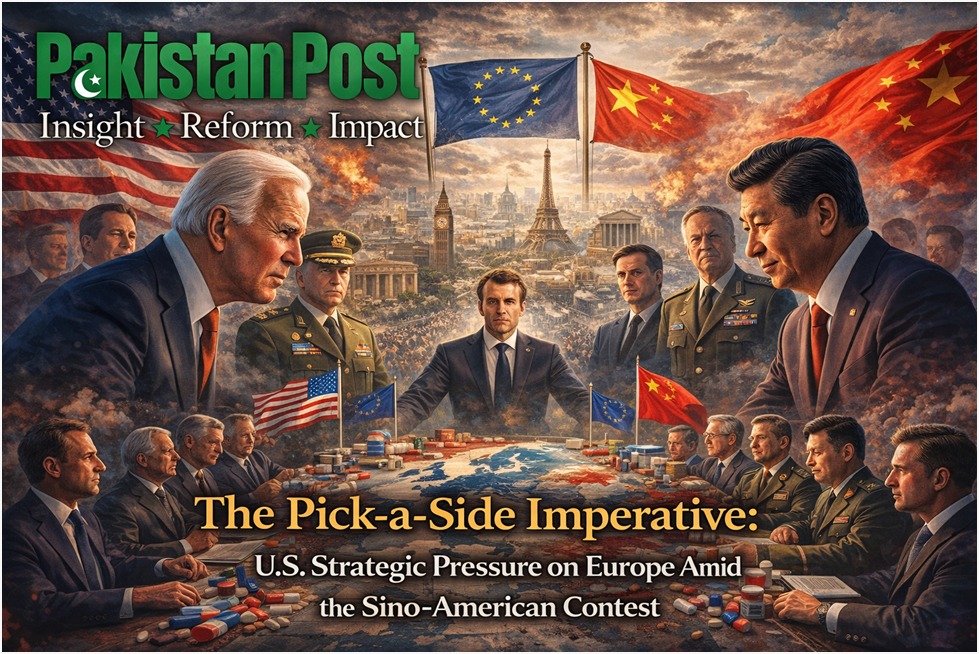
The contemporary international landscape is witnessing a profound realignment of global power structures. The post-Cold War order, defined by U.S.-led liberal internationalism and the premise of shared norms among allied states, is increasingly challenged by the structural ascent of China and the emergence of a multipolar architecture. Within this evolving framework, the proposition advanced by Beijing advocating European strategic autonomy has become a central vector of geopolitical discourse. The concept, long a theoretical aspiration in French foreign policy circles and a subject of debate among European policymakers, has been publicly validated by Chinese diplomatic engagement. This endorsement is neither superficial nor incidental; it represents a calculated exercise in civilizational diplomacy, designed to shape Europe’s strategic calculations while exploiting latent divergences within the transatlantic alliance. The proposition raises fundamental questions about the nature of multipolar equilibrium, the limits of U.S. influence in European decision-making, and the capacity of Europe to navigate the structural pressures imposed by systemic great power competition.
At its core, China’s strategic autonomy proposition signals an acknowledgment of Europe as a distinct geopolitical actor, capable of exercising sovereign choice in both economic and security domains. In public statements, Chinese diplomats have emphasized the primacy of European agency, framing autonomy not as isolationism or indifference to allied obligations, but as a legitimate expression of political maturity and strategic foresight. This framing resonates particularly with European states that have historically sought to assert independent positions on issues ranging from defense procurement to trade policy. France, which has long championed the doctrine of strategic autonomy as a central pillar of its foreign policy, views Beijing’s endorsement as a validation of its vision for a Europe that can navigate systemic pressures without becoming a vassal to any single power. Germany, whose industrial and technological sectors are deeply intertwined with Chinese markets, interprets the proposition through the lens of pragmatic economic engagement, seeking to safeguard its economic exposure while maintaining critical security alliances. The proposition therefore operates at the intersection of ideological validation, economic pragmatism, and structural opportunity.
China’s approach to this proposition is deliberate and calibrated. By positioning itself as a partner for European autonomy, Beijing offers an alternative narrative to the binary choice increasingly imposed by the United States. The framing is carefully constructed to appeal to the European aspiration for strategic flexibility, particularly in areas where alignment with Washington may impose economic or technological constraints. Beijing emphasizes the continuity of free trade, integration into global supply chains, and access to Chinese markets as tangible benefits of an autonomous European posture. At the same time, the diplomatic messaging includes implicit caution against overreliance on U.S.-driven security architectures, highlighting the risks associated with becoming entangled in strategic contests in regions that may not align with European interests. This dual approach—promising opportunity while signaling risk—creates a complex strategic calculus for European policymakers, who must weigh the benefits of engagement with China against the obligations and expectations of the transatlantic alliance.
The structural logic underlying China’s strategic autonomy proposition reflects an acute understanding of Europe’s economic and technological dependencies. German industry, particularly in the automotive, energy, and manufacturing sectors, maintains significant exposure to Chinese markets and supply chains. French high-tech and aerospace sectors are similarly integrated into Chinese industrial networks. By acknowledging Europe’s economic stakes and offering continued engagement without coercive conditions, China positions itself as a facilitator of European industrial continuity. This contrasts sharply with U.S. policies, which increasingly link access to markets and technology to alignment with security objectives. In this context, the proposition can be interpreted as a form of structural leverage: China enhances its influence not through overt coercion, but by offering a credible and attractive alternative to European actors seeking flexibility in a contested strategic environment.
The civilizational dimension of China’s diplomacy further reinforces the proposition’s appeal. Chinese narratives frequently frame strategic autonomy in historical and philosophical terms, evoking principles of sovereignty, respect for national agency, and the non-imposition of external norms. This approach resonates with European states that are sensitive to perceptions of external pressure or interference, reinforcing the legitimacy of pursuing autonomous policies. Moreover, the narrative is intentionally juxtaposed against U.S. approaches that emphasize alignment and conditionality, casting Washington as a partner whose transactional logic may constrain European decision-making. By combining economic incentives, political recognition, and normative framing, China crafts a multidimensional proposition that seeks to shape the cognitive and institutional environment in which European policy choices are made.
The strategic implications of this proposition extend across multiple domains. In the technological sphere, Europe’s pursuit of autonomy could accelerate investment in domestic innovation, semiconductor production, and 5G infrastructure. The capacity to engage with both the United States and China without being strictly bound to either creates an environment conducive to technological diversification, industrial resilience, and standards-setting. Economically, the proposition encourages continued engagement with global value chains, mitigating the risks associated with unilateral decoupling or protectionist policies. Politically, it reinforces the legitimacy of independent decision-making within the European Union and among its member states, potentially enhancing intra-European cohesion around shared strategic objectives.
However, the proposition is not without risk. European pursuit of strategic autonomy in alignment with Beijing’s vision could exacerbate tensions within the transatlantic alliance. U.S. policymakers, interpreting autonomy as hedging or even tacit alignment with China, may respond with coercive measures, including trade restrictions, sanctions, or the imposition of technological standards. Such responses could create friction not only between Europe and the United States but also within the European Union itself, as member states differ in their assessments of the costs and benefits of autonomy. The proposition therefore necessitates a nuanced balancing act, requiring European actors to calibrate their policies in ways that preserve both strategic flexibility and alliance credibility.
Moreover, the proposition carries broader implications for the architecture of global governance. By endorsing strategic autonomy, China implicitly challenges the U.S.-led conception of a rules-based international order in which normative alignment is often a prerequisite for participation in global institutions. European pursuit of autonomy, supported by Beijing, could result in the emergence of alternative regulatory and institutional arrangements, particularly in areas such as technology governance, trade standards, and financial networks. This development may contribute to the fragmentation of global governance, creating parallel systems that reflect multipolar competition rather than hierarchical normativity. The strategic autonomy proposition thus operates not only as a bilateral or regional policy instrument but as a potential catalyst for systemic realignment in the broader international order.
The historical precedent for strategic autonomy in Europe provides additional context for understanding the proposition’s resonance. Since the post-World War II period, European powers have periodically sought to assert independence in foreign policy, whether through France’s independent nuclear deterrent, the EU’s Common Foreign and Security Policy, or debates over transatlantic military deployments. These historical initiatives have often been constrained by reliance on U.S. security guarantees and structural asymmetries in economic power. China’s proposition, by contrast, offers a framework in which autonomy is endorsed externally, not merely asserted internally. This endorsement creates both opportunity and complexity, as European actors must integrate external validation into existing institutional and strategic frameworks while managing alliance expectations.
Strategically, the proposition intersects with European efforts to “de-risk” economic and technological dependencies. EU policies aimed at reducing reliance on single suppliers, diversifying supply chains, and strengthening domestic industrial capacity are aligned with the objectives of strategic autonomy. Beijing’s endorsement enhances the credibility of these efforts by presenting them as consistent with a coherent international strategy rather than isolationist maneuvers. However, the proposition also places Europe in a delicate position with respect to Washington, which increasingly views technological independence as potential misalignment. The interplay between Chinese encouragement, European ambition, and U.S. expectations creates a dynamic environment in which strategic foresight, scenario planning, and institutional adaptability become essential for policy coherence.
China’s civilizational diplomacy also conveys subtle warnings regarding engagement in security architectures that may impose obligations beyond Europe’s immediate interests. References to historical tensions and the risks associated with militarized alliances serve to caution European actors against uncritical alignment in U.S.-dominated strategic frameworks, particularly in Asia-Pacific theaters. These messages, while diplomatically nuanced, are strategically potent, underscoring the extent to which Beijing seeks to influence European calculations not merely through economic incentives but through cognitive framing and risk perception management. In this sense, the strategic autonomy proposition operates simultaneously as a lure, a shield, and a constraint, shaping both opportunities and perceived hazards.
The proposition’s broader significance lies in its potential to recalibrate systemic power balances. If European actors embrace aspects of strategic autonomy, the transatlantic alliance may be compelled to reconsider the conditions of alignment, the scope of obligations, and the mechanisms of influence it exercises over European policymaking. This recalibration could foster a more multipolar equilibrium in which Europe functions as a decisive mediator between U.S. and Chinese spheres of influence. Conversely, misalignment or miscommunication could exacerbate tensions, erode alliance cohesion, and precipitate competitive escalation in economic, technological, and security domains. The proposition thus functions as both a strategic opportunity and a systemic stress test, revealing the contours of emerging multipolarity in real time.
In conclusion, China’s strategic autonomy proposition represents a sophisticated and multi-dimensional approach to influencing European policy within the context of U.S.-China systemic competition. By endorsing the concept of European strategic independence, Beijing validates long-standing aspirations while embedding itself as a key reference point in Europe’s strategic calculus. The proposition offers tangible economic and technological incentives, normative and civilizational framing, and strategic signaling designed to shape Europe’s behavior without resorting to coercion. For European policymakers, the proposition presents both opportunity and complexity: the capacity to assert autonomy, strengthen resilience, and diversify strategic options, coupled with the challenge of managing alliance expectations and structural pressures from Washington. The unfolding dynamics will have enduring implications for transatlantic relations, Sino-European engagement, and the broader architecture of global governance, defining the parameters of multipolar equilibrium and the strategic agency of Europe in the decades ahead.
A Public Service Message