
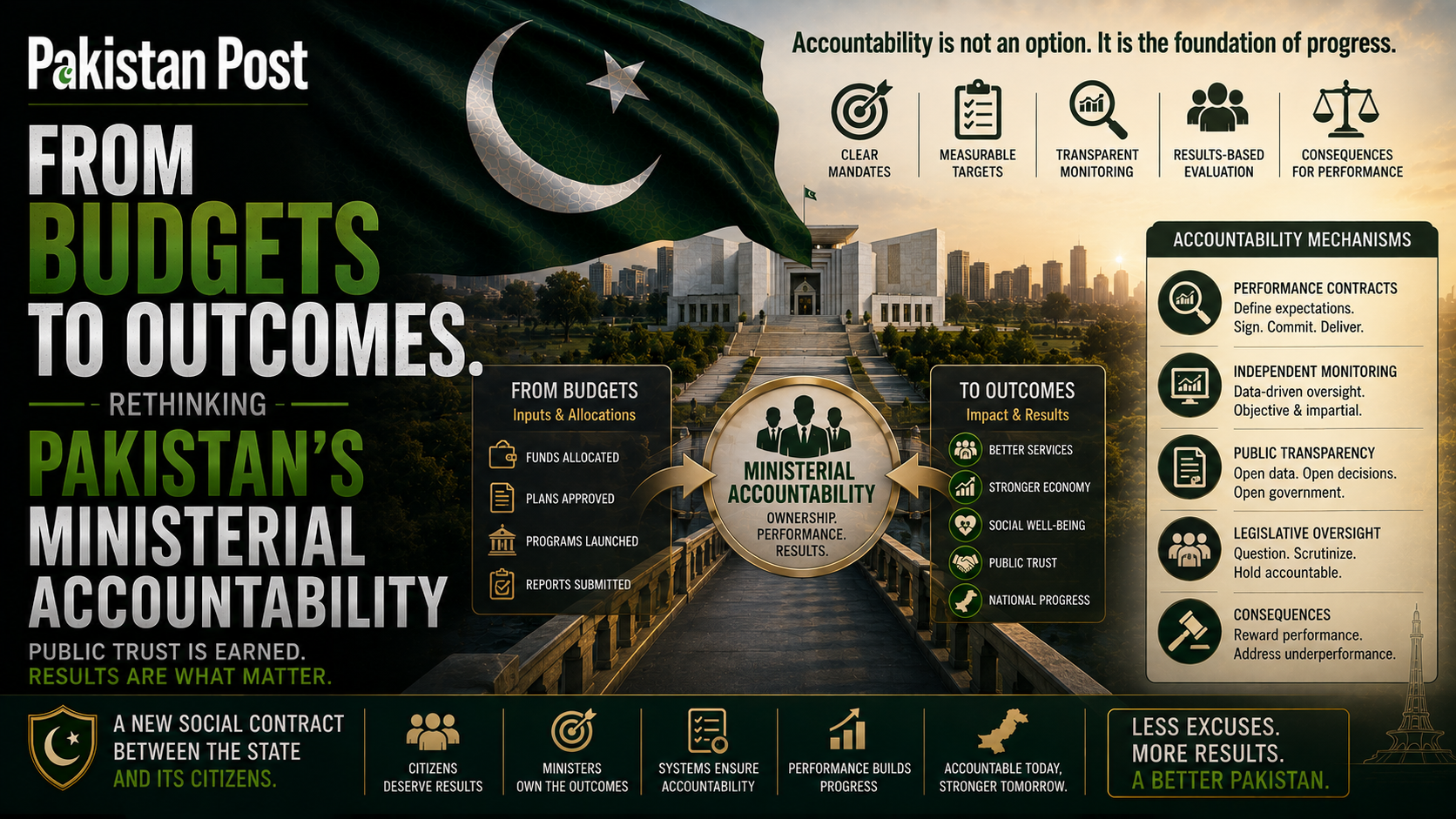
From Budgets To Outcomes. Rethinking Pakistan’s Ministerial Accountability

For decades, Pakistan’s governance architecture has measured administrative success through a familiar sequence. Ministries secure larger annual allocations, departments demonstrate budget utilisation, development schemes are inaugurated, procurement targets are completed and compliance reports are submitted through lengthy administrative channels. Yet citizens experience governance
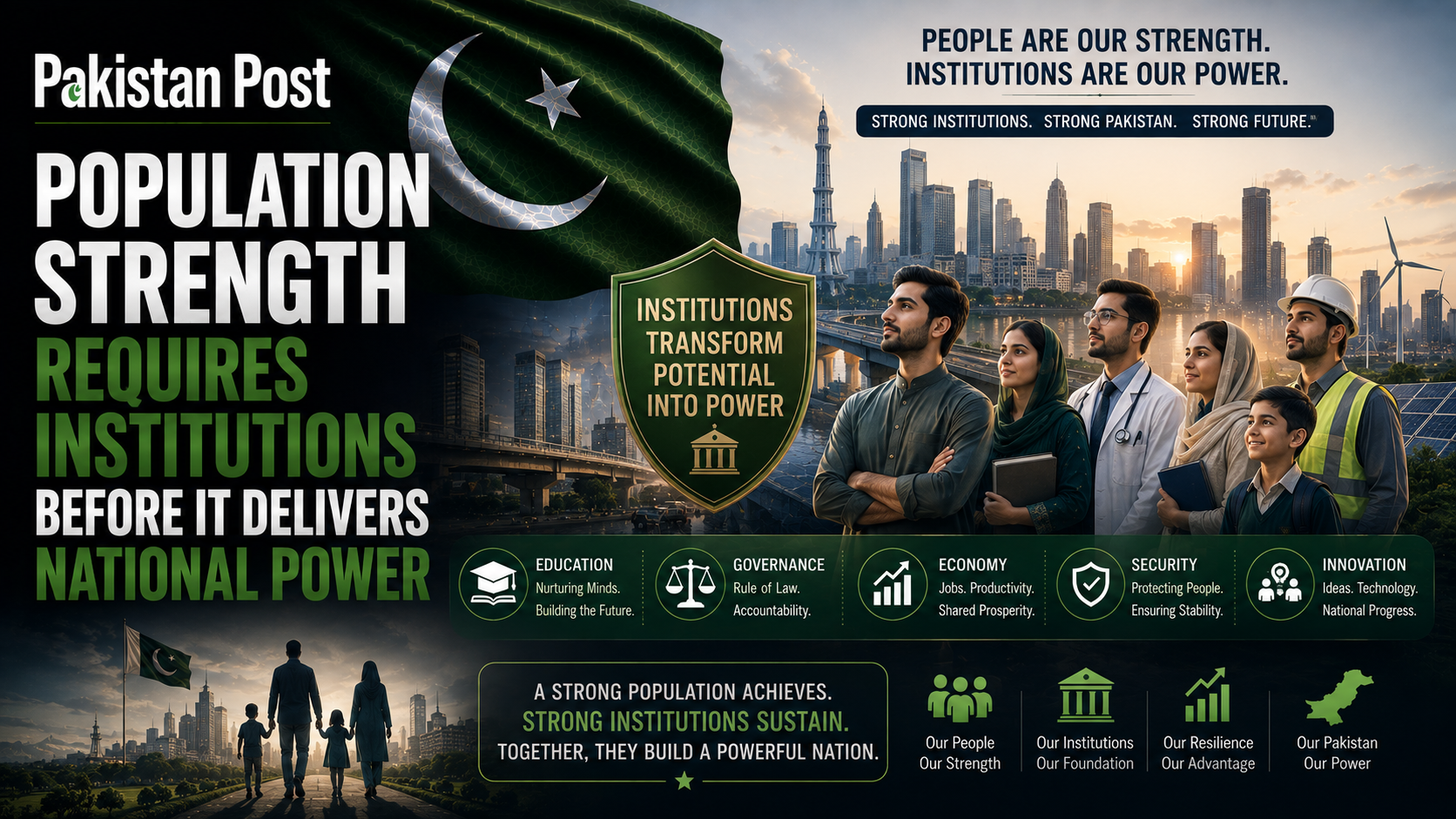
Population Strength Requires Institutions Before It Delivers National Power
For much of modern history, governments viewed population growth primarily through the lenses of census management, electoral arithmetic and social welfare. That perception has altered dramatically. Demographic structure now occupies the centre of strategic planning because population composition increasingly determines whether states possess
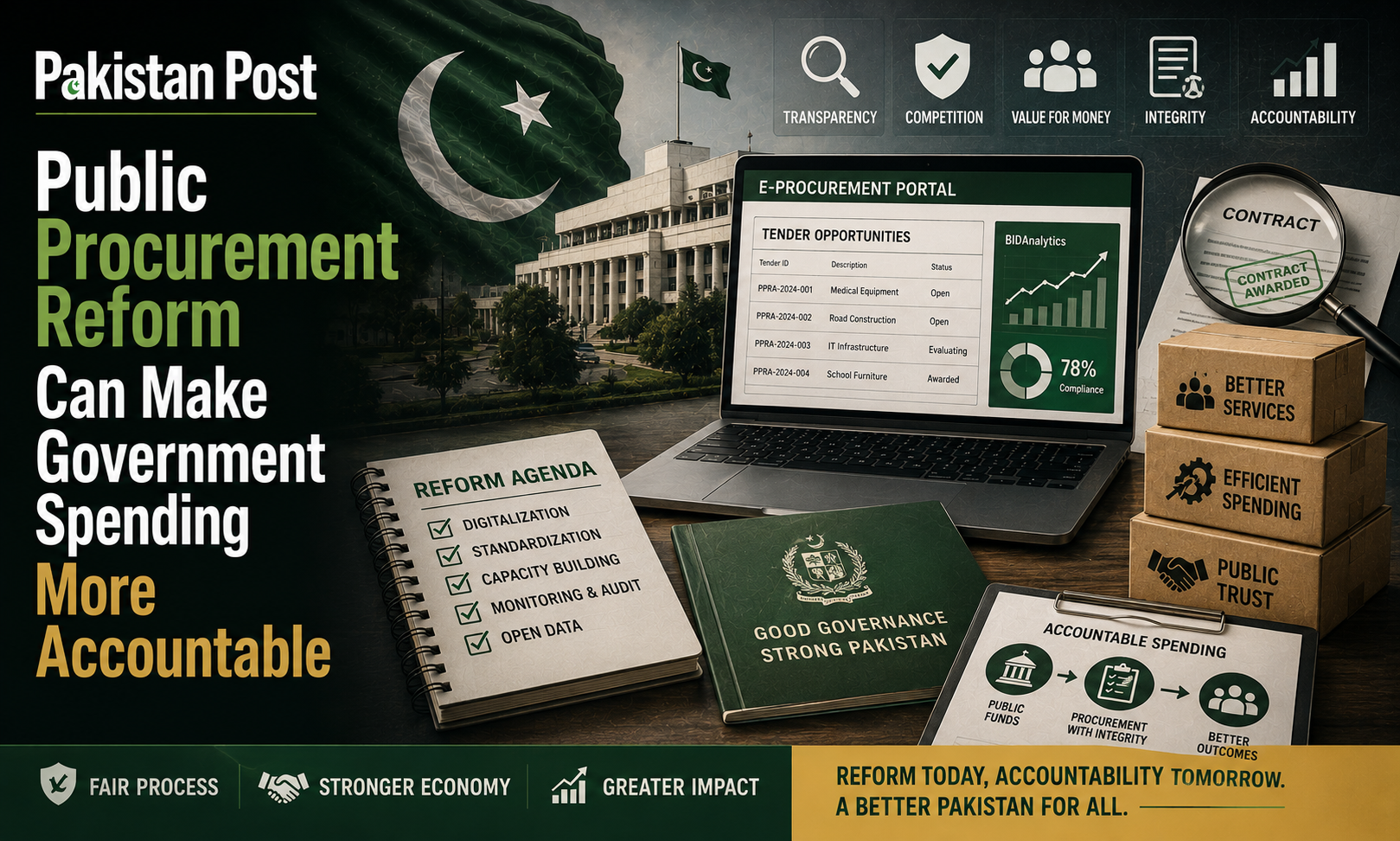
Public Procurement Reform Can Make Government Spending More Accountable
Pakistan’s public procurement system is often treated as an administrative back office, where tenders are advertised, bids are opened, contracts are awarded and files eventually move towards payment. That framing is increasingly inadequate. Procurement is one of the principal mechanisms through which the
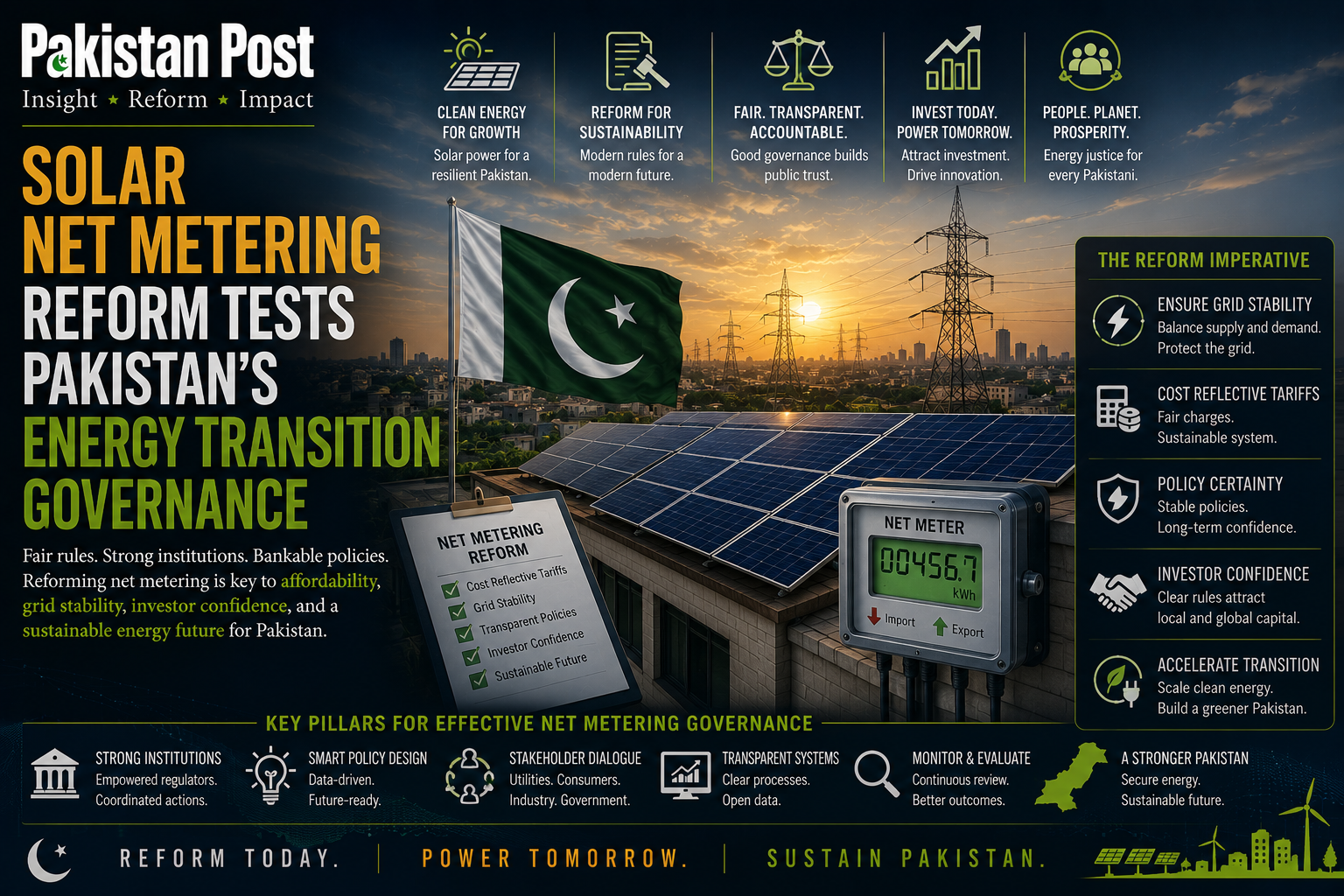
Solar Net Metering Reform Tests Pakistan’s Energy Transition Governance
Pakistan’s decision to reform its solar net metering framework has emerged as one of the country’s most consequential energy governance debates, illustrating how the transition toward cleaner electricity systems is no longer merely an environmental question but an institutional test of fiscal discipline,
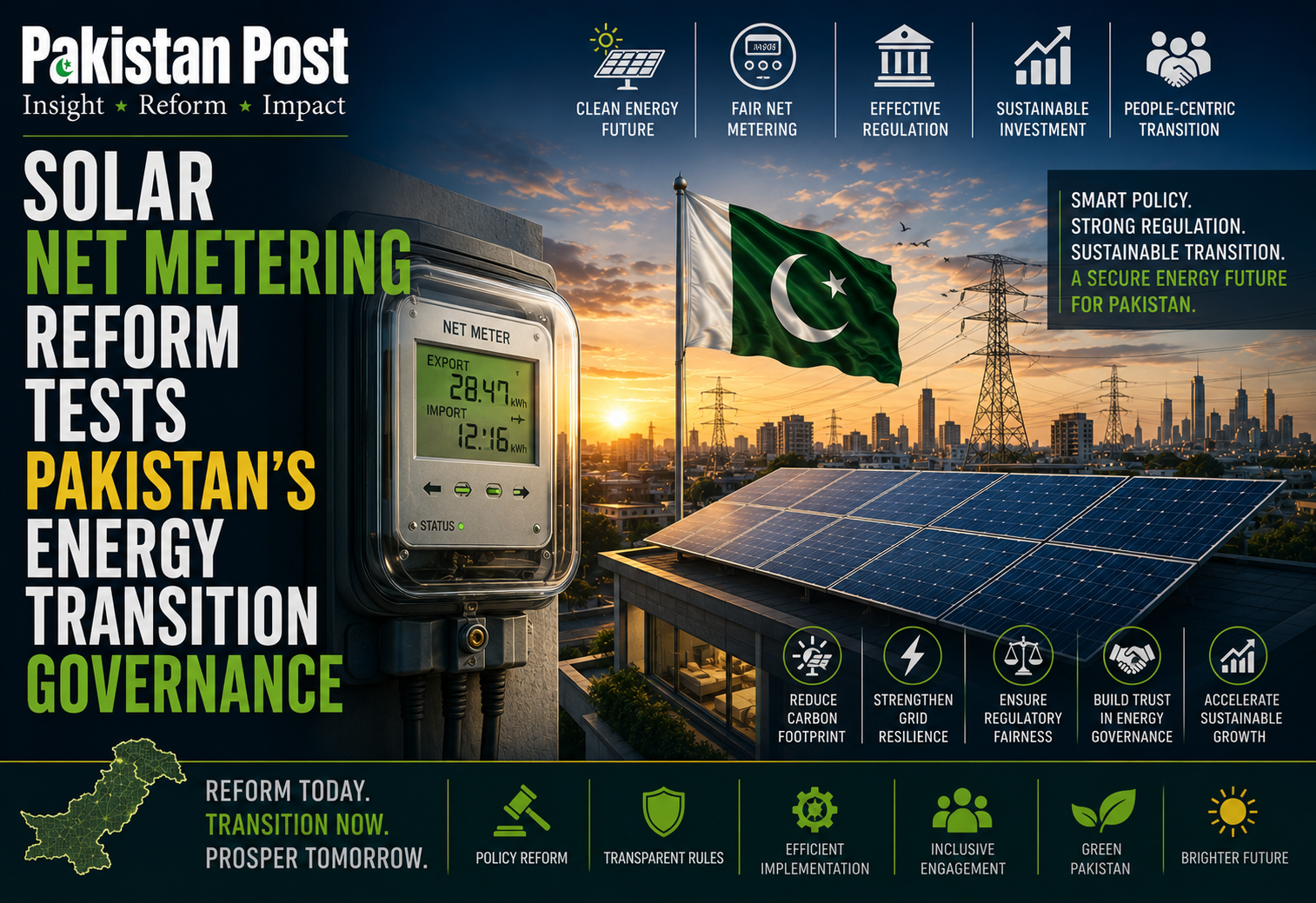
Solar Net Metering Reform Tests Pakistan’s Energy Transition Governance
Pakistan’s decision to reform its solar net metering framework has emerged as one of the country’s most consequential energy governance debates, illustrating how the transition toward cleaner electricity systems is no longer merely an environmental question but an institutional test of fiscal discipline,
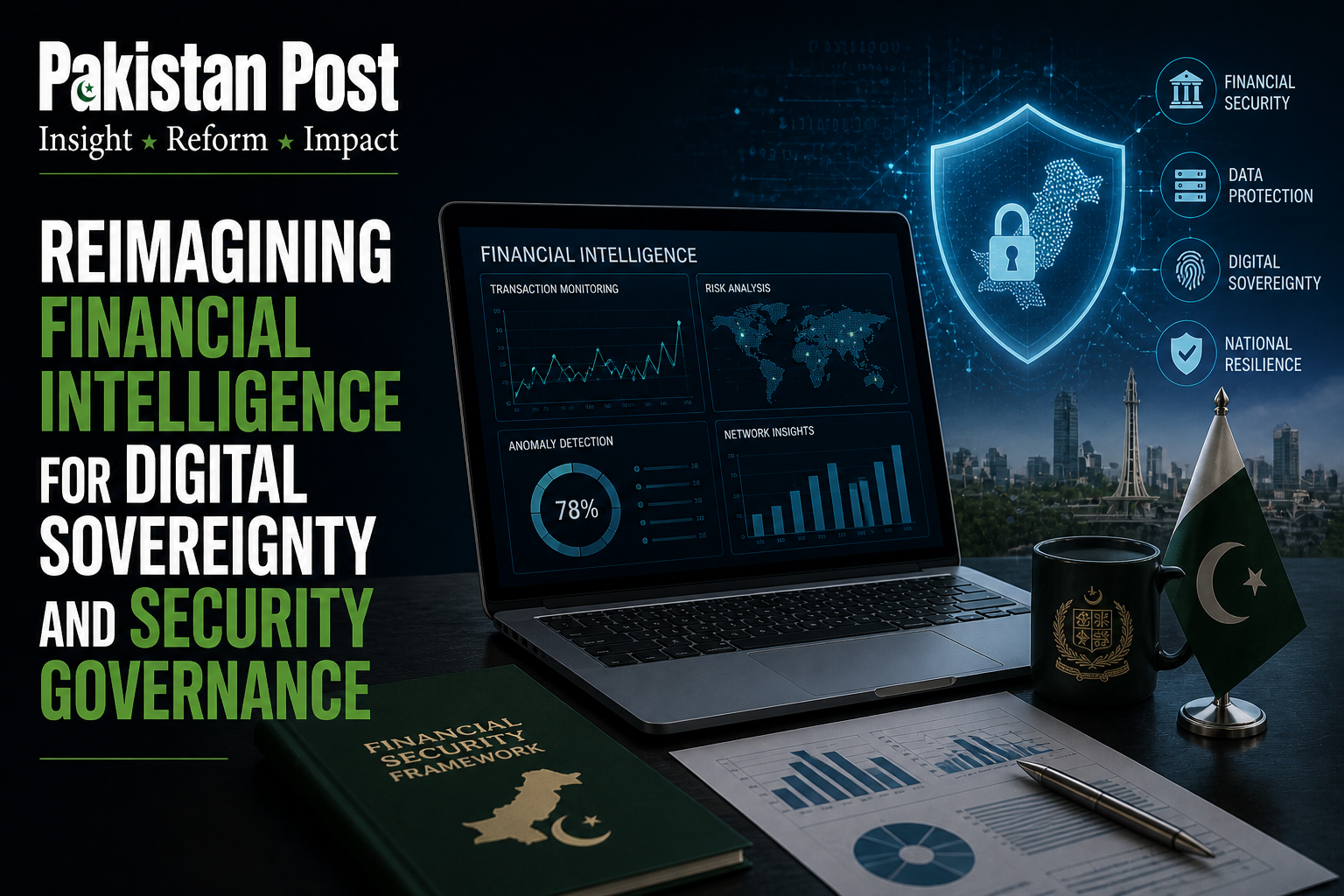
Reimagining financial intelligence for digital sovereignty and security governance
Pakistan’s financial enforcement architecture stands at a critical inflection point where the nature of crime has outpaced the capacity of the state to detect, interpret, and respond to it, and nowhere is this more evident than in the evolving mandate of the Federal
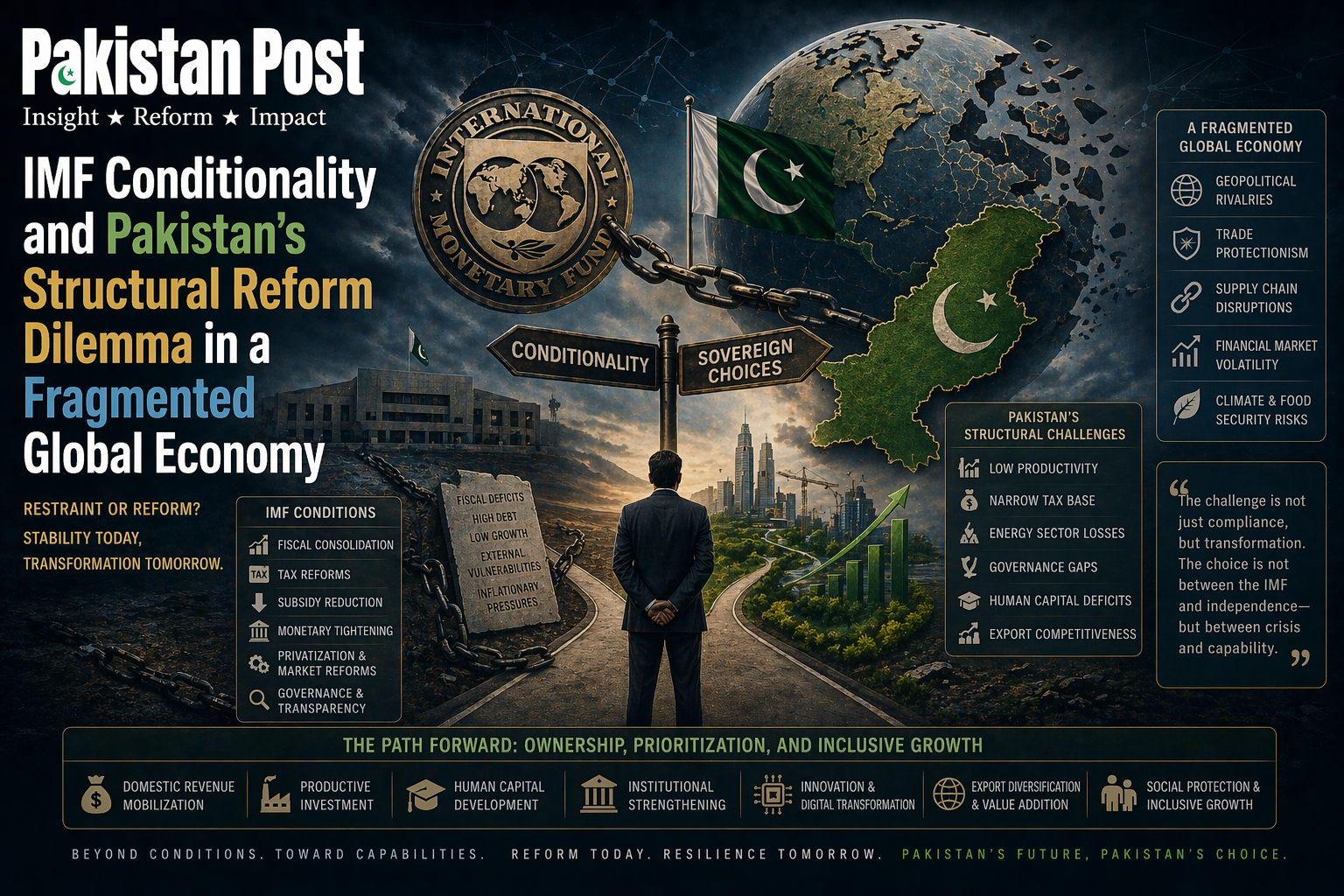
IMF Conditionality and Pakistan’s Structural Reform Dilemma in a Fragmented Global Economy
Pakistan’s economic story in recent years has increasingly been written in the language of stabilization, adjustment, and external dependency. At the center of this narrative sits the International Monetary Fund, returning repeatedly as lender of last resort, policy architect, and macroeconomic disciplinarian. Yet

Geo-Economics over Geopolitics: Pakistan’s Strategic Play in a Fragmenting Post–War Global Order
The conclusion of a major war does not restore order; it redistributes power within it. The confrontation involving the United States, Israel, and Iran has accelerated a transformation that was already underway in the global system but had not yet fully revealed itself.

Reforming Pakistan’s Oil and Gas Governance for Market Transparency and Resilience
Pakistan’s oil and gas sector has long been at the center of national economic debates with its performance influencing consumer prices fiscal stability industrial competitiveness and overall macroeconomic health. Today the imperative to reform this sector is more urgent than ever because global
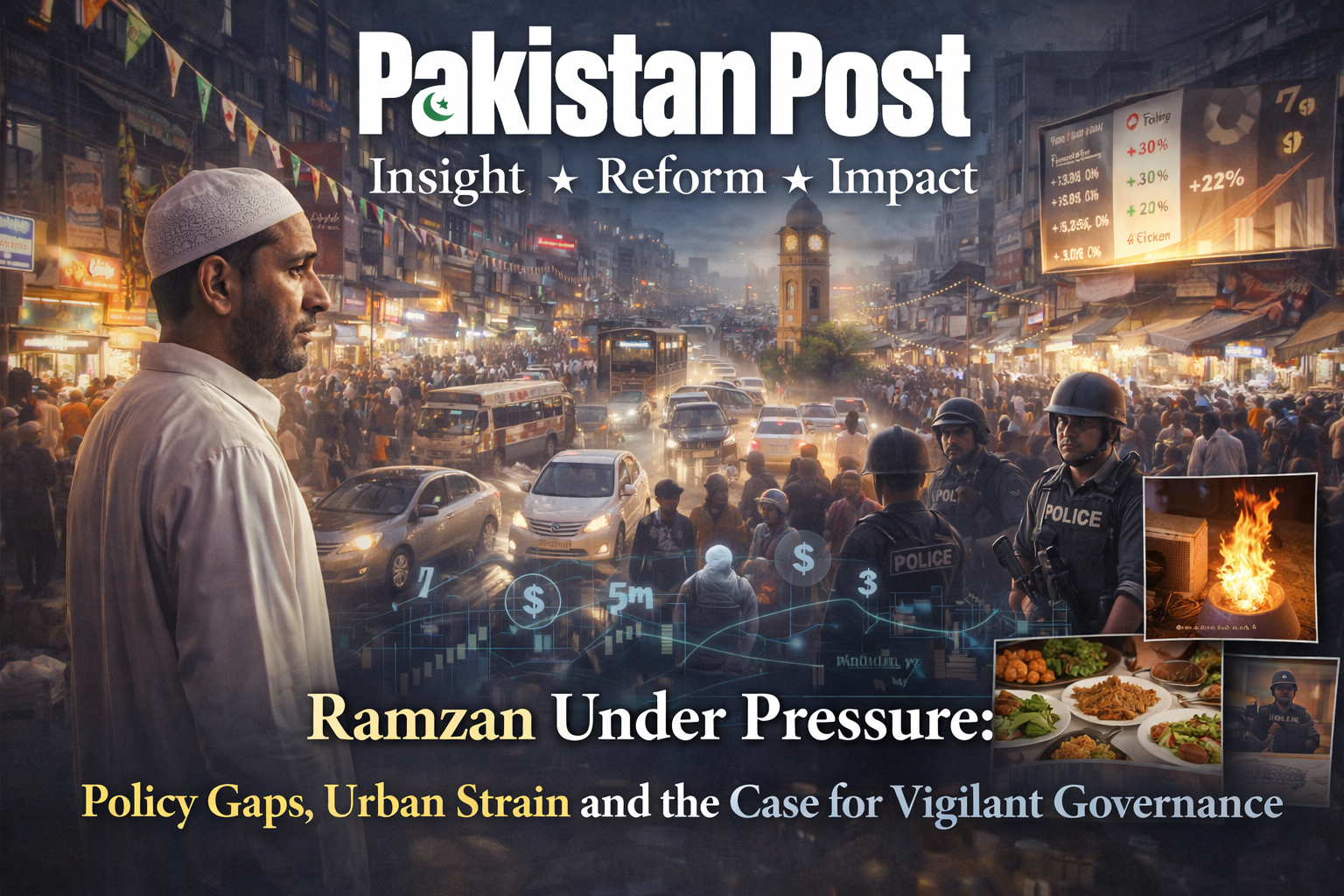
Ramzan Under Pressure: Policy Gaps, Urban Strain and the Case for Vigilant Governance
Ramzan in Pakistan is more than a month of fasting; it is a period that tests the resilience of urban systems, social cohesion, and governance structures. While citizens engage in spiritual reflection and communal solidarity, the practical realities of city life, including traffic