Public Procurement Reform Can Make Government Spending More Accountable

Pakistan’s public procurement system is often treated as an administrative back office, where tenders are advertised, bids are opened, contracts are awarded and files eventually move towards payment. That framing is increasingly inadequate. Procurement is one of the principal mechanisms through which the state converts public revenue into roads, hospitals, schools, defence related infrastructure, digital systems, medicines, municipal services and strategic projects. Where procurement is poorly governed, fiscal leakage does not merely occur at the point of purchase. It becomes embedded in the architecture of public expenditure.
For Pakistan, the issue is particularly consequential because procurement sits at the intersection of fiscal constraint, administrative discretion, political pressure, commercial influence and institutional capacity. A government can improve its tax collection, negotiate external financing and rationalise development expenditure, yet still lose substantial economic value if contracts are designed around weak specifications, awarded within artificially narrow competitive fields or inadequately supervised after signature. Procurement therefore deserves treatment as an economic governance instrument, not simply as a compliance exercise.
The central policy question is not whether Pakistan should make procurement more transparent. It is whether transparency can be designed without paralysing legitimate government purchasing, exposing sensitive state activity or converting commercial decision making into bureaucratic litigation. A credible reform architecture must distinguish between information that should be public, information that should remain restricted and information that should be accessible only to authorised oversight institutions. The objective should be controlled transparency, supported by data standards, auditability and institutional accountability.
The existing procurement environment contains several points where discretion can accumulate. Tender specifications can be written so narrowly that nominal competition exists without meaningful contestability. Technical requirements may inadvertently or deliberately favour an established supplier, proprietary technology or a particular configuration. Evaluation criteria can become difficult to scrutinise when scoring methodologies are insufficiently granular. A low bid may later be followed by variations, extensions and supplementary works that alter the economics of the original award. Delayed payments can generate claims, weaken contractor liquidity and create incentives for informal settlement. Emergency procurement, although sometimes indispensable, can become a parallel channel through which normal competitive safeguards are diluted.
The problem is not that discretion exists. Governments require discretion. A procurement authority dealing with a specialised medical device, an information security system, an emergency flood response or strategically sensitive infrastructure cannot operate through rigid formulae alone. The problem emerges when discretion is undocumented, unverifiable or exercised without an auditable rationale.
Pakistan’s procurement debate should consequently move away from the simplistic opposition between transparency and administrative efficiency. The more useful distinction is between visible discretion and invisible discretion. A commercially sensitive contract can remain protected while its existence, procurement method, approving authority, broad value, supplier identity, award rationale, implementation status and subsequent material variations are recorded in a structured system accessible to appropriate oversight bodies.
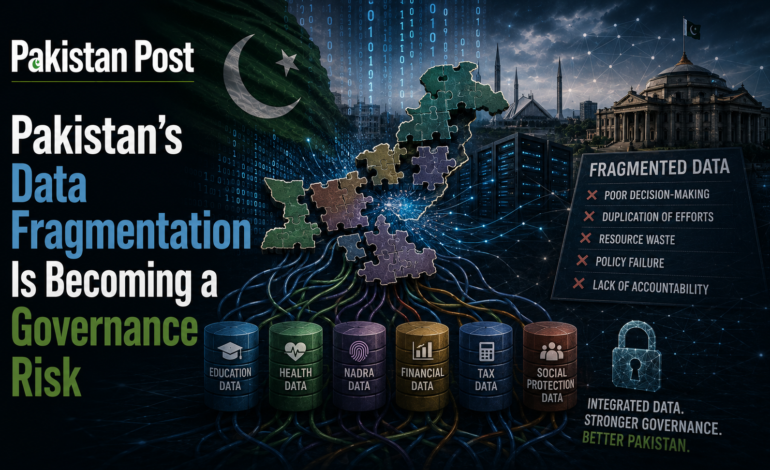
Machine readable procurement data could provide the foundation for such a transition. At present, procurement information often exists across advertisements, tender documents, departmental files, evaluation reports, contract registers, payment records and audit observations. Even where individual documents are technically available, their fragmentation makes systematic analysis difficult. A researcher may be able to locate an advertisement but not easily connect it to the final award, the winning bidder, subsequent amendments, payment history and completion record.
An open contracting model would treat the procurement lifecycle as a continuous information chain. Planning, tendering, evaluation, award, implementation, amendment and completion would generate linked digital records. This would allow an auditor, regulator or authorised analyst to examine not simply whether a tender was formally compliant but whether the procurement behaved unusually compared with similar transactions.
That distinction matters. Conventional auditing often asks whether officials followed the prescribed procedure. Data driven procurement oversight can additionally ask whether the transaction itself contains characteristics associated with elevated risk.
A red flag system could identify repeated awards to the same supplier, unusually short tender periods, single bidder competitions, identical bid values, recurrent contract extensions, excessive amendments, substantial cost escalation, geographical clustering of awards, suspicious relationships between companies and unusually high advance payments. None of these indicators would automatically establish wrongdoing. They would instead prioritise transactions for human examination.
That is an important institutional safeguard. Artificial intelligence or automated analytics should not become an adjudicator of procurement misconduct. Algorithms can identify anomalies; authorised officials must determine whether those anomalies have legitimate explanations. A specialised engineering project may properly require contract variation because geological conditions changed. An emergency health purchase may reasonably have limited competition. A cybersecurity procurement may legitimately restrict disclosure. The system should therefore generate investigative leads rather than pronounce guilt.
Beneficial ownership disclosure would strengthen this architecture. Knowing the legal name of a company is not always equivalent to knowing who ultimately controls the commercial entity receiving public money. Procurement authorities should progressively establish a verified beneficial ownership regime for public contracts above defined thresholds, with enhanced scrutiny for sectors and transactions carrying elevated corruption or conflict of interest risks.
The purpose would not be indiscriminate publication of private corporate information. It would be to allow the state to identify conflicts, related-party transactions, concentration risks and concealed commercial relationships. A supplier appearing repeatedly through different corporate vehicles should not evade scrutiny simply because each company possesses a separate registration number.
Such a system would also assist national security institutions. Strategic procurement increasingly involves complex corporate structures, foreign technology providers, subcontractors, cloud infrastructure, telecommunications equipment and cross border supply chains. Procurement integrity is therefore becoming inseparable from economic security. A government that cannot confidently identify the ownership and control structures behind strategic suppliers has limited visibility over potential dependency risks.
This concern becomes particularly important in information technology and critical infrastructure procurement. The state is purchasing increasingly sophisticated digital systems, surveillance technologies, data platforms, cloud services and communications infrastructure. The commercial procurement process cannot be separated entirely from questions of data sovereignty, supply chain resilience and technological dependence. Procurement specifications must therefore incorporate security architecture, data governance and lifecycle obligations rather than focusing exclusively on acquisition price.
The same principle applies to major infrastructure. The lowest initial bid can become the most expensive public contract if construction quality is poor, implementation is delayed or repeated variations transform the original price. Value for money requires consideration of lifecycle cost, reliability, maintenance obligations, energy consumption, operational resilience and disposal costs.
This is where post award monitoring becomes critical. Pakistan has traditionally devoted substantial administrative attention to getting a contract awarded, while implementation monitoring can become less systematic. Yet the greatest fiscal consequences often emerge after signature. Delayed milestones, weak supervision, inadequate quality control and undocumented variations can gradually erode the competitive discipline established during tendering.
Every major public contract should therefore have a digital performance record. It should capture agreed milestones, payments, variations, completion dates, performance guarantees, penalties, extensions and material disputes. For public infrastructure, geotagged progress evidence, engineering certification and independent verification could provide additional assurance.
Contract performance should also influence future procurement decisions. A supplier that repeatedly delivers late, produces defective work or accumulates unresolved contractual disputes should not automatically return to the procurement market with a clean institutional record. Conversely, suppliers demonstrating consistent performance should benefit from credible performance histories. This would encourage a more mature relationship between the state and the private sector, moving beyond the transactional logic of individual tenders.
Delayed government payments require particular attention. Procurement reform frequently concentrates on bidder behaviour while ignoring the state’s own contractual obligations. If departments routinely delay legitimate payments, contractors price that risk into bids, demand larger advances or become financially dependent on informal arrangements. Payment discipline is therefore itself a procurement integrity measure.
A centralised payment visibility mechanism could connect contract milestones with authorised financial releases while preserving departmental expenditure controls. This would help distinguish genuine fiscal constraints from administrative delays. Where a contractor has completed certified work but payment remains outstanding, the responsible institutional bottleneck should become visible rather than disappearing inside a general category of pending bills.
Emergency procurement presents a harder problem. States require the capacity to purchase rapidly during floods, earthquakes, epidemics, security emergencies and other crises. Requiring ordinary tender timelines during an actual emergency can impose costs that exceed the risks of accelerated purchasing. The appropriate response is not to eliminate emergency procurement but to make it exceptional, time bounded and retrospectively auditable.
Emergency contracts should therefore trigger an automatic disclosure and review mechanism after the immediate crisis. The procurement authority should record why normal competition was impractical, who authorised the exception, how suppliers were selected, what price benchmarks were used and whether the goods or services were delivered. Sensitive information can remain restricted where necessary, but the institutional decision should remain accountable.
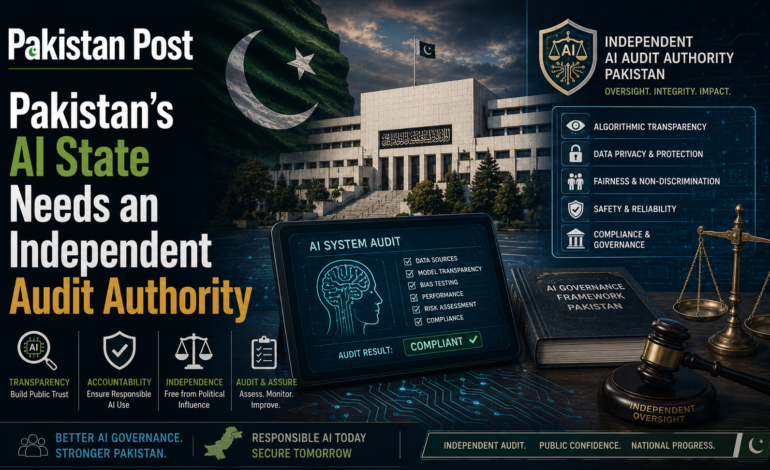
Pakistan also needs stronger separation between procurement policy, purchasing decisions and independent scrutiny. A system becomes vulnerable when the same administrative chain defines requirements, manages competition, evaluates bids, supervises implementation and effectively determines whether its own contract succeeded. Independent contract performance audits should therefore be introduced for high value and high risk procurement.
These audits should not become another layer of routine paperwork. Their purpose should be selective assurance. Risk based sampling could direct independent auditors towards large infrastructure projects, repeated variations, unusually concentrated supplier markets, emergency awards and contracts involving technologically or strategically significant assets.
Parliamentary oversight also requires better procurement information. Legislatures cannot meaningfully scrutinise public expenditure if procurement data arrives primarily through aggregated budget lines and retrospective audit observations. Structured procurement dashboards could allow authorised parliamentary committees to examine expenditure by department, supplier concentration, project category, procurement method, implementation status and contract variation.
Civil society and journalism can play a useful role, but transparency should not be romanticised. Journalists, researchers and watchdog organisations require usable information, not merely large volumes of documents. Open data should therefore prioritise machine readability, consistent identifiers and searchable records. A thousand scanned files do not constitute effective transparency if no one can connect them.
Pakistan could establish a national procurement data standard applicable across federal ministries, departments, autonomous bodies and, through appropriate intergovernmental arrangements, provincial and local institutions. The standard should define common identifiers for procuring entities, suppliers, contracts, projects and amendments. This would make it possible to compare procurement patterns across institutions without forcing every organisation to abandon its operational autonomy.
The federation’s constitutional structure makes uniformity difficult, particularly where provincial procurement falls within provincial jurisdiction. The answer should be interoperability rather than centralised control. Federal and provincial authorities can retain their respective procurement institutions while adopting common data standards, disclosure principles and risk indicators. Such an arrangement would strengthen national visibility without unnecessarily concentrating procurement authority.
For security and defence related procurement, a differentiated regime is indispensable. Strategic contracts cannot be subjected to indiscriminate public disclosure. Operational capabilities, sensitive technical specifications, intelligence related purchases and certain defence supply arrangements require controlled access. But confidentiality should not automatically mean absence of auditability. Classified procurement can still maintain internal digital records, authorised audit trails, conflict of interest controls, beneficial ownership verification where appropriate and post award performance assessment.
The institutional challenge is therefore to build layers of access rather than a binary system of public versus secret information. Citizens may require aggregate expenditure and award information. Journalists may require supplier and contract records. auditors may require full transactional documentation. Security institutions may require classified technical and ownership information. Procurement officials require operational data. A mature system recognises these different legitimate interests.
The reform agenda should also address professional capacity. Digital platforms cannot compensate for officials who lack commercial, engineering, legal, financial and analytical expertise. Procurement should become a recognised professional discipline within the public service, with specialised career tracks and continuous training. Officials responsible for major procurements should understand market analysis, contract economics, lifecycle costing, negotiation, supplier risk, data analytics and cybersecurity.
At the same time, procurement officials require institutional protection from arbitrary political intervention. An officer who rejects an unsuitable bid or identifies an inflated specification should not become personally vulnerable merely because the decision inconveniences a powerful supplier or institutional stakeholder. Clear delegation frameworks, recorded decisions and independent review can provide procedural protection without creating immunity from accountability.
Pakistan’s procurement reform should ultimately be judged through economic outcomes. The relevant indicators are not simply how many tenders were published or how many departments migrated to an electronic platform. Government should measure savings against credible market benchmarks, competition levels, procurement cycle times, contract completion rates, variation ratios, payment delays, supplier concentration and verified quality outcomes.
The strategic objective is a procurement state that can spend rapidly when circumstances require it, negotiate intelligently when markets permit it and withstand scrutiny when public money is at stake. That requires neither radical privatisation of procurement nor the creation of another centralised bureaucracy. It requires a connected institutional architecture in which commercial discretion leaves a reliable evidence trail.
Pakistan’s fiscal constraints make such reform increasingly urgent. Every rupee lost through inflated specifications, avoidable delays, weak competition or poorly supervised contracts is a rupee unavailable for public services or fiscal stabilisation. Procurement efficiency is therefore not merely an anti corruption aspiration. It is a component of economic policy.
The most consequential change would be conceptual. Procurement should no longer be understood as the administrative moment when the government buys something. It is the entire governance chain through which public demand is defined, markets are approached, suppliers are selected, public obligations are contracted, money is released and performance is verified.
Open contracting can strengthen that chain if Pakistan avoids turning transparency into procedural theatre. The country needs commercially intelligent openness, automated risk detection, verified ownership information, independent performance assurance and differentiated access for sensitive transactions. It needs procurement records that can speak to auditors, regulators, investigators and policymakers without compromising legitimate confidentiality.
The establishment’s strategic interest in this reform is equally clear. Procurement integrity protects not only the exchequer but institutional credibility, national resilience and the security of critical supply chains. A state that knows who supplies it, what it pays, why it selected a supplier, how the contract performs and where vulnerabilities are emerging possesses a stronger instrument of national governance.
The goal, therefore, should not be to make every government purchase publicly exposed. It should be to make every significant procurement institutionally explainable. Once public expenditure becomes traceable from planning to performance, opportunities for leakage become harder to conceal, legitimate discretion becomes easier to defend and government purchasing can begin to deliver what it should have delivered all along: maximum public value for every unit of scarce fiscal space.
A Public Service Message