
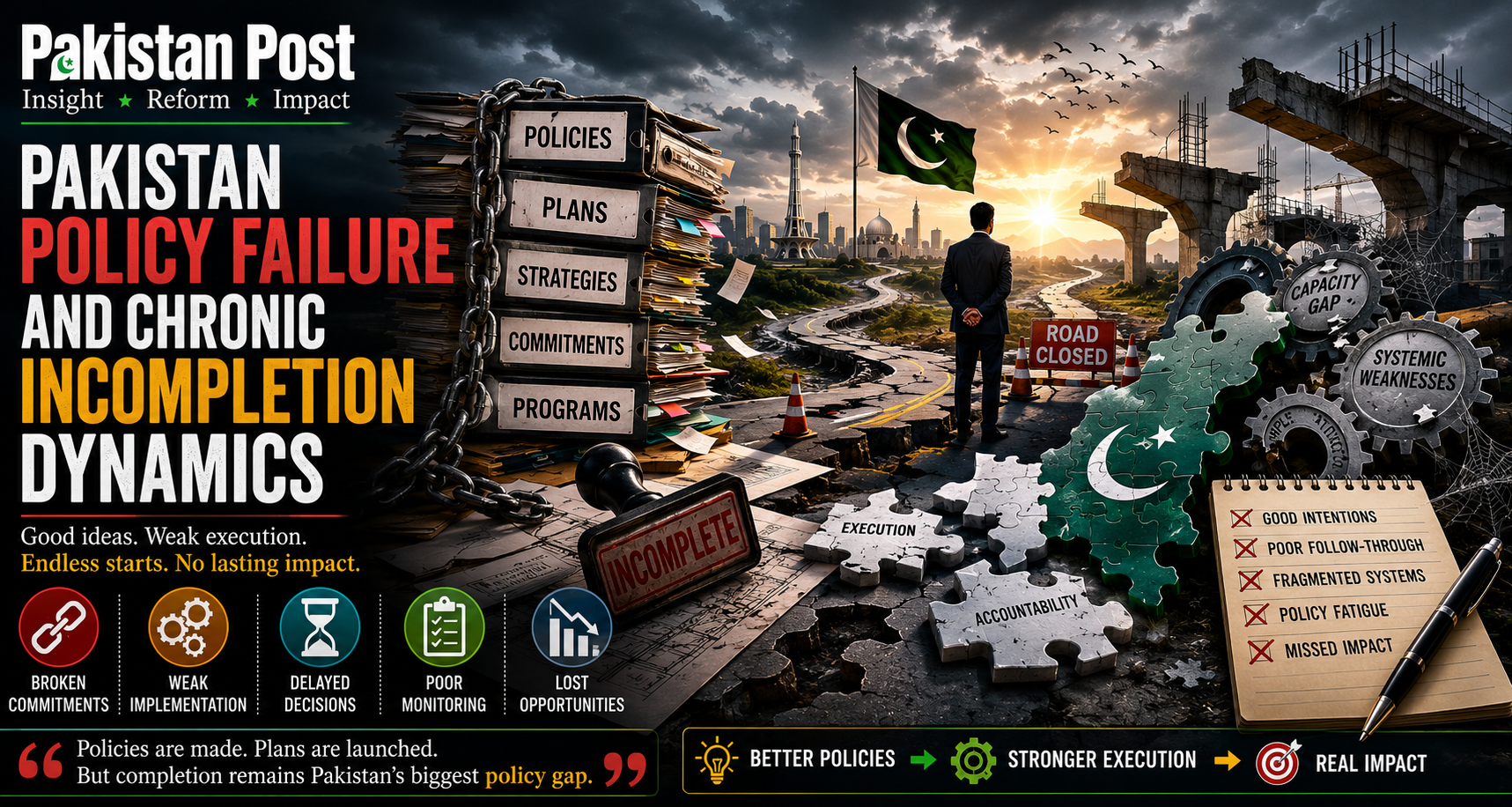
Pakistan Policy Failure and Chronic Incompletion Dynamics

Pakistan’s governance discourse has long revolved around a familiar complaint: there is no shortage of policy, only a shortage of implementation. Yet this framing, repeated across administrations and reform cycles, now risks obscuring a deeper structural condition. The problem is no longer simply
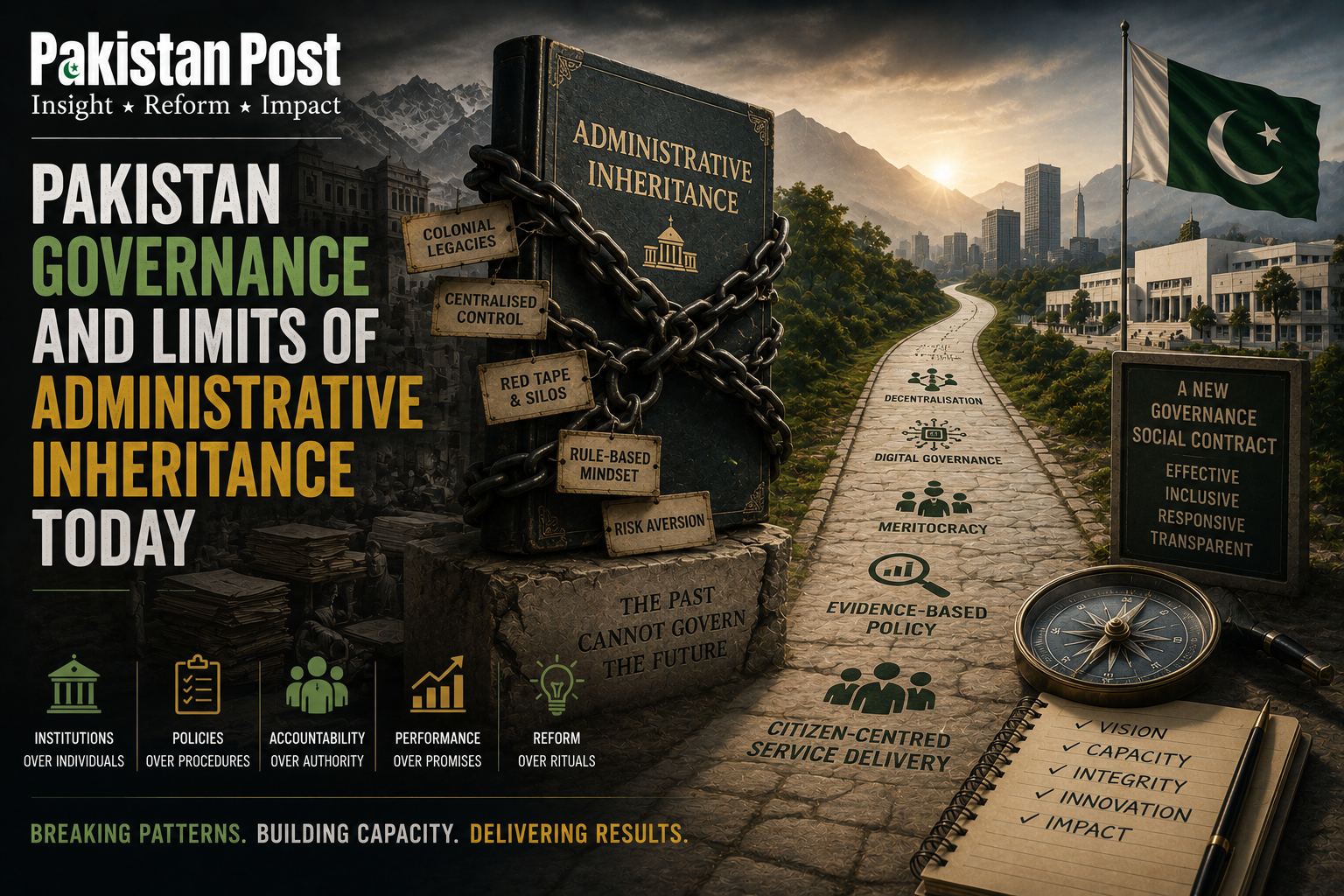
Pakistan Governance and Limits of Administrative Inheritance Today

Pakistan’s state is entering a phase in which inherited administrative habits are no longer merely insufficient but increasingly misaligned with the complexity of the environment it is expected to govern. The governing architecture, built largely on colonial-era procedural logic, post-independence bureaucratic expansion, and
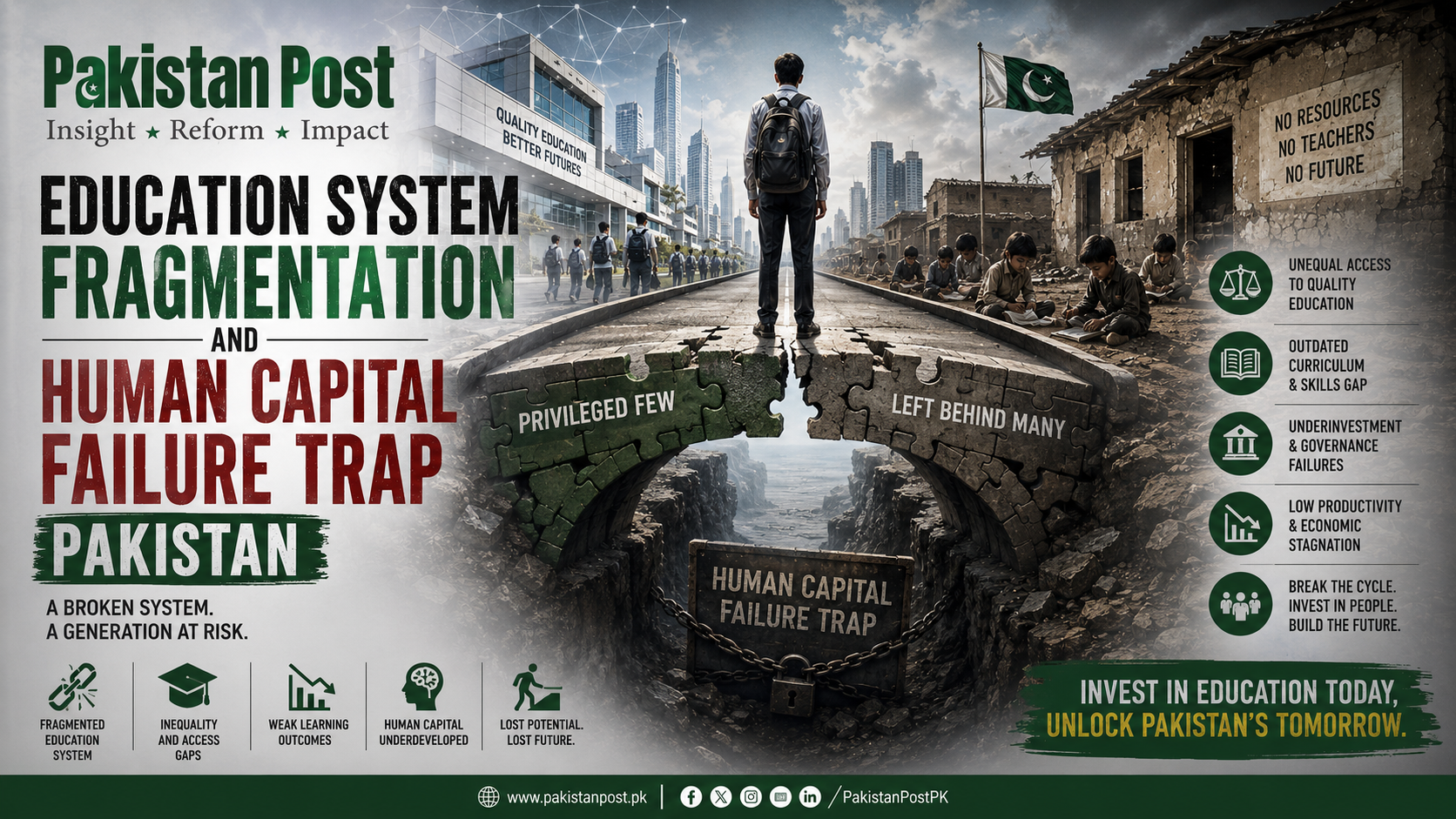
Education System Fragmentation and Human Capital Failure Trap Pakistan
Pakistan’s education system now operates as a structurally fragmented knowledge architecture, producing a widening disconnect between credential attainment and functional human capital formation. This disjunction has become a central constraint on national productivity, institutional capacity, and long-term economic competitiveness. While enrollment rates have
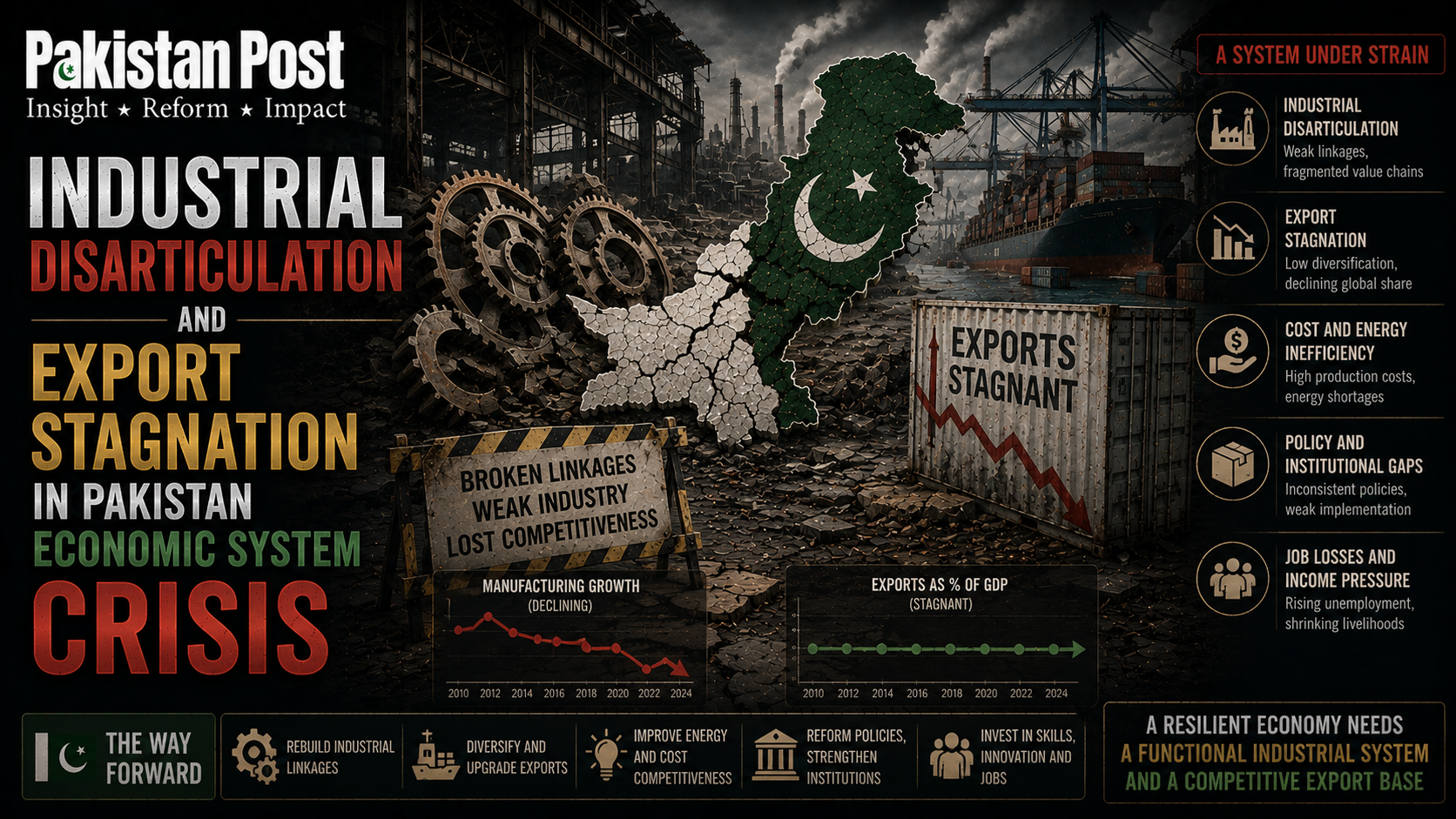
Industrial Disarticulation and Export Stagnation in Pakistan Economic System Crisis
Pakistan’s economic structure now stands at a critical inflection point where incremental policy adjustments are no longer sufficient to offset deep structural decay in industrial productivity, export diversification, and external account stability. The country’s industrial base, once envisioned as a platform for gradual

Revitalizing capital markets for resilience growth and global investor confidence

Pakistan’s capital market narrative has long oscillated between episodic optimism and structural fragility, reflecting a deeper tension between the country’s economic potential and the institutional constraints that inhibit its realization. The Pakistan Stock Exchange, often portrayed as a barometer of investor sentiment, operates
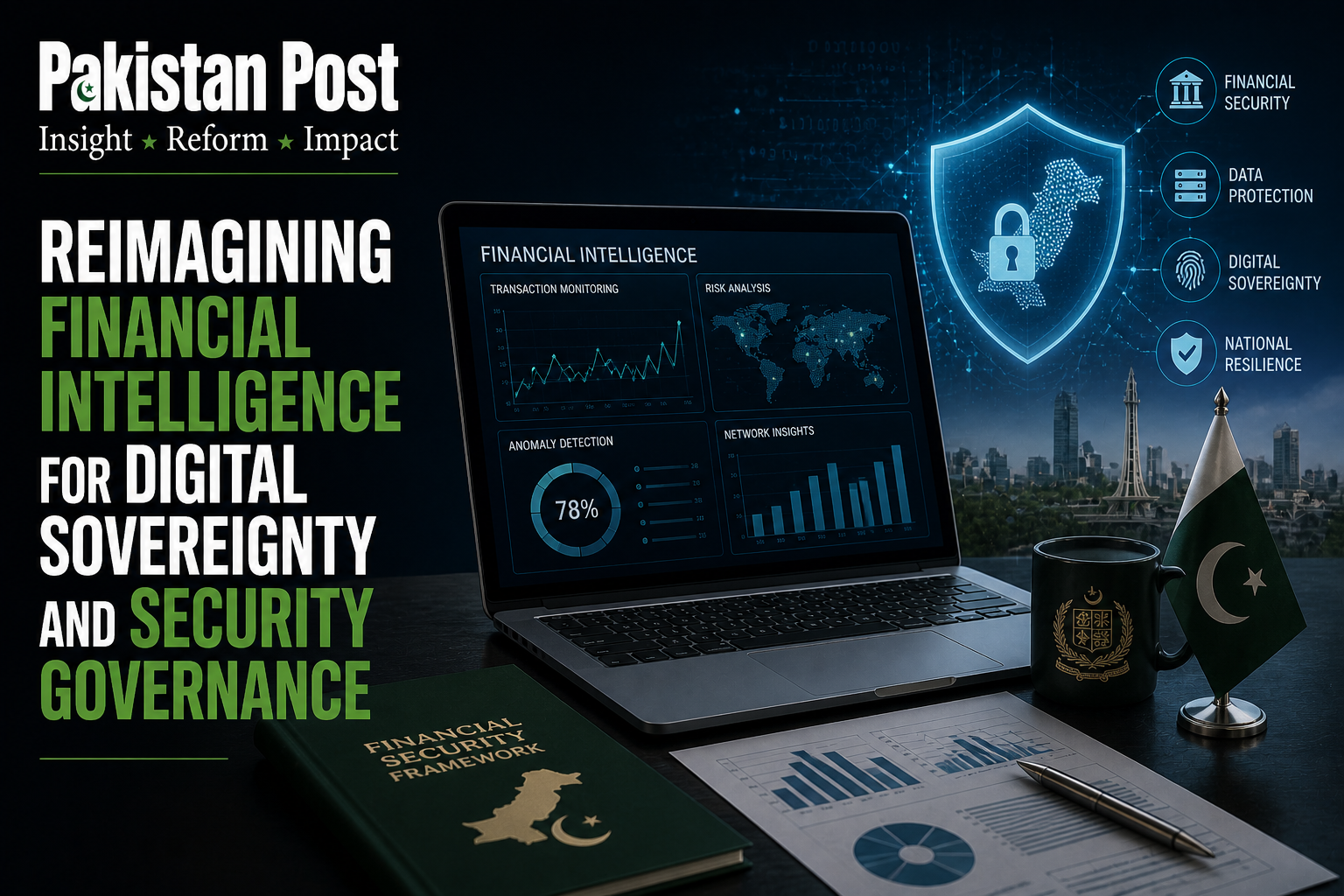
Reimagining financial intelligence for digital sovereignty and security governance

Pakistan’s financial enforcement architecture stands at a critical inflection point where the nature of crime has outpaced the capacity of the state to detect, interpret, and respond to it, and nowhere is this more evident than in the evolving mandate of the Federal
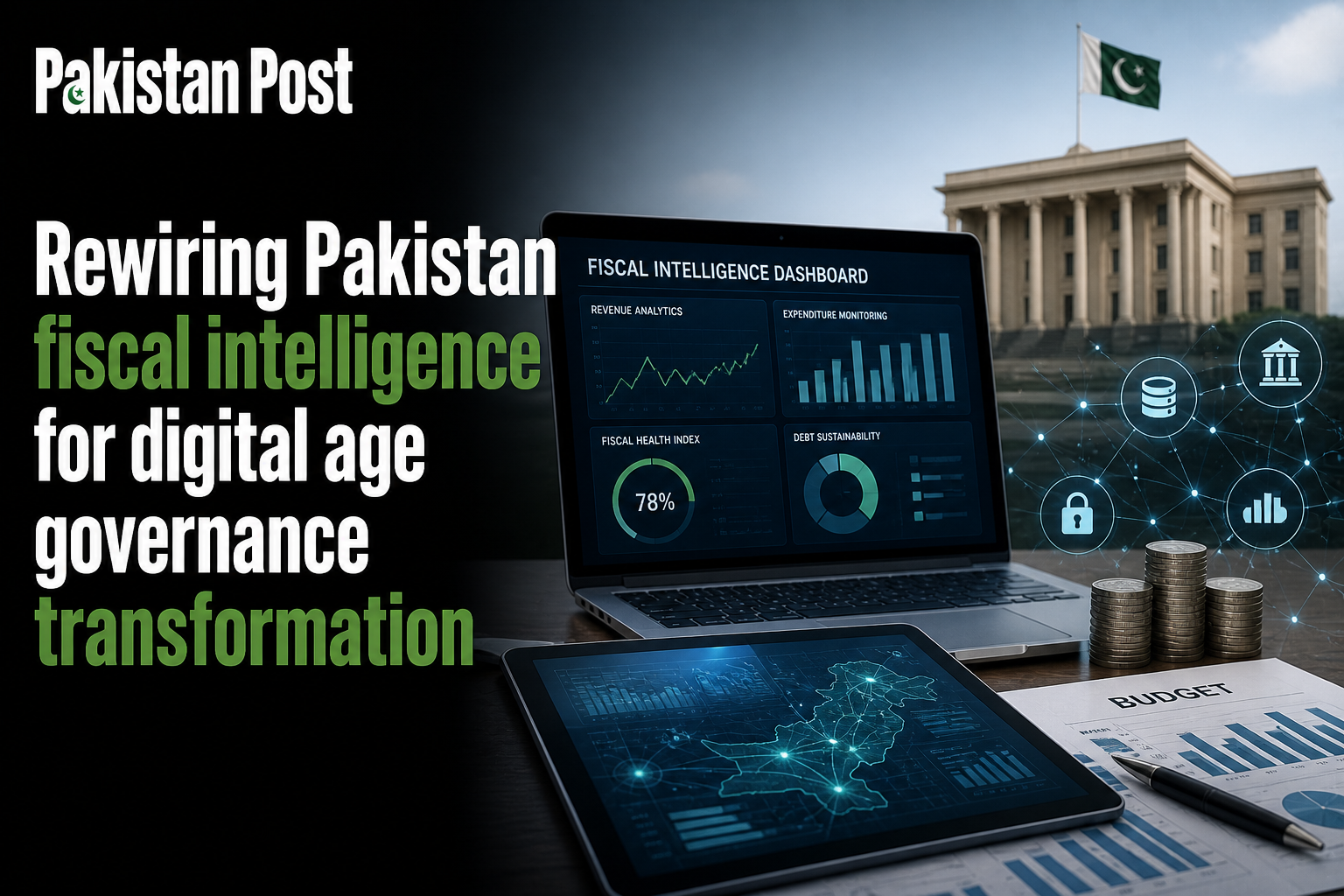
Rewiring Pakistan fiscal intelligence for digital age governance transformation
Pakistan’s fiscal crisis is no longer merely a question of deficits, debt cycles, or negotiations with international lenders, it is fundamentally a crisis of state intelligence, of how the state sees, measures, predicts, and governs economic activity within its own borders. The Federal
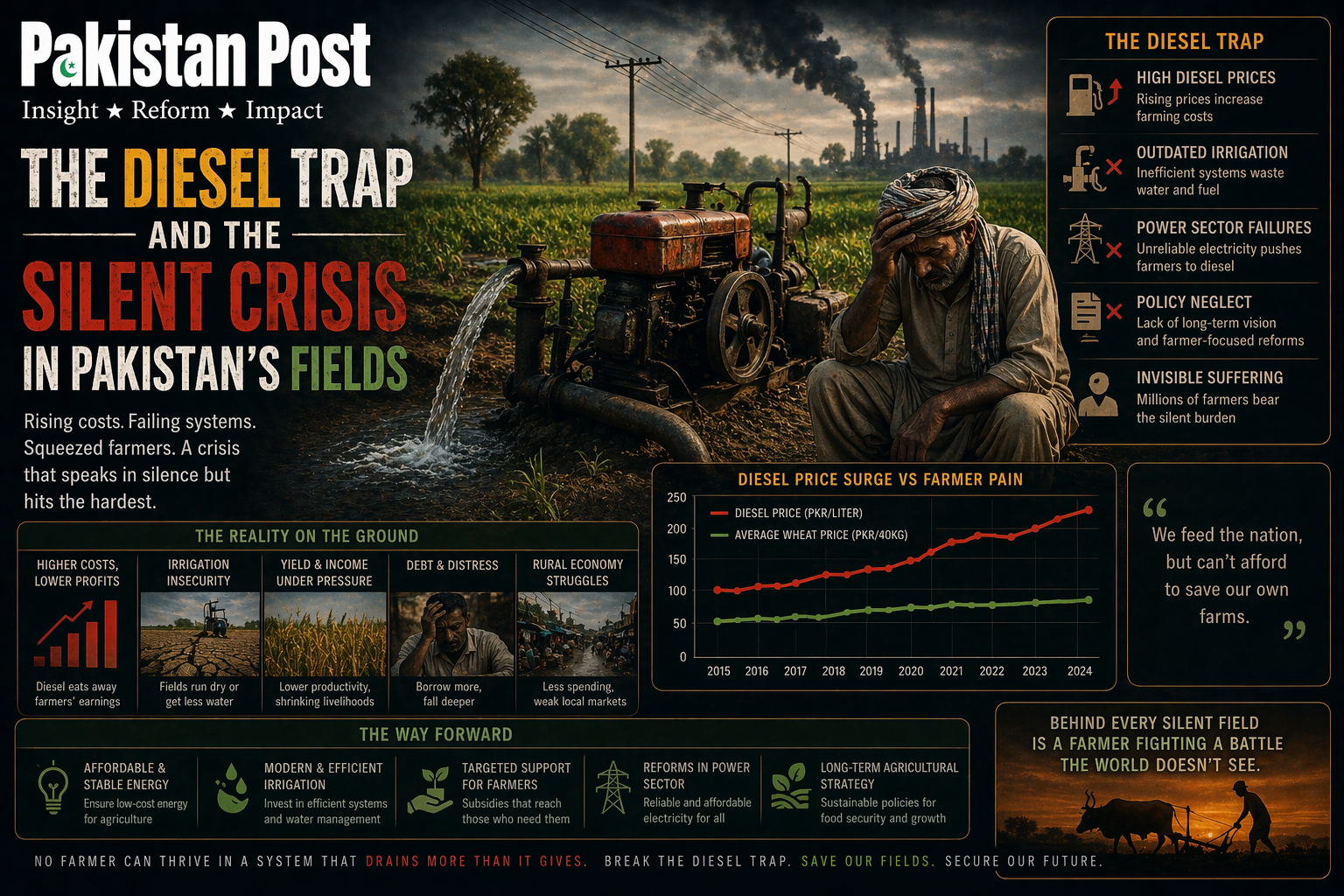
The Diesel Trap and the Silent Crisis in Pakistan’s Fields
In Pakistan’s countryside, the sound of agriculture is increasingly the sound of diesel engines. It powers tubewells, runs tractors, moves harvests, and sustains irrigation in a water-stressed economy. Yet this dependence has become a trap. As diesel prices climb, the cost of simply
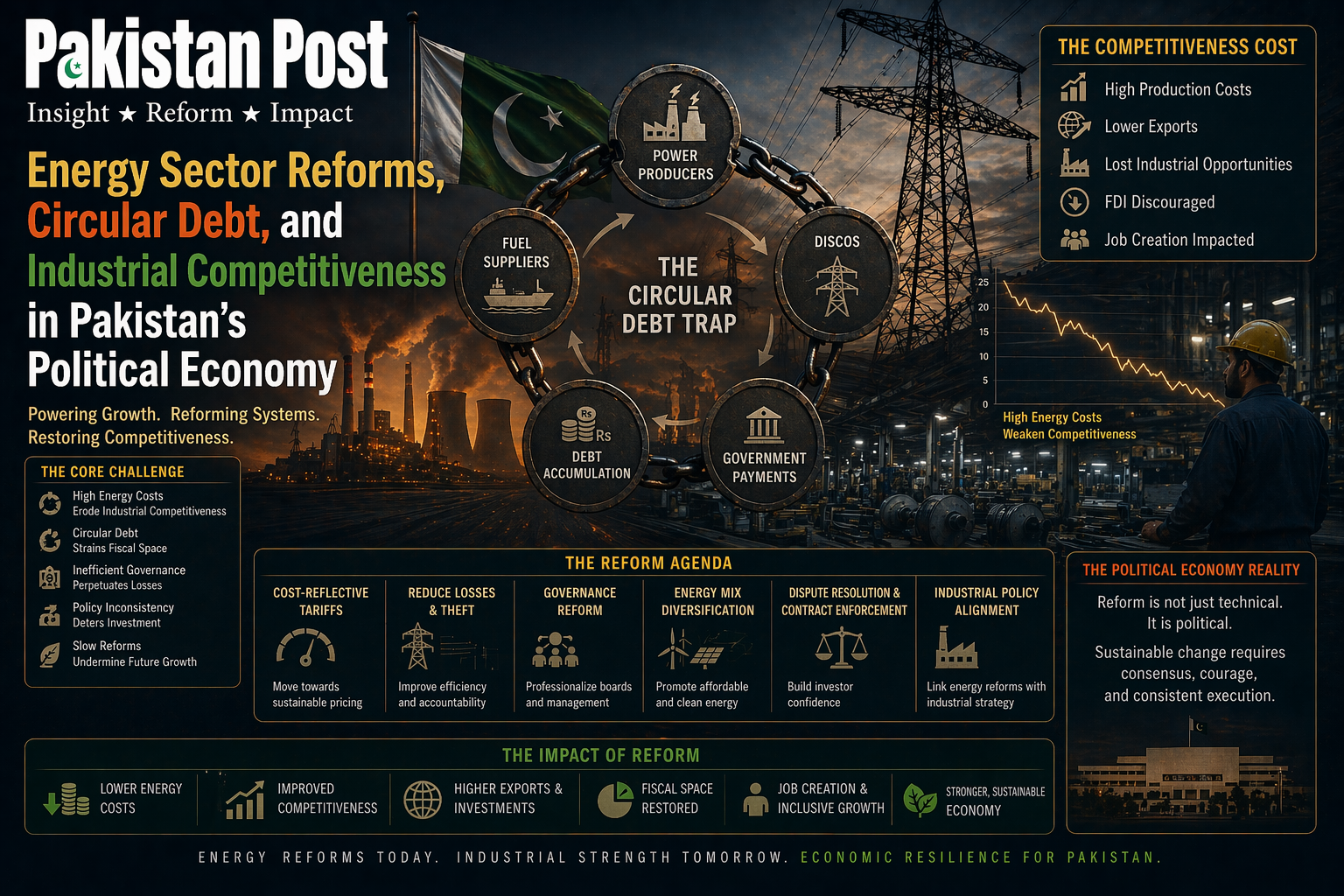
Energy Sector Reforms, Circular Debt, and Industrial Competitiveness in Pakistan’s Political Economy
Pakistan’s energy sector sits at the core of its macroeconomic instability and industrial underperformance, functioning simultaneously as a driver of fiscal stress, a constraint on export competitiveness, and a persistent source of political contestation. Over the past decade, successive governments have introduced a
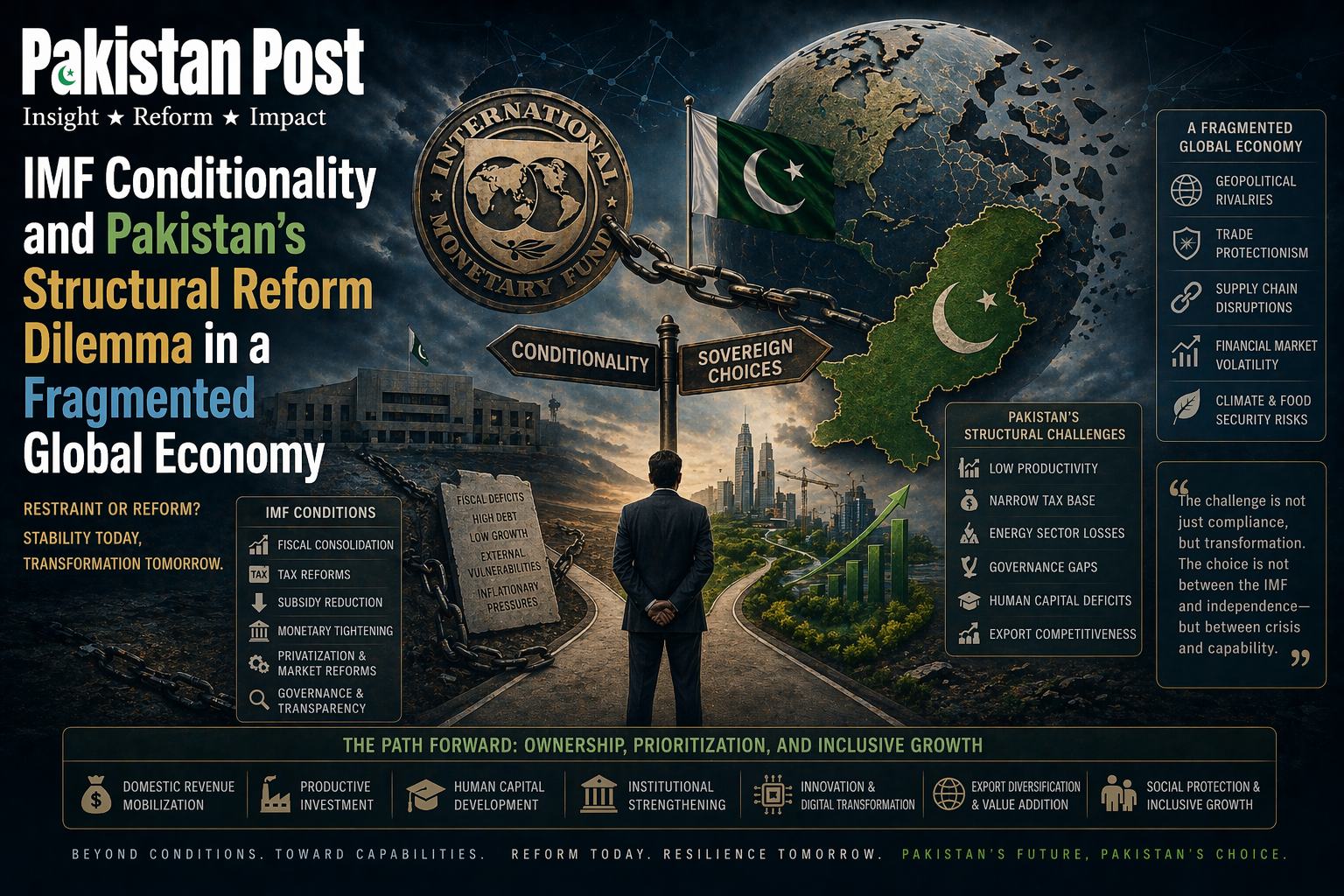
IMF Conditionality and Pakistan’s Structural Reform Dilemma in a Fragmented Global Economy
Pakistan’s economic story in recent years has increasingly been written in the language of stabilization, adjustment, and external dependency. At the center of this narrative sits the International Monetary Fund, returning repeatedly as lender of last resort, policy architect, and macroeconomic disciplinarian. Yet