Pakistan Governance and Limits of Administrative Inheritance Today

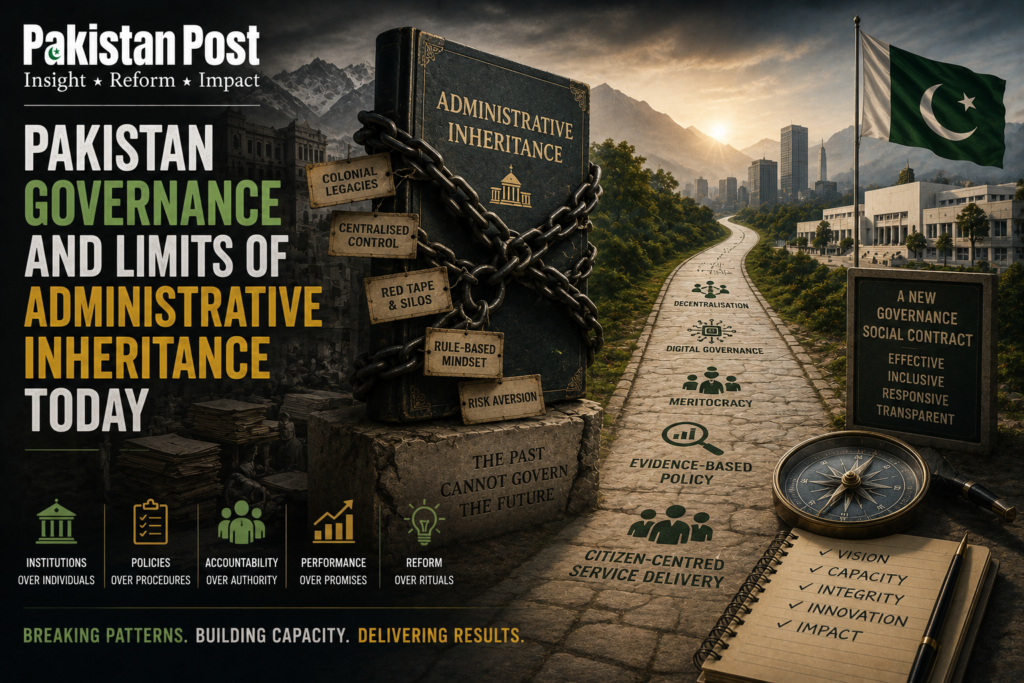
Pakistan’s state is entering a phase in which inherited administrative habits are no longer merely insufficient but increasingly misaligned with the complexity of the environment it is expected to govern. The governing architecture, built largely on colonial-era procedural logic, post-independence bureaucratic expansion, and later layers of crisis-driven improvisation, now faces a strategic context defined by simultaneity rather than sequence. Fiscal tightening, climate volatility, digital disruption, urban density, demographic pressure, border insecurity, and declining public trust are not episodic shocks. They are concurrent conditions. Yet the machinery of governance continues to operate as though problems can be compartmentalised, delegated vertically, and resolved through procedural accumulation.
The result is not simply inefficiency. It is a deeper structural mismatch between state capacity and state expectation. Pakistan is not short of authority; it is short of coordination. It is not devoid of policy instruments; it is saturated with fragmented ones. It is not entirely lacking in data; it lacks integration of data into decision loops that can produce timely and enforceable outcomes. In this sense, governance failure is increasingly less about intent and more about design.
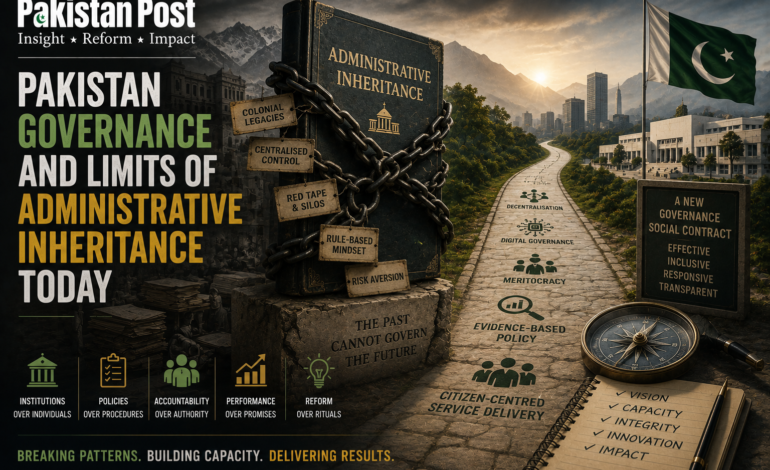
At the centre of this condition lies what may be described as administrative inheritance. The bureaucratic model that persists in Pakistan assumes that governance is primarily a matter of file movement, hierarchical approval, departmental jurisdiction, and procedural compliance. This model was once adequate for a slower economy, a narrower state remit, and a more predictable risk environment. Today, it is increasingly unable to process the speed, density, and interdependence of policy challenges.
Climate governance, for instance, does not belong to a single ministry. Flood management intersects with provincial planning, federal disaster agencies, irrigation departments, local government systems, and international climate finance frameworks. Yet institutional silos continue to treat these as separable domains. Similarly, taxation reform requires coordination between revenue authorities, financial intelligence units, digital infrastructure providers, provincial governments, and political leadership. In practice, these actors operate on parallel tracks with limited interoperability.
The deeper issue is that Pakistan’s governance system still behaves as if complexity can be reduced through administrative segmentation. However, modern governance systems increasingly depend on integration rather than segmentation. The difference is not semantic. It is structural. Integration requires shared data systems, cross-agency accountability, interoperable digital platforms, and decision architectures that collapse time between information and action. Segmentation produces delay, duplication, and diffusion of responsibility.
A key feature of Pakistan’s current governance condition is crisis-management substitution. Over time, the state has developed a reflex for emergency response that often masks the absence of sustained governance capability. When crises emerge, committees are formed, notifications are issued, and temporary coordination mechanisms are activated. These responses create the appearance of control. Yet once immediate pressure subsides, institutional momentum dissipates. The system then reverts to routine fragmentation until the next crisis.
This cyclical pattern creates an illusion of functionality. The state appears active, but its activity is episodic rather than structural. It reacts more effectively than it plans, and it plans more frequently than it executes. In this gap between reaction and execution lies the core governance deficit.
Fiscal governance illustrates this pattern clearly. Pakistan’s fiscal system is repeatedly subject to reform announcements, tax broadening strategies, digitisation efforts, and compliance drives. Yet structural outcomes remain constrained by limited enforcement capacity, weak data integration between federal and provincial tax authorities, and political resistance from entrenched economic actors. The result is a recurring cycle in which reforms are announced under external pressure, partially initiated, and then diluted through implementation fatigue.
The same pattern is visible in public sector digital transformation. E governance initiatives exist across multiple departments, yet interoperability remains limited. Systems are often developed in isolation, procurement driven rather than architecture driven, and lacking standardisation across provinces. This creates digital islands rather than a digital state. In such an environment, data becomes abundant but not actionable, and digitisation becomes cosmetic rather than transformational.
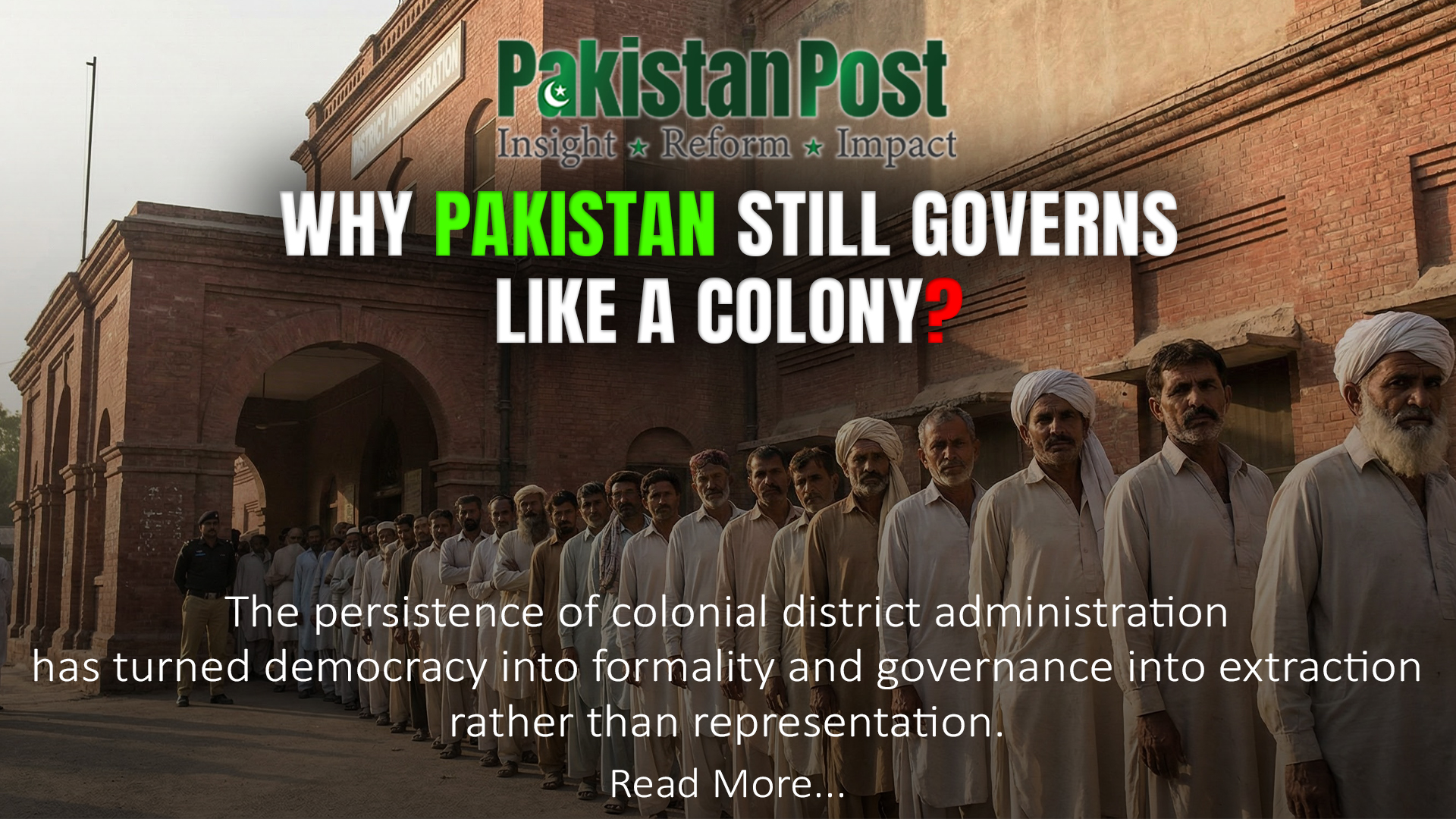
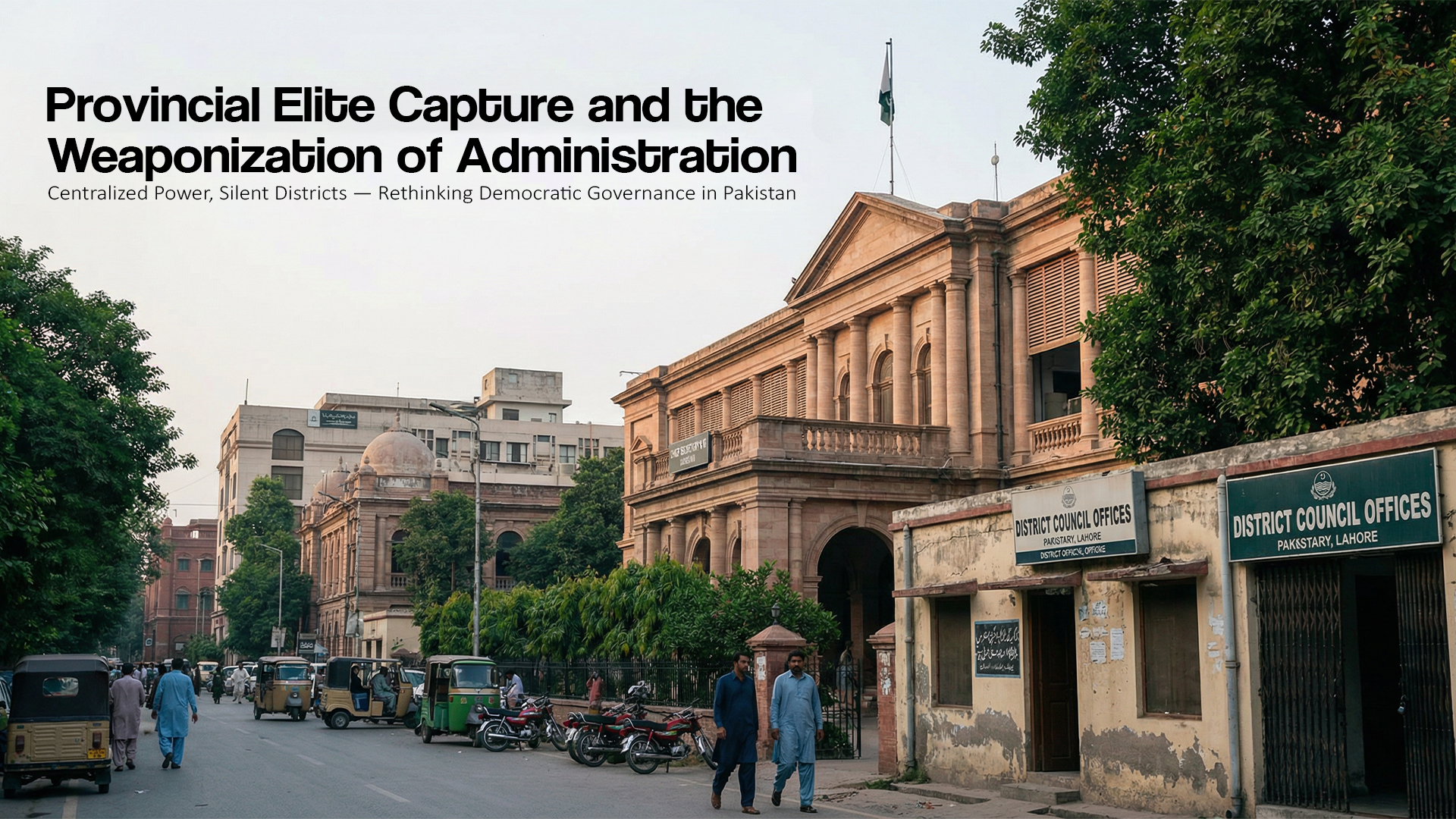
At the provincial and local level, governance constraints are even more pronounced. Devolution has expanded formal responsibility without corresponding increases in technical capacity or fiscal autonomy in many cases. Local governments remain weakly institutionalised, frequently interrupted by political cycles, and often dependent on provincial directives. This creates a vertical overload at higher levels of government and a horizontal vacuum at the local level where service delivery actually occurs.
The consequence is a system in which accountability is diffused. When outcomes fail, responsibility migrates between tiers of government. Federal institutions point to provincial execution gaps. Provinces cite resource constraints and federal policy inconsistency. Local administrations cite lack of authority. Citizens experience the system as a single entity, but internally it behaves as a set of disconnected jurisdictions.
One of the most persistent misunderstandings in governance discourse is the assumption that the primary problem is corruption or inefficiency alone. While both are significant, they do not fully explain the systemic persistence of underperformance. A more accurate diagnosis points to institutional design limitations that make coordination structurally difficult regardless of intent.
For instance, bureaucratic turnover disrupts continuity of reform. Senior administrative rotations, political changes, and frequent reconstitution of committees result in repeated resetting of policy agendas. Even well designed reforms lose momentum as institutional memory is weakened. In such a system, policy becomes event driven rather than process driven.
Legal and regulatory contestation adds another layer of friction. Policy initiatives are frequently subject to litigation, procedural challenges, and overlapping jurisdictional claims. While legal oversight is essential in any constitutional system, excessive fragmentation of regulatory authority can slow execution to a point where policy relevance diminishes before implementation is complete.
Media and political volatility further compress the implementation horizon. In environments where policy is continuously subject to public contestation cycles, administrators tend to prioritise short term visible actions over long term structural reforms. This creates a bias toward announcement driven governance rather than delivery driven governance.
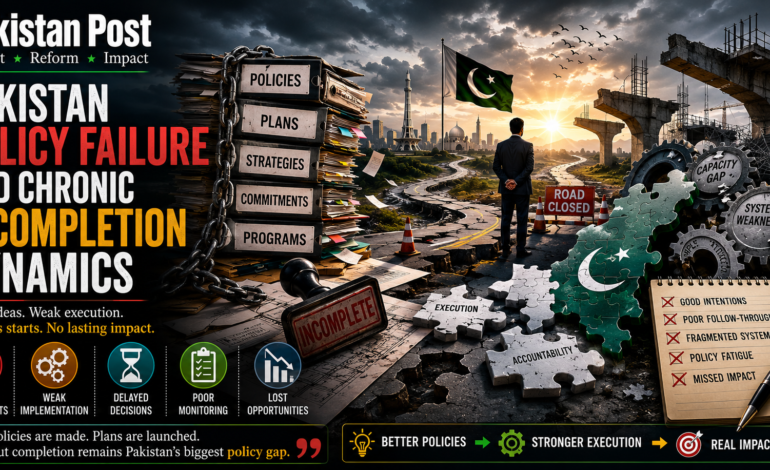
The cumulative effect is what may be described as chronic incompletion. Pakistan does not lack reform ideas. It lacks reform completion systems. Policies are initiated with political visibility but without durable institutional insulation. They begin under urgency but lack mechanisms to ensure continuity beyond the initial phase of political attention.
This incompletion is visible in multiple sectors. Tax reform is repeatedly announced but only partially enforced. Energy sector restructuring is frequently initiated but remains constrained by circular debt dynamics and institutional fragmentation. Public financial management reforms are launched but rarely integrated into a unified expenditure tracking system. Education and health reforms are designed but inconsistently implemented across provinces and districts.
What is missing is not policy imagination but execution architecture. Execution architecture refers to the institutional mechanisms that ensure continuity, monitoring, accountability, and adaptive correction during implementation. Without such architecture, even well designed policies degrade over time.
A critical gap lies in the absence of integrated delivery systems. In many countries that have improved governance outcomes, specialised delivery units have been established to track reform progress across ministries, standardise reporting, and escalate bottlenecks in real time. These units do not replace ministries but coordinate them. Pakistan’s system, by contrast, often relies on ad hoc committees without permanent institutional authority or data integration capacity.
Another missing element is performance linked budgeting. While budgeting processes exist, they are not consistently tied to measurable delivery outcomes across sectors. Expenditure tracking and outcome measurement remain loosely connected. This weakens incentives for performance and reduces the ability of central authorities to enforce accountability across administrative layers.
Public dashboards and real time monitoring systems remain underdeveloped or fragmented. In modern governance systems, transparency is increasingly operational rather than symbolic. When citizens and oversight bodies can observe policy progress in real time, implementation pressure increases and bureaucratic inertia decreases. In Pakistan’s case, transparency often exists in static reports rather than dynamic systems.
The question, therefore, is not whether Pakistan needs more policy. It is whether Pakistan can convert policy into completion under current institutional conditions. The evidence suggests that without redesign of governance architecture, policy multiplication will continue to exceed policy completion.
This raises a more fundamental issue. Can Pakistan’s administrative inheritance be adapted incrementally, or does it require structural redesign? Incremental reform assumes that existing institutions can absorb additional capacity and coordination tools without fundamental alteration. Structural redesign assumes that the underlying architecture itself must be reconfigured to match contemporary complexity.
The answer likely lies somewhere between these positions. Total institutional replacement is neither feasible nor desirable. However, selective architectural upgrades are essential. These include interoperable data systems across federal and provincial levels, permanent delivery units with cross ministerial authority, legally mandated timelines for reform implementation, and integrated performance management systems tied to budgeting processes.
Equally important is rethinking the relationship between crisis management and governance. Crisis management will always remain necessary in a volatile environment. However, it should not become the primary mode of governance. When crisis response becomes habitual, it displaces long term planning and institutional learning. The challenge is to shift from reactive governance to anticipatory governance.
Anticipatory governance requires the ability to detect emerging risks early, simulate policy outcomes before implementation, and adjust strategies dynamically based on feedback loops. This is not a technological challenge alone, but an institutional one. It requires coordination between data systems, analytical capacity within the state, and decision making structures that can act on evidence in real time.
Pakistan’s strategic environment in 2026 demands this shift more urgently than in previous decades. Climate events are increasing in frequency and severity. Economic volatility is tied to global financial cycles and domestic structural constraints. Security challenges are evolving in ways that require integrated civil military coordination with civilian governance systems. Urbanisation is accelerating faster than municipal capacity. Each of these domains reinforces the others.
In such a context, governance cannot remain a linear process. It must become a networked system. Networked governance does not eliminate hierarchy, but it embeds coordination mechanisms across hierarchies. It reduces latency between decision and execution. It allows information to flow laterally as well as vertically.
The risk for Pakistan is not simply governance failure in isolated sectors, but systemic lag, where the speed of institutional adaptation falls behind the speed of environmental change. When this gap widens, the state begins to govern in a perpetual state of catch up. Over time, catch up governance becomes structurally unsustainable.
The central diagnosis is therefore clear. Pakistan’s governance challenge is no longer limited to corruption, inefficiency, or policy absence. It is increasingly about the inability of inherited administrative systems to complete policy in a complex, interconnected, and rapidly changing environment.
The task ahead is not rhetorical reform but institutional redesign. Without it, the state will continue to generate policy more effectively than it can execute it, and govern more through inheritance than through adaptation.
A Public Service Message