

National Resilience in a Fracturing World: Governance, Economy, Defense, and Strategic Cohesion in Pakistan

The international system is entering a phase of prolonged instability marked not by a single hegemonic collapse, but by overlapping shocks: financial fragmentation, energy insecurity, militarized trade, and narrative warfare. For a state like Pakistanstrategically pivotal, economically constrained, and socially diverseexternal volatility does
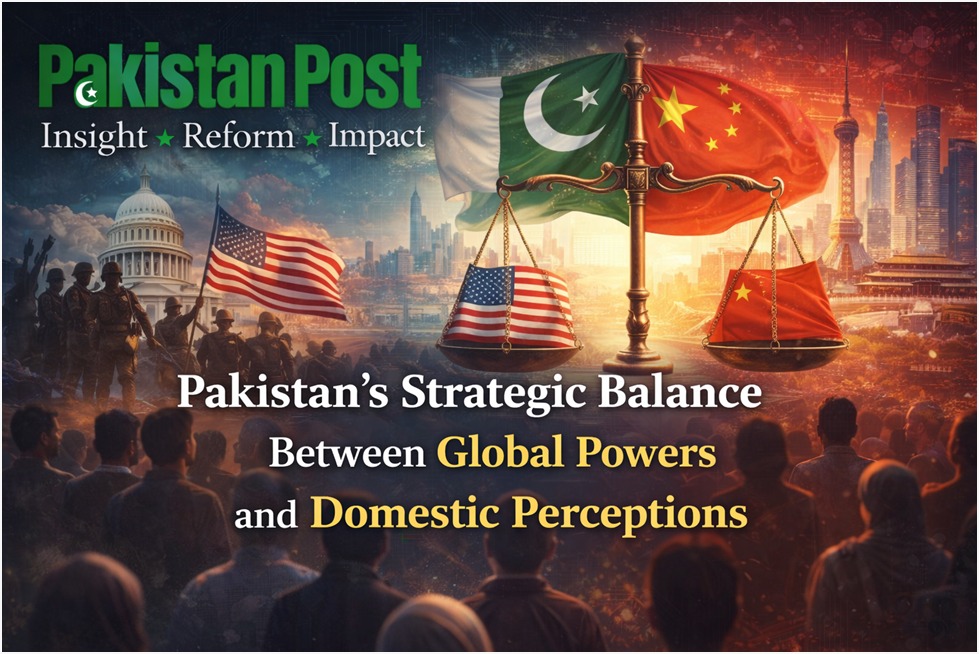
Pakistan’s Strategic Balance Between Global Powers and Domestic Perceptions
The global geopolitical landscape in 2025 is, by almost any measure, in a state of profound flux. Longstanding post‑Cold War assumptions about the endurance of a U.S.‑centered unipolar world have been overtaken by a more complex, unevenly articulated multipolar reality. Deepening rivalry between

China’s Strategic Autonomy Proposition: Enabling Europe’s Multipolar Equilibrium Amid U.S.-China Rivalry
The contemporary international landscape is witnessing a profound realignment of global power structures. The post-Cold War order, defined by U.S.-led liberal internationalism and the premise of shared norms among allied states, is increasingly challenged by the structural ascent of China and the emergence
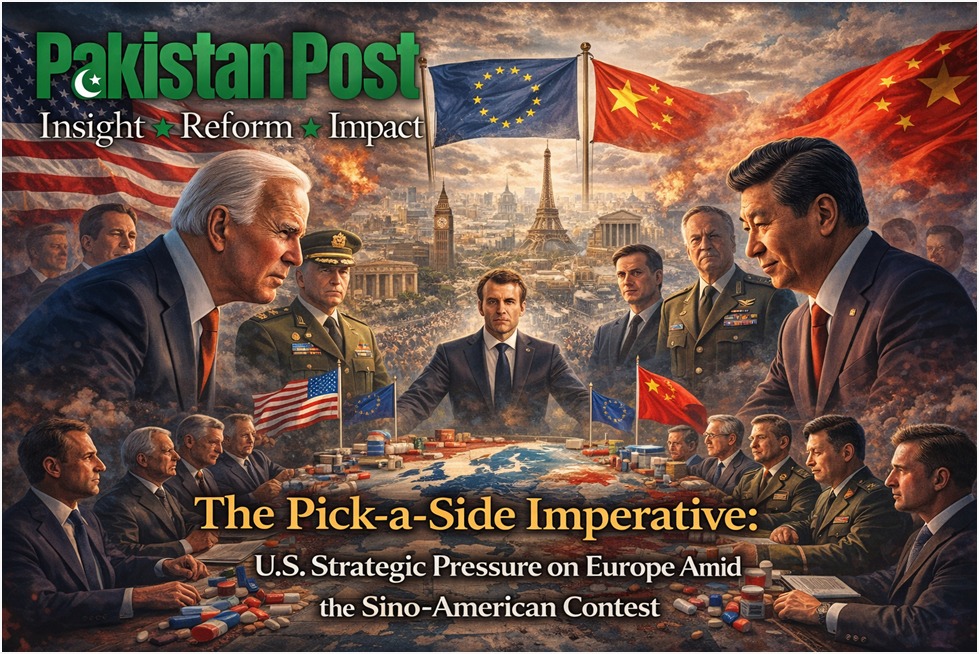
The Pick-a-Side Imperative: U.S. Strategic Pressure on Europe Amid the Sino-American Contest
The contemporary international system is undergoing a profound structural transformation. The post-Cold War era, characterized by a largely unipolar liberal order under U.S. hegemony, is giving way to a multipolar world in which systemic competition between great powers defines the architecture of global

Strategic Hedging Post-Iranian Crisis — How China and the Middle East Can Ensure Pakistan’s Stability in a Similar Situation
The ongoing turbulence in Iran has become a live demonstration of how pressure against states is now prosecuted in the modern international system. What is unfolding is not a classic confrontation of armies or borders, but a prolonged contest aimed at exhausting economic
Hybrid Intelligence Operations, Proxy Dynamics, and the Risk to Nuclear-Armed States
Across the cities and towns of Iran, from Tehran’s historic Grand Bazaar to the industrial belts of Isfahan and Mashhad, the economic crisis that has deepened since late 2025 has now erupted into the most significant wave of unrest the nation has seen

Geo-Economic Warfare and Inner-Front Destabilization- Lessons from Iran for Pakistan

The recent internal crisis in Iran is increasingly examined in global strategic discourse as a revealing case study of how modern geo-economic warfare and hybrid pressure mechanisms can converge to generate large-scale internal instability, even within states that possess strong ideological cohesion, complex

When Education Stops Building Nations and Starts Sorting Citizens: How Pakistan’s Schooling Model Converted Learning into a Class-Producing

Education serves as one of the most powerful vehicles for social development and national cohesion. Historically, countries like Finland, South Korea, post-war Germany, and early China leveraged their education systems to equalize cognitive capital, prioritizing inclusivity and collective advancement over monetization. However, Pakistan

The Language Paradox: When English Was Meant to Connect but Ended Up Silencing

In the landscape of modern education and communication in Pakistan, English holds a paradoxical status. Initially introduced as a means to bridge the country to the global sphere, providing opportunities for participation in economic, political, and cultural dialogues, it has evolved into a

Manufacturing Gen Z: Digital Syllabi, Donor Confidence, and the Quiet Rewriting of Culture

In an era characterized by rapid technological advancement and global interconnectedness, the educational landscape is undergoing a profound transformation, one that has been labeled as “modern education.” While the promise of modernity suggests a brighter future filled with opportunities for growth and enlightenment,