Hybrid Intelligence Operations, Proxy Dynamics, and the Risk to Nuclear-Armed States

Across the cities and towns of Iran, from Tehran’s historic Grand Bazaar to the industrial belts of Isfahan and Mashhad, the economic crisis that has deepened since late 2025 has now erupted into the most significant wave of unrest the nation has seen in years. What began as merchant strikes and protests over plunging currency value, runaway inflation, and shortages of basic necessities has evolved into sustained demonstrations that traverse demographic, class, and regional divides. By early January 2026, thousands of Iranians were mobilised across all 31 provinces, facing clampdowns that have, according to human rights monitors, resulted in hundreds of deaths and thousands of arrests amid nationwide internet blackouts and information curbs.
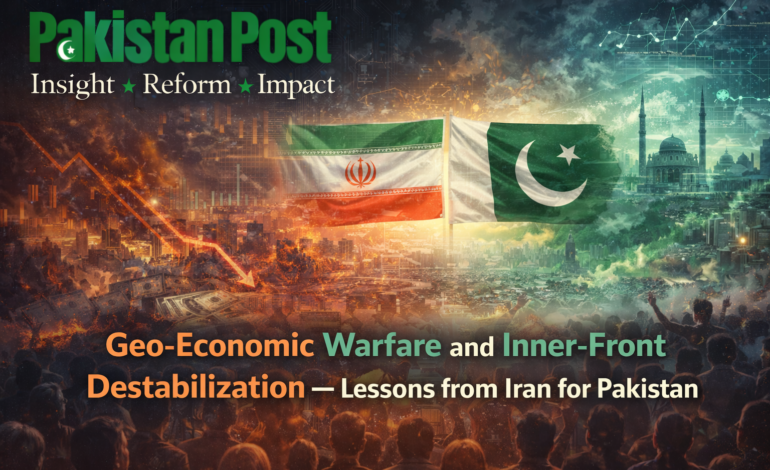
This unfolding situation highlights a stark reality of our era: hardened states with formidable conventional forces and nuclear capabilities are not immune to hybrid stress campaigns that combine economic coercion, information influence, proxy dynamics, and social fissures into a cascade of instability. In Iran’s case, the dramatic collapse of the rial to record lows spiraling from an already fragile exchange mechanism to over a million rials per US dollarhas not merely eroded purchasing power, it has hollowed lived security and public confidence.
At the operational level, modern hybrid campaigns are not monolithic strikes but architecture-wide pressures. Intelligence coordination across economic, social, and digital domains identifies societal fault lines; exile networks and diaspora messaging amplify narratives of grievance; cyber and digital channels propagate alternative frames and rally mobilization; and economic signalingthrough sanctions, banking exclusion, and market panictightens the noose on everyday livelihoods. The result is not a traditional battlefield confrontation but an inner-front erosion, where trust in institutions, markets, and governance is progressively undermined. These phenomena do not require explicit admissions of foreign orchestration; their potency lies in the synchronized exploitation of stress multipliers that exist within every open society.
Within South Asian and Middle Eastern strategic debate, agencies such as RAW and NDS are frequently referenced in Pakistan’s threat literature as examples of regional intelligence entities possessing human networks, diaspora links, and operational capacity. Separately, open-source analyses discuss the doctrinal and technical capabilities of CIA and Mossad as paradigms within hybrid influence operations. The analytical emphasis for policymakers is not on attributing specific actions in Iran to these services, but on understanding how multi-vector pressure mechanisms can intersect with internal vulnerabilities to produce rapid systemic strain.
Iran’s current upheaval reveals the limitations of narrow defensive postures. Nuclear deterrence and military depth, while deterring large-scale external invasion, do not inoculate a state against protracted economic instability, financial isolation, or social fracturing. Moreover, the presence of capable domestic security forces can paradoxically intensify unrest when they become instruments of repression rather than stabilization, feeding narratives of alienation and grievance that hybrid campaigns are designed to exploit.
For Iran’s leadership, the array of policy options that might have pre-empted or mitigated the crisis go to the heart of strategic economic management and external engagement. The structural drivers of the unrest are clear: an economy beset by chronic sanctions, constrained export avenues, diminished foreign reserves, and public sector mismanagement that has left large swathes of the population struggling with unchecked inflation, rising food prices, and declining access to basic services.
That a hard-target state with vast energy resources and longstanding ties with global markets did not rapidly pivot its external economic posture to stabilize its internal front reflects a combination of institutional risk aversion, geopolitical calculation, and the friction inherent in state decision-making under pressure. In theory, a more assertive financial strategy might have included earlier expansion of energy exports under non-dollar settlement mechanisms with major partners like China; broader adoption of yuan-based trade or alternative settlement systems; and creative use of emerging digital assets and stablecoins through third-party hubs to maintain liquidity and foreign exchange access. Such measures require prior preparation, credible trust frameworks with partners, and legal-institutional mechanisms to manage sanctions riskcapacities that cannot be effectively improvised during a crisis window. The relative delay in deploying such tools suggests that Tehran underestimated both the pace of economic deterioration and the compound risk of social reaction when macroeconomic stress crossed critical thresholds.
Historical comparisons reinforce this insight. During periods of economic coercion in the late twentieth century, states that diversified trade partners and rapidly instituted contingency financial frameworksincluding local currency swaps and regional clearing arrangementswere more resilient to external pressure. The absence of proactive financial-diplomatic hedging amplifies the structural effects of sanctions and magnifies the leverage of outside actors in shaping domestic outcomes.
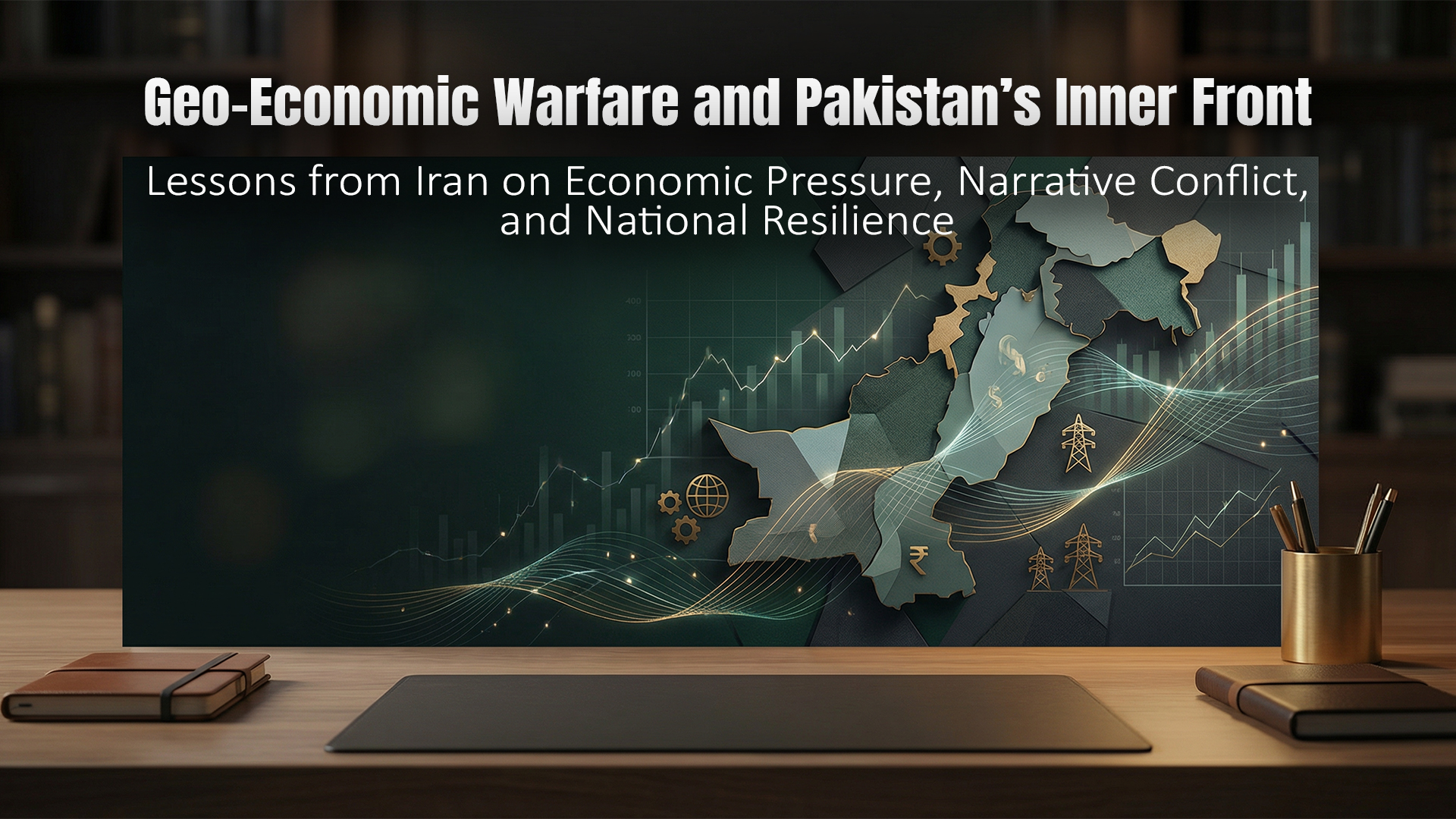
For Pakistan, the Iranian scenario is neither a distant Middle Eastern drama nor a theoretical case; it is a stark warning of the multi-dimensional risk environment that nuclear-armed countries face when internal governance, economic resilience, and external pressures intersect. Pakistan’s vulnerabilitiesurban density that amplifies mobilization effects, sharply divided political narratives, complex refugee and migrant demographics across porous border regions, and a digital information ecosystem where contested narratives can spread rapidlyconstitute pressure points that hybrid strategies seek to leverage. Coupled with episodic macroeconomic stress, these vulnerabilities can synchronize into a systemic shock that outpaces conventional security responses.
A robust response doctrine must therefore be whole-of-state and anticipatory. Intelligence reform should integrate economic, digital, and social analytics to detect stress accumulation before it becomes crisis. Civil-military coordination must extend beyond kinetic threats to encompass economic continuity and information environments. Cyber resilience strategies must priorities not only infrastructure protection but also narrative integrity, countering disinformation campaigns before they solidify into mass perceptions. Legal frameworks need to enable urgent economic stabilization measures while preserving transparency and public trust, forestalling the very grievances that hybrid pressures seek to magnify.
Geoeconomic architecture also matters. Pakistan must institutionalize diversified payment channels, currency swap lines, and strategic reserves, so that economic stress does not instantly translate into foreign exchange crises or shortages of essentials. Agreements with key partners should include explicit crisis support mechanisms and alternative settlement pathways, ensuring that global friction does not become domestic fracture. Engagement with the international community should emphasiseconomic integration, not isolation, as a buffer against external pressure vectors.
Iran’s present turmoil underscores a strategic truth of our age: the battleground of national security increasingly includes economic axes, narrative domains, and societal fault lines. Nuclear arsenals deter conventional battles, but they do not shield states from the cumulative impact of economic contraction, informational fracture, and social mobilization. For Pakistan and other nuclear-armed societies, the imperative is clearstrengthen internal resilience, anticipate hybrid pressures with calibrated policy instruments, and invest in systemic buffers that convert vulnerability into stability. In the evolving era of hybrid conflict, the security of the nation is inseparable from the stability of its economy, institutions, and social contract.
A Public Service Message