

Pakistan Hybrid Warfare IMF Energy Pressures Strategic Security Outlook Analysis

In the contemporary global order, the distinction between economic governance and strategic security has begun to dissolve into a single continuum of coercion, compliance, and contestation. For Pakistan, this convergence is not an abstract theoretical proposition but a lived structural condition, where fiscal

Invisible Frontiers Shape Pakistan Electoral Sovereignty Under Hybrid Warfare Pressures

Pakistan’s democratic architecture is no longer operating within the conventional boundaries of electoral competition. It is functioning inside a contested cognitive battlespace where information, perception, and institutional legitimacy are being weaponized simultaneously by domestic political actors, transnational ideological ecosystems, hostile digital networks, commercially
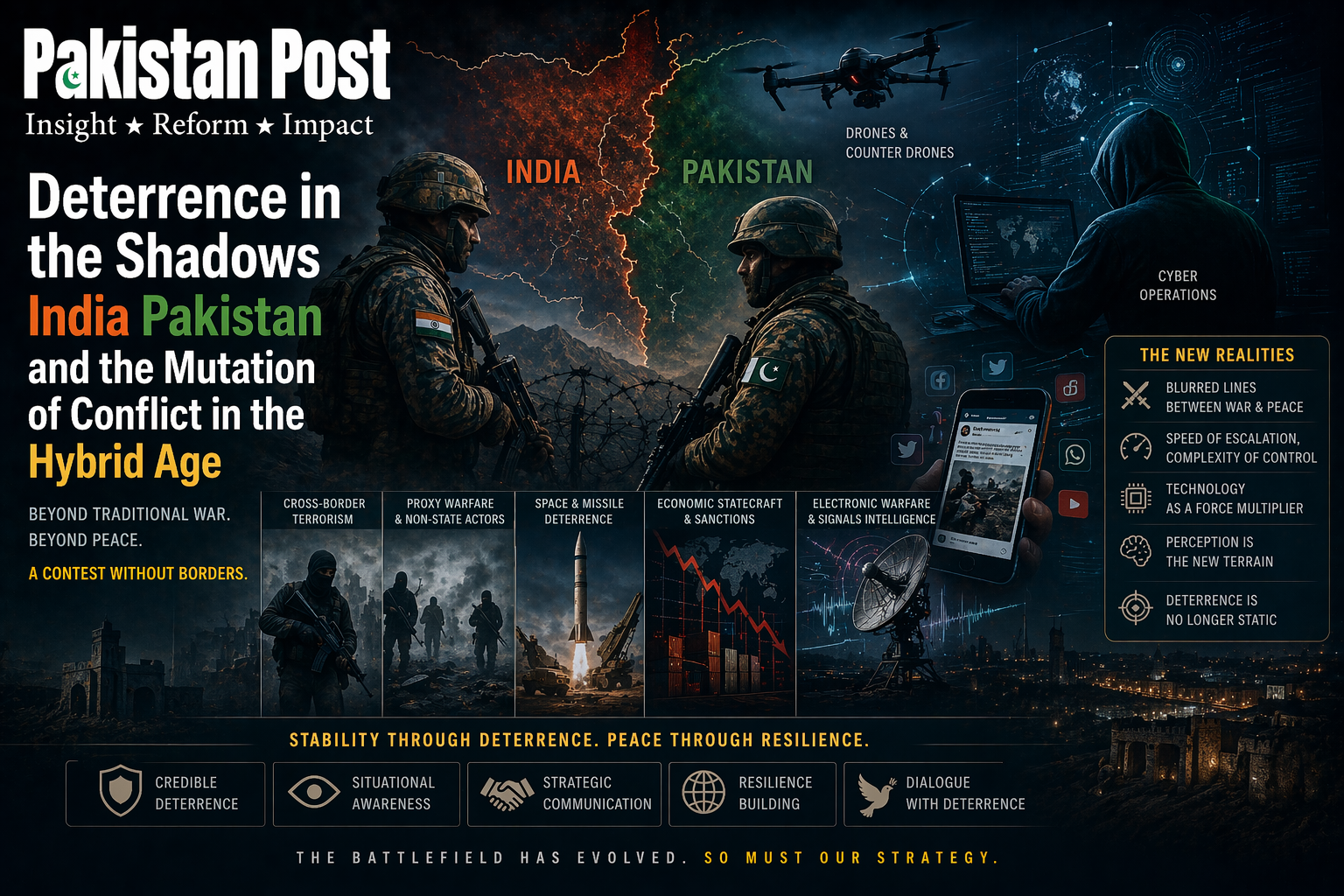
Deterrence in the Shadows India Pakistan and the Mutation of Conflict in the Hybrid Age

By: Shafqat Ali Qureshi The grammar of deterrence in South Asia has long been written in the language of nuclear parity, conventional force balance, and the uneasy stability that emerges when adversaries possess the capacity to inflict unacceptable damage upon one another. For
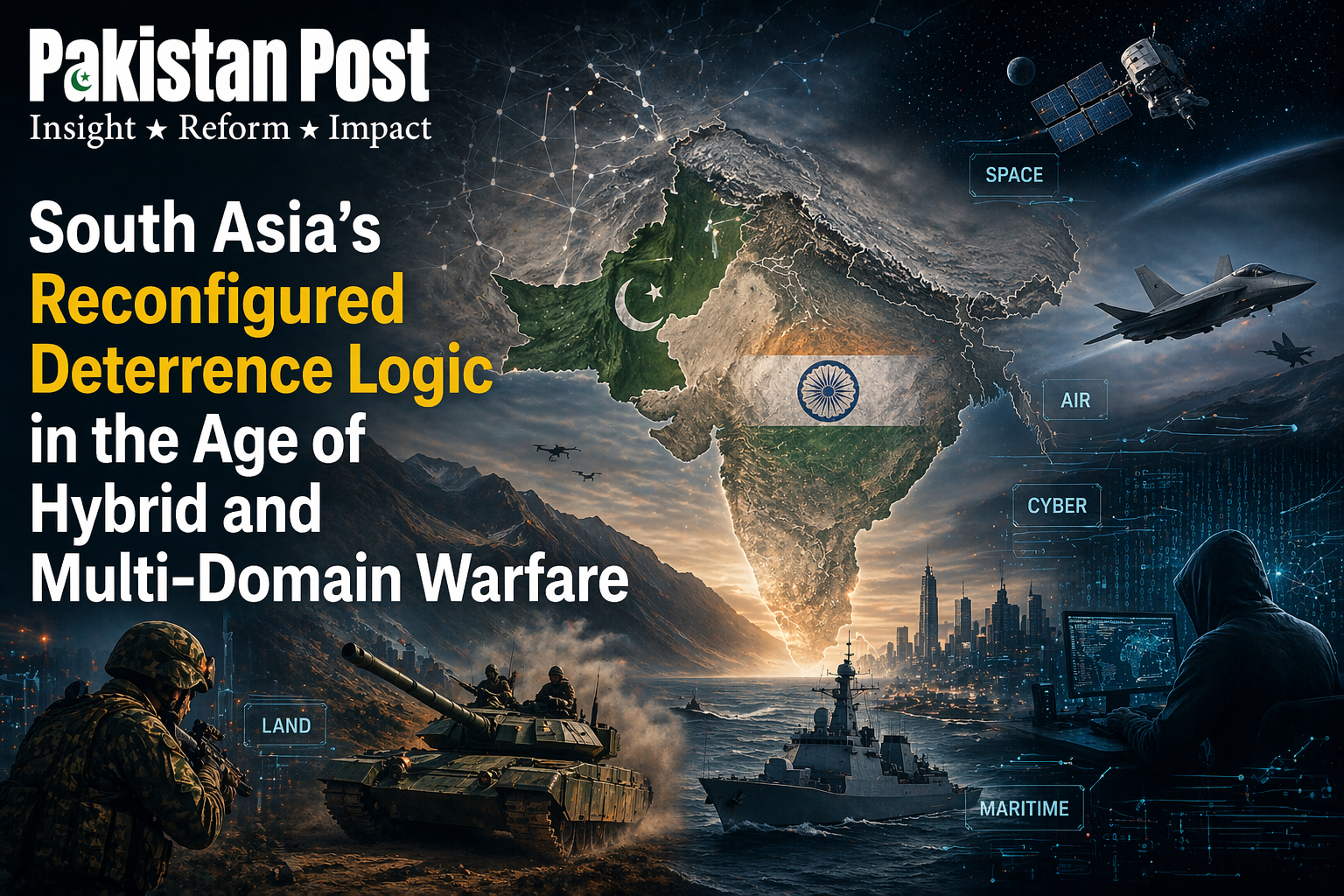
South Asia’s Reconfigured Deterrence Logic in the Age of Hybrid and Multi-Domain Warfare
Deterrence in South Asia is no longer anchored solely in the classical grammar of tanks, territory, and nuclear signaling. It is increasingly shaped by a far more diffuse and continuous form of competition in which cyber intrusions, drone operations, satellite surveillance, economic pressure,
Hybrid Intelligence Operations, Proxy Dynamics, and the Risk to Nuclear-Armed States
Across the cities and towns of Iran, from Tehran’s historic Grand Bazaar to the industrial belts of Isfahan and Mashhad, the economic crisis that has deepened since late 2025 has now erupted into the most significant wave of unrest the nation has seen

Geo-Economic Warfare and Inner-Front Destabilization- Lessons from Iran for Pakistan

The recent internal crisis in Iran is increasingly examined in global strategic discourse as a revealing case study of how modern geo-economic warfare and hybrid pressure mechanisms can converge to generate large-scale internal instability, even within states that possess strong ideological cohesion, complex