
Pakistan as the Pivot Node in the Reconstitution of Maritime Order in the Strait of Hormuz

The contemporary restructuring of maritime order is no longer adequately interpretable through the inherited lexicon of hegemonic dominance, naval primacy, or unilateral enforcement. The system is instead gravitating toward a more intricate equilibrium of distributed authority, in which influence is exercised through interconnected
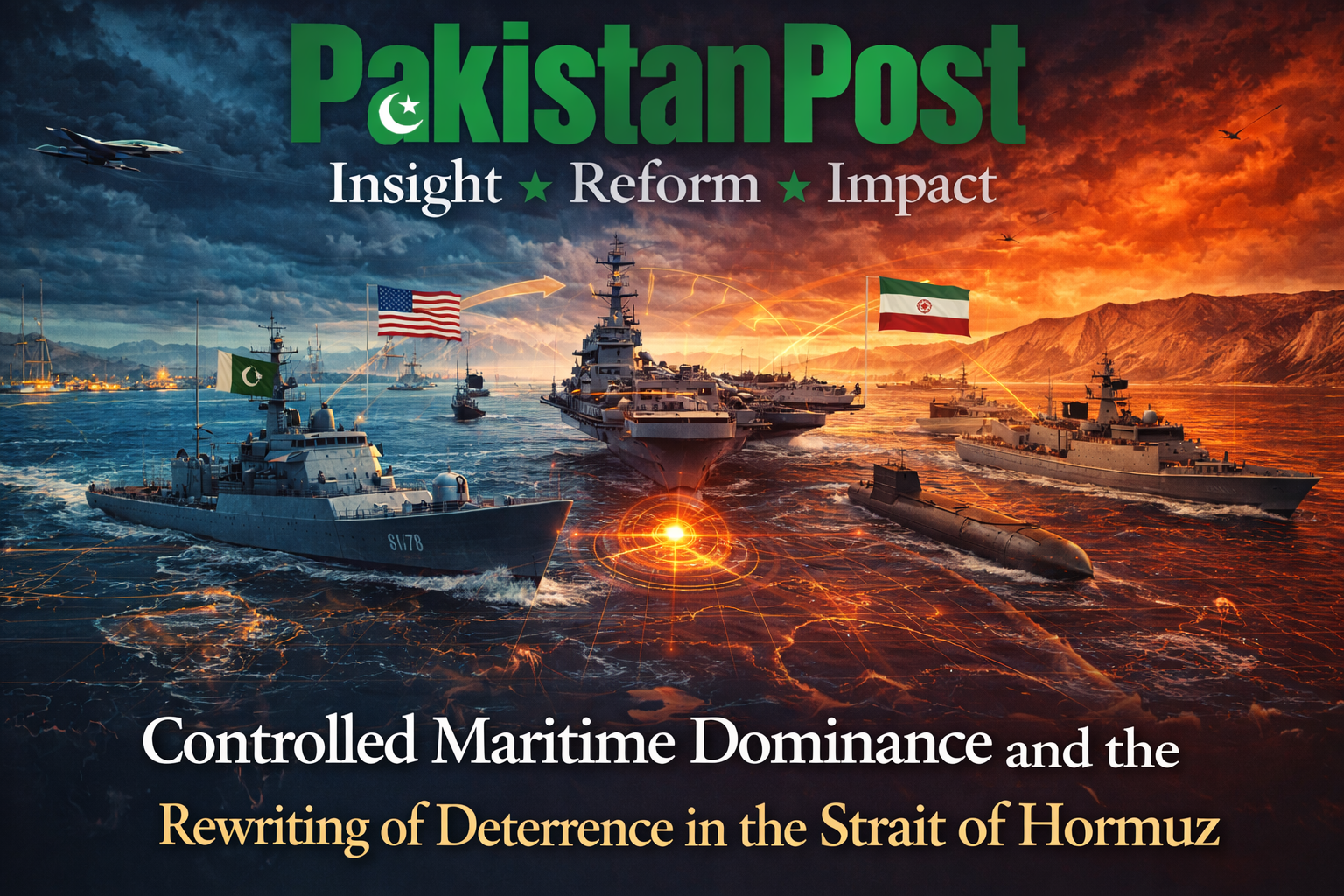
Controlled Maritime Dominance and the Rewriting of Deterrence in the Strait of Hormuz

The evolution of maritime security doctrine in the twenty first century reflects a decisive movement away from the rigid binaries of war and peace toward a more fluid spectrum of calibrated control. Within this shifting doctrinal landscape, the concept of controlled maritime dominance

The Triple Constraint on the United States: Pakistan’s Strategic Role in Reshaping Power in the Strait of Hormuz
The contemporary structure of global power competition is undergoing a subtle yet profound transformation, one that is increasingly defined not by direct confrontation but by the construction of layered constraints that limit the operational flexibility of dominant actors. Within this evolving landscape, the

Gwadar as a Strategic Command Node in the Reconfiguration of Global Energy Flows

The evolution of strategic infrastructure in the contemporary international system is no longer confined to economic facilitation alone. It has expanded into a central instrument of geopolitical influence, particularly in regions where geography, commerce, and security intersect with high strategic sensitivity. Within this

Pakistan as the Pivot of Post-American Gulf Security in the Strait of Hormuz

The architecture of Gulf security is undergoing a profound and irreversible reconfiguration, one that is gradually displacing the entrenched paradigm of singular external guarantorship with a more distributed and regionally embedded system of stabilization. For decades, the strategic equilibrium of the Gulf remained

Sovereign Maritime Doctrine and the Reconfiguration of Control in the Strait of Hormuz
The transformation of maritime power in the twenty first century is no longer defined by the crude arithmetic of fleet size or the theatrical projection of naval supremacy. Instead, it is increasingly determined by the capacity of states to engineer layered systems of
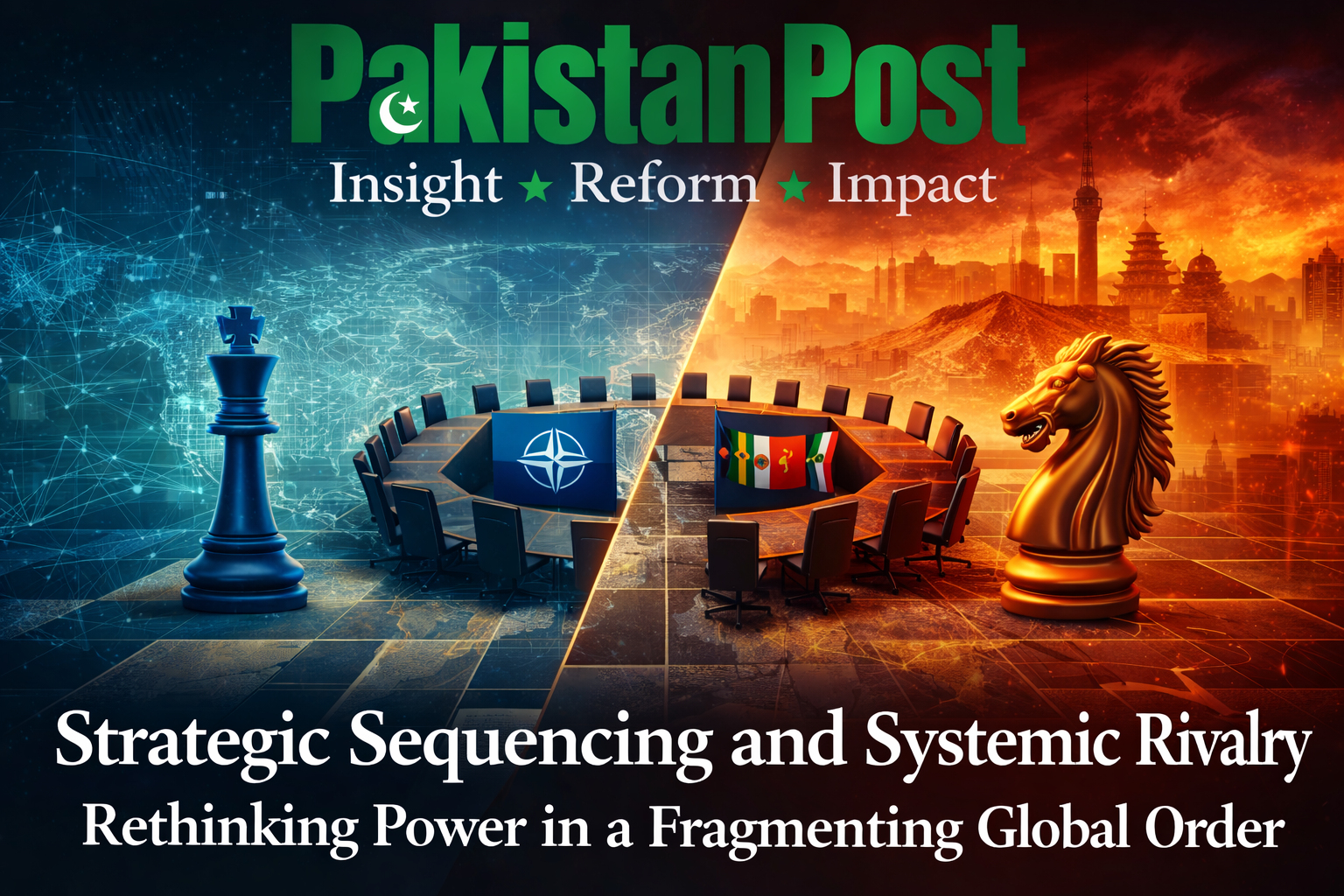
Strategic Sequencing and Systemic Rivalry Rethinking Power in a Fragmenting Global Order
In moments of geopolitical tension it is tempting to interpret events as isolated crises wars as sudden eruptions economic downturns as failures and political polarization as dysfunction Yet such a reading often obscures a deeper structural logic Increasingly analysts are asking whether contemporary

Global Power Shifts Between Stability and Emerging Instability
In the contemporary global order, events rarely arrive as isolated shocks. They appear instead as overlapping disturbances in an increasingly interconnected system where economics, politics, culture, and information flows are tightly interwoven. Wars, financial volatility, technological disruption, and political polarization are often treated

The Silence of the Scales
By: Ghulam Sajjad Gopang Senior Lawyer of Supreme Court On 30 March 2026, a decision delivered by the Court in Dadu, Sindh, marked a deeply consequential moment in the administration of justice in Pakistan. The acquittal of individuals holding elected public office, including
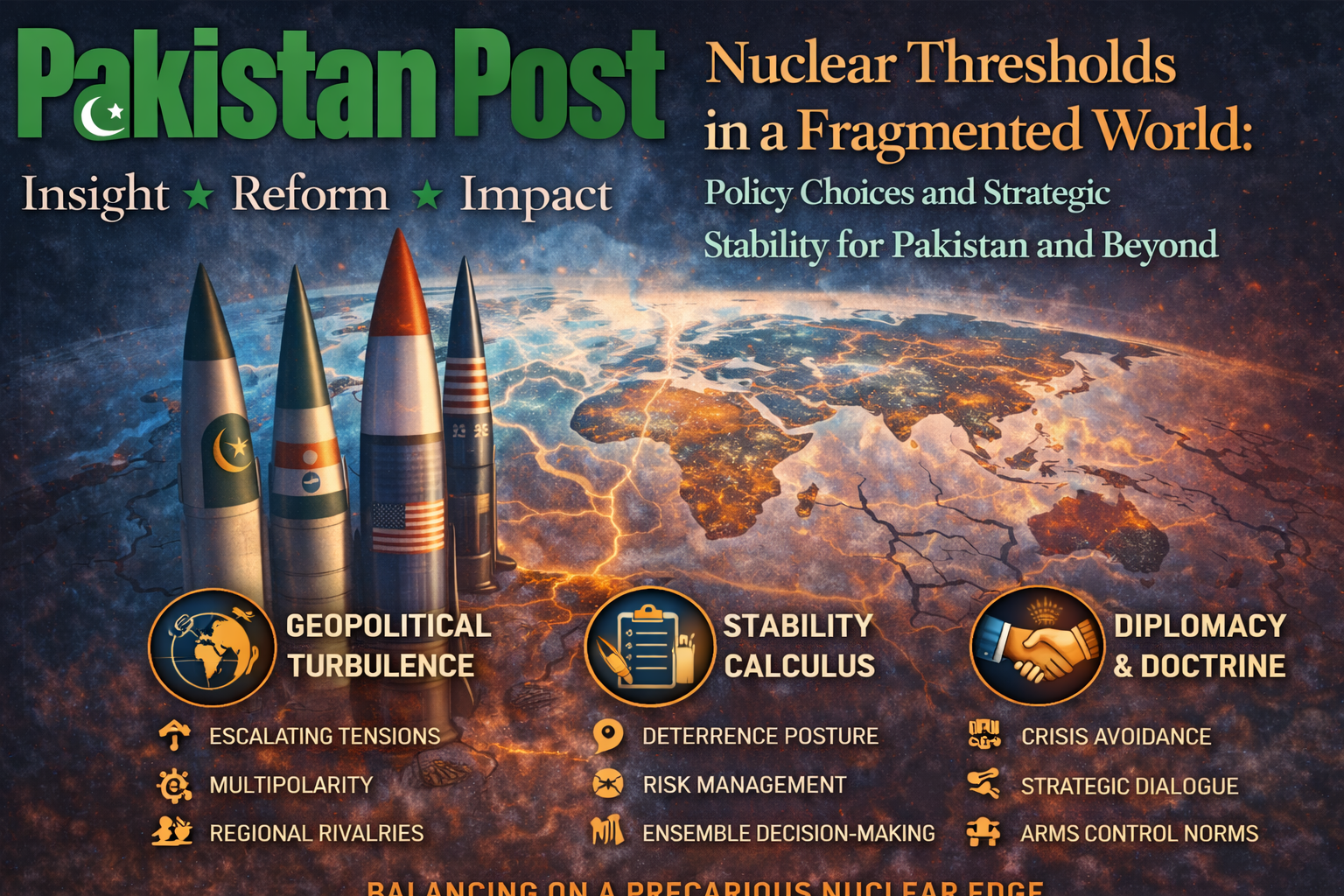
Nuclear Thresholds in a Fragmented World: Policy Choices and Strategic Stability for Pakistan and Beyond

The nuclear question has returned to the center of global strategic though not as a distant abstraction but as an immediate and structuring force shaping policy choices, economic alignments, and the psychological climate of nations. For policymakers and analysts observing the current geopolitical