
Pakistan as the Pivot of Post-American Gulf Security in the Strait of Hormuz


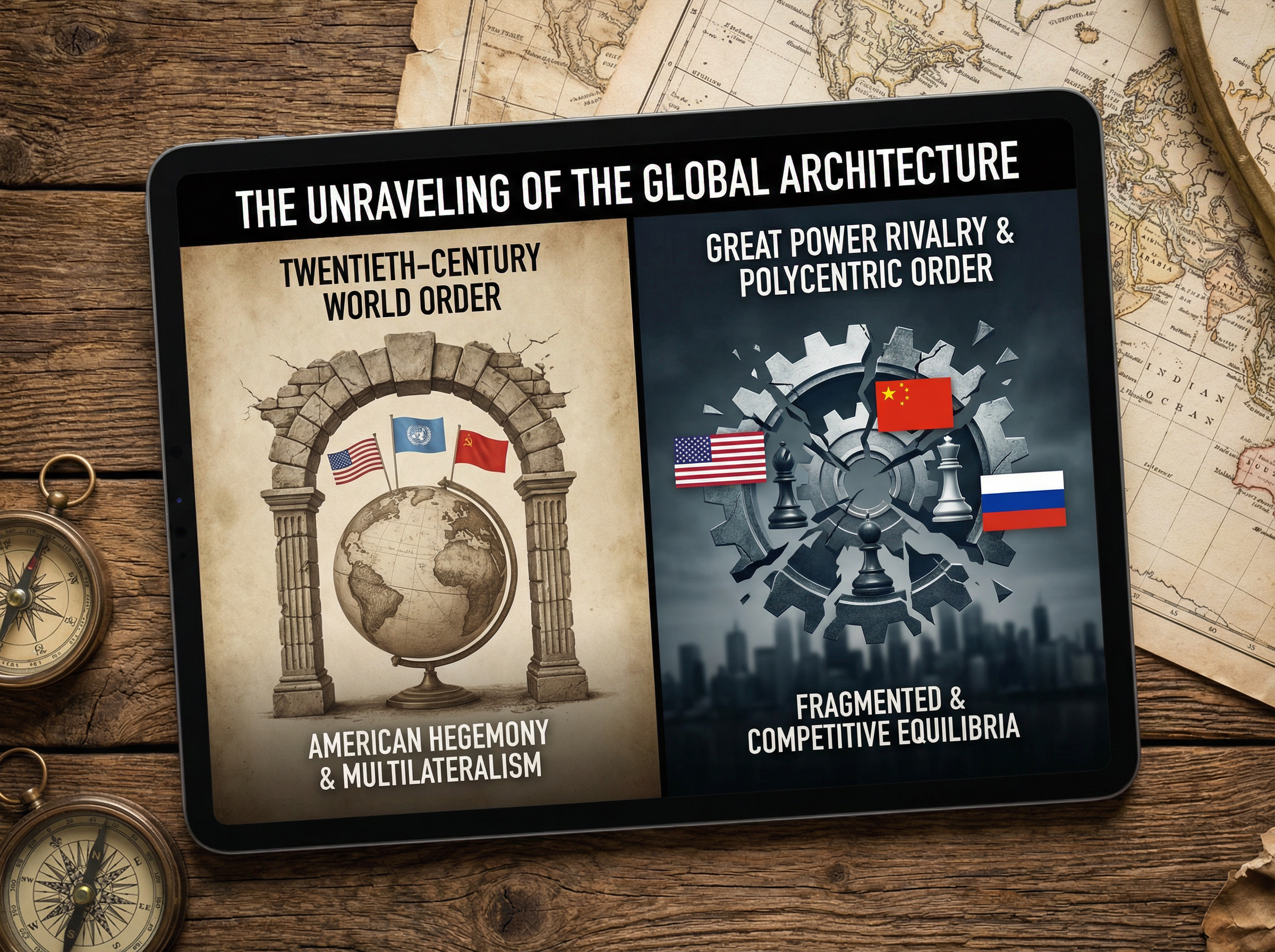
The architecture of Gulf security is undergoing a profound and irreversible reconfiguration, one that is gradually displacing the entrenched paradigm of singular external guarantorship with a more distributed and regionally embedded system of stabilization. For decades, the strategic equilibrium of the Gulf remained tethered to the overwhelming naval and expeditionary presence of the United States, whose doctrinal reliance on forward deployment and rapid escalation ensured a form of deterrence rooted in visibility and coercive credibility. Yet, as the systemic pressures of multipolarity intensify and the costs of unilateral enforcement escalate, this model is encountering diminishing returns. Within this transitional milieu, Pakistan is emerging not as a peripheral adjunct but as a central stabilizing axis, co constructing with China a layered maritime control architecture that redefines both deterrence and governance in the vicinity of the Strait of Hormuz.
This transformation is not the product of abrupt strategic rupture but of incremental recalibration. Pakistan’s historical role within Gulf security frameworks was largely circumscribed by its alignment patterns and resource constraints. It functioned as a supportive actor, contributing to coalition operations and maintaining bilateral defense ties, yet lacking the autonomous capacity to shape the broader security environment. The contemporary shift, however, reflects a deliberate effort to transcend this auxiliary status and to reposition Pakistan as a provider of security rather than a consumer of externally supplied stability.
At the core of this repositioning lies the development of a multi layered maritime control system that integrates kinetic capabilities with informational dominance. Unlike traditional deterrence, which is predicated on the threat of retaliation, this system operates through the continuous modulation of risk across multiple domains. Subsurface deployments, including strategically positioned submarines, create a latent deterrent that complicates adversarial calculations without necessitating overt confrontation. These are complemented by missile envelopes that extend across critical transit corridors, establishing zones of graduated denial that can be activated with precision and restraint.
However, the true innovation of this architecture resides not in its individual components but in their integration. Through advanced command and control systems, Pakistan is increasingly capable of synchronizing its naval, aerial, and surveillance assets into a cohesive operational framework. This integration is further enhanced by collaboration with China, whose technological contributions in areas such as remote sensing, satellite communication, and data analytics amplify the effectiveness of Pakistan’s indigenous capabilities. The result is a composite system in which visibility is replaced by awareness, and presence by influence.
The port of Gwadar occupies a central position within this architecture. Situated in close proximity to the Hormuz chokepoint, Gwadar serves as both a logistical hub and a command interface through which maritime operations are coordinated. Its evolution from a commercial facility into a strategic node reflects a broader convergence of economic and security imperatives. By integrating port operations with surveillance networks and intelligence fusion centers, Pakistan is transforming Gwadar into a site of continuous situational awareness, enabling anticipatory rather than reactive responses to emerging developments.
This transformation has significant implications for the nature of deterrence in the region. The classical model, characterized by large scale naval deployments and overt demonstrations of force, is increasingly being supplanted by a subtler form of control. In this new paradigm, deterrence is achieved not through the threat of overwhelming retaliation but through the creation of an environment in which the costs and uncertainties associated with non compliance are systematically elevated. Actors transiting the Strait are thus compelled to operate within a framework shaped by Pakistan’s regulatory influence, even in the absence of explicit coercion.
Crucially, this shift does not entail the exclusion of other stakeholders. On the contrary, Pakistan’s approach is predicated on the incorporation of regional actors into a broader system of managed stability. Engagements with Gulf states, as well as with neighboring Iran, reflect an understanding that durable security cannot be imposed externally but must be co constructed through dialogue and coordination. These diplomatic efforts complement the maritime architecture by fostering an environment of mutual assurance, thereby reducing the likelihood of miscalculation and escalation.
The role of China within this framework is both enabling and synergistic. While Pakistan provides the geostrategic platform and operational proximity, China contributes the technological and financial resources necessary to sustain and expand the system. This partnership, however, should not be misconstrued as hierarchical. Pakistan’s agency is evident in its ability to adapt and internalize these inputs within its own strategic doctrine, thereby ensuring that the resulting architecture reflects national priorities as well as shared objectives.
From a broader geopolitical perspective, the emergence of Pakistan as a pivot in Gulf security signifies a shift in the distribution of strategic authority. The region is no longer defined by a binary opposition between local actors and external guarantors but is instead characterized by a more complex interplay of regional and extra regional forces. Within this configuration, Pakistan occupies a unique position, bridging South Asia, the Middle East, and the broader Indian Ocean region. This positionality enhances its capacity to mediate, coordinate, and, when necessary, regulate interactions across these interconnected spaces.
The economic dimension of this transformation further reinforces Pakistan’s centrality. As Gwadar becomes increasingly integrated into regional and global trade networks, its stability assumes heightened importance for a wide range of stakeholders. Energy flows, in particular, are heavily dependent on the uninterrupted functioning of the Hormuz corridor. By positioning itself as a guarantor of this stability, Pakistan is able to translate its strategic role into economic leverage, attracting investment and fostering interdependence.
Yet, the consolidation of this role is contingent upon the effective management of several challenges. Technological integration must be continuously updated to keep pace with evolving threats. Diplomatic engagements must navigate the complex and often competing interests of regional actors. Domestic stability, particularly in areas surrounding Gwadar, must be ensured to prevent internal disruptions from undermining external credibility. Each of these factors represents a potential point of vulnerability that requires sustained attention and strategic foresight.
Moreover, the response of other major powers to this emerging architecture will play a critical role in shaping its trajectory. While some may view Pakistan’s ascent as a stabilizing development, others may perceive it as a challenge to established interests. The manner in which Pakistan navigates these perceptions, balancing assertion with reassurance, will determine the extent to which its role as a security provider is accepted or contested.
Despite these uncertainties, the direction of change is increasingly evident. Pakistan is transitioning from a position of dependency to one of agency, from a consumer of security to a producer of stability. This transition is not merely a function of enhanced capabilities but of a fundamental shift in strategic outlook. By embracing a model of controlled access and integrated governance, Pakistan is redefining the parameters of maritime power in the Gulf.
In conclusion, the emergence of Pakistan as the pivot of post American Gulf security reflects a broader transformation in the nature of international order. As the limitations of unilateral dominance become more apparent, new forms of cooperation and co design are coming to the fore. Through its partnership with China and its own doctrinal evolution, Pakistan is at the forefront of this transition, shaping a system that is at once more distributed, more adaptive, and more reflective of the complexities of the contemporary world.
A Public Service Message