

Climate Vulnerability and the Emerging National Security Equation in Pakistan

Pakistan’s exposure to climate change has moved beyond the realm of environmental concern and into the structural core of state stability. Once treated primarily as a developmental or humanitarian challenge, climate variability is now increasingly shaping the country’s economic resilience, food systems, urban

Institutional Fragmentation and the Shifting Civil–Military Equilibrium in Pakistan

Pakistan’s governance system has long been described as a layered state, where formal constitutional arrangements coexist with informal centres of authority that shape policy direction, crisis response, and strategic decision-making. Over time, this coexistence has not matured into stable power-sharing but has instead
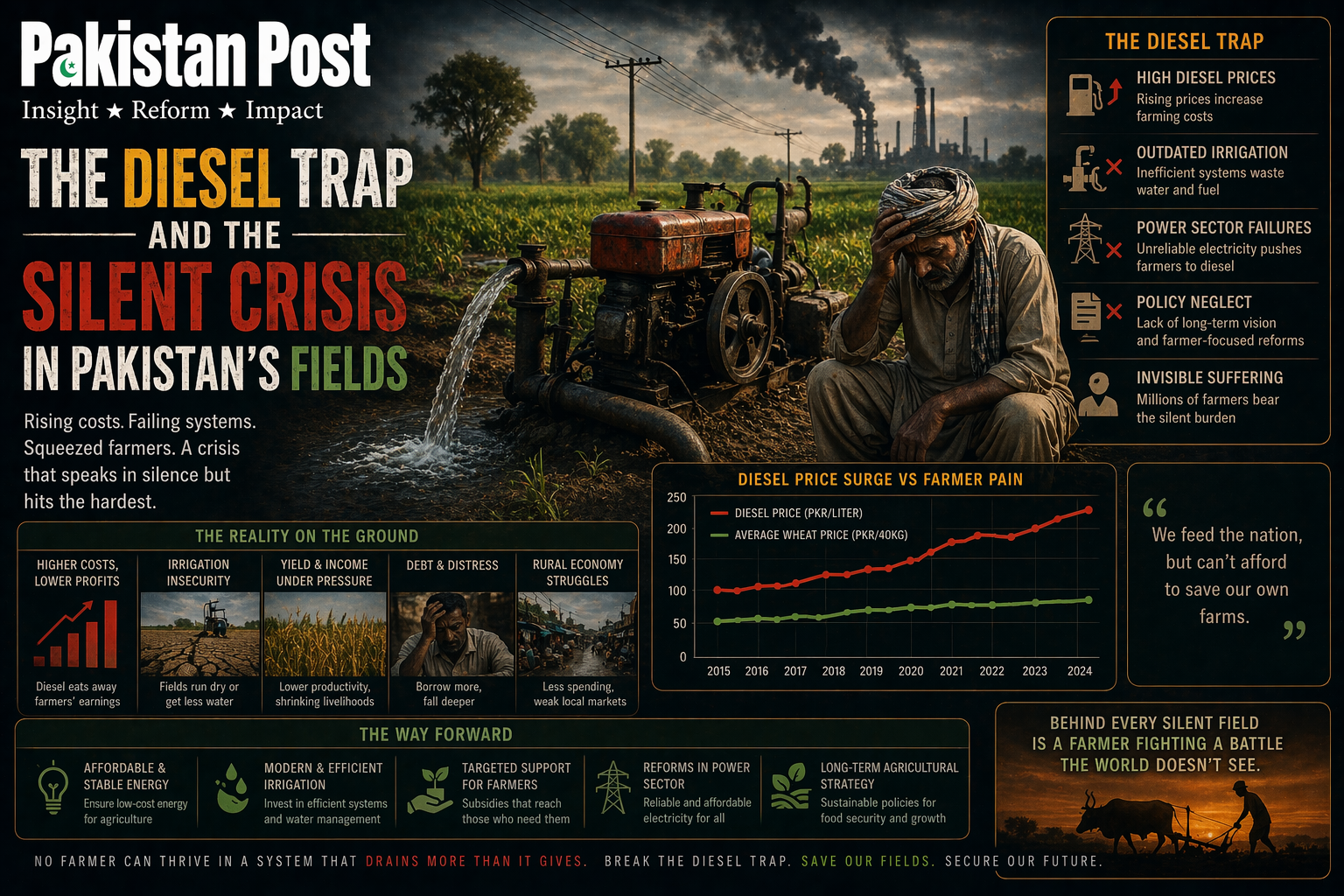
The Diesel Trap and the Silent Crisis in Pakistan’s Fields

In Pakistan’s countryside, the sound of agriculture is increasingly the sound of diesel engines. It powers tubewells, runs tractors, moves harvests, and sustains irrigation in a water-stressed economy. Yet this dependence has become a trap. As diesel prices climb, the cost of simply
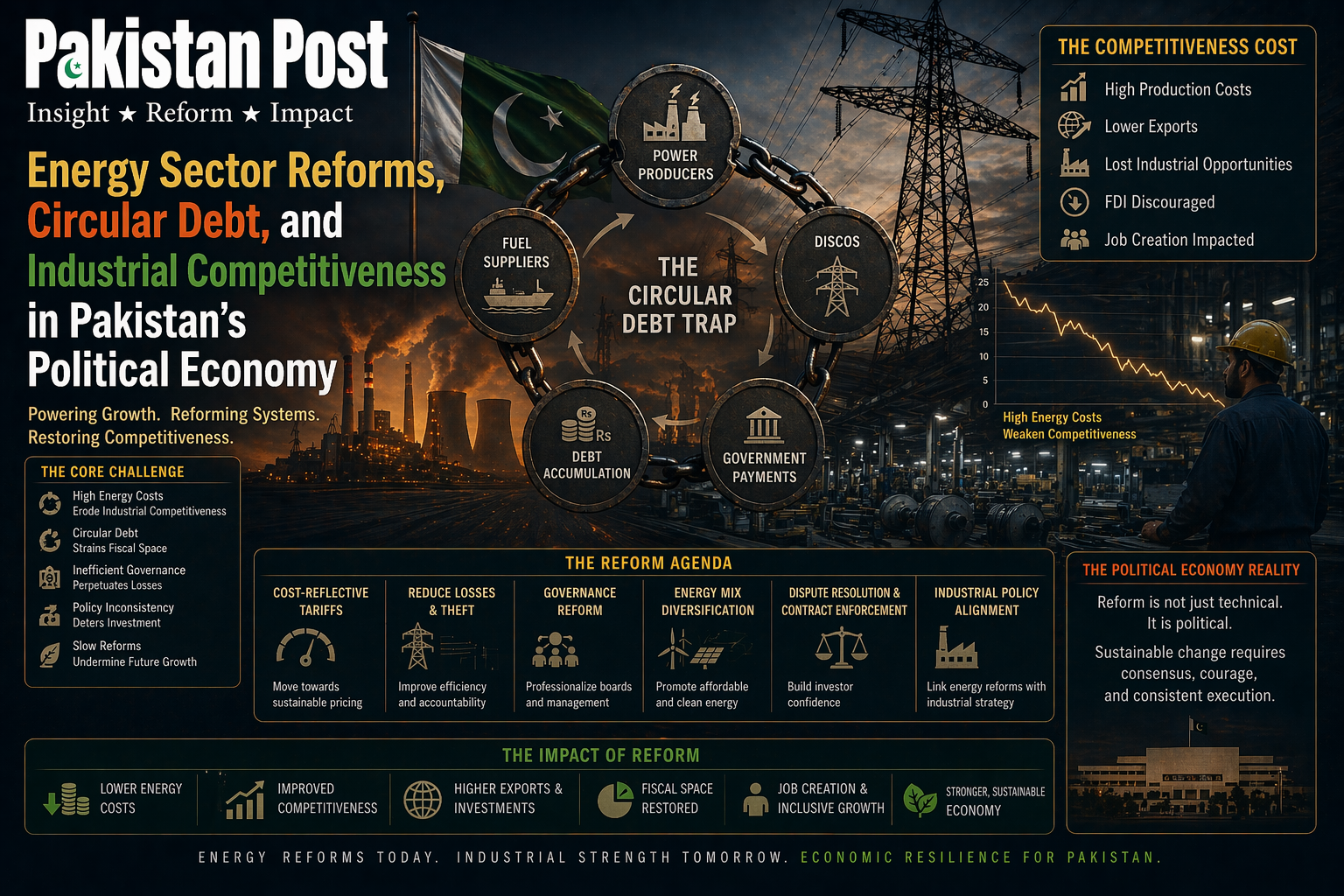
Energy Sector Reforms, Circular Debt, and Industrial Competitiveness in Pakistan’s Political Economy
Pakistan’s energy sector sits at the core of its macroeconomic instability and industrial underperformance, functioning simultaneously as a driver of fiscal stress, a constraint on export competitiveness, and a persistent source of political contestation. Over the past decade, successive governments have introduced a
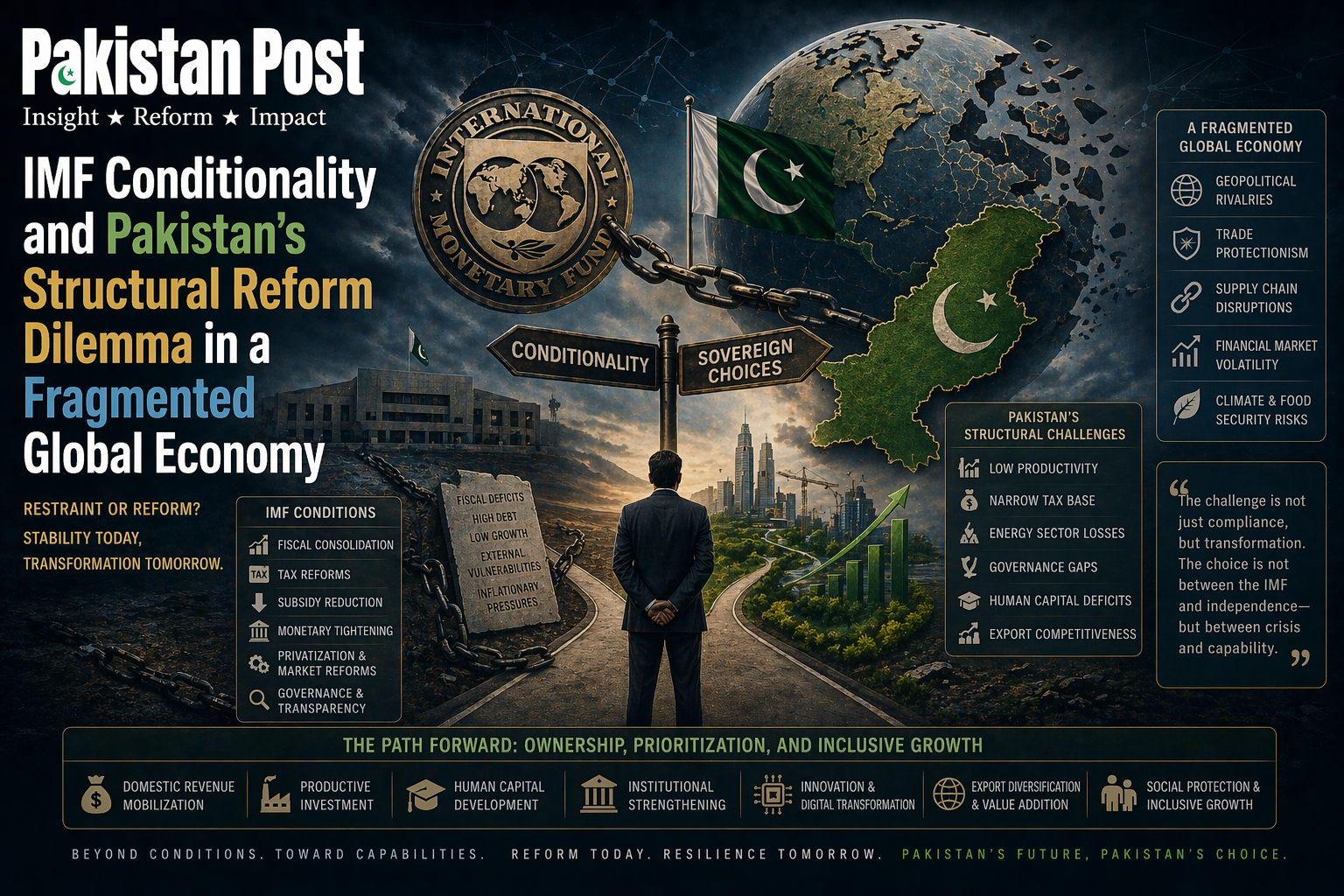
IMF Conditionality and Pakistan’s Structural Reform Dilemma in a Fragmented Global Economy

Pakistan’s economic story in recent years has increasingly been written in the language of stabilization, adjustment, and external dependency. At the center of this narrative sits the International Monetary Fund, returning repeatedly as lender of last resort, policy architect, and macroeconomic disciplinarian. Yet
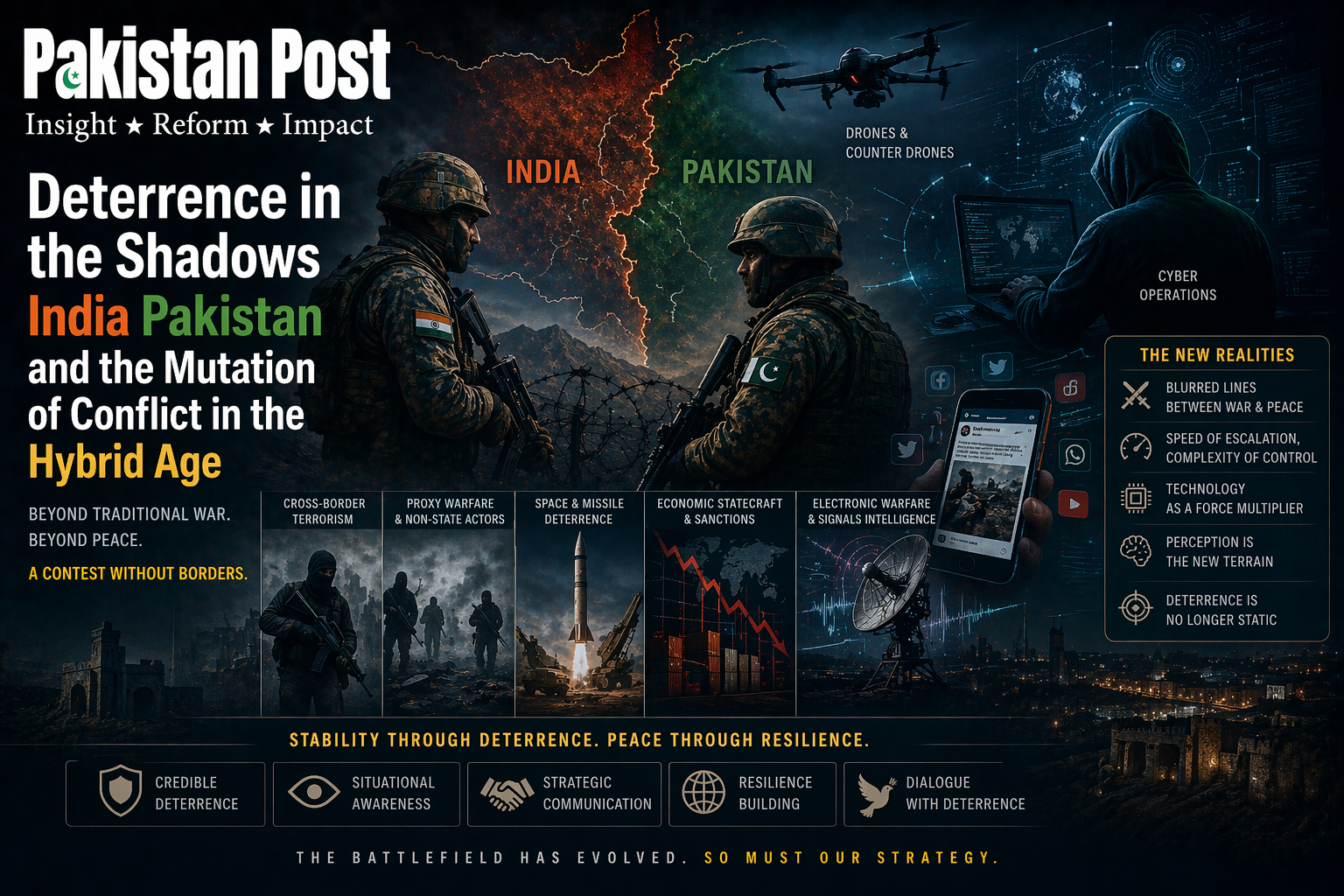
Deterrence in the Shadows India Pakistan and the Mutation of Conflict in the Hybrid Age

By: Shafqat Ali Qureshi The grammar of deterrence in South Asia has long been written in the language of nuclear parity, conventional force balance, and the uneasy stability that emerges when adversaries possess the capacity to inflict unacceptable damage upon one another. For
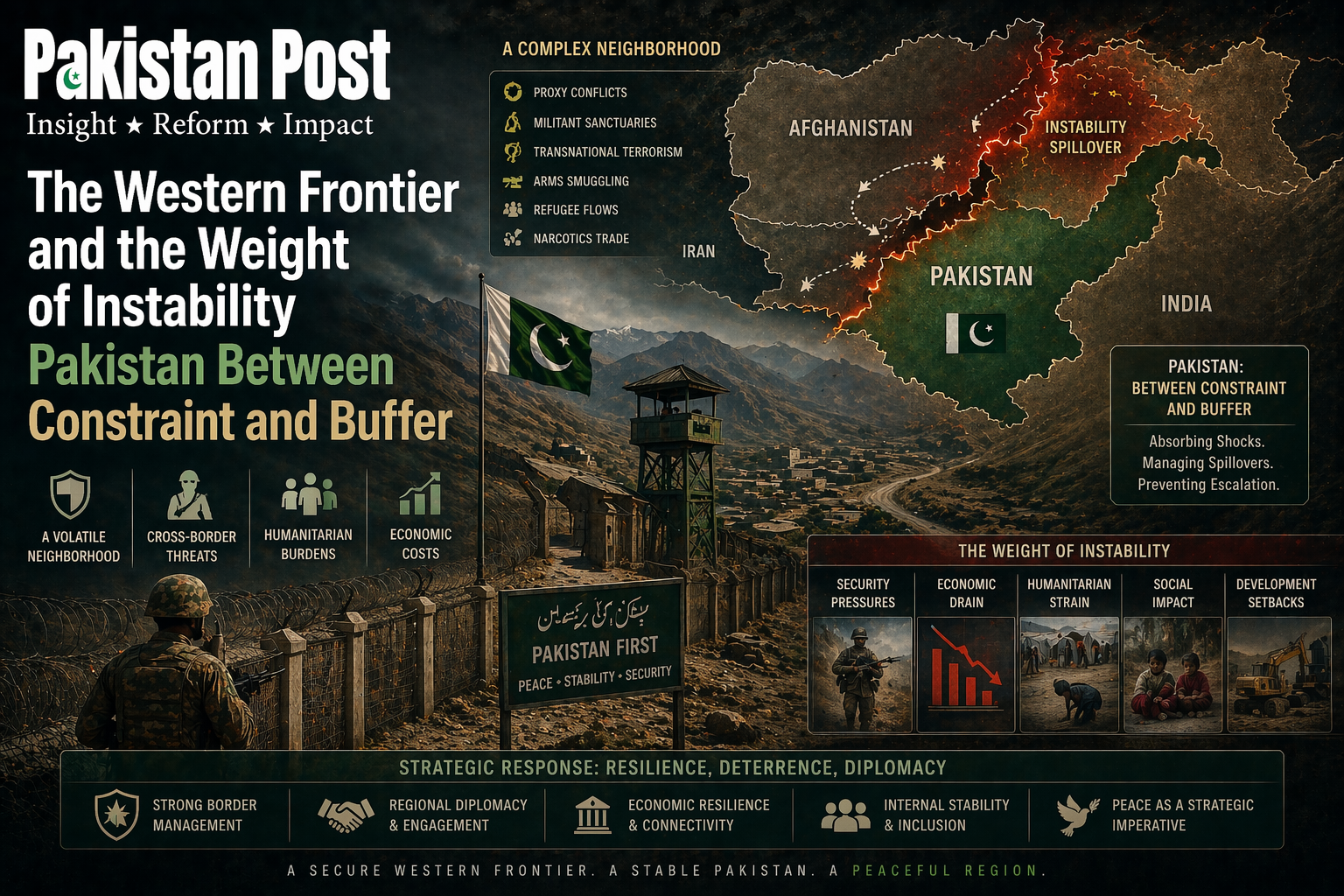
The Western Frontier and the Weight of Instability Pakistan Between Constraint and Buffer

The persistence of instability in Afghanistan has long been treated as a chronic condition of regional politics, an enduring reality that defies both external intervention and internal consolidation. Yet in the current geopolitical moment, this instability has acquired a renewed and more complex

Between Giants and Guardians Pakistan’s Search for Strategic Sovereignty

The geometry of power in the twenty-first century is no longer defined by singular dominance but by intersecting axes of influence, where economic leverage, security guarantees, ideological affinity, and financial dependency converge in ways that defy traditional alliance structures. For Pakistan, this evolving
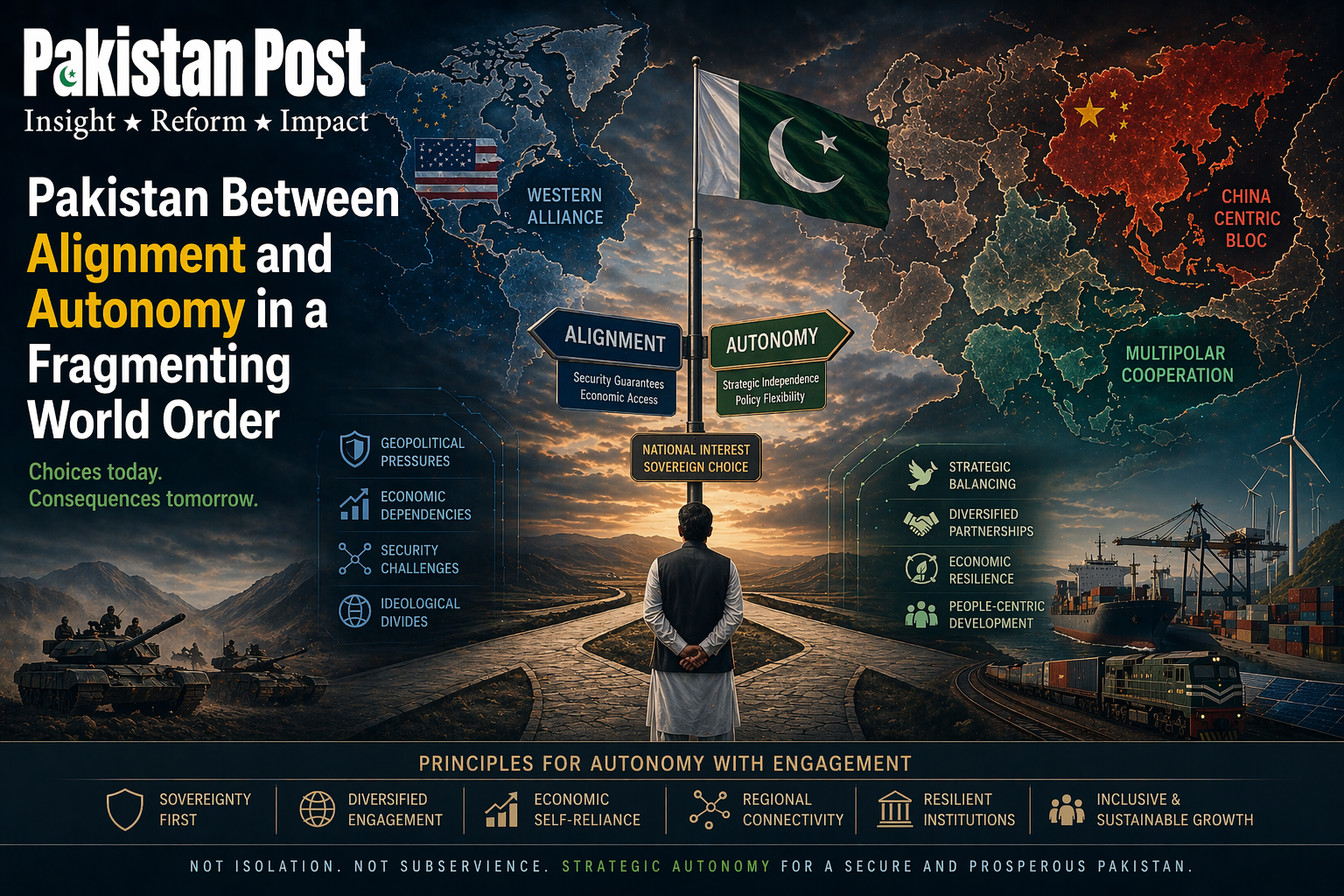
Pakistan Between Alignment and Autonomy in a Fragmenting World Order

The slow unravelling of the post-Cold War order is no longer a matter of academic speculation but an observable reality, unfolding across trade corridors, security alliances, and diplomatic theatres with a clarity that even its architects can no longer obscure. The era in

Digital Finance, Informal Economies, and the Struggle for Economic Visibility in Pakistan’s Transition to a Data-Driven Financial Order
The global economy is entering a phase where value is no longer measured solely through physical output, but increasingly through data, traceability, and digital financial footprints. In this emerging order, digital finance is not simply a technological upgrade to existing banking systems; it