
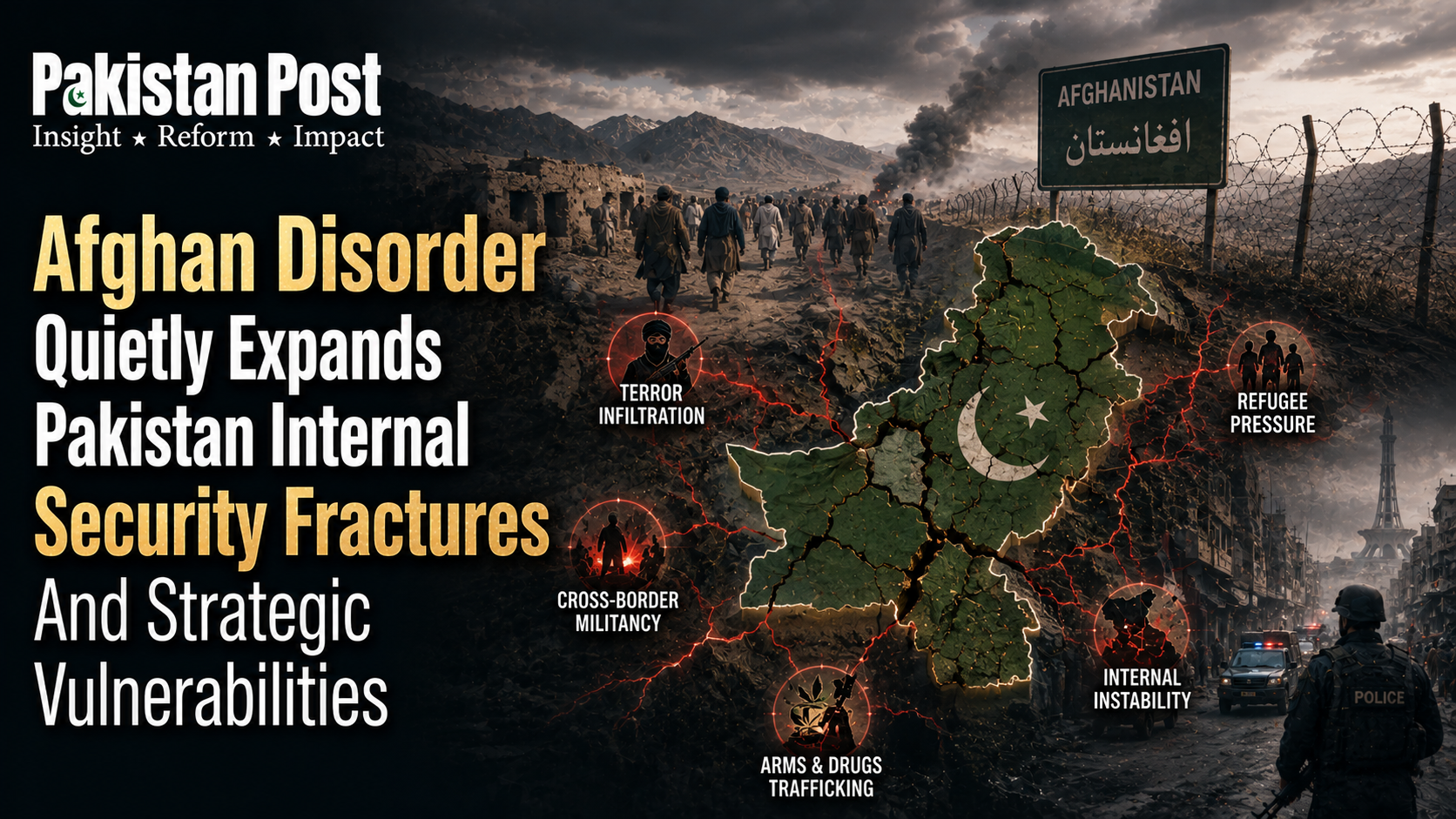
Afghan Disorder Quietly Expands Pakistan Internal Security Fractures And Strategic Vulnerabilities

The Afghan conflict did not end with the American withdrawal. It merely changed form. What collapsed in Kabul was not instability itself, but the architecture through which instability had previously been managed, monitored, financed, and internationally contained. The prevailing assumption within sections of

Silent Oceans Surround Pakistan Amid Expanding Maritime Encirclement And Strategic Vulnerabilities
The Indian Ocean is no longer an ocean in the traditional geopolitical sense. It is becoming a militarized algorithm. Beneath the commercial language of trade corridors, maritime cooperation, blue economy integration, and freedom of navigation, an invisible security architecture is consolidating across the
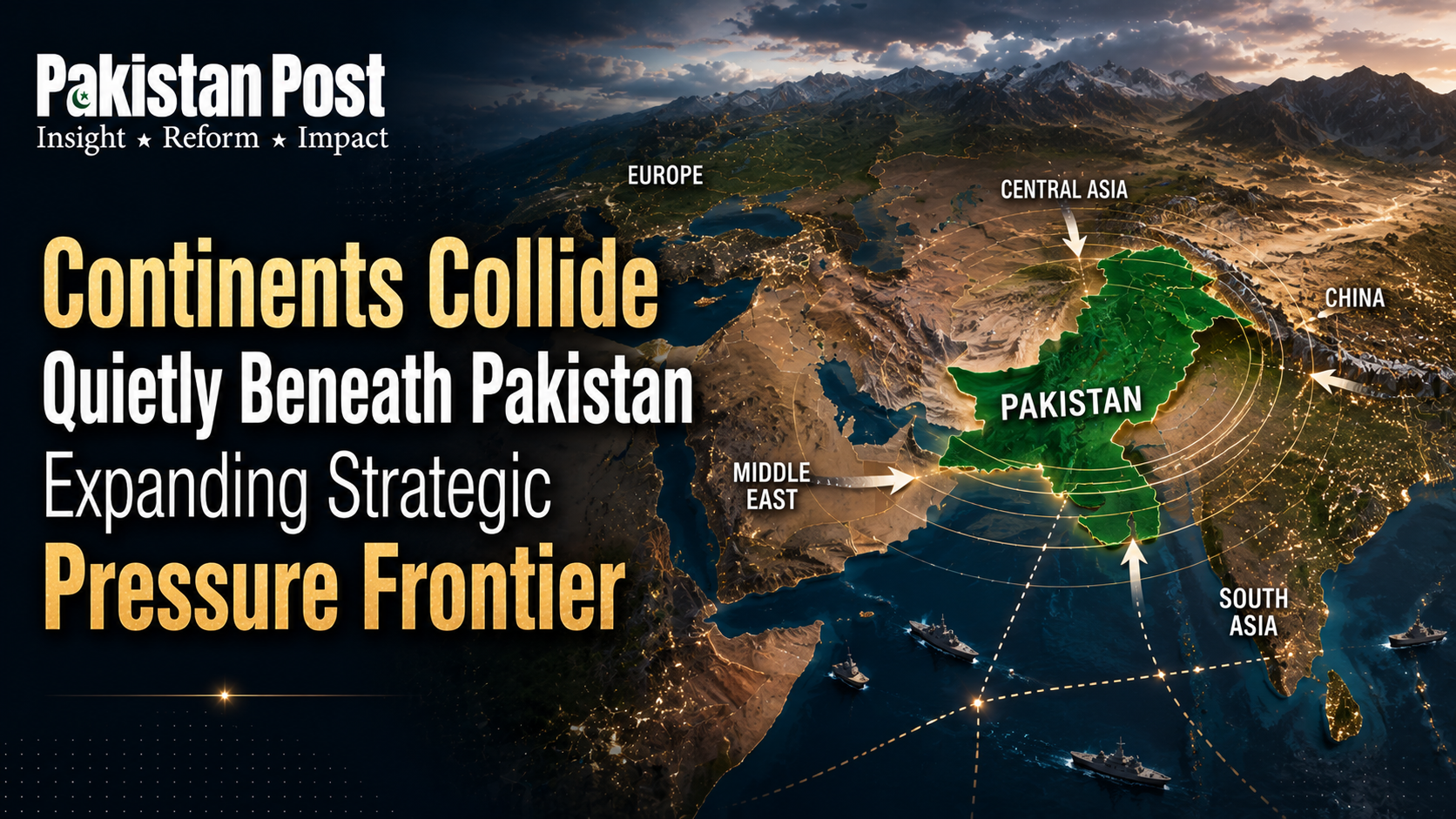
Continents Collide Quietly Beneath Pakistan Expanding Strategic Pressure Frontier
The old geopolitical maps are dying silently. Not through dramatic invasions or ideological revolutions, but through corridors, debt systems, naval logistics, semiconductor restrictions, energy vulnerabilities, digital surveillance architecture, and invisible intelligence wars conducted beneath the language of connectivity. Eurasia is no longer merely

Revitalizing capital markets for resilience growth and global investor confidence

Pakistan’s capital market narrative has long oscillated between episodic optimism and structural fragility, reflecting a deeper tension between the country’s economic potential and the institutional constraints that inhibit its realization. The Pakistan Stock Exchange, often portrayed as a barometer of investor sentiment, operates
Reimagining financial intelligence for digital sovereignty and security governance

Pakistan’s financial enforcement architecture stands at a critical inflection point where the nature of crime has outpaced the capacity of the state to detect, interpret, and respond to it, and nowhere is this more evident than in the evolving mandate of the Federal
Rewiring Pakistan fiscal intelligence for digital age governance transformation

Pakistan’s fiscal crisis is no longer merely a question of deficits, debt cycles, or negotiations with international lenders, it is fundamentally a crisis of state intelligence, of how the state sees, measures, predicts, and governs economic activity within its own borders. The Federal

Cyber Warfare Redefining Sovereignty and Pakistan Defence Digital Architecture

Cyber warfare has moved beyond its earlier framing as an auxiliary instrument of intelligence gathering or low level disruption and has become a central arena of strategic competition among states. In the contemporary international security environment, the distinction between peace and conflict is

Artificial Intelligence Reshaping Global Power and Pakistan Policy Preparedness Assessment
Artificial intelligence is no longer a discrete technological domain confined to research laboratories or software industries; it has become a structuring force of global power, reshaping how states compete, govern, and project influence. The contemporary international order is increasingly defined not by the

Reimagining Madrasa Education for Economic Independence and Modern Relevance Pakistan

Across Pakistan, religious seminaries remain one of the most enduring educational institutions, shaping the moral, spiritual and intellectual outlook of millions of students. They are deeply rooted in society, often functioning as the earliest and sometimes the only structured educational environment available to

Food Inflation Threatens Stability Economic Pressure Deepens Pakistan Risk

Food inflation has increasingly moved from the margins of economic reporting to the centre of political stability analysis in developing states, where the price of basic consumption goods is no longer treated as a routine macroeconomic indicator but as a barometer of governance