

Artificial Intelligence Sovereignty Risks and Pakistan’s Digital Dependency Crisis Unveiled

Pakistan’s accelerating integration into global artificial intelligence ecosystems is no longer a peripheral technological adjustment but a structural transformation of governance cognition, institutional decision-making, and informational sovereignty. The state’s increasing reliance on foreign-developed AI systems, cloud-based inference engines, and proprietary machine learning architectures

Water Stress Climate Collapse and Internal Migration Shockwaves

Pakistan is entering a phase of hydrological volatility that can no longer be interpreted through the lens of cyclical droughts or seasonal variability. The emerging reality is one of structural water stress, where climatic, institutional, and demographic pressures converge to produce a sustained

Debt Entrapment and Sovereign Compression in Pakistan Economy

Pakistan stands at an inflection point where macroeconomic stabilization has ceased to function as a policy objective and has instead evolved into a permanent operating condition. The recurrent reliance on external financial lifelines, particularly through multilateral adjustment frameworks, has produced a structural dependency
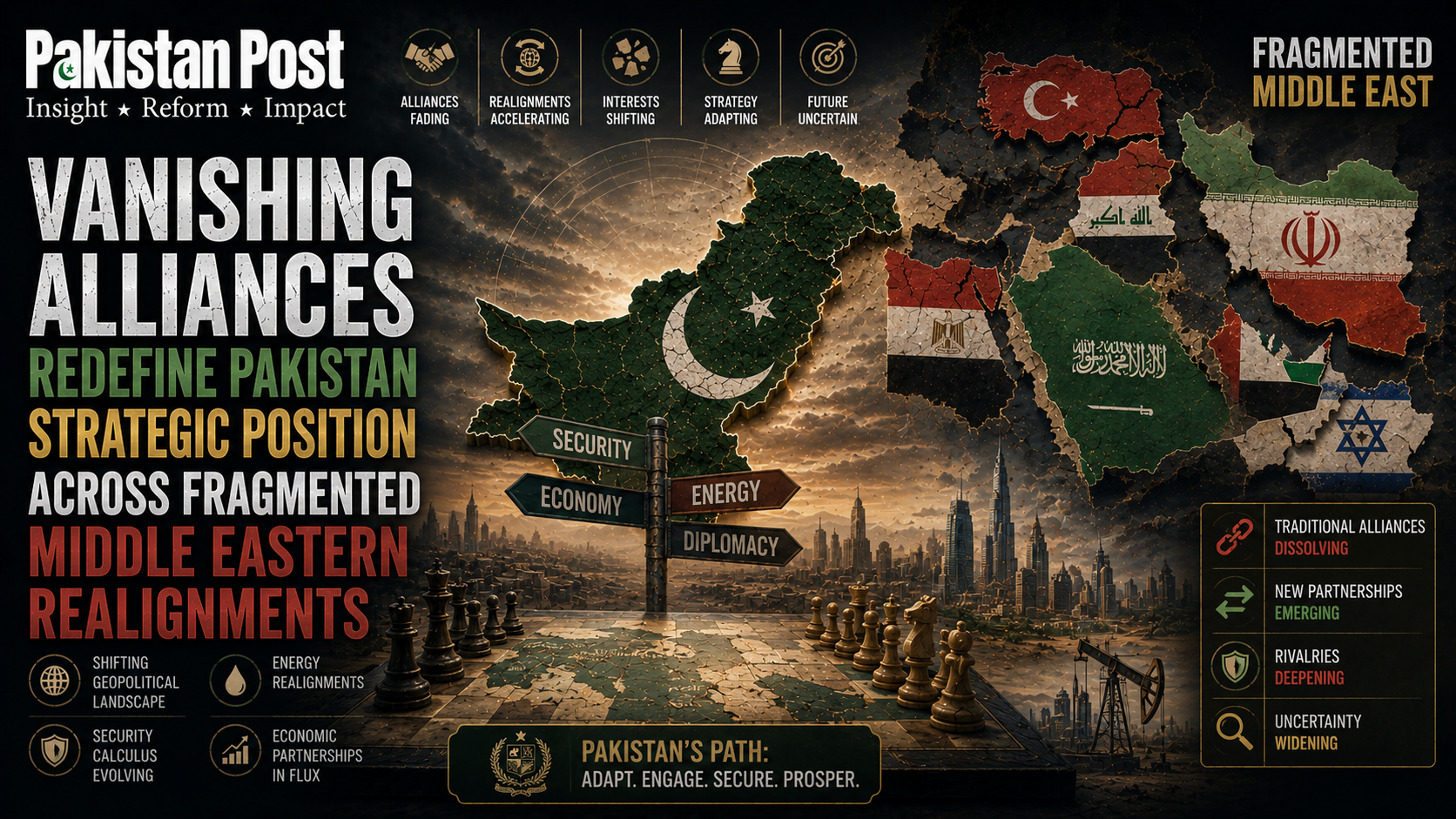
Vanishing Alliances Redefine Pakistan Strategic Position Across Fragmented Middle Eastern Realignments

BY SHAFQAT ALI QURESHI The Middle East is undergoing its most consequential geopolitical restructuring since the aftermath of the Cold War, and Pakistan risks entering this transition not as a central strategic actor but as a peripheral observer trapped between outdated diplomatic assumptions

Silent Deterrence Masks South Asian Escalation Dangers Beneath Strategic Rivalries

South Asia is entering a prolonged era of frozen hostility where nuclear deterrence preserves temporary stability while simultaneously concealing accelerating risks of conventional escalation, psychological confrontation, cyber disruption, water insecurity, and strategic miscalculation. The Pakistan India relationship no longer resembles a traditional bilateral

Fractured Mandates Reshape Pakistan Institutional Stability Amid Expanding Strategic Pressures

Pakistan is entering a historically delicate phase where the traditional equilibrium between civilian authority and strategic institutions is being recalibrated under the simultaneous pressure of economic fragility, governance exhaustion, regional insecurity, technological disruption, and intensifying geopolitical competition. The resulting transformation is neither a

Invisible Frontiers Shape Pakistan Electoral Sovereignty Under Hybrid Warfare Pressures

Pakistan’s democratic architecture is no longer operating within the conventional boundaries of electoral competition. It is functioning inside a contested cognitive battlespace where information, perception, and institutional legitimacy are being weaponized simultaneously by domestic political actors, transnational ideological ecosystems, hostile digital networks, commercially
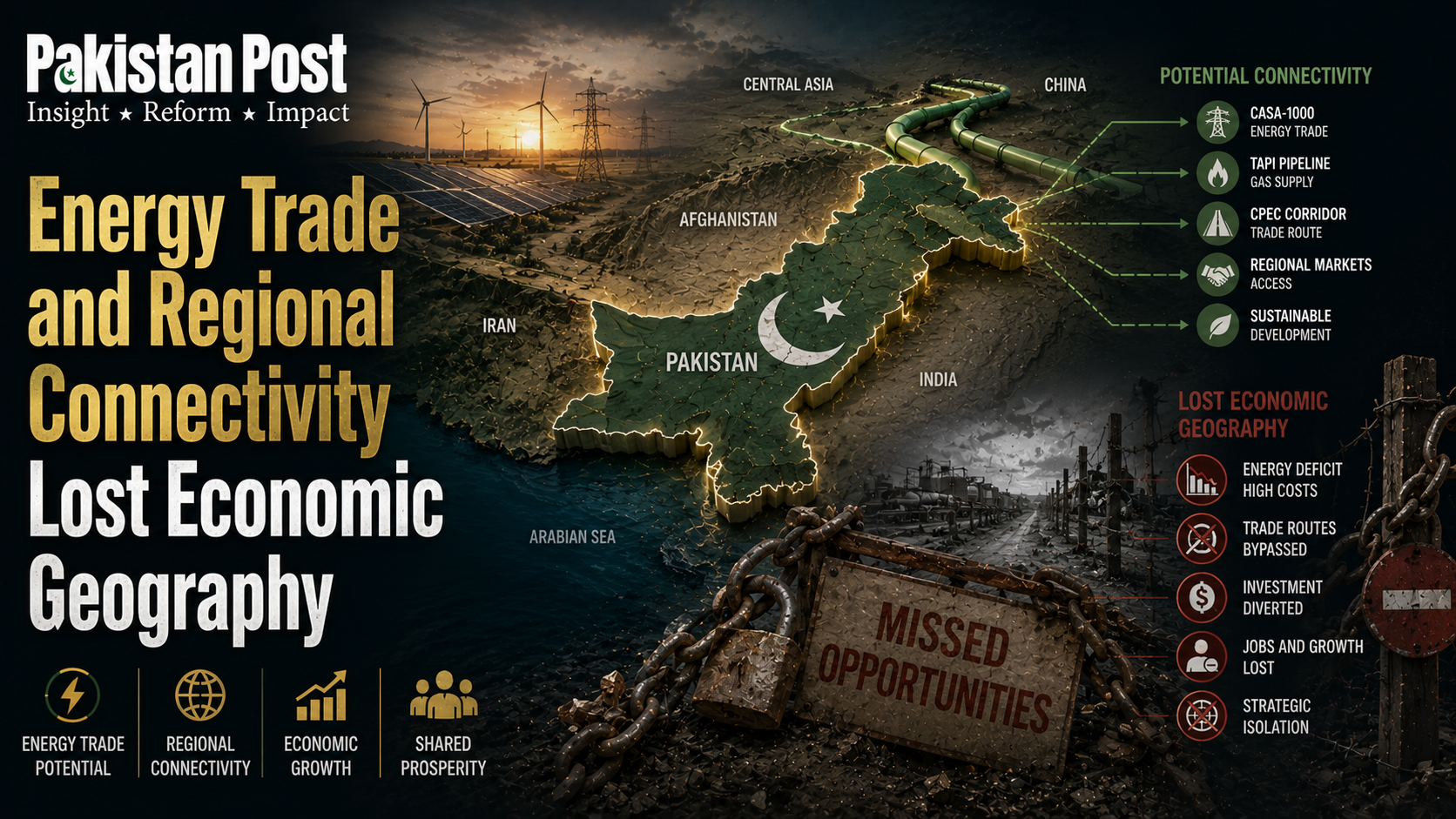
Energy Trade and Regional Connectivity Lost Economic Geography
Pakistan’s economic geography has long been discussed in strategic terms, yet rarely in terms of its actual trade realisation. Positioned at the intersection of energy-rich Gulf economies, resource-abundant Central Asia, and energy-demanding South Asia, the country theoretically occupies a structural advantage in regional
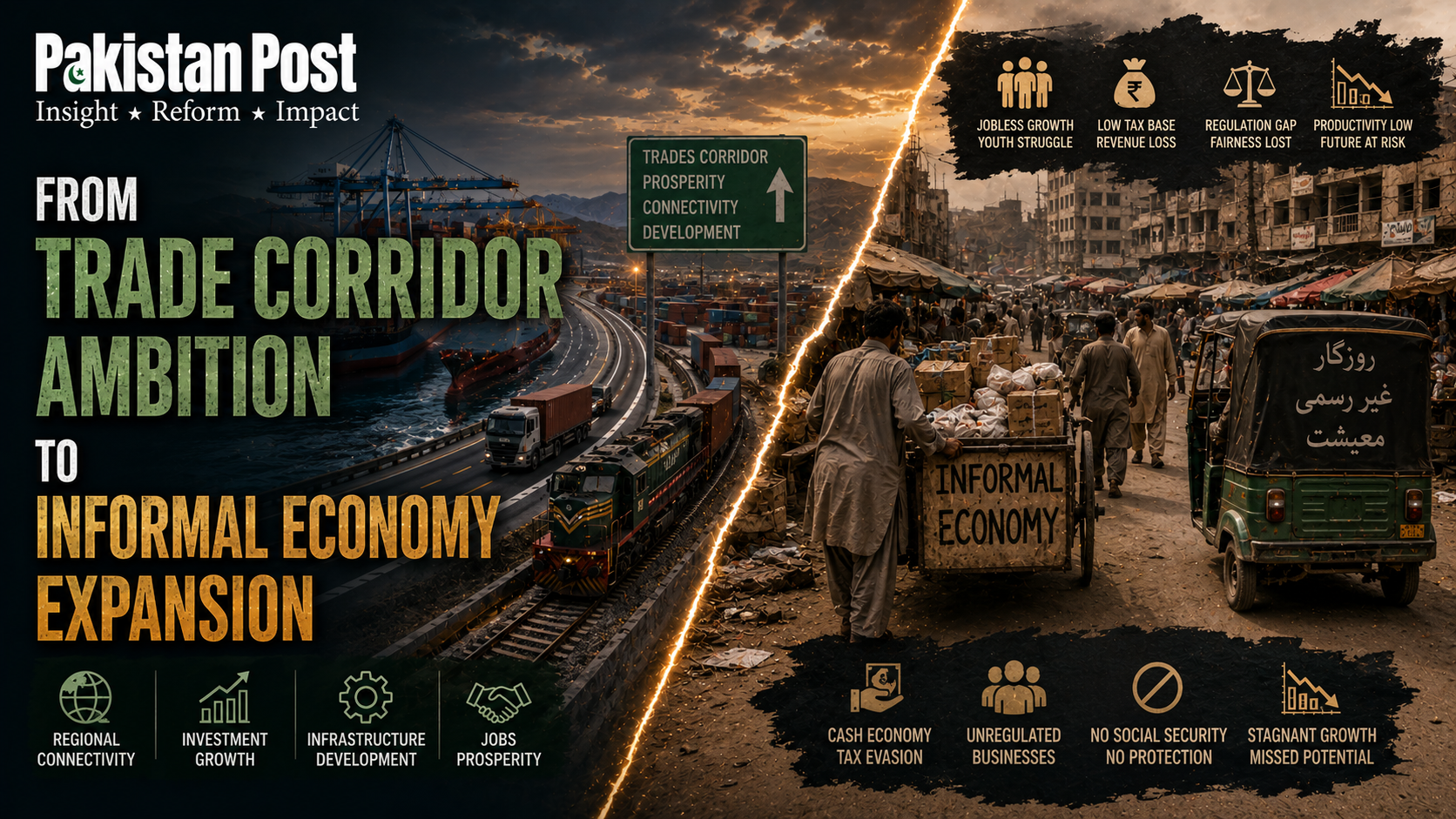
From Trade Corridor Ambition To Informal Economy Expansion
Pakistan’s geographic position has long been described in strategic literature as an economic hinge between South Asia, Central Asia, the Middle East, and China’s western periphery. In theory, this spatial advantage should have translated into a robust transit economy, anchored in logistics, warehousing,
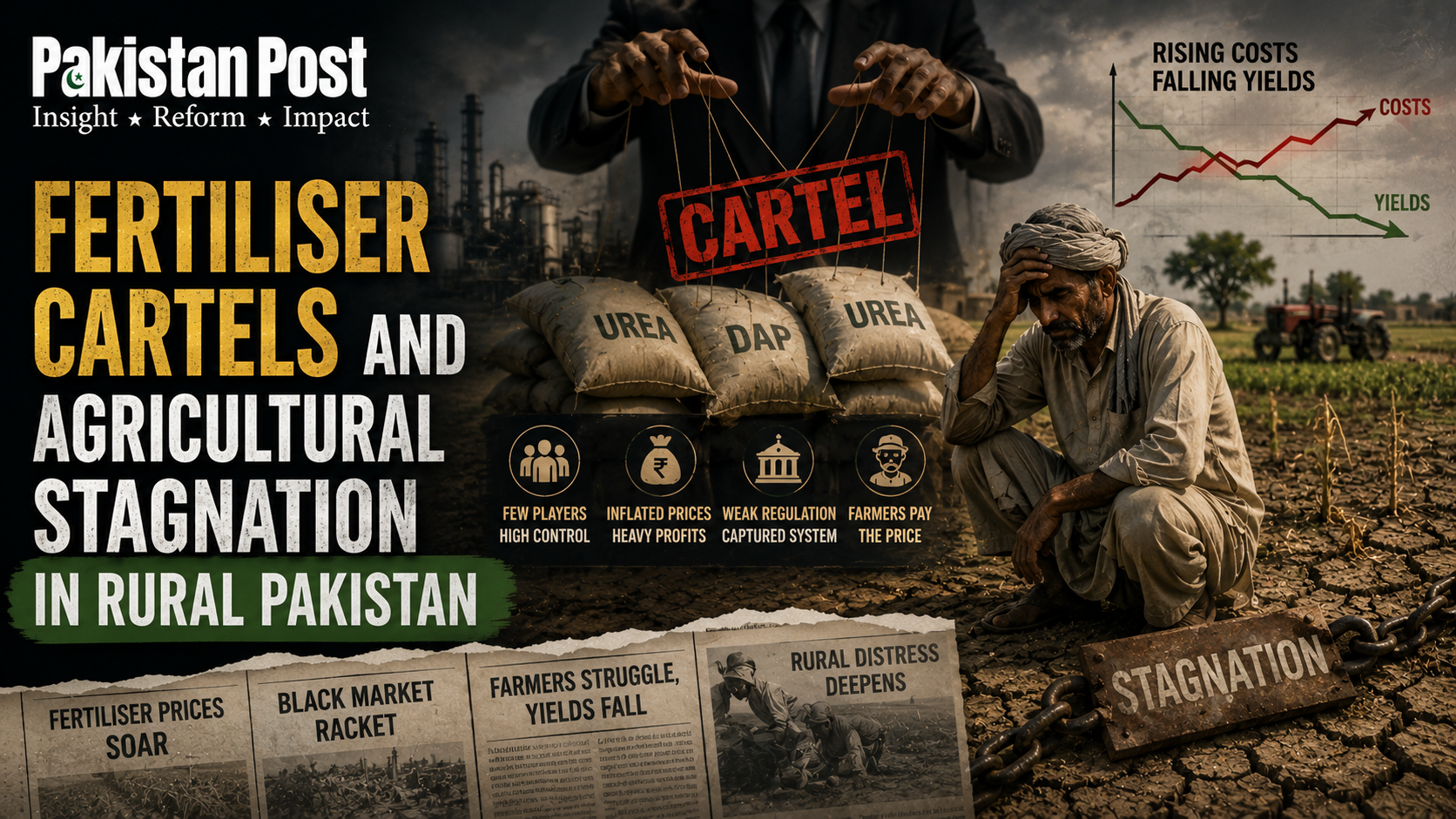
Fertiliser Cartels And Agricultural Stagnation In Rural Pakistan
Agriculture in Pakistan is often described through the language of paradox. It is the largest employer in the economy, a central pillar of food security, and a sector endowed with extensive natural endowments in terms of fertile land, irrigation networks, and climatic diversity.