

Climate Displacement and Pakistan Emerging Security and State Fragility Imperative.

Climate displacement in Pakistan is no longer a humanitarian footnote in development reporting, nor a seasonal consequence of monsoon variability. It has become an increasingly central axis through which questions of state capacity, governance legitimacy, and national security are being reframed both domestically

Ideological Faultlines Recast Global Governance Architecture Today

BY SHAFQAT ALI QURESHI The contemporary global order is increasingly defined not by the absence of ideology, as was once assumed in the post-Cold War liberal moment, but by its intensified return in fragmented and competing forms. The assumption that globalization would converge

Sanctions Redefine Power and Reshape Global Economic Order Today

Economic sanctions have emerged as one of the most consequential instruments of contemporary international power, gradually displacing traditional military confrontation as the preferred method of coercive diplomacy among major states. In the twenty first century, the logic of warfare has extended beyond battlefields

Great Power Rivalry Shapes Middle Power Strategic Calculations Today

The contemporary international system is undergoing a profound structural transformation driven by intensifying rivalry between the United States and China. This competition is no longer confined to traditional military balances or diplomatic posturing; it now permeates global trade, technological ecosystems, financial infrastructures, and

Diplomacy Under Permanent Crisis and Fragmented Global Order Today Evolving

Diplomacy in the early twenty first century no longer resembles the calibrated architecture of post Cold War optimism, nor the structured bargaining systems that defined classical international relations theory. It has become an adaptive survival mechanism within a geopolitical environment where crises are
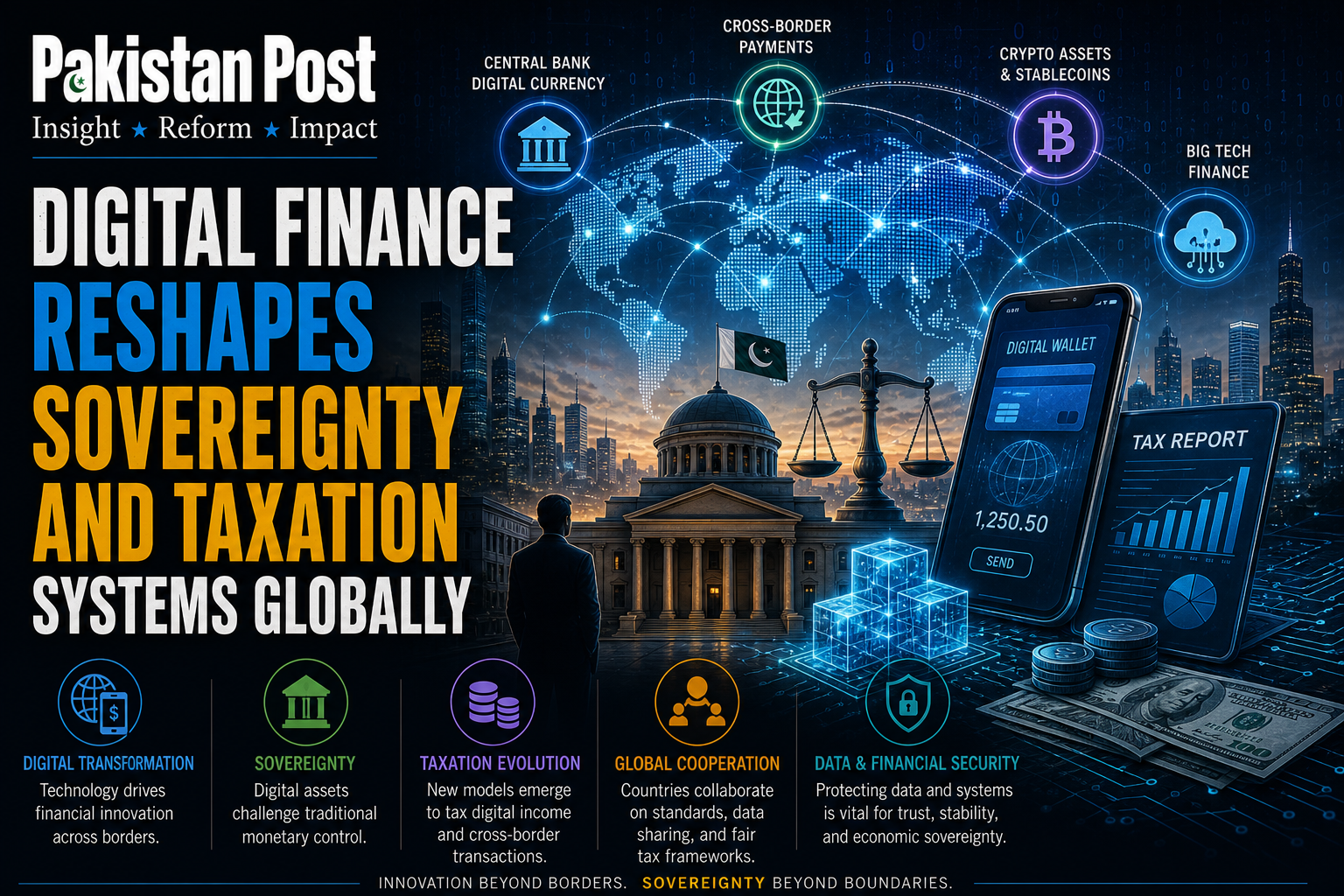
Digital finance reshapes sovereignty and taxation systems globally
The global monetary order is entering a phase of structural experimentation where the traditional monopoly of states over currency issuance, taxation, and financial surveillance is being reconfigured by digital platforms, algorithmic finance, and decentralized payment ecosystems. For Pakistan, this transformation is not a
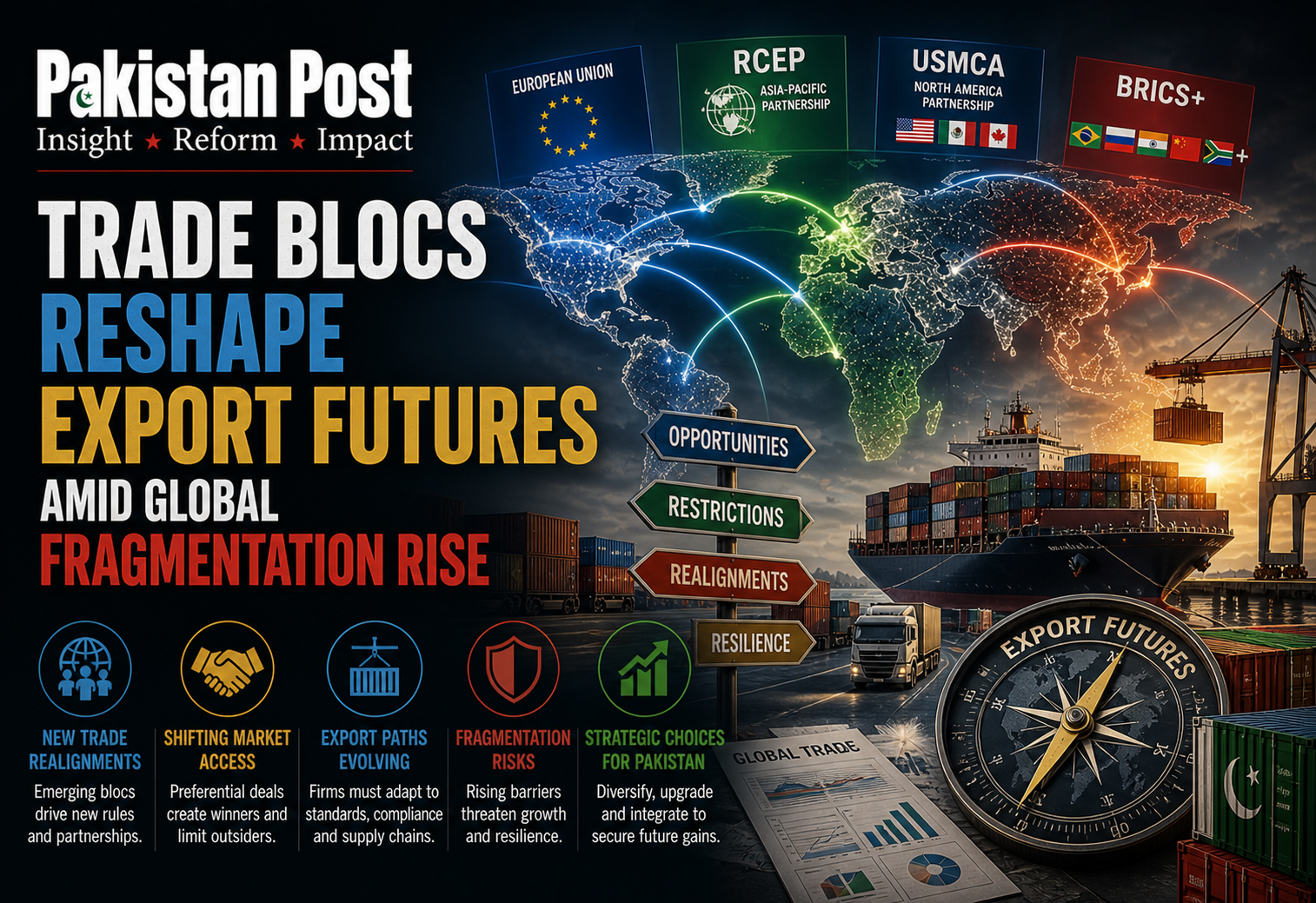
Trade blocs reshape export futures amid global fragmentation rise
The architecture of global trade is undergoing a quiet but decisive fragmentation, where the idea of a single integrated market governed by multilateral rules is giving way to overlapping regional blocs, strategic corridors, and regulatory ecosystems that increasingly reflect geopolitical alignments rather than

Energy dependence and sovereignty dilemmas in volatile global markets today
The meaning of sovereignty is being quietly rewritten, not through grand declarations or territorial conflicts, but through the invisible yet deeply consequential circuits of energy flows, pricing mechanisms, and supply dependencies. For Pakistan, the question is no longer confined to how energy is
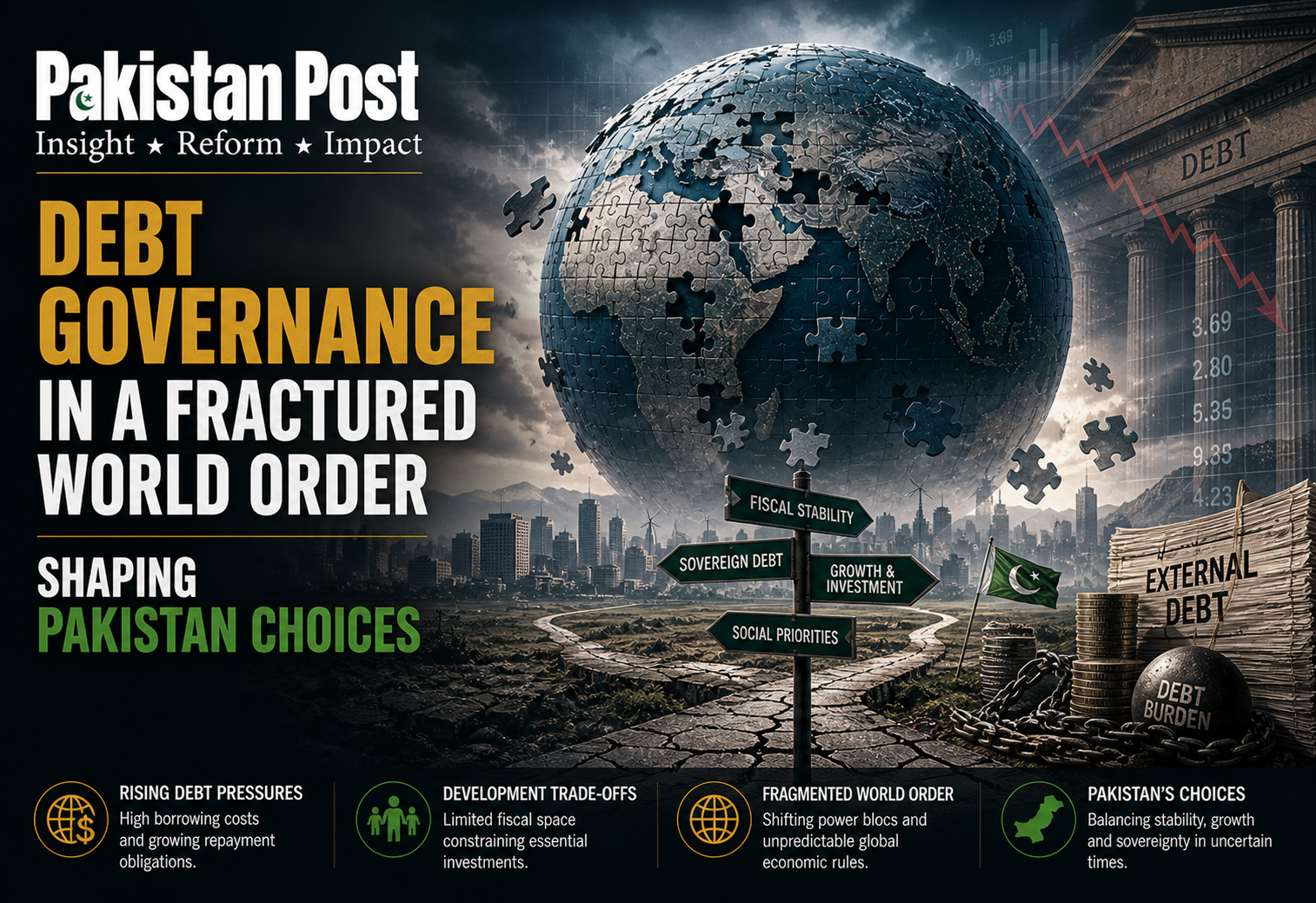
Debt governance in a fractured world order shaping Pakistan choices
The vocabulary of global finance is changing, and with it the grammar of power. What was once simplistically narrated as debt trap diplomacy has matured into a far more intricate contest over who writes the rules of financial survival, who enforces them, and

Nuclear Deterrence Faces Instability in an Accelerating Fragmented Global Security Order
The architecture of nuclear deterrence was designed for a world that moved more slowly than the one that now exists. Its logic rested on time, clarity and a shared understanding of thresholds. Decisions could be weighed, signals interpreted and crises managed within a