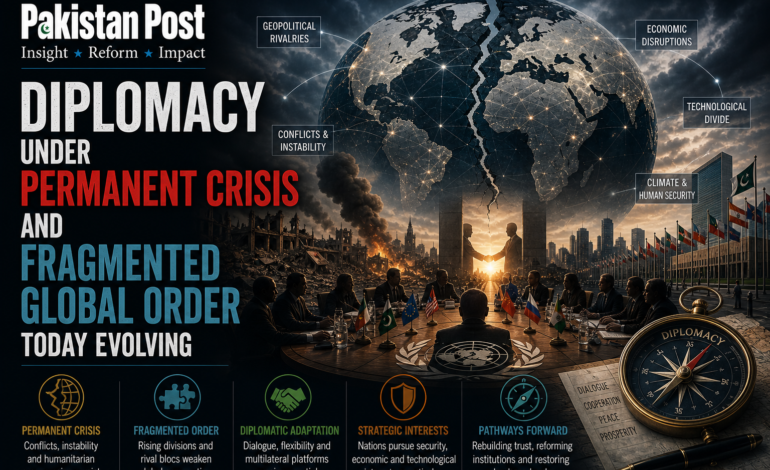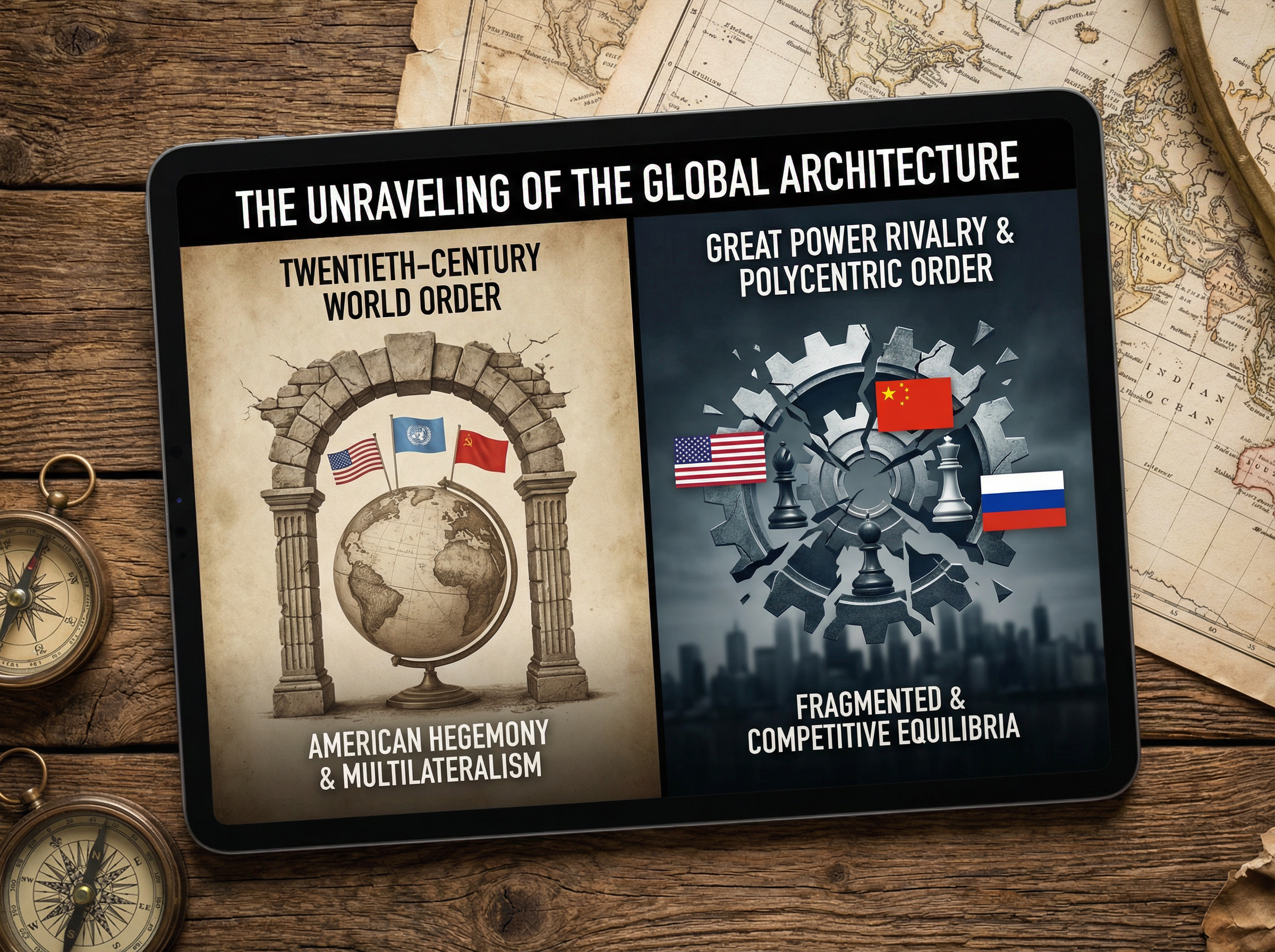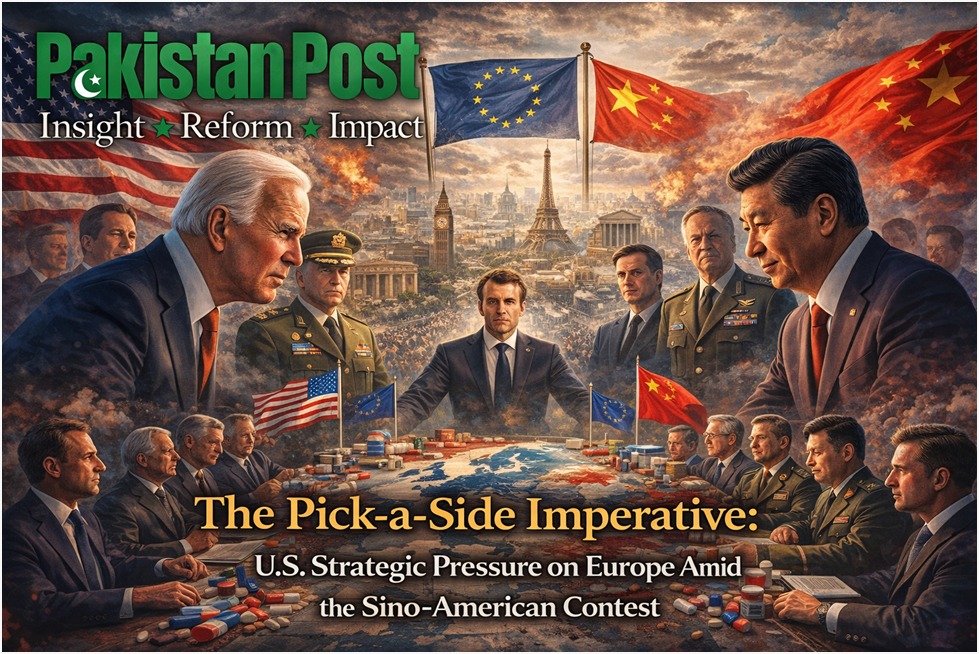

Great Power Rivalry Shapes Middle Power Strategic Calculations Today

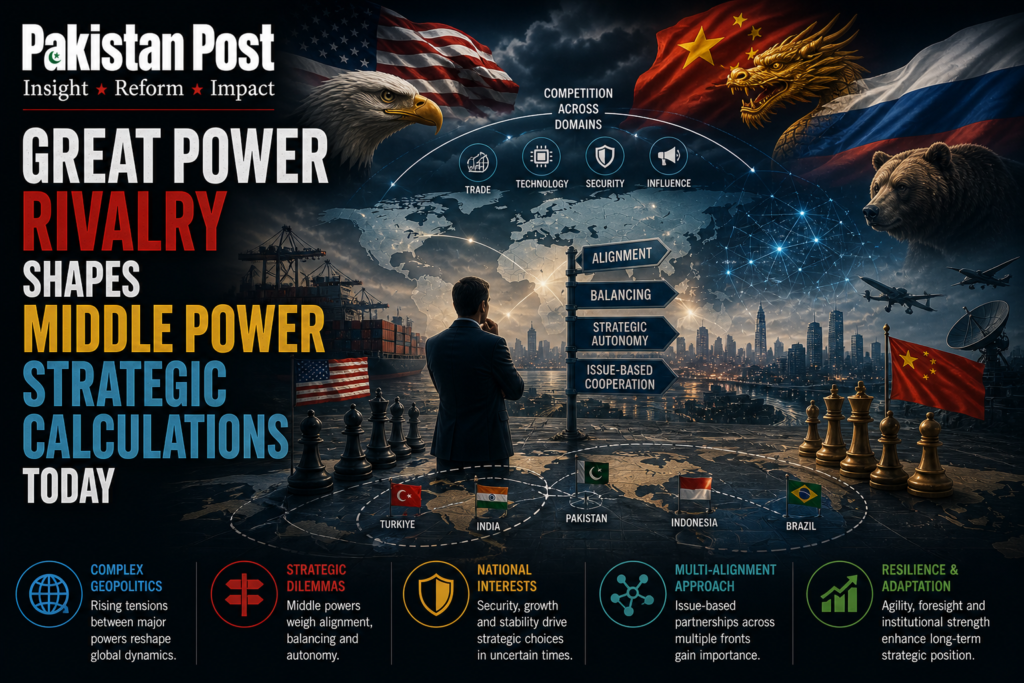
The contemporary international system is undergoing a profound structural transformation driven by intensifying rivalry between the United States and China. This competition is no longer confined to traditional military balances or diplomatic posturing; it now permeates global trade, technological ecosystems, financial infrastructures, and normative frameworks of governance. What emerges from this condition is not a simple bipolar world but a complex, fragmented strategic environment in which middle powers are compelled to navigate overlapping pressures, shifting alignments, and conditional partnerships.
At the center of this transformation lies the erosion of the post Cold War assumption that globalization would produce a relatively integrated and rule based international order. Instead, globalization itself has become weaponized. Supply chains are being reconfigured not only for efficiency but for strategic insulation. Technology regimes are being decoupled into competing ecosystems. Financial systems are increasingly used as instruments of coercion and compliance. In this environment, strategic autonomy has become both more desirable and more difficult to sustain.
Middle powers occupy a particularly precarious position within this evolving architecture. Unlike great powers, they do not possess the capacity to shape global rules unilaterally. Unlike smaller states, they cannot fully retreat into neutrality without incurring significant economic and security costs. Their agency is therefore conditional, relational, and often transactional. It is exercised not through dominance but through navigation, balancing, and selective alignment.
Pakistan represents a paradigmatic case of this condition. Situated at the intersection of South Asia, Central Asia, and the broader Indo Pacific strategic theatre, it is embedded in multiple layers of geopolitical contestation. Its relationship with China is structurally anchored through long term economic and infrastructural integration, most visibly through the China Pakistan Economic Corridor. This partnership is not merely bilateral; it is embedded within China’s broader global connectivity strategy, which seeks to reshape trade routes, energy corridors, and regional influence architectures.
At the same time, Pakistan remains enmeshed in financial and institutional linkages with Western dominated systems, particularly through the International Monetary Fund, the World Bank, and global credit markets. These relationships impose conditionalities that influence domestic economic policy, governance reforms, and macroeconomic stabilization strategies. As a result, Pakistan’s external orientation cannot be reduced to a single axis of alignment but must be understood as a multi vector system of dependencies and engagements.
The United States China rivalry intensifies this structural complexity. Washington’s strategic focus on the Indo Pacific region, combined with its emphasis on technological containment and alliance consolidation, places increasing scrutiny on states that maintain deep engagement with China. Conversely, China’s expanding global footprint encourages partner states to deepen integration while resisting external pressure to decouple. Pakistan finds itself positioned within this tension, required to maintain equilibrium between competing expectations without triggering systemic exclusion from either side.
This balancing act is not merely diplomatic; it is economic and technological. Infrastructure development, energy cooperation, digital connectivity, and defense procurement are all embedded within broader geopolitical narratives. Decisions in one domain inevitably carry implications for others. For instance, participation in Chinese financed infrastructure projects may influence perceptions in Western financial institutions. Similarly, engagement with Western security frameworks may affect the strategic depth of partnership with China. The result is a tightly interwoven decision environment where policy options are rarely independent.
Within this context, the concept of strategic autonomy requires careful reconsideration. Traditionally, autonomy implied the capacity to make independent decisions free from external coercion. In the current global environment, however, autonomy is increasingly relational rather than absolute. It is defined by the ability to diversify dependencies, expand diplomatic options, and avoid over concentration of risk within a single strategic relationship.
Pakistan’s pursuit of this form of calibrated autonomy reflects broader trends among middle powers globally. Countries such as Turkey, Indonesia, Brazil, and Saudi Arabia are similarly engaged in multi directional diplomacy, seeking to maximize strategic flexibility while minimizing exposure to great power volatility. This involves participating in multiple institutional frameworks, maintaining diversified economic partnerships, and avoiding rigid bloc alignment.
However, this strategy is not without constraints. The structural asymmetry of the global system means that diversification often occurs within limits set by great power interests. Economic dependencies cannot be easily replaced, and security guarantees remain heavily concentrated among established powers. As a result, middle power autonomy is always partial and contingent.
The media dimension of great power competition further complicates this landscape. Narratives about alignment, dependency, and strategic positioning are actively constructed and disseminated through global information networks. States are not only evaluated based on their actions but also on how those actions are interpreted within competing geopolitical discourses. Pakistan, for example, is often simultaneously framed as a strategic partner, a fragile state, or a geopolitical pivot depending on the narrative lens applied.
This narrative competition has material consequences. Perceptions of alignment can influence investment flows, credit ratings, and diplomatic engagement. They can also shape domestic political discourse, where external interpretations are often internalized or contested. In this sense, media systems function as secondary arenas of geopolitical competition, where legitimacy and influence are continuously negotiated.
Another critical dimension of great power rivalry is technological fragmentation. The global digital ecosystem is increasingly divided into competing standards, platforms, and regulatory regimes. Artificial intelligence, telecommunications infrastructure, semiconductor production, and data governance are becoming strategic domains rather than purely commercial sectors. This technological bifurcation creates pressure on middle powers to make choices that may have long term structural implications.
For Pakistan, digital infrastructure development and technological modernization are closely tied to external partnerships. Access to technology, investment in digital systems, and integration into global innovation networks are influenced by geopolitical alignments. This introduces a new layer of strategic calculation, where technological choices are also geopolitical signals.
Energy systems represent another domain of strategic intersection. Global energy markets are increasingly shaped by geopolitical considerations, including sanctions regimes, supply chain disruptions, and regional conflicts. Pakistan’s energy security is therefore influenced not only by market dynamics but also by broader geopolitical configurations. This reinforces the importance of diversified energy partnerships and adaptive policy frameworks.
In the security domain, Pakistan’s strategic environment remains deeply embedded within regional rivalries, particularly its relationship with India and the broader South Asian security complex. However, this regional dynamic is increasingly influenced by extra regional powers, including the United States and China, both of which maintain strategic interests in regional stability, maritime security, and counterbalance mechanisms. This creates a layered security architecture where local and global dynamics intersect.
The central question for middle powers in this environment is not whether they can avoid great power competition, but how effectively they can manage its consequences. This involves maintaining policy flexibility, institutional resilience, and diplomatic credibility. It also requires continuous recalibration of external relationships in response to shifting global conditions.
Pakistan’s strategic challenge lies in translating its geographic and geopolitical position into sustainable diplomatic leverage. Its location at the crossroads of major trade routes and strategic corridors offers potential opportunities for connectivity driven growth. However, realizing this potential depends on internal stability, economic reform, and institutional capacity. External alignment alone is insufficient without domestic strengthening.
At the systemic level, great power competition is likely to persist for the foreseeable future. The structural drivers of US China rivalry, including technological competition, ideological divergence, and strategic mistrust, are deeply embedded. As a result, the international system will continue to experience periods of tension, partial decoupling, and regional realignment.
Within this environment, middle power agency will remain both significant and constrained. It is significant because middle powers collectively shape regional stability, economic flows, and diplomatic outcomes. It is constrained because their autonomy is always mediated by structural dependencies and power asymmetries.
The future of strategic autonomy will therefore depend on the ability of middle powers to institutionalize flexibility. This includes building resilient economic systems, diversifying diplomatic partnerships, investing in technological capacity, and strengthening domestic governance structures. It also requires sophisticated diplomatic engagement that can operate across multiple geopolitical frameworks simultaneously.
For Pakistan, this implies a long-term strategic orientation that goes beyond episodic balancing. It requires a coherent doctrine of multi vector engagement grounded in economic pragmatism, security awareness, and diplomatic adaptability. Such a doctrine would not eliminate constraints but could transform them into managed interdependencies.
Ultimately, great power competition does not eliminate agency for middle powers; it redefines its conditions. Agency becomes less about independence in the absolute sense and more about the capacity to maneuver within structured constraints. In this sense, the contemporary international system is not devoid of opportunity for states like Pakistan, but it demands a higher level of strategic discipline, institutional coherence, and adaptive diplomacy than at any previous point in the post-Cold War era.
A Public Service Message