

Sanctions Redefine Power and Reshape Global Economic Order Today

Economic sanctions have emerged as one of the most consequential instruments of contemporary international power, gradually displacing traditional military confrontation as the preferred method of coercive diplomacy among major states. In the twenty first century, the logic of warfare has extended beyond battlefields

Great Power Rivalry Shapes Middle Power Strategic Calculations Today

The contemporary international system is undergoing a profound structural transformation driven by intensifying rivalry between the United States and China. This competition is no longer confined to traditional military balances or diplomatic posturing; it now permeates global trade, technological ecosystems, financial infrastructures, and

Diplomacy Under Permanent Crisis and Fragmented Global Order Today Evolving

Diplomacy in the early twenty first century no longer resembles the calibrated architecture of post Cold War optimism, nor the structured bargaining systems that defined classical international relations theory. It has become an adaptive survival mechanism within a geopolitical environment where crises are
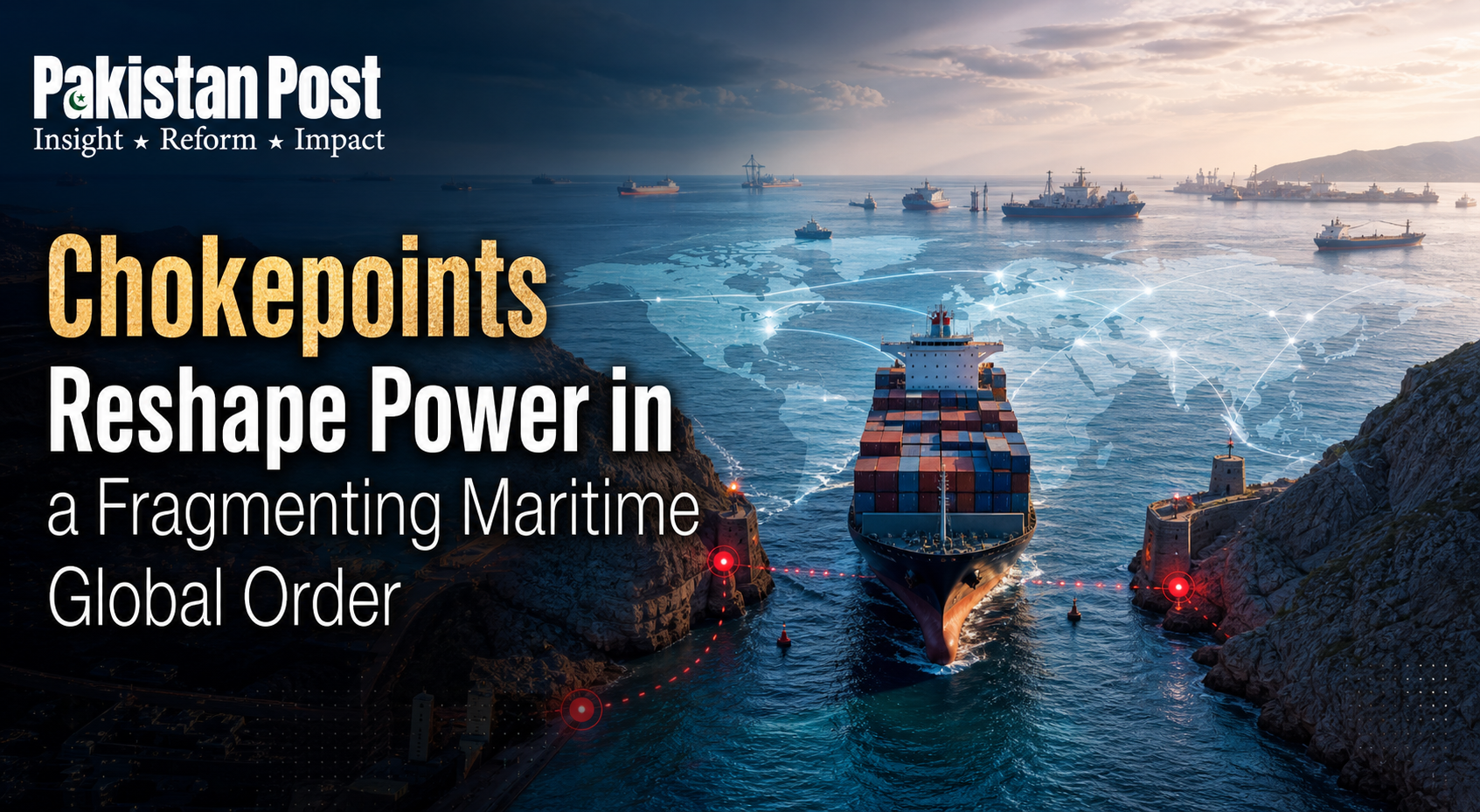
Chokepoints Reshape Power in a Fragmenting Maritime Global Order
The map of globalization has always been maritime, but the meaning of the sea is changing. Where once the oceans were imagined as connective tissue, frictionless corridors binding distant markets, they are now increasingly experienced as sites of pressure, delay and selective denial.
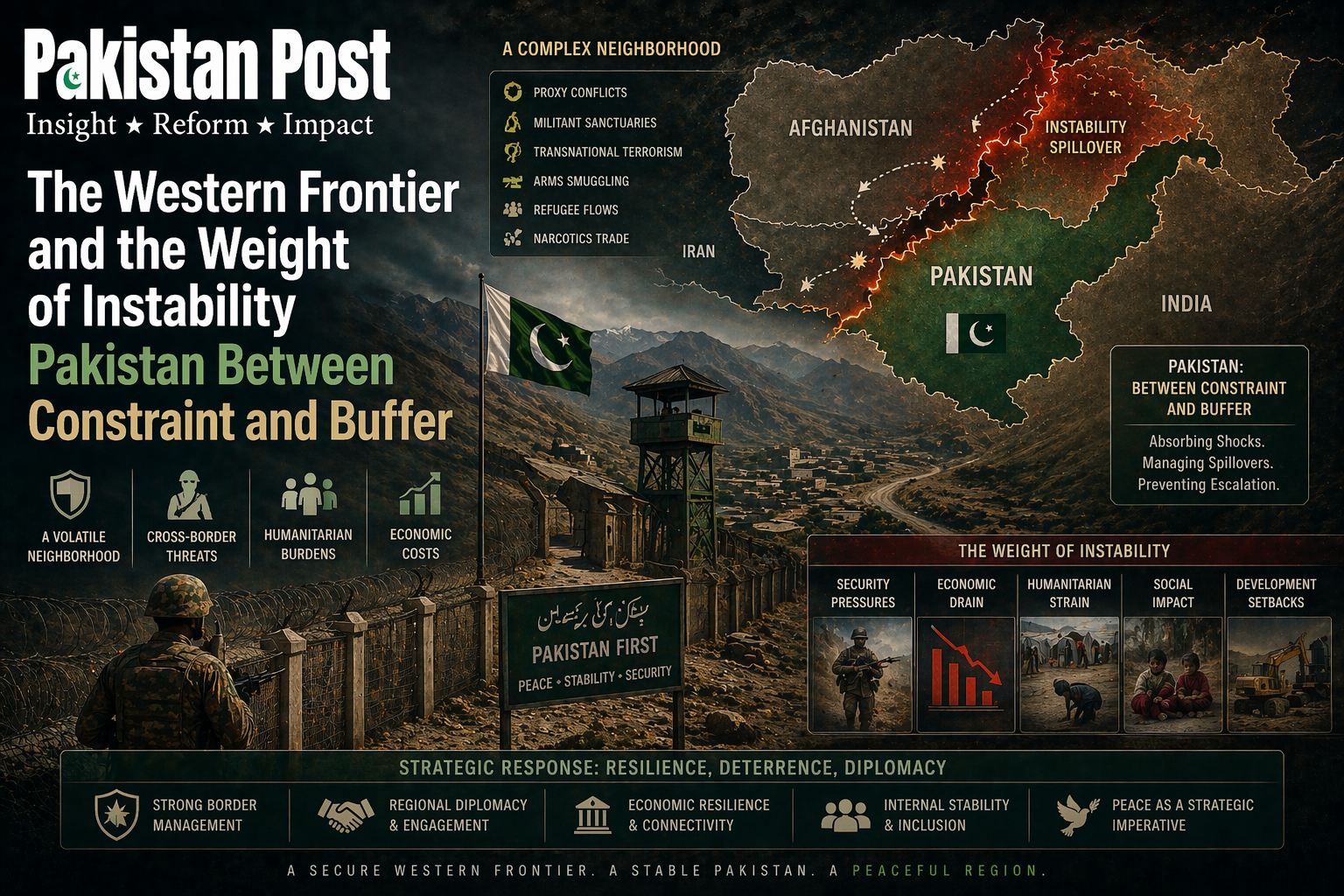
The Western Frontier and the Weight of Instability Pakistan Between Constraint and Buffer
The persistence of instability in Afghanistan has long been treated as a chronic condition of regional politics, an enduring reality that defies both external intervention and internal consolidation. Yet in the current geopolitical moment, this instability has acquired a renewed and more complex
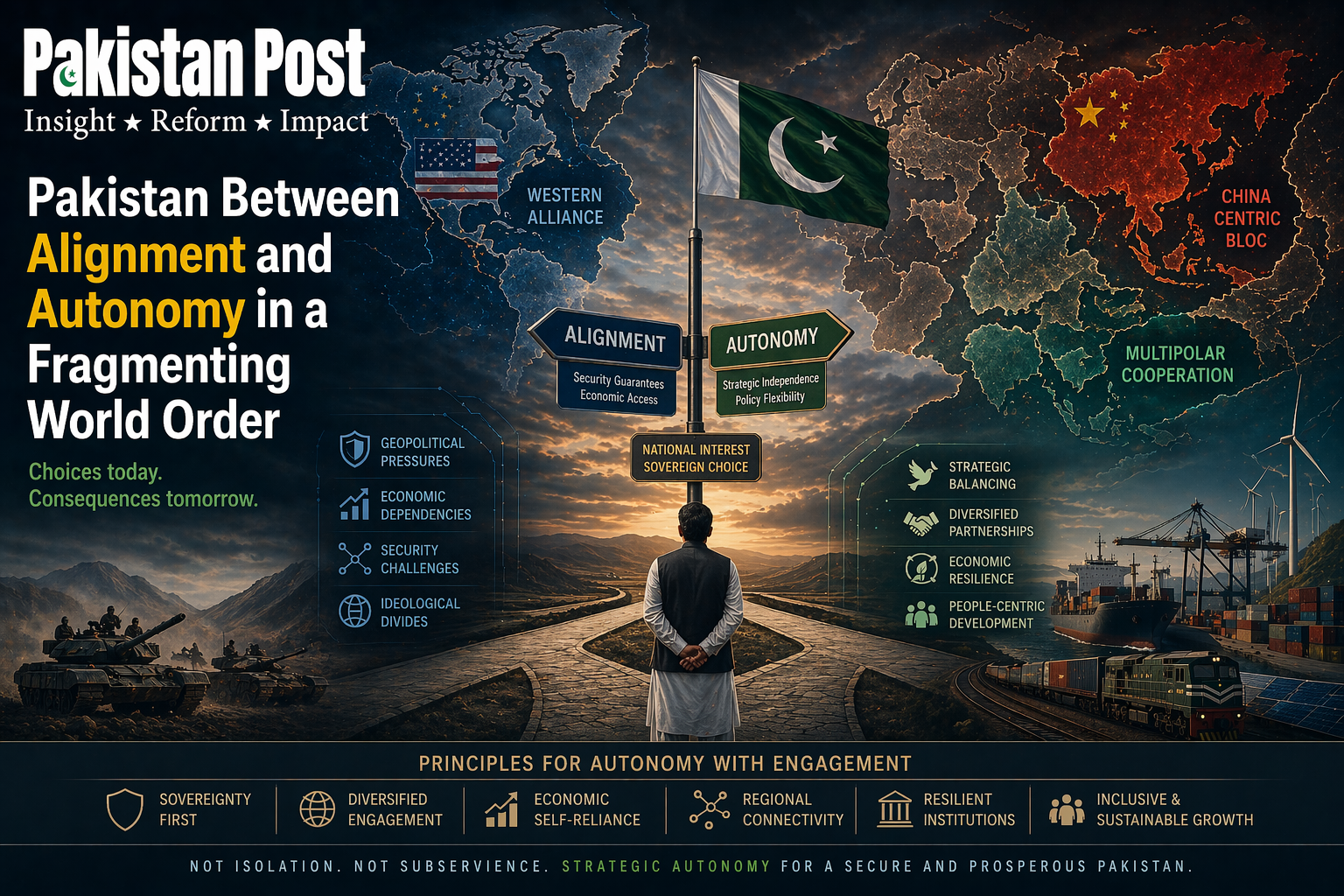
Pakistan Between Alignment and Autonomy in a Fragmenting World Order
The slow unravelling of the post-Cold War order is no longer a matter of academic speculation but an observable reality, unfolding across trade corridors, security alliances, and diplomatic theatres with a clarity that even its architects can no longer obscure. The era in
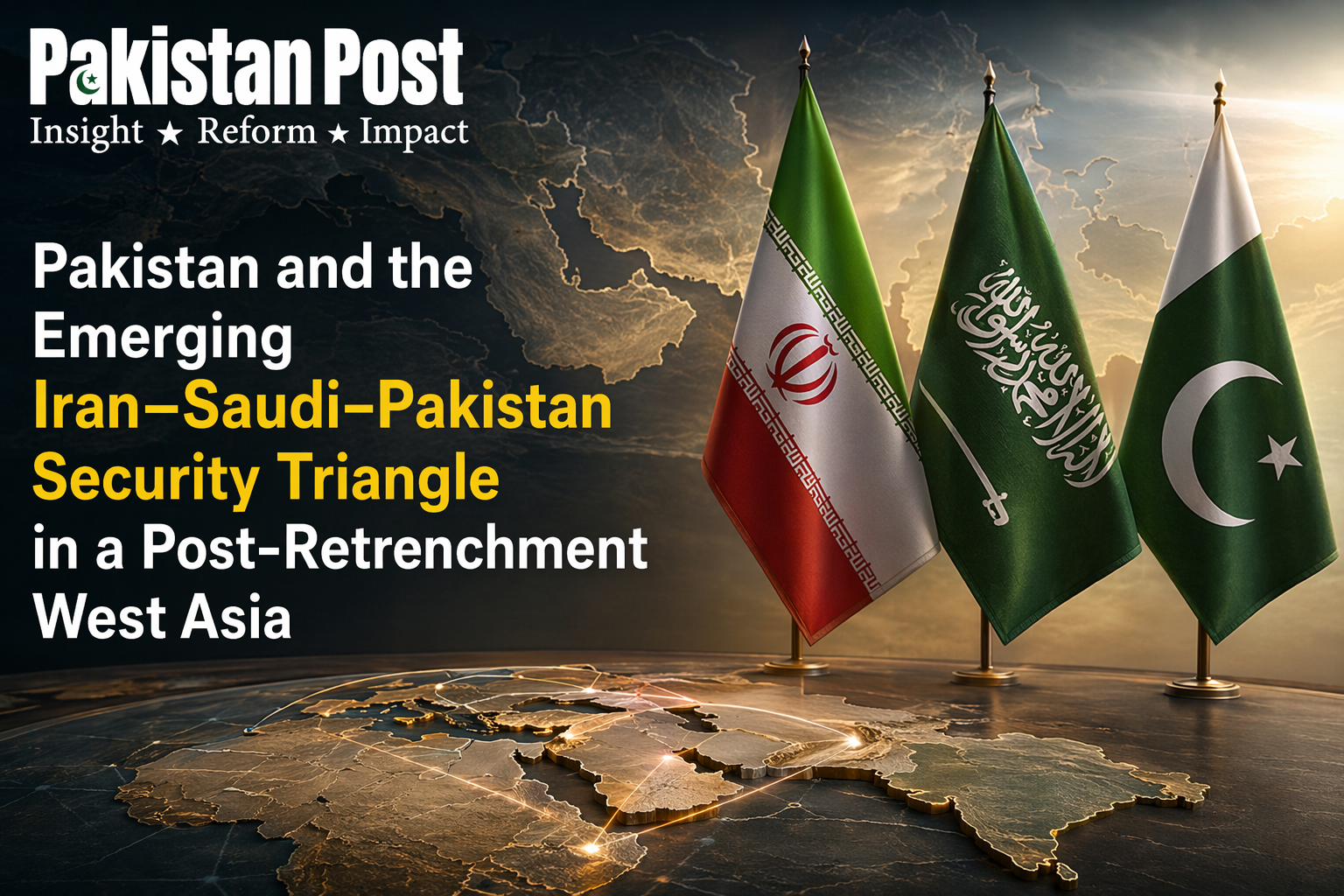
Pakistan and the Emerging Iran–Saudi–Pakistan Security Triangle in a Post-Retrenchment West Asia
The strategic landscape of West Asia is entering a phase of controlled fluidity, shaped by shifting alignments, episodic détente, and the gradual redefinition of external guarantees. In this environment, the Islamic Republic of Pakistan is increasingly being viewed not as a peripheral observer
Pakistan as a Hinge State in the Reordering Eurasian Security Architecture
The geopolitical identity of the Islamic Republic of Pakistan is undergoing a subtle but consequential redefinition. Once treated largely as a buffer zone between competing great powers and regional blocs, it is increasingly being interpreted by strategists as a “hinge state” embedded within

Global Power Shifts Between Stability and Emerging Instability
In the contemporary global order, events rarely arrive as isolated shocks. They appear instead as overlapping disturbances in an increasingly interconnected system where economics, politics, culture, and information flows are tightly interwoven. Wars, financial volatility, technological disruption, and political polarization are often treated

After the Iran–Israel–US War: Can the Muslim World Build a New Security Architecture Beyond Fragmentation?
The end of the recent confrontation involving the United States, Israel, and Iran has left behind more than damaged infrastructure and disrupted economies; it has exposed a deeper and more persistent structural weakness in the Muslim world’s strategic architecture. The war did not