
Trade blocs reshape export futures amid global fragmentation rise

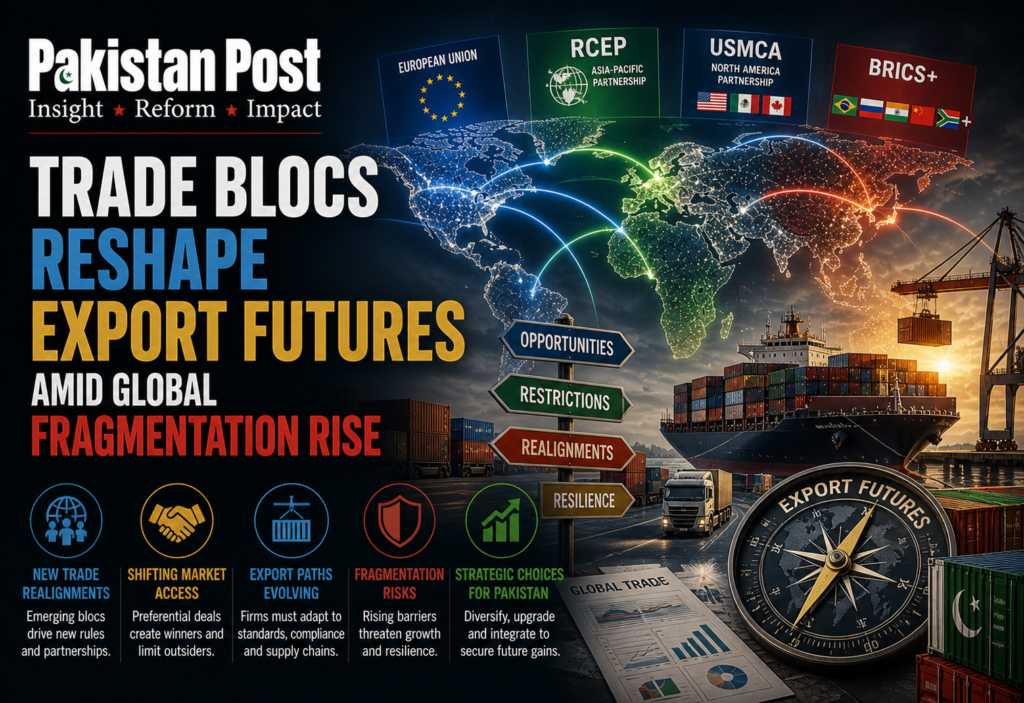
The architecture of global trade is undergoing a quiet but decisive fragmentation, where the idea of a single integrated market governed by multilateral rules is giving way to overlapping regional blocs, strategic corridors, and regulatory ecosystems that increasingly reflect geopolitical alignments rather than pure comparative advantage. For Pakistan, this transformation is not a distant structural shift but an immediate constraint on export strategy, industrial planning, and long term economic positioning.
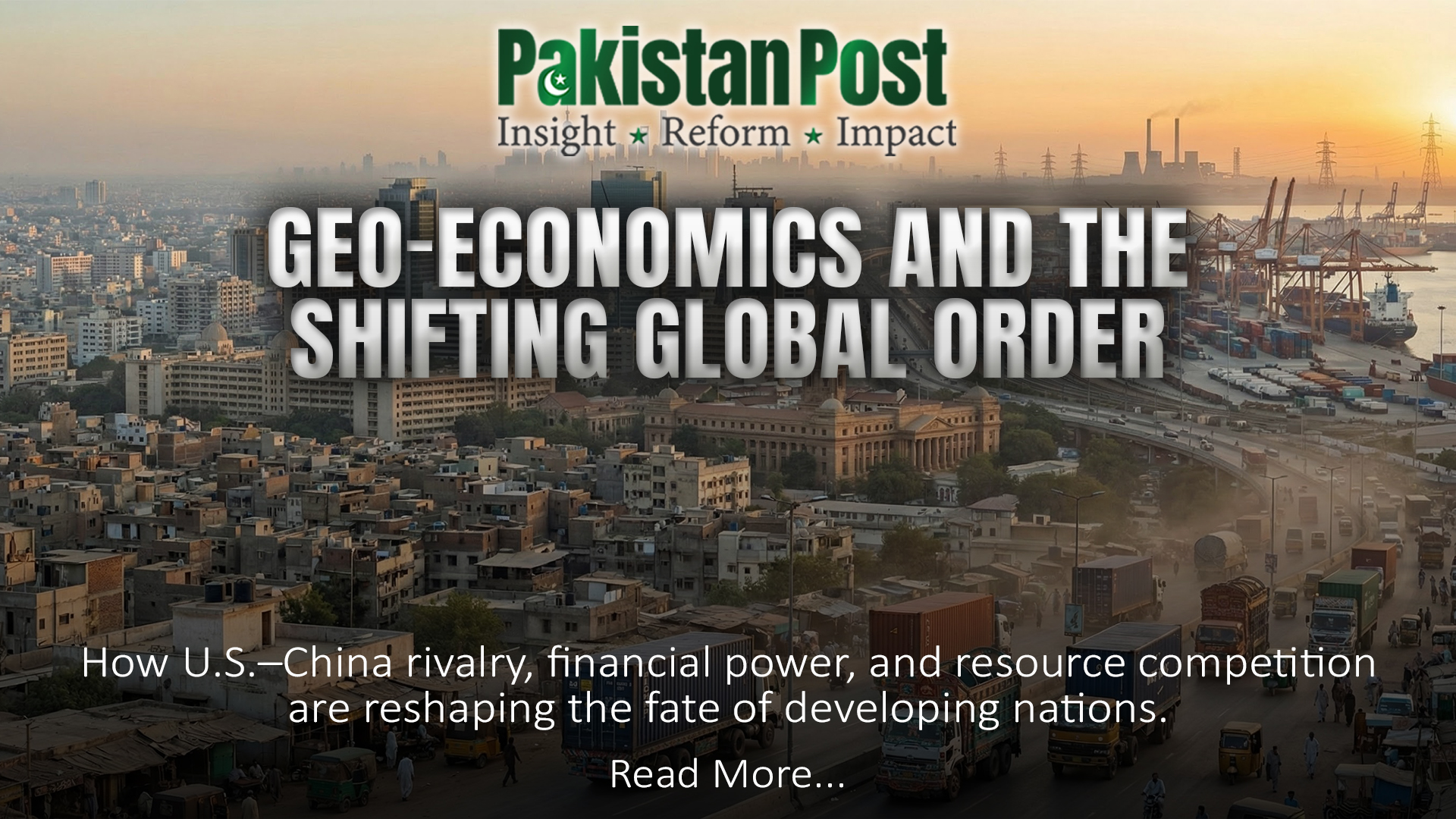
The post liberalisation consensus that once anchored globalisation under the World Trade Organization is now under visible strain. The rise of industrial policy in advanced economies, the escalation of tariffs and export controls, and the reconfiguration of supply chains around security considerations have collectively weakened the assumption of frictionless trade. The intensifying strategic decoupling between the United States and China has further accelerated this shift, turning trade policy into an extension of geopolitical competition rather than a neutral economic mechanism.
This fragmentation is not merely about tariffs or quotas. It is about the emergence of competing regulatory universes. The European Union, for instance, is increasingly exporting its regulatory standards through mechanisms such as carbon border adjustments, digital governance frameworks, and supply chain due diligence requirements. These rules effectively redefine market access, embedding environmental, social, and governance criteria into trade eligibility. For exporters in developing economies, compliance is no longer optional but structurally embedded in competitiveness.
Pakistan’s export economy, historically concentrated in textiles, leather, and agricultural products, now faces a multidimensional challenge. The traditional advantage of low cost labour is increasingly insufficient in a global environment where value chains are driven by technological integration, sustainability standards, and geopolitical trust. Buyers are no longer simply evaluating price and quality but also assessing regulatory compliance, carbon footprint, and supply chain resilience.
The narrative emerging in policy and media discourse frames this shift as a move toward “selective globalisation.” Unlike the hyper globalisation phase of the early twenty first century, where integration was broad and deep, the current phase is characterised by selective openness. Countries are open to trade within trusted networks but increasingly cautious outside them. This has led to the formation of quasi blocs, such as friend shoring arrangements, nearshoring strategies, and regional trade agreements that prioritise political alignment.
For Pakistan, this raises a fundamental strategic question. Where does it situate itself in this fragmented landscape? Historically, its export markets have been heavily concentrated in Western economies, particularly Europe and North America. Preferential schemes such as GSP Plus have provided tariff advantages, but these preferences are conditional and periodically reviewed. As regulatory thresholds tighten, maintaining access to these markets will require significant upgrading of production systems and compliance mechanisms.
At the same time, emerging regional frameworks such as the Regional Comprehensive Economic Partnership, though not directly accessible to Pakistan, are reshaping trade flows in Asia. Supply chains are increasingly reorganising within East and Southeast Asia, creating dense production networks that are difficult for outside economies to penetrate. This reinforces the risk of marginalisation for countries that are not embedded within these regional production ecosystems.
The concept of export competitiveness is therefore being redefined. It is no longer sufficient to produce cheaply; it is necessary to produce within ecosystems that meet evolving standards of traceability, sustainability, and technological integration. This requires investment not only in physical infrastructure but also in institutional capacity, certification systems, and digital trade facilitation.
Domestic constraints further complicate Pakistan’s position. Energy shortages, limited technological upgrading, and regulatory unpredictability continue to affect industrial productivity. Logistics inefficiencies and high transaction costs reduce competitiveness in global markets where speed and reliability are increasingly critical. Without addressing these structural bottlenecks, integration into fragmented global value chains will remain limited.
The role of China as a manufacturing hub adds another layer of complexity. As global supply chains adjust to decoupling pressures, some production is shifting away from China to alternative locations in Southeast Asia, South Asia, and Mexico. This relocation trend, often referred to as “China plus one” strategy, presents potential opportunities for Pakistan. However, capturing these opportunities requires readiness in terms of infrastructure, skilled labour, and investment climate.
Yet the competition for relocated investment is intense. Countries such as Vietnam, Bangladesh, and India have already positioned themselves as alternative manufacturing destinations, offering more stable policy environments and better integration into regional supply chains. Pakistan’s ability to compete in this environment depends on its capacity to improve governance, ensure policy consistency, and provide investor confidence.
The geopolitical dimension of trade fragmentation cannot be ignored. Export markets are increasingly influenced by strategic considerations. Security alliances, diplomatic relations, and geopolitical positioning now play a role in determining market access. Trade is no longer purely economic; it is embedded in broader strategic frameworks. This is evident in export controls on sensitive technologies, restrictions on dual use goods, and scrutiny of supply chain dependencies.
For Pakistan, maintaining balanced relations with major economic powers is essential. Overdependence on any single market or bloc increases vulnerability to external shocks. Diversification of export destinations, therefore, becomes a strategic imperative rather than merely an economic preference. Expanding trade with Central Asia, the Middle East, and Africa offers potential avenues, but these markets also present their own limitations in terms of scale and purchasing power.
Digital trade is emerging as a new frontier in this fragmented landscape. E commerce platforms, digital services, and data driven trade flows are increasingly significant components of global commerce. However, digital trade is also subject to regulatory fragmentation, with different jurisdictions imposing varying data localisation, privacy, and cybersecurity requirements. This creates additional compliance burdens for exporters and service providers.
The rise of carbon based trade restrictions further complicates export strategies. The EU’s carbon border adjustment mechanism represents a shift toward embedding climate policy into trade architecture. Exporters are required to account for embedded emissions in their products, effectively linking environmental performance to market access. For energy intensive industries in Pakistan, this presents both a challenge and an incentive for transition toward cleaner production methods.
In this evolving environment, industrial policy becomes central to trade strategy. Passive reliance on market forces is no longer sufficient. Governments must actively support export oriented industries through targeted incentives, infrastructure development, and skills enhancement. This includes investment in technology upgrading, certification systems, and export facilitation mechanisms.
Financial constraints, however, limit policy flexibility. Fiscal space is constrained by debt servicing obligations and macroeconomic stabilisation requirements. Engagements with the International Monetary Fund often prioritise short term stabilisation over long term industrial development. This creates a tension between macroeconomic discipline and export expansion strategies.
The private sector’s role is therefore critical. Export led growth requires entrepreneurial dynamism, investment in innovation, and integration into global networks. However, access to finance, regulatory predictability, and infrastructure quality remain key constraints. Addressing these issues is essential for enhancing export competitiveness.
Regional trade integration in South Asia remains underdeveloped despite significant potential. Political tensions have limited intra regional trade, preventing the formation of a cohesive economic bloc. This contrasts with other regions where regional integration has served as a buffer against global fragmentation. Strengthening regional economic linkages could provide Pakistan with a more stable export base, but this requires diplomatic progress that remains uncertain.
The broader implication of global trade fragmentation is the erosion of predictability. Exporters and policymakers must operate in an environment where rules are constantly evolving, markets are increasingly segmented, and geopolitical risks are embedded in commercial decisions. Flexibility, adaptability, and strategic foresight become essential attributes.
Narratives in global media increasingly reflect this reality. The language of “de risking,” “friend shoring,” and “strategic autonomy” has replaced earlier narratives of global integration. Trade is being reimagined not as a universal system but as a network of selective connections shaped by trust, alignment, and strategic interest.
For Pakistan, the challenge is to avoid marginalisation in this evolving order. This requires a comprehensive export strategy that aligns domestic capabilities with global demand shifts. It requires investment in competitiveness, diversification of markets, and integration into emerging value chains.
Ultimately, the global economy is not de globalising but reconfiguring. The nature of interdependence is changing rather than disappearing. In this new configuration, countries that adapt quickly will secure advantages, while those that remain static risk exclusion from high value segments of global trade.
Pakistan’s export future will depend on its ability to navigate this fragmented landscape with clarity and strategic coherence. The choices made today will determine whether it becomes a peripheral participant or a competitive node in the emerging global trade architecture.
A Public Service Message