
When Summer Dries the Veins of the Nation: Pakistan at the Edge of a Structural Water Crisis


As the warmth of summer approaches, Pakistan faces a challenge that is invisible yet omnipresent, flowing through every aspect of life like a river running dry. Water, the lifeblood of agriculture, industry, and human sustenance, is increasingly becoming a scarce commodity, and the looming season threatens to expose vulnerabilities that have been building for decades. Climate change is no longer a distant possibility but a lived reality, shaping the hydrological cycles that sustain the nation. Erratic monsoons, rising temperatures, and the accelerating melt of Himalayan glaciers converge to create a perfect storm of water stress, pushing the country toward what experts now describe as a chronic structural water deficit. This condition, highlighted by the United Nations University Institute for Water, Environment and Health, represents a systemic imbalance in which withdrawals outpace natural replenishment. Unlike temporary droughts, this is a long-term problem embedded in the way societies and economies consume water.
Pakistan’s river basins, which have historically nourished its agricultural heartlands, are under unprecedented strain. The Indus River, the backbone of national irrigation systems, faces declining flows due to both upstream usage and climatic variability. Hydrological studies indicate that the timing and volume of river discharge are becoming increasingly unpredictable, complicating the management of irrigation schedules and reservoir storage. Urban centers, meanwhile, are experiencing pressure from a combination of population growth and climate-induced scarcity. Reservoirs that were designed to buffer seasonal fluctuations are struggling to maintain adequate levels, and cities reliant on these systems are forced to implement rationing measures that disrupt daily life and economic productivity. Agriculture, which consumes the majority of Pakistan’s water resources, is particularly vulnerable. Crops such as wheat, rice, and sugarcane depend on precise water availability, and any deviation from expected patterns can dramatically reduce yields, threatening food security and inflating costs for consumers.
The interplay of glacial melt and rising temperatures further compounds the problem. Himalayan glaciers, long considered the continent’s water towers, are retreating at an alarming rate. This initially increases river flows, leading to flood risks, but ultimately reduces the long-term storage that replenishes rivers during dry seasons. Combined with heatwaves that increase evaporation from both soil and reservoirs, Pakistan faces a paradox of simultaneous flood and drought risks, demanding a sophisticated and anticipatory approach to water management. The unpredictability of monsoons adds another layer of complexity, as delayed or uneven rainfall can leave some regions parched while others face localized flooding, undermining traditional water planning frameworks.
The United Nations University Institute for Water, Environment and Health underscores the urgency of proactive measures. UNU-INWEH emphasizes that countries experiencing structural water deficits must integrate water management with climate adaptation strategies, ensuring that infrastructure, governance, and social policies are designed to withstand both seasonal extremes and long-term shifts. Pakistan’s water situation mirrors the patterns identified by the organization, illustrating the global relevance of localized crises and highlighting the need for policies that are forward-looking and systemically integrated.
Addressing these challenges requires a transformation of Pakistan’s water governance. Integrated water resource management, which considers the interconnectedness of surface water, groundwater, and ecosystem needs, must become the cornerstone of policy. Investments in climate-resilient infrastructure, including the modernization of dams and the expansion of water storage capacity, are critical for buffering against seasonal extremes. Early warning systems that predict droughts, heatwaves, and glacial floods can provide the lead time necessary for effective emergency responses and resource allocation. At the same time, urban planning must integrate water conservation measures, promoting efficiency in municipal supply systems and incentivizing reduced consumption in industrial and domestic sectors.
Agricultural adaptation is equally vital. Techniques such as drip irrigation, crop diversification, and soil moisture retention can reduce dependence on unpredictable water supplies while maintaining productivity. Policy frameworks that encourage the reuse of treated wastewater for non-potable purposes can free freshwater resources for human consumption and essential ecological functions. Education and public awareness campaigns can foster a culture of water stewardship, emphasizing that every drop conserved contributes to national resilience. Financial instruments such as water pricing, subsidies for efficient irrigation technologies, and incentives for private investment in water infrastructure can align economic incentives with sustainable practices, ensuring that water scarcity is addressed not only as an environmental issue but as a strategic economic priority.
Pakistan’s approach to water stress must also be forward-looking, integrating long-term climate projections into planning and investment decisions. Multi-year droughts, once considered rare, are now part of the expected climate profile, and infrastructure development must reflect this new reality. Policymakers must anticipate not only seasonal fluctuations but also the cumulative impacts of successive dry years on reservoirs, groundwater recharge, and food production systems. Collaboration across federal, provincial, and local governments is essential to ensure that policies are coherent, resources are allocated efficiently, and responses are coordinated in a manner that balances short-term exigencies with long-term sustainability.
The human dimension of water scarcity cannot be overlooked. Communities in arid regions are disproportionately affected, facing increased vulnerability to health crises, economic instability, and social disruption. Migration from water-stressed areas may intensify, placing additional burdens on urban centers and potentially fueling conflict over scarce resources. Social equity must therefore be embedded in water policy, ensuring that vulnerable populations receive priority access to clean water and are included in decision-making processes. Public health considerations, including the prevention of waterborne diseases and the maintenance of hygiene standards, are inseparable from water security, particularly during the high temperatures and erratic rainfall associated with summer.
Regional cooperation offers another avenue for mitigating water stress. Transboundary rivers such as the Indus are shared with neighboring countries, and the equitable management of these waters can enhance stability while ensuring sustainable resource use. Diplomatic engagement, scientific collaboration, and data sharing are vital for developing basin-wide strategies that respond to both climate change and demographic pressures. At the same time, Pakistan must strengthen its internal monitoring and governance mechanisms to ensure that national water policies are effective, enforceable, and adaptive to emerging challenges.
In conclusion, the approaching summer in Pakistan is more than a seasonal phenomenon; it is a lens through which the nation’s structural vulnerabilities in water management are magnified. The convergence of climate change, glacial retreat, erratic monsoons, and population growth has created a complex and interdependent web of risks that cannot be addressed through piecemeal solutions. Structural water deficits, as identified by UNU-INWEH, demand comprehensive, anticipatory, and integrated policy responses. By investing in climate-resilient infrastructure, modernizing water governance, adopting efficient agricultural practices, fostering public awareness, and promoting regional cooperation, Pakistan can navigate the precarious balance between scarcity and sustainability. The veins of the nation may be under stress, but with informed and decisive action, it is possible to sustain the flow of life-giving water through its rivers, fields, and cities, ensuring that summer does not become a season of deprivation but an opportunity to demonstrate resilience and strategic foresight.
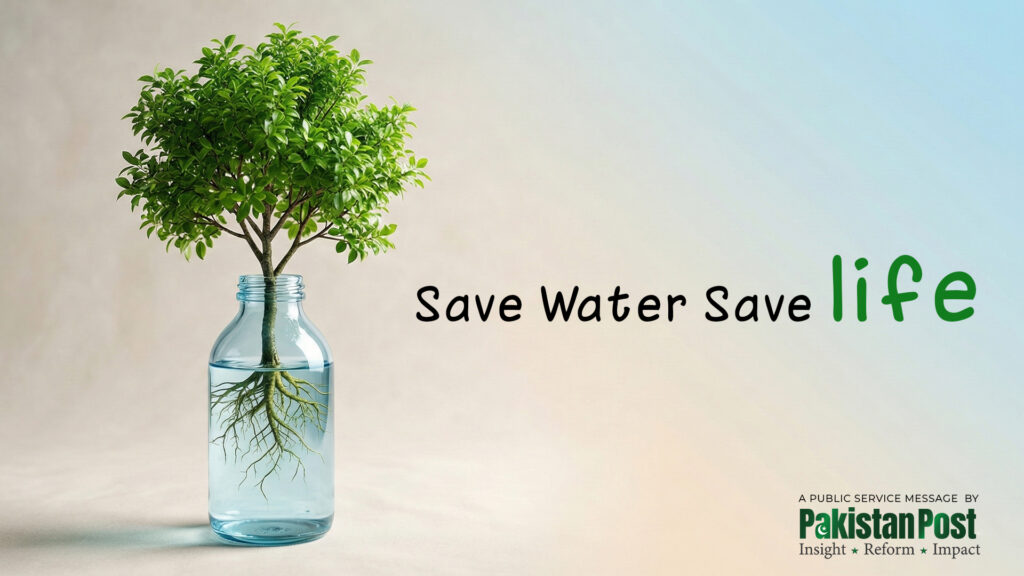
A Public Service Message