
When Fields Run Dry and Factories Stall: Pakistan Faces a Structural Water Crisis


Water is the pulse that drives Pakistan’s economy, nourishing its fields, powering its industries, and sustaining the livelihoods of millions. Yet this pulse is weakening, signaling a crisis that is deeper and more structural than conventional droughts. The United Nations University Institute for Water, Environment and Health has warned that the world is entering an era of systemic water scarcity, a condition in which withdrawals consistently exceed natural replenishment. Pakistan is already experiencing this structural water deficit, where reservoirs are depleted, aquifers are overdrawn, and rivers fail to meet seasonal and economic demand. Unlike episodic shortages of the past, this is a chronic imbalance that threatens agriculture, industry, and ultimately, national stability. The upcoming summer intensifies these risks, exposing vulnerabilities in irrigation networks, industrial supply chains, and economic planning that have long been masked by seasonal abundance.
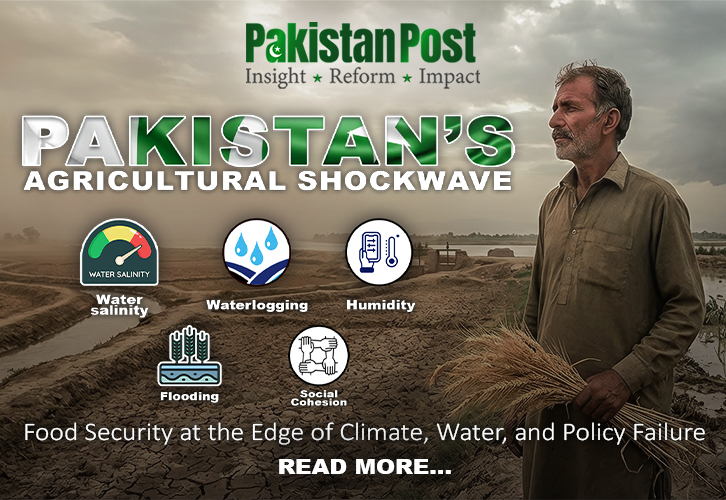
Agriculture, the backbone of Pakistan’s economy, faces unprecedented stress. The Indus Basin Irrigation System, once a model of large-scale water management, is increasingly strained by declining river flows, glacial retreat, and erratic monsoons. Crops such as wheat, rice, sugarcane, and cotton are highly water-intensive, and even minor deviations in water availability can result in dramatic yield reductions. Farmers, particularly smallholders, are caught between rising demand for irrigation and falling supply, leaving them dependent on groundwater extraction that is rapidly unsustainable. Soil degradation, salinity, and reduced groundwater recharge amplify these pressures, while delayed monsoons threaten to shift planting schedules, resulting in cascading losses that ripple through local and national markets.
Industrial sectors are equally exposed. Water-intensive industries such as textiles, sugar processing, beverages, and chemical manufacturing rely on predictable and adequate water flows. Any disruption in supply directly affects production timelines, increases operational costs, and reduces competitiveness in domestic and global markets. Factories dependent on municipal water networks face shortages as urban demand grows, forcing difficult trade-offs between domestic supply and industrial use. Pollution from industrial discharge further diminishes water quality, creating a vicious cycle in which economic activity and water availability are mutually constrained.
Climate change compounds these challenges. Rising temperatures accelerate evaporation from soil, reservoirs, and canals, while glacial melt initially increases river flows but ultimately reduces long-term storage critical for dry periods. Erratic monsoon patterns create uncertainty in irrigation planning and industrial water procurement, and extreme events such as floods or heatwaves disrupt both farm and factory operations. Without strategic interventions, seasonal scarcity will evolve into chronic disruption, threatening food security, employment, and economic growth.
The stance of the United Nations University Institute for Water, Environment and Health underscores the urgency of this crisis. UNU-INWEH emphasizes that countries experiencing structural water deficits must adopt integrated resource management and forward-looking policies that account for both climate variability and population pressures. Pakistan’s water situation reflects precisely the type of systemic imbalance the organization warns about, demonstrating that short-term measures are insufficient to secure long-term resilience.
Policy responses must address both supply and demand dimensions of water management. In agriculture, adopting efficient irrigation technologies such as drip and sprinkler systems can reduce water consumption while maintaining yields. Crop diversification toward less water-intensive varieties, alongside soil conservation techniques, can improve resilience to both seasonal and long-term water stress. Policies that encourage groundwater recharge and protect aquifers are essential to prevent irreversible depletion. Financial incentives, technical support, and capacity-building for farmers can accelerate the adoption of these practices, ensuring that agricultural productivity is maintained despite mounting scarcity.
For industry, water efficiency must become a strategic priority. Investment in recycling and reuse of process water, modernization of cooling systems, and treatment of industrial effluents can both conserve resources and mitigate environmental impacts. Urban water management must balance industrial and domestic needs, ensuring equitable allocation without compromising economic activity or public health. Cross-sector coordination, robust monitoring, and regulatory enforcement are essential to prevent over-extraction and pollution while promoting sustainable economic growth.
The economic consequences of structural water stress extend beyond agriculture and industry. Reduced crop yields drive up food prices, affecting nutrition and household welfare, particularly among vulnerable populations. Industrial slowdowns increase unemployment, lower production, and erode export earnings. The interplay between water scarcity, economic productivity, and social stability highlights the systemic nature of the crisis, demonstrating that water security is inseparable from national prosperity. Public health is indirectly affected, as limited water supply reduces hygiene, amplifies disease risk, and undermines workforce resilience, linking economic and human wellbeing in a single feedback loop.
Strategic planning must integrate climate projections, hydrological modeling, and sectoral priorities. Investments in climate-resilient infrastructure, such as modern reservoirs, canals, and wastewater treatment facilities, provide buffers against seasonal extremes. Early warning systems can anticipate droughts or water stress events, enabling proactive allocation across agriculture, industry, and urban consumption. Regional cooperation on transboundary rivers, data sharing, and basin-wide management further strengthens Pakistan’s ability to mitigate risks while enhancing economic and social stability.
Education and capacity-building are also vital. Farmers, industrial managers, and policymakers must understand the implications of water scarcity, adopt best practices, and embrace innovative solutions. Public awareness campaigns can encourage efficient water use, highlighting the economic and social consequences of wastage. Private sector engagement, through incentives, partnerships, and technology adoption, can accelerate sustainable practices, ensuring that water security aligns with economic growth objectives.
In conclusion, Pakistan’s structural water deficit is more than an environmental challenge; it is a strategic economic threat. Fields running dry, factories stalling, and rising costs are symptomatic of a deeper imbalance that threatens national stability. Addressing this crisis requires a holistic, anticipatory, and integrated policy approach, balancing the needs of agriculture, industry, and public welfare. By investing in efficient irrigation, modern industrial water practices, climate-resilient infrastructure, and cross-sector coordination, Pakistan can preserve both economic productivity and human wellbeing. The stance of the United Nations University Institute for Water, Environment and Health provide a global framework for understanding and managing this crisis, emphasizing that structural water scarcity is a systemic challenge requiring immediate and coordinated action. The nation’s ability to manage water as a strategic resource will determine not only the sustainability of its economy but the health, livelihoods, and prosperity of generations to come.
A Public Serivice Message