

Inflation Reality and Pakistan Hidden Political Economic Strain Unseen Pressures

In the contemporary economic narrative of Pakistan, inflation is frequently presented through sanitized statistical representations that obscure more than they reveal. Official dashboards, multilateral briefings, and donor-facing reports tend to compress a complex socio economic transformation into a singular percentage figure, often detached
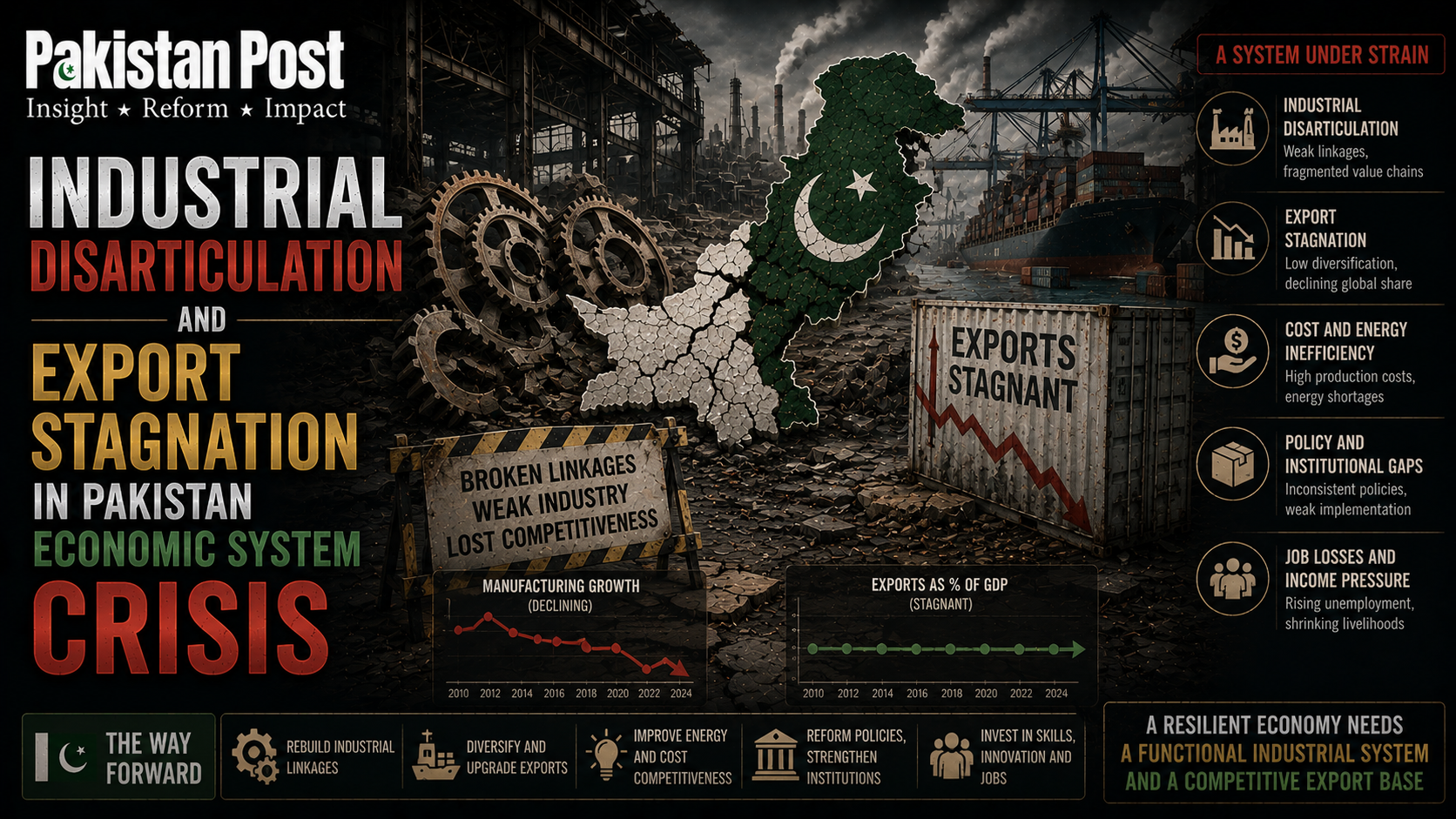
Industrial Disarticulation and Export Stagnation in Pakistan Economic System Crisis

Pakistan’s economic structure now stands at a critical inflection point where incremental policy adjustments are no longer sufficient to offset deep structural decay in industrial productivity, export diversification, and external account stability. The country’s industrial base, once envisioned as a platform for gradual

Debt Entrapment and Sovereign Compression in Pakistan Economy

Pakistan stands at an inflection point where macroeconomic stabilization has ceased to function as a policy objective and has instead evolved into a permanent operating condition. The recurrent reliance on external financial lifelines, particularly through multilateral adjustment frameworks, has produced a structural dependency
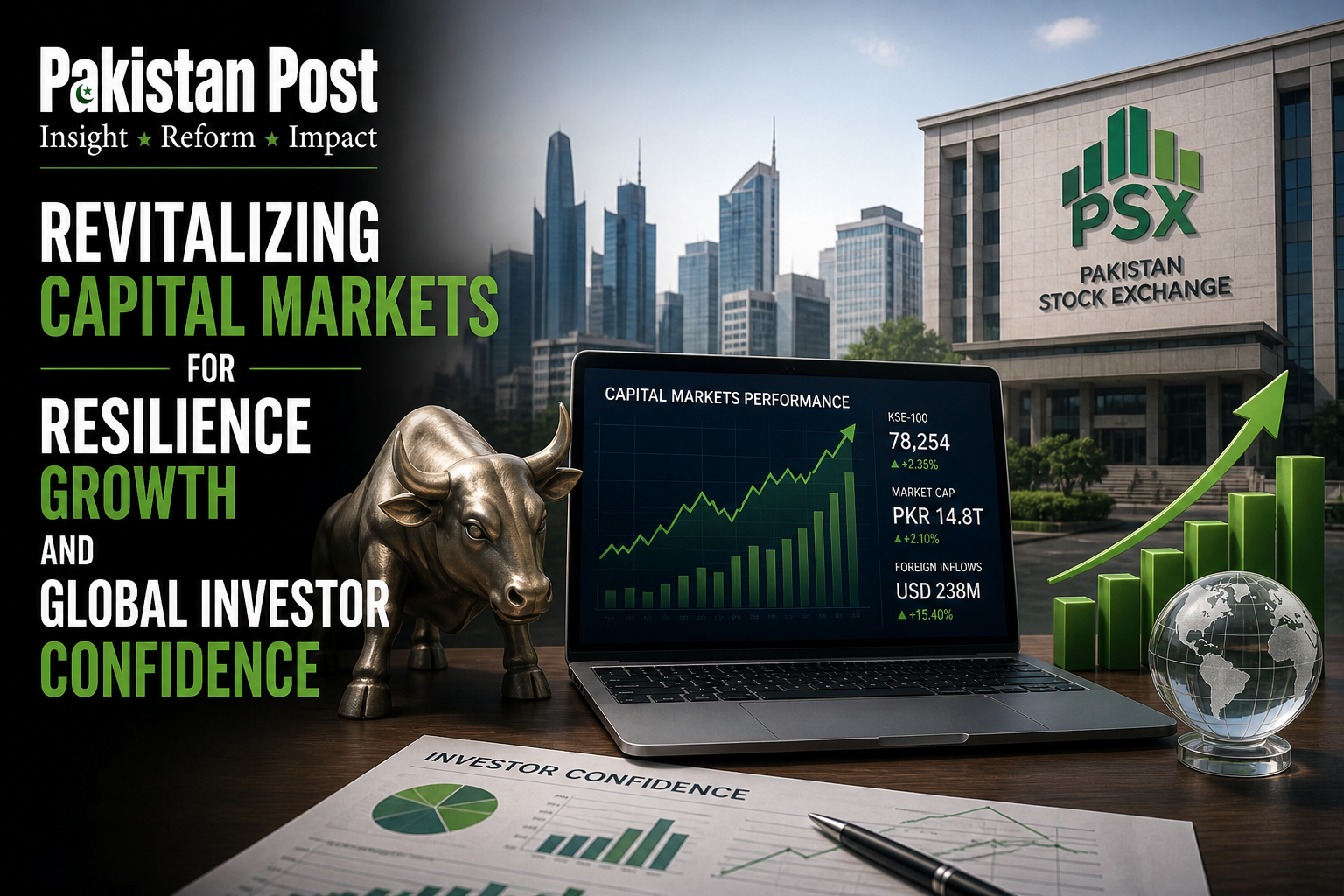
Revitalizing capital markets for resilience growth and global investor confidence

Pakistan’s capital market narrative has long oscillated between episodic optimism and structural fragility, reflecting a deeper tension between the country’s economic potential and the institutional constraints that inhibit its realization. The Pakistan Stock Exchange, often portrayed as a barometer of investor sentiment, operates
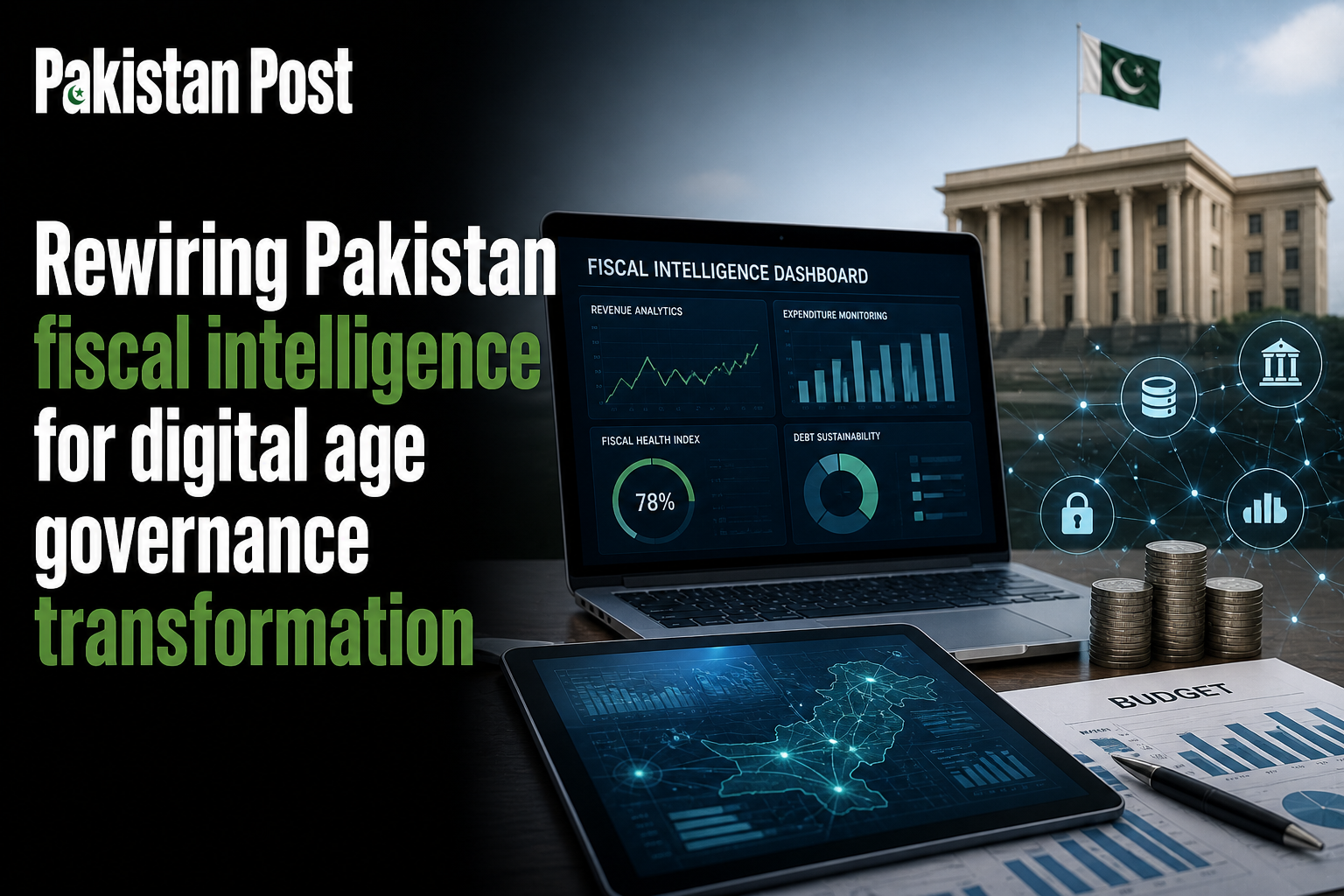
Rewiring Pakistan fiscal intelligence for digital age governance transformation
Pakistan’s fiscal crisis is no longer merely a question of deficits, debt cycles, or negotiations with international lenders, it is fundamentally a crisis of state intelligence, of how the state sees, measures, predicts, and governs economic activity within its own borders. The Federal

Food Inflation Threatens Stability Economic Pressure Deepens Pakistan Risk

Food inflation has increasingly moved from the margins of economic reporting to the centre of political stability analysis in developing states, where the price of basic consumption goods is no longer treated as a routine macroeconomic indicator but as a barometer of governance

The Price Beneath the Pump
Petrol prices in Pakistan rise with a familiar rhythm, announced in late-night notifications, justified through global benchmarks, and absorbed reluctantly by a public already strained by inflation. The official explanation is always technical, international crude prices have shifted, the exchange rate has moved,

Fintech Expansion, Mobile Banking, and the Political Economy of Financial Inclusion in Pakistan

The rapid expansion of fintech ecosystems in Pakistan has emerged as one of the most visible yet uneven transformations in the country’s contemporary political economy. Mobile wallets, branchless banking networks, digital payment platforms, and instant transfer systems have redefined the mechanics of money

Educational Misalignment and the Structural Human Capital Gap in Pakistan’s Economic Transition
Pakistan’s education system stands at the centre of a widening structural contradiction: a rapidly changing global economy demanding advanced digital, analytical, and technical skills, and an institutional framework of learning that remains largely anchored in outdated curricula, fragmented governance, and uneven quality standards.
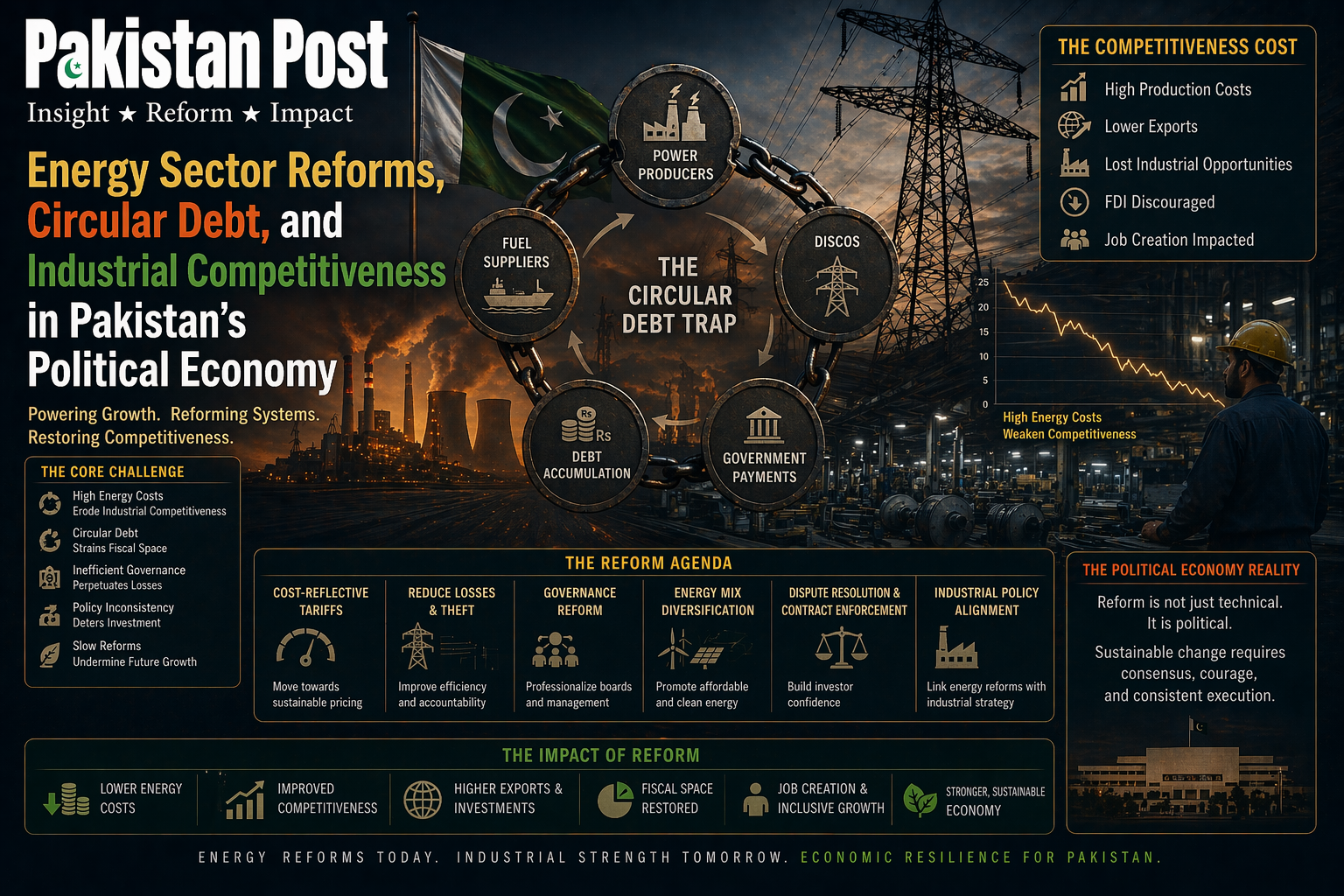
Energy Sector Reforms, Circular Debt, and Industrial Competitiveness in Pakistan’s Political Economy
Pakistan’s energy sector sits at the core of its macroeconomic instability and industrial underperformance, functioning simultaneously as a driver of fiscal stress, a constraint on export competitiveness, and a persistent source of political contestation. Over the past decade, successive governments have introduced a