

Great Power Rivalry Shapes Middle Power Strategic Calculations Today

The contemporary international system is undergoing a profound structural transformation driven by intensifying rivalry between the United States and China. This competition is no longer confined to traditional military balances or diplomatic posturing; it now permeates global trade, technological ecosystems, financial infrastructures, and

Diplomacy Under Permanent Crisis and Fragmented Global Order Today Evolving

Diplomacy in the early twenty first century no longer resembles the calibrated architecture of post Cold War optimism, nor the structured bargaining systems that defined classical international relations theory. It has become an adaptive survival mechanism within a geopolitical environment where crises are

Energy dependence and sovereignty dilemmas in volatile global markets today

The meaning of sovereignty is being quietly rewritten, not through grand declarations or territorial conflicts, but through the invisible yet deeply consequential circuits of energy flows, pricing mechanisms, and supply dependencies. For Pakistan, the question is no longer confined to how energy is

Nuclear Deterrence Faces Instability in an Accelerating Fragmented Global Security Order
The architecture of nuclear deterrence was designed for a world that moved more slowly than the one that now exists. Its logic rested on time, clarity and a shared understanding of thresholds. Decisions could be weighed, signals interpreted and crises managed within a

Geography Weaponized Reshaping Power Across Corridors Ports and Global Networks
Geography has never been neutral, yet for much of the late twentieth and early twenty first century it was treated as though it were. Maps were read as static backdrops to the dynamic play of markets, technologies and institutions. Infrastructure was celebrated as
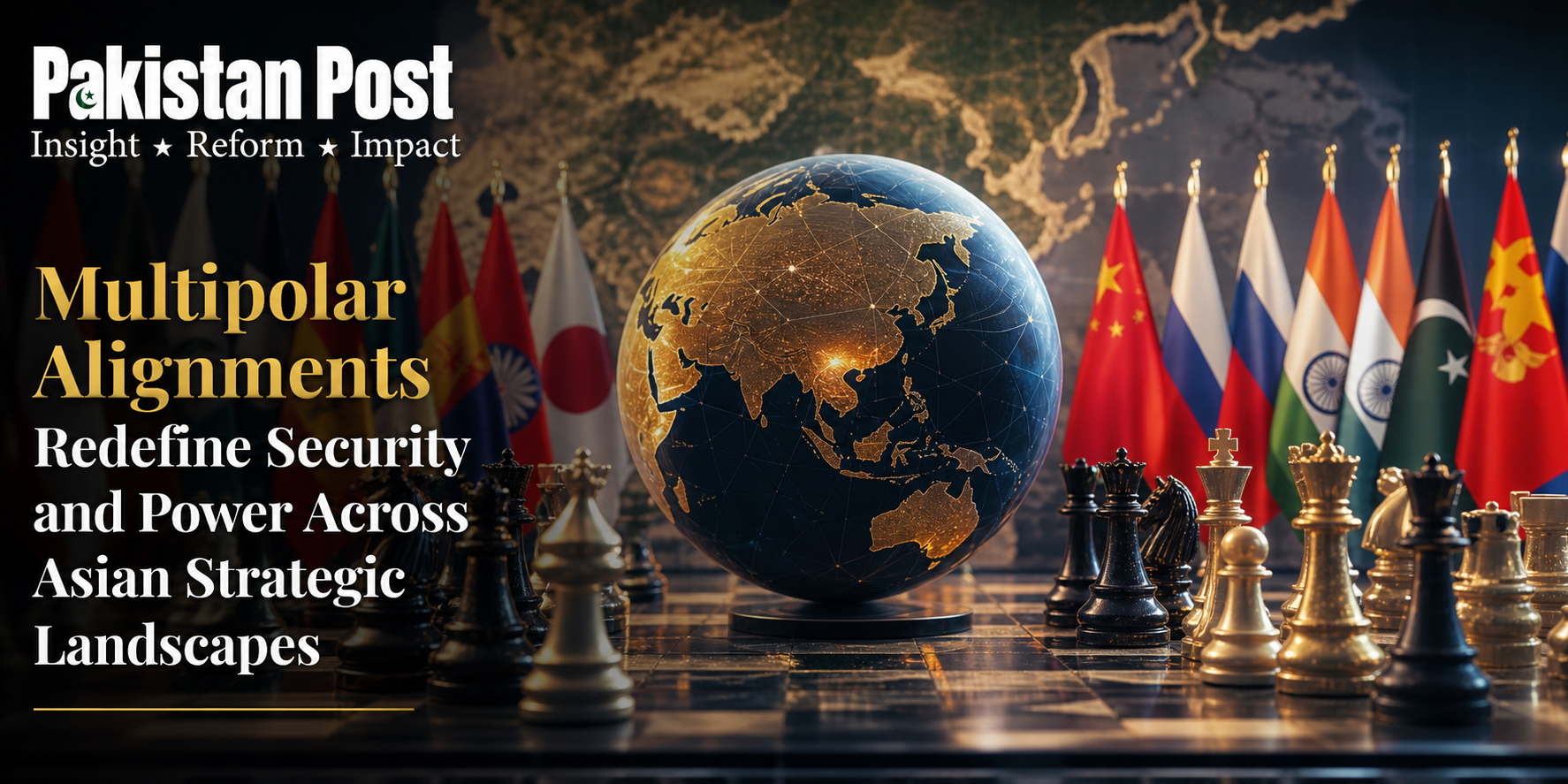
Multipolar Alignments Redefine Security and Power Across Asian Strategic Landscapes
The vocabulary of global order is undergoing a quiet but profound mutation. Where once the language of international security was anchored in alliances, treaties and institutional predictability, it is now increasingly articulated through alignments that are fluid, interest driven and often deliberately ambiguous.
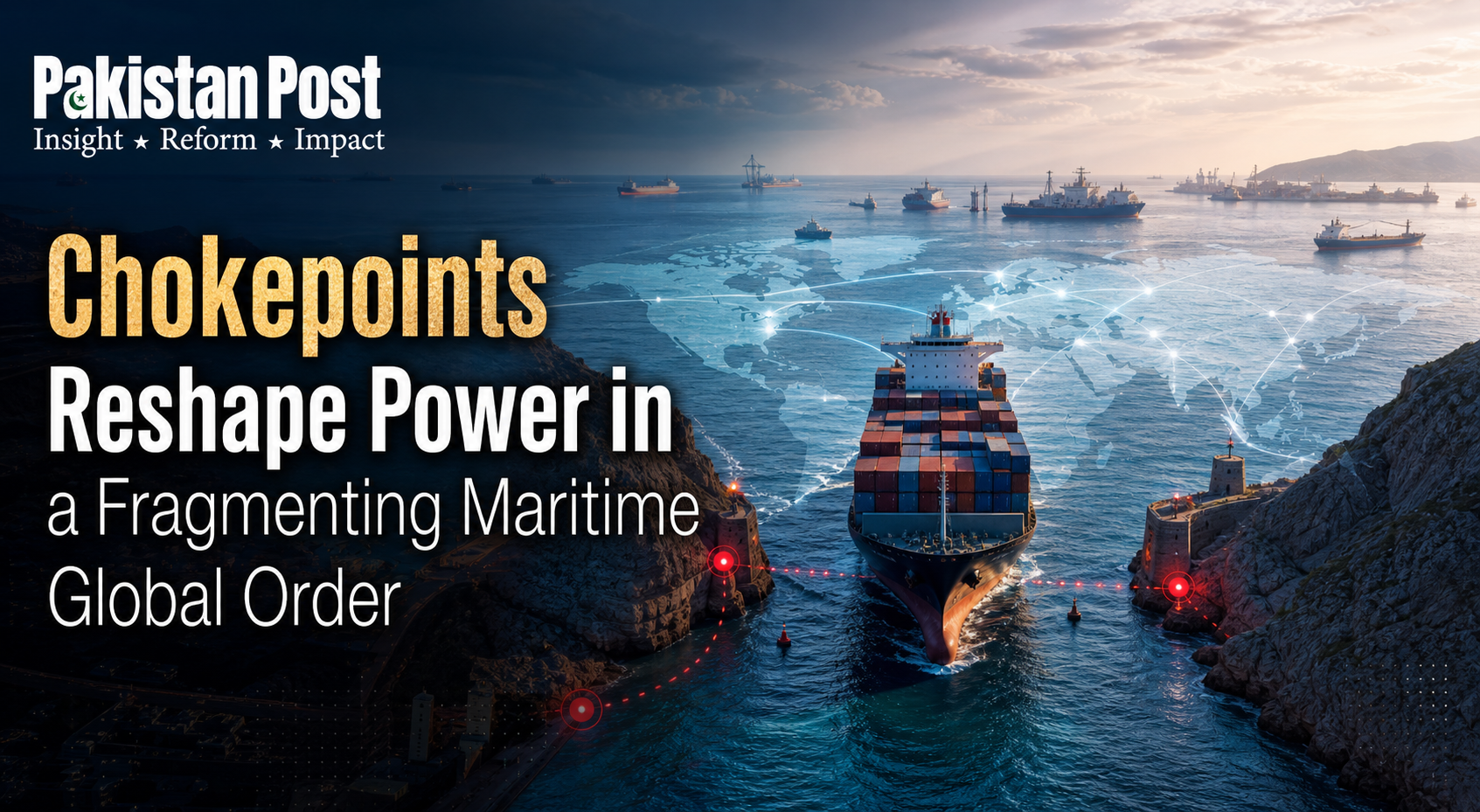
Chokepoints Reshape Power in a Fragmenting Maritime Global Order
The map of globalization has always been maritime, but the meaning of the sea is changing. Where once the oceans were imagined as connective tissue, frictionless corridors binding distant markets, they are now increasingly experienced as sites of pressure, delay and selective denial.
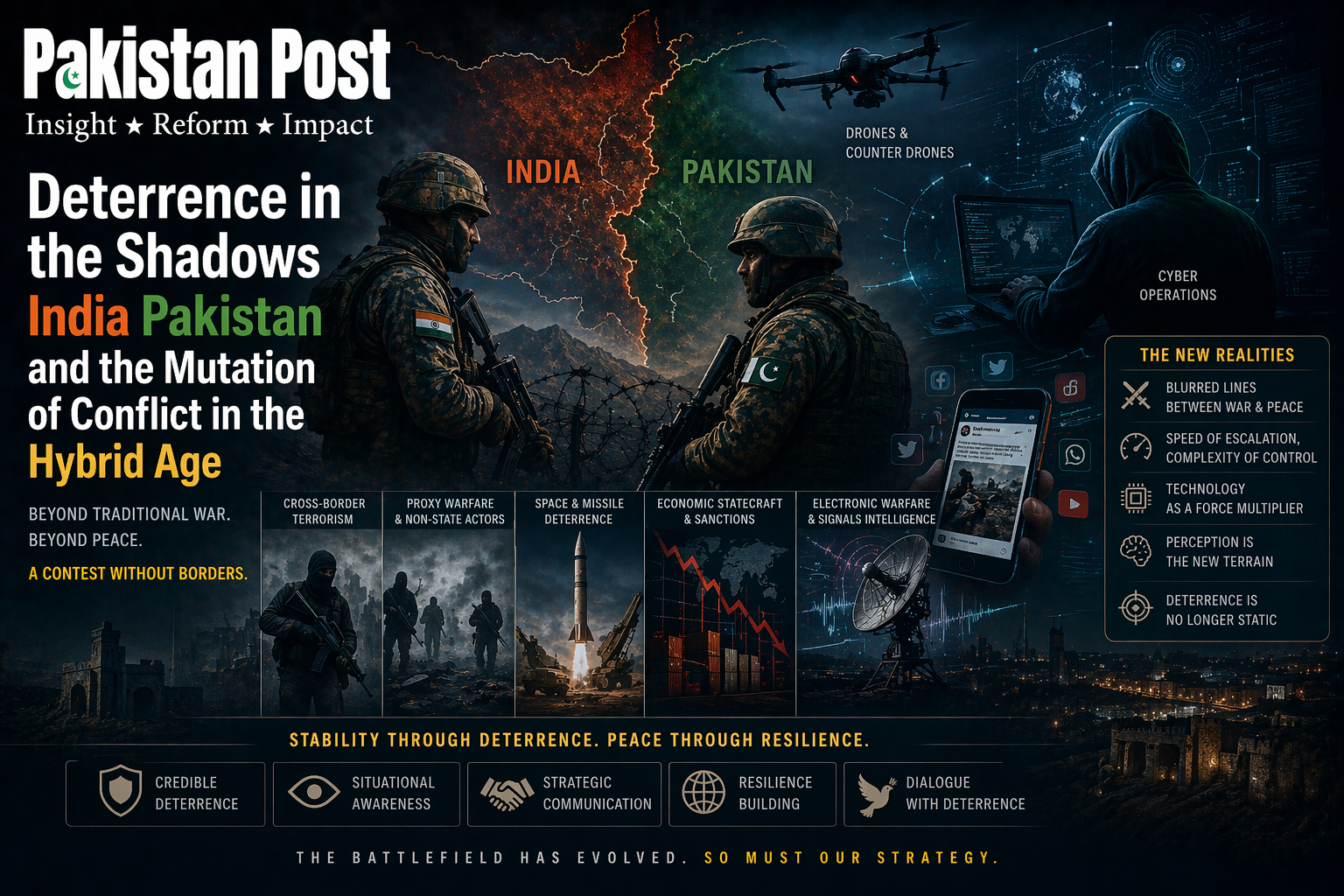
Deterrence in the Shadows India Pakistan and the Mutation of Conflict in the Hybrid Age

By: Shafqat Ali Qureshi The grammar of deterrence in South Asia has long been written in the language of nuclear parity, conventional force balance, and the uneasy stability that emerges when adversaries possess the capacity to inflict unacceptable damage upon one another. For
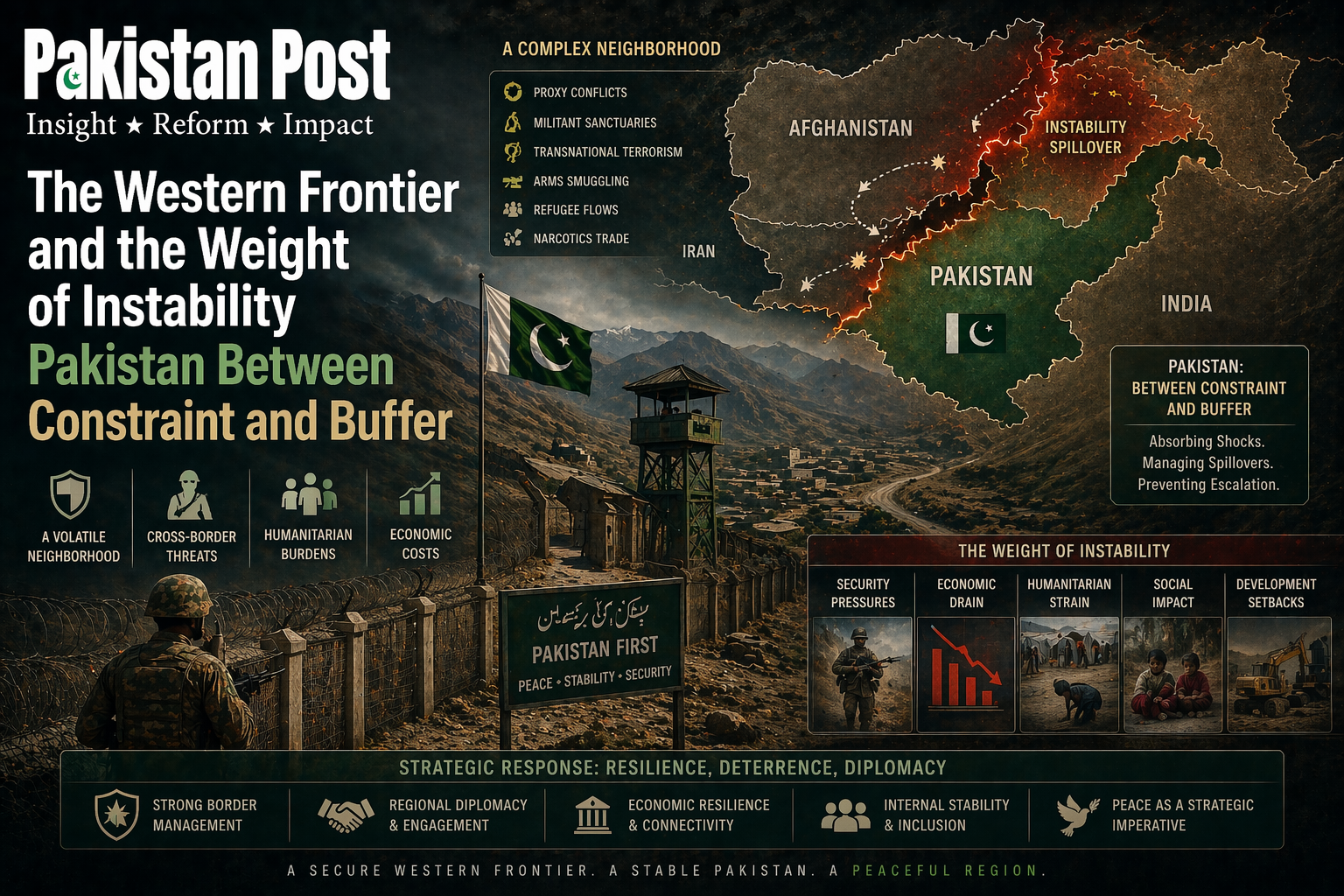
The Western Frontier and the Weight of Instability Pakistan Between Constraint and Buffer
The persistence of instability in Afghanistan has long been treated as a chronic condition of regional politics, an enduring reality that defies both external intervention and internal consolidation. Yet in the current geopolitical moment, this instability has acquired a renewed and more complex

Between Giants and Guardians Pakistan’s Search for Strategic Sovereignty
The geometry of power in the twenty-first century is no longer defined by singular dominance but by intersecting axes of influence, where economic leverage, security guarantees, ideological affinity, and financial dependency converge in ways that defy traditional alliance structures. For Pakistan, this evolving