

Pakistan Must Compete Where Global Standards Shape Strategic Power

Pakistan’s long term strategic influence will increasingly depend less upon territorial calculations and more upon its ability to participate in the international institutions that determine technical standards. The decisive competition of the coming decades will not primarily concern maps, military deployments, or even

Pakistan Must Master Coalition Diplomacy Before Global Rules Solidify
Pakistan’s future diplomatic influence will depend less on the number of bilateral relationships it maintains and more on whether it can consistently shape international negotiations that increasingly determine access to finance, technology, markets, critical infrastructure, food systems, maritime resources and regulatory standards. The
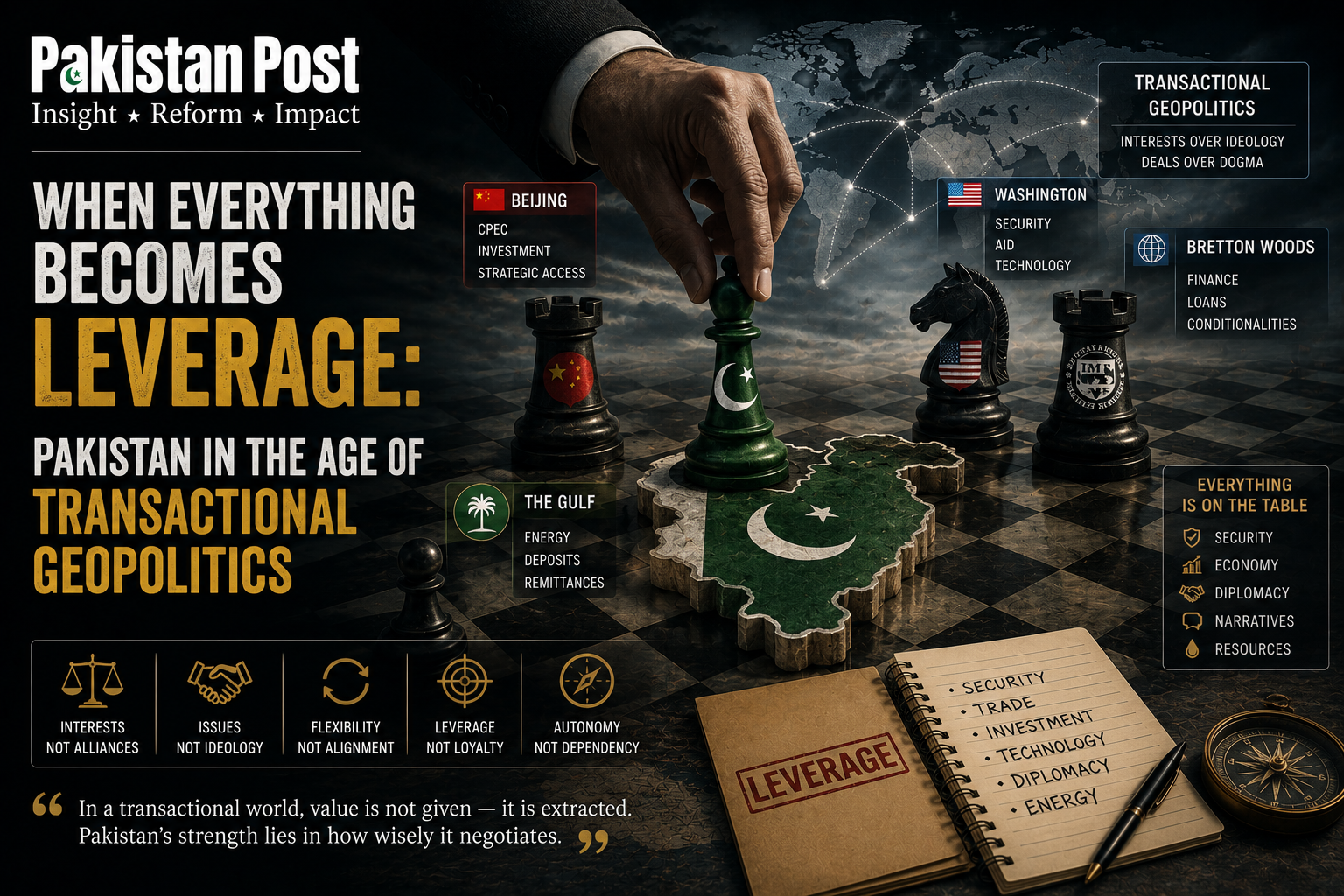
When Everything Becomes Leverage: Pakistan in the Age of Transactional Geopolitics

Pakistan now confronts an international order in which the old bureaucratic fiction that economics, diplomacy, security, and technology can be handled as separate theatres has largely collapsed. The world is moving into an era of open geopolitical bargaining where tariffs, sanctions, debt relief,
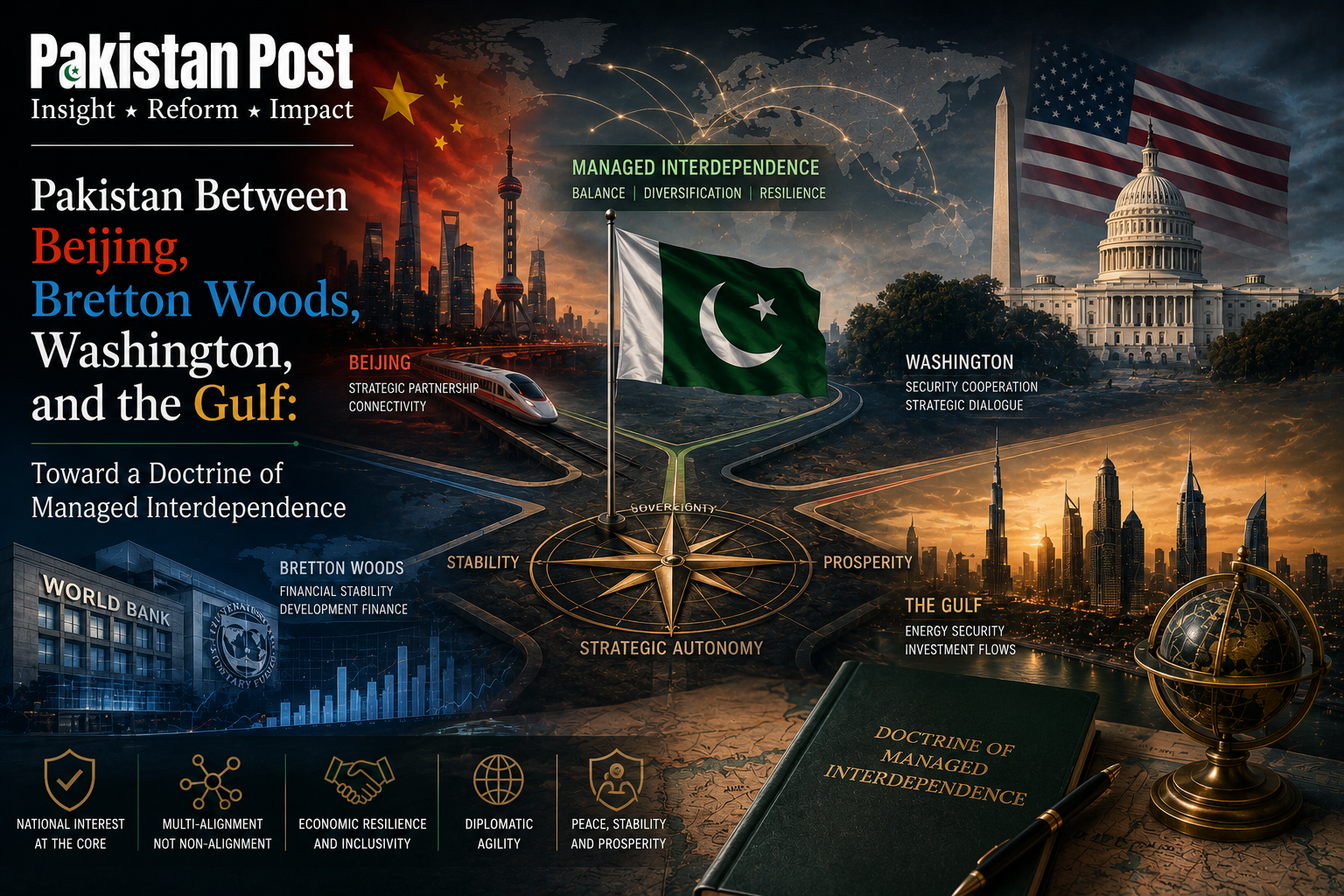
Pakistan Between Beijing, Bretton Woods, Washington, and the Gulf: Toward a Doctrine of Managed Interdependence

Pakistan is entering a foreign policy moment in which the old habit of treating external relationships as separate compartments is no longer sustainable. The country’s strategic landscape is now shaped by four simultaneous and deeply entangled vectors of dependence and leverage. China remains

Defence Spending as the New Geopolitical Frontline and the Emergence of Fiscal War Scrapes in Contemporary Strategic Order
The structure of modern geopolitical competition is undergoing a profound transformation in which the visible boundaries of conflict are increasingly displaced by the invisible architecture of fiscal commitment. In earlier eras of international politics, the frontline of strategic competition was geographically identifiable, marked
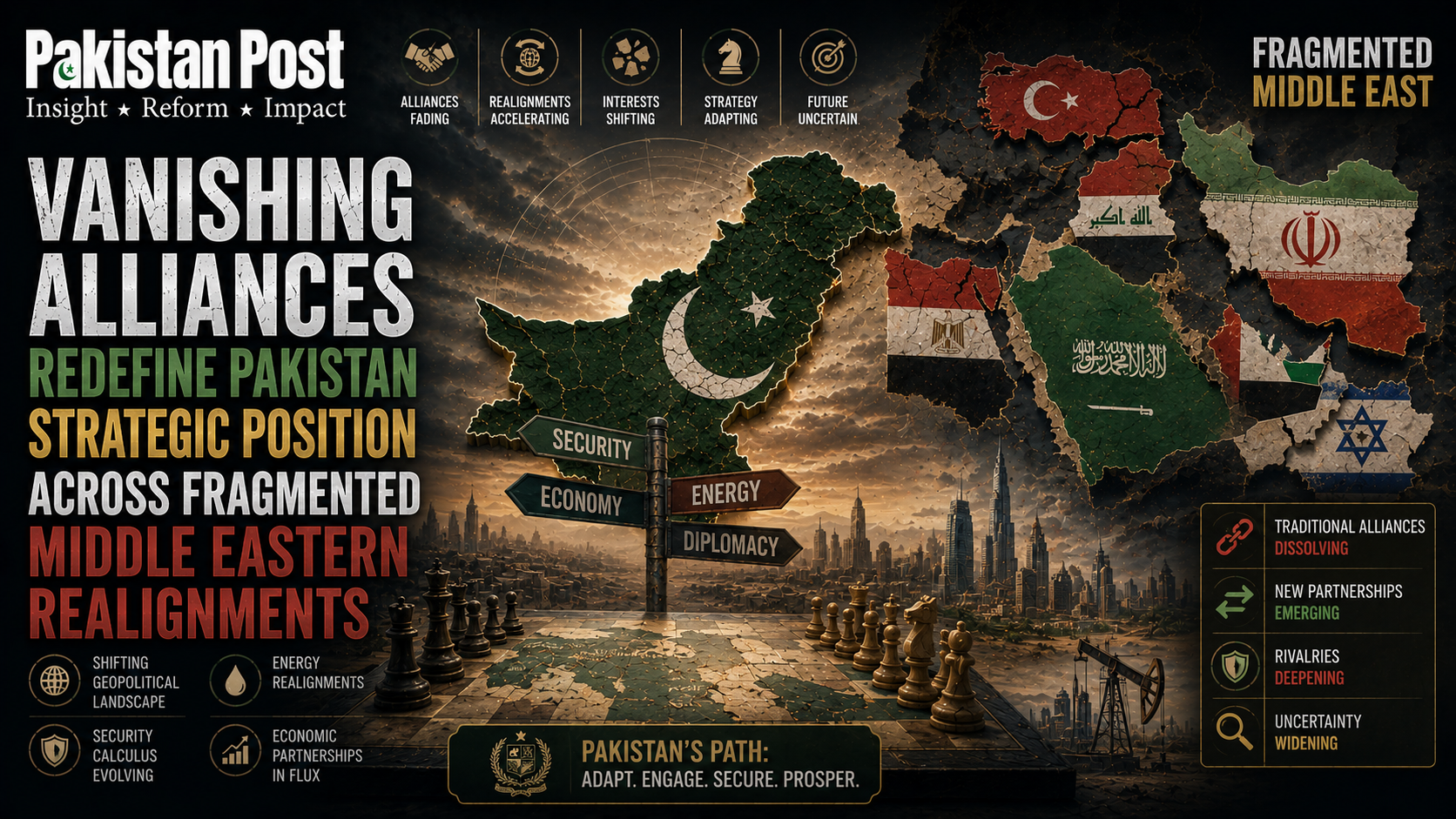
Vanishing Alliances Redefine Pakistan Strategic Position Across Fragmented Middle Eastern Realignments

BY SHAFQAT ALI QURESHI The Middle East is undergoing its most consequential geopolitical restructuring since the aftermath of the Cold War, and Pakistan risks entering this transition not as a central strategic actor but as a peripheral observer trapped between outdated diplomatic assumptions

Silent Deterrence Masks South Asian Escalation Dangers Beneath Strategic Rivalries

South Asia is entering a prolonged era of frozen hostility where nuclear deterrence preserves temporary stability while simultaneously concealing accelerating risks of conventional escalation, psychological confrontation, cyber disruption, water insecurity, and strategic miscalculation. The Pakistan India relationship no longer resembles a traditional bilateral

Fractured Mandates Reshape Pakistan Institutional Stability Amid Expanding Strategic Pressures
Pakistan is entering a historically delicate phase where the traditional equilibrium between civilian authority and strategic institutions is being recalibrated under the simultaneous pressure of economic fragility, governance exhaustion, regional insecurity, technological disruption, and intensifying geopolitical competition. The resulting transformation is neither a

Ideological Faultlines Recast Global Governance Architecture Today
BY SHAFQAT ALI QURESHI The contemporary global order is increasingly defined not by the absence of ideology, as was once assumed in the post-Cold War liberal moment, but by its intensified return in fragmented and competing forms. The assumption that globalization would converge

Sanctions Redefine Power and Reshape Global Economic Order Today
Economic sanctions have emerged as one of the most consequential instruments of contemporary international power, gradually displacing traditional military confrontation as the preferred method of coercive diplomacy among major states. In the twenty first century, the logic of warfare has extended beyond battlefields