
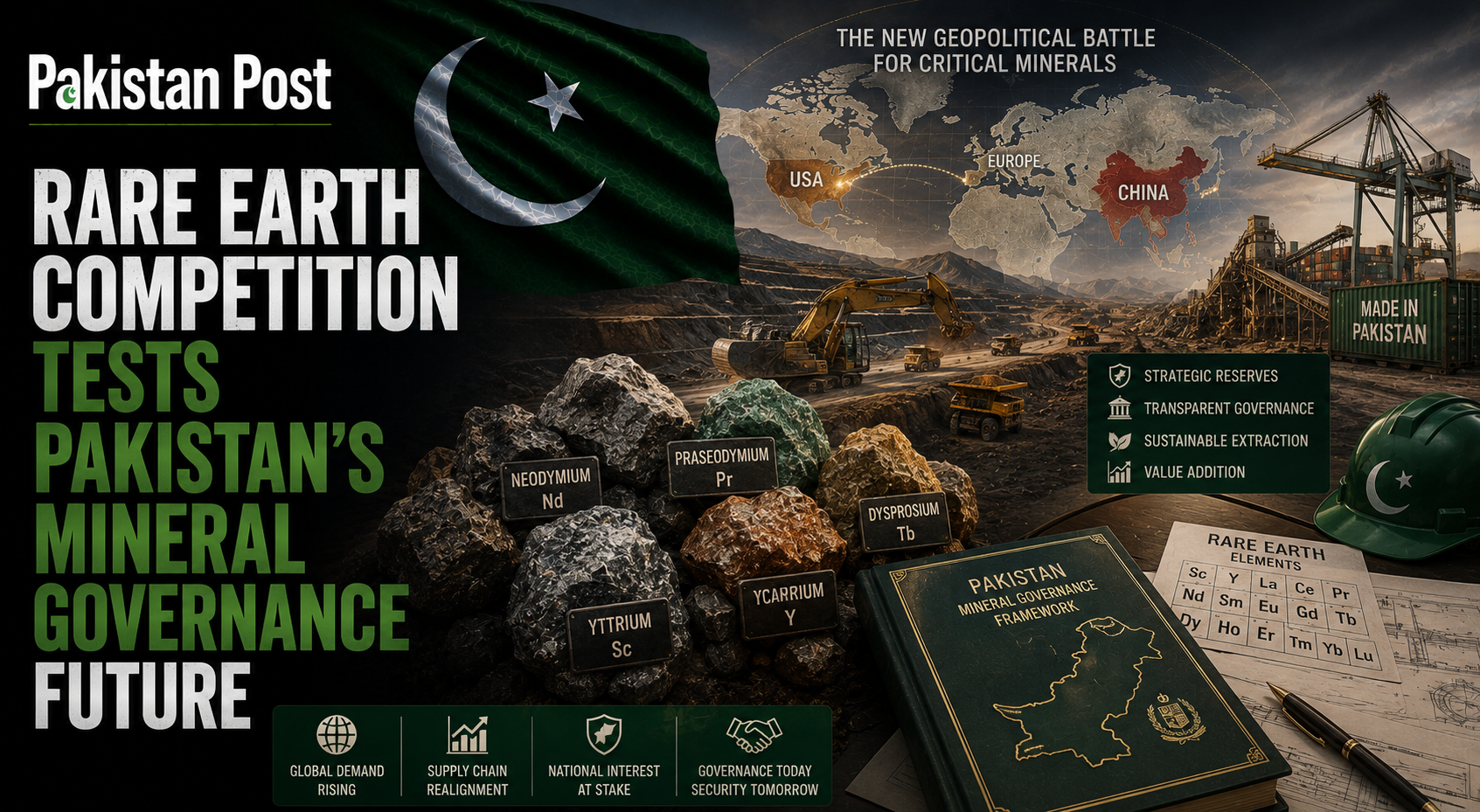
Rare Earth Competition Tests Pakistan’s Mineral Governance Future

The contest for rare earth elements has quietly become one of the defining strategic competitions of the twenty first century. While oil shaped the geopolitical architecture of the industrial era and semiconductors now dominate technological rivalry, the minerals enabling advanced manufacturing have emerged
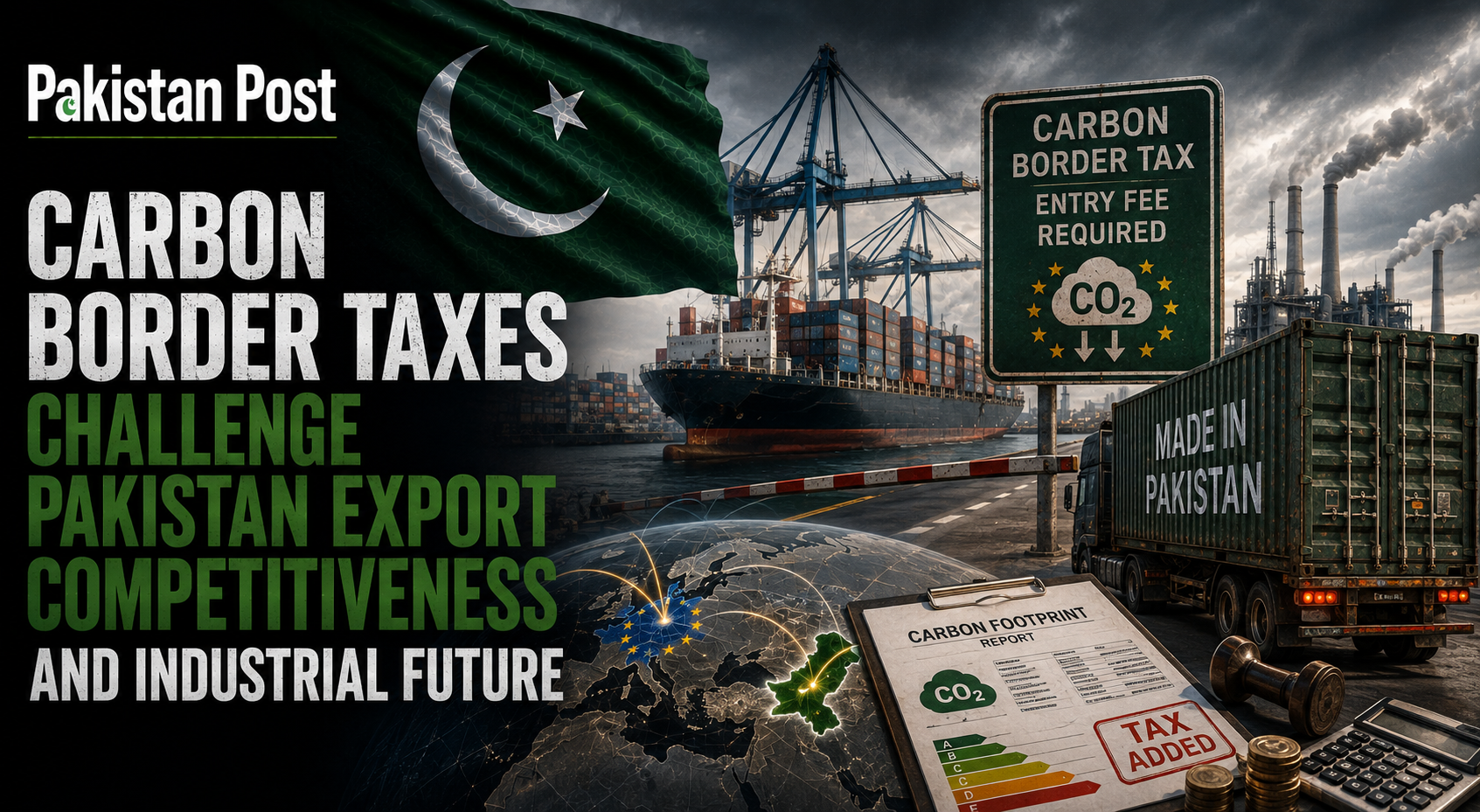
Carbon Border Taxes Challenge Pakistan Export Competitiveness and Industrial Future
Carbon emissions have moved beyond environmental diplomacy into the architecture of international commerce. Climate policy is no longer confined to environmental ministries or multilateral negotiations. It now influences customs procedures, investment decisions, manufacturing standards, financial disclosure, supply chain governance and market access across
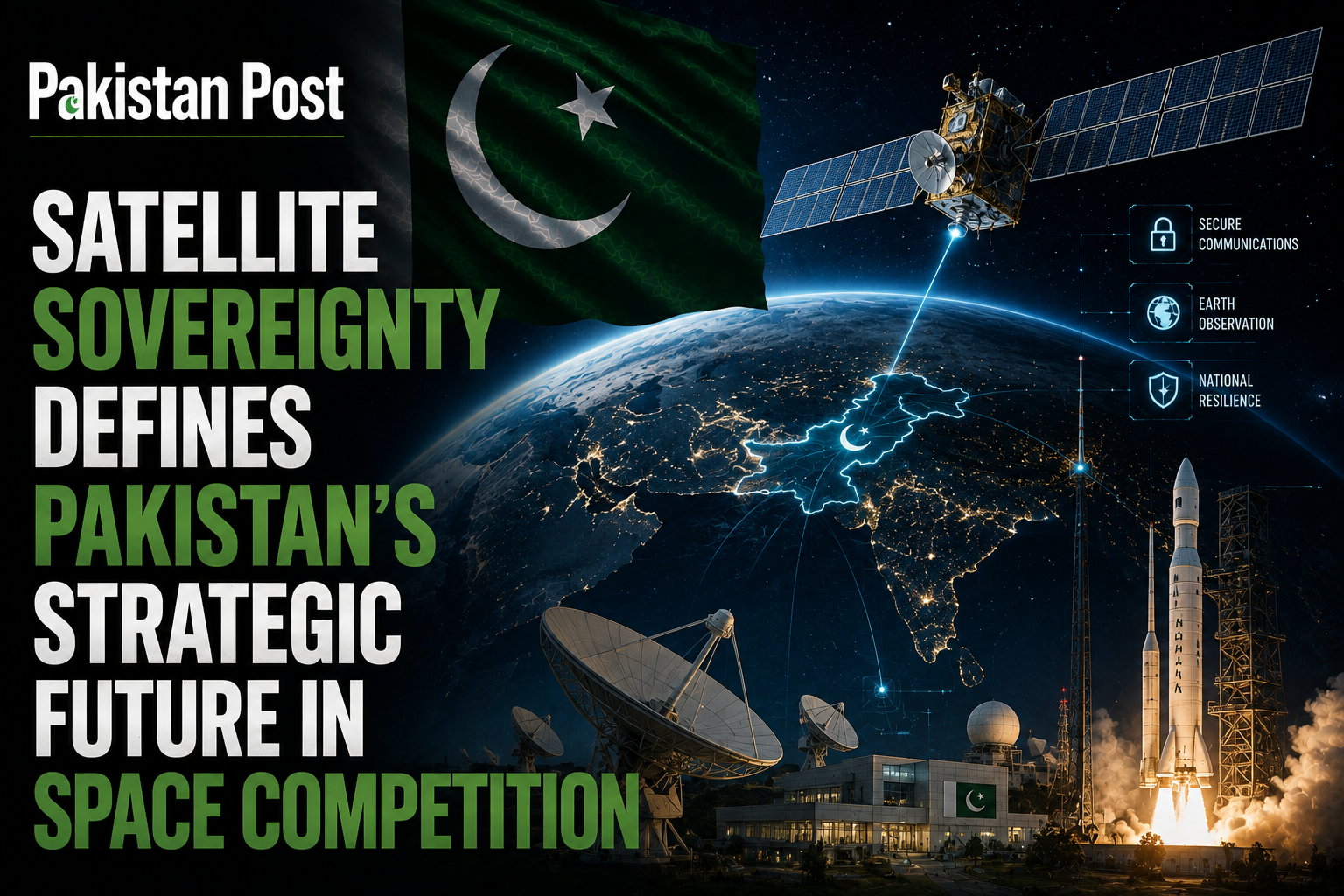
Satellite Sovereignty Defines Pakistan’s Strategic Future In Space Competition

The invisible architecture sustaining modern states no longer resides exclusively within national territory. It increasingly operates thousands of kilometres above the Earth through orbital systems that quietly underpin military readiness, economic management, environmental monitoring, financial stability and governmental continuity. Satellites have evolved from
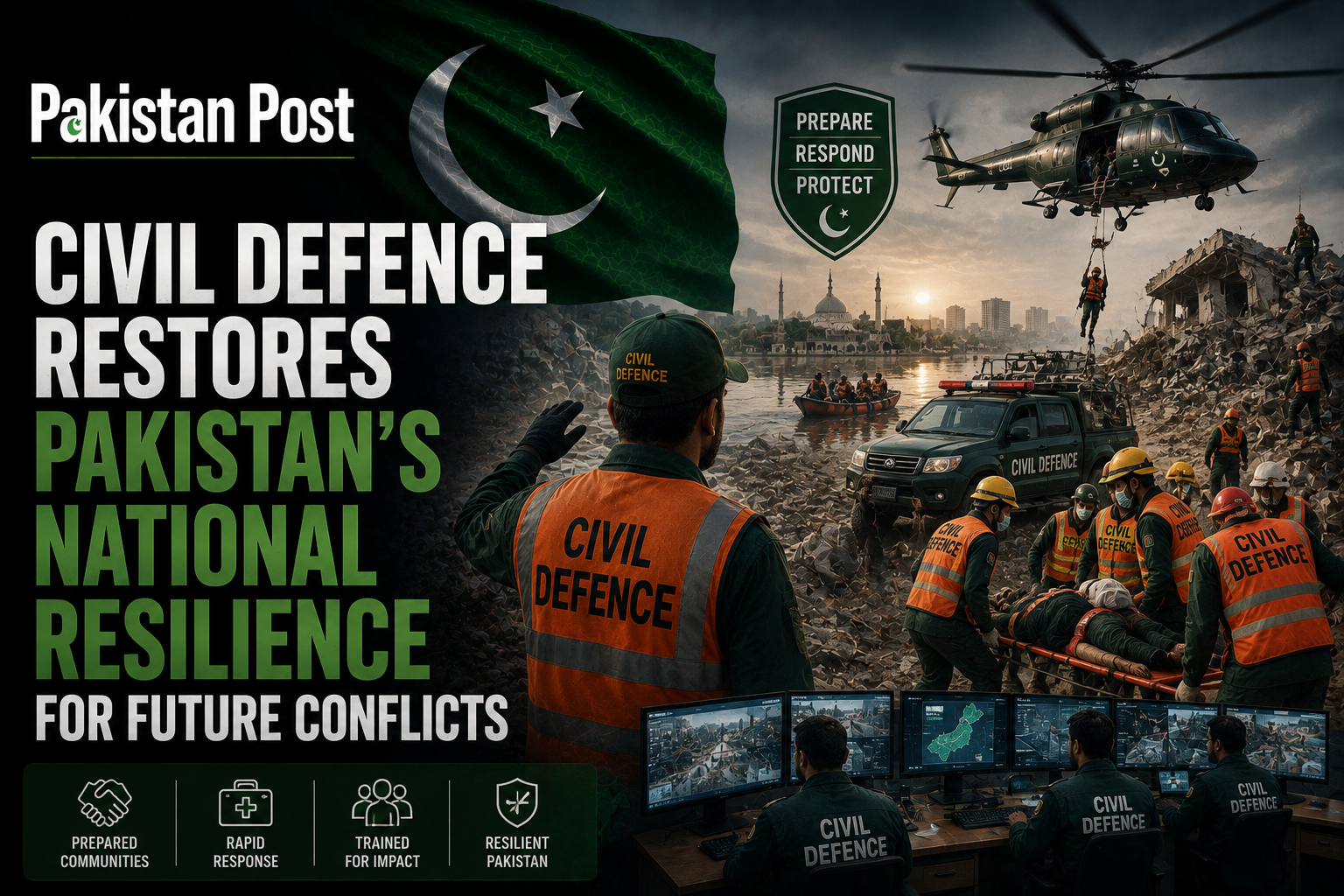
Civil Defence Restores Pakistan’s National Resilience For Future Conflicts
The geography of conflict has undergone a profound transformation. Modern warfare no longer begins with massed armour crossing borders or fighter aircraft establishing air superiority before conventional battles unfold. Instead, the earliest targets increasingly lie within the economic, administrative and technological foundations of
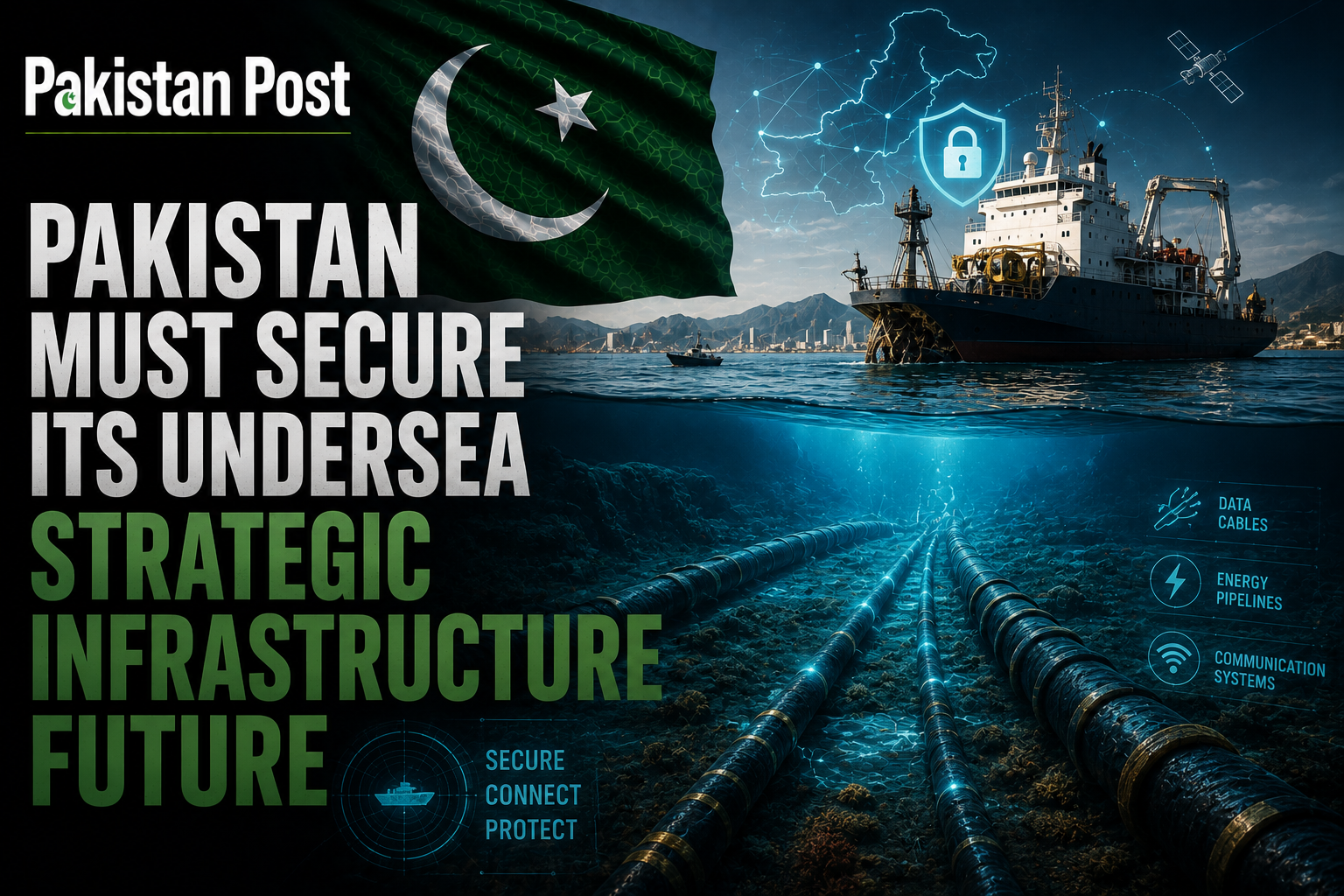
Pakistan Must Secure Its Undersea Strategic Infrastructure Future
Invisible networks resting beneath the sea increasingly determine the resilience of modern states. The strategic geography of the twenty first century is no longer defined exclusively by coastlines, ports or naval deployments. It is equally shaped by submarine fibre optic cables carrying global
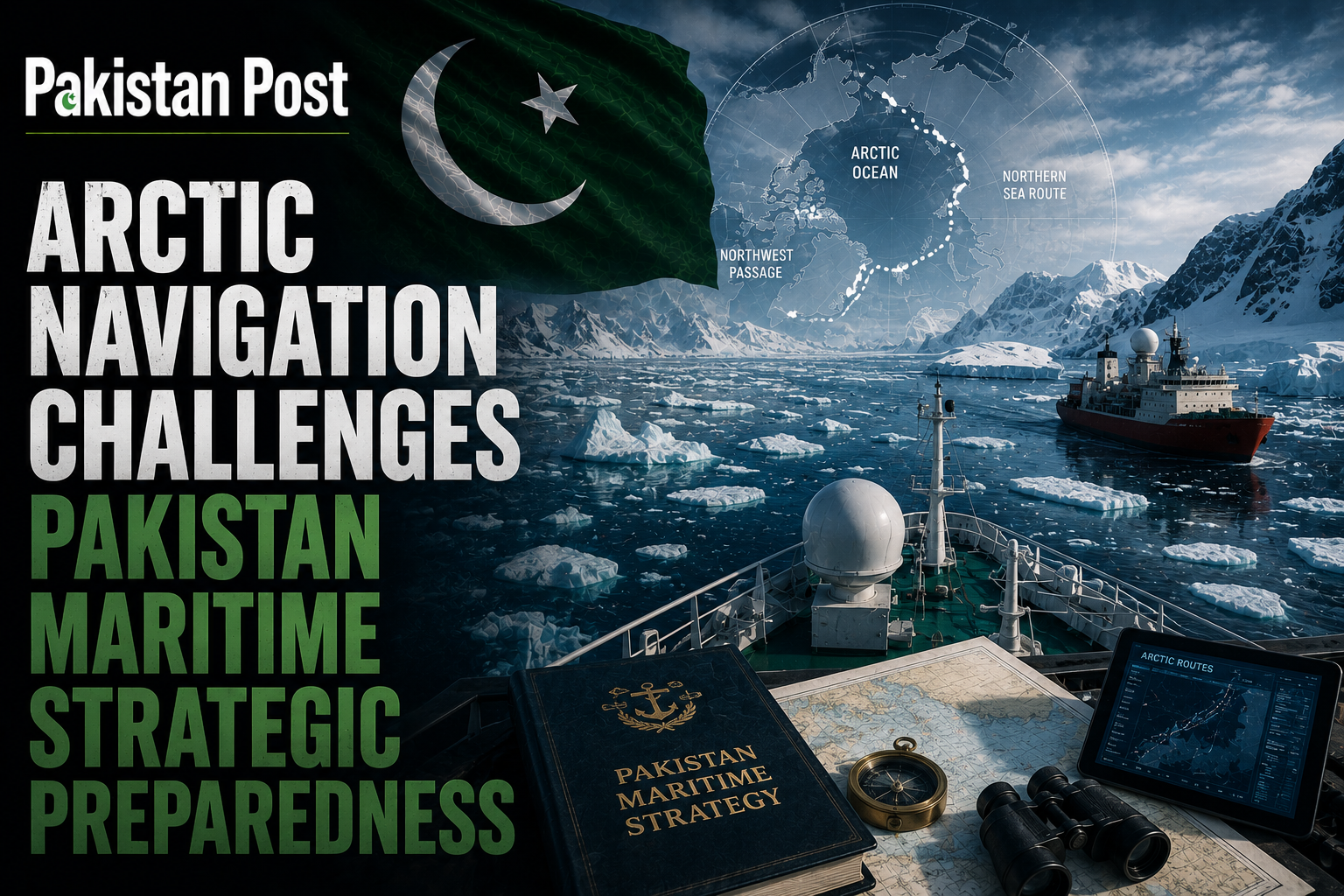
Arctic Navigation Challenges Pakistan Maritime Strategic Preparedness
The accelerating commercial viability of Arctic navigation is gradually transforming assumptions that have governed international maritime strategy for more than a century. While the Indian Ocean remains indispensable to global commerce, diminishing Arctic ice coverage, technological advances in polar shipping, expanding northern infrastructure
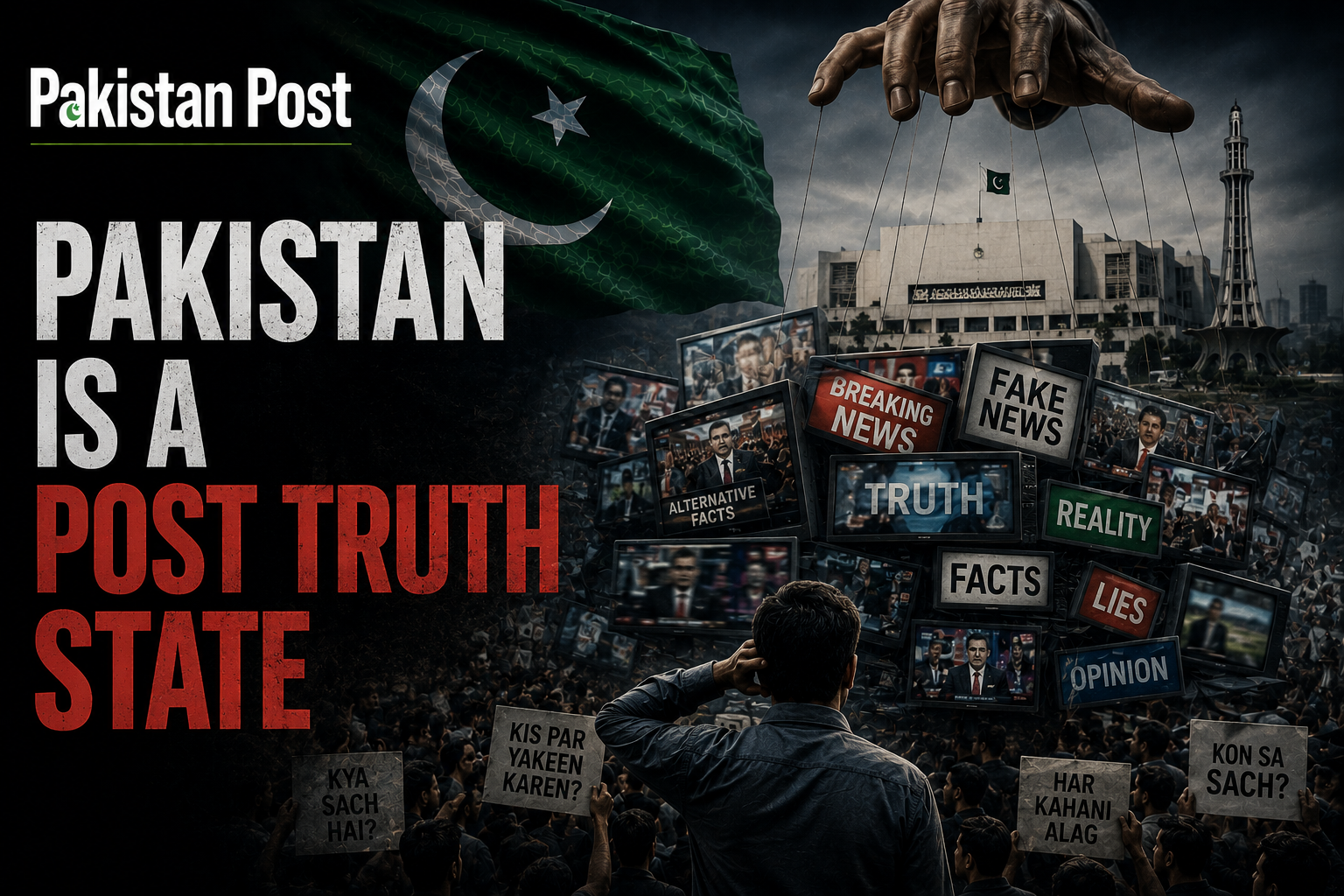
Pakistan Is a Post Truth State
Pakistan is increasingly entering a political and social condition in which truth has not disappeared, but has lost its privileged position in determining what citizens believe, discuss and act upon. Facts continue to exist. Evidence continues to be produced. Institutions continue to publish
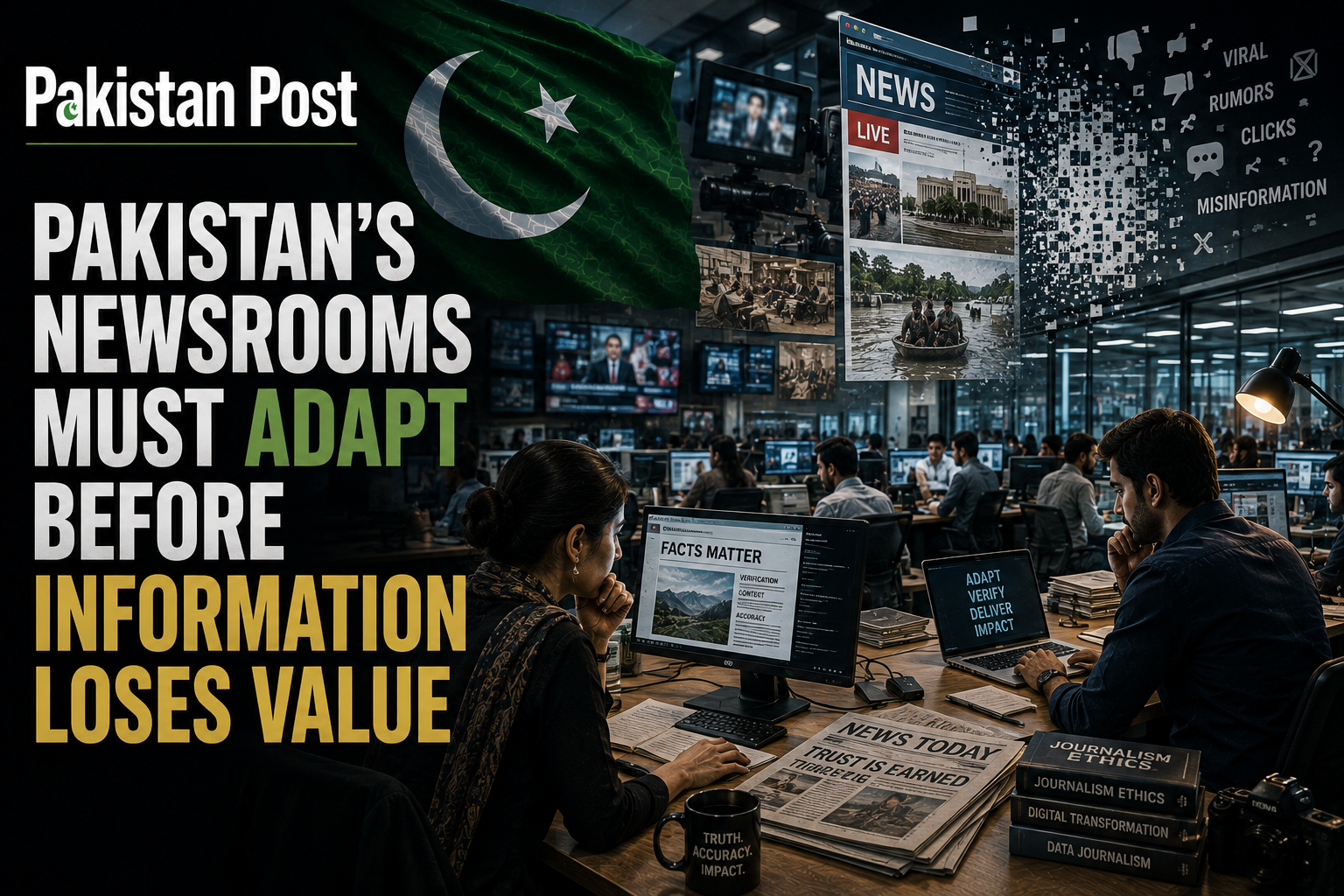
Pakistan’s Newsrooms Must Adapt Before Information Loses Value
Generative artificial intelligence is removing one of journalism’s oldest economic advantages: scarcity. News organisations once competed because verified information was difficult to obtain, expensive to process and slow to distribute. A reporter had to find the source, travel to the location, transcribe the
Who Controls Pakistan’s Political Narrative Across Competing Platforms?

Pakistan’s political information economy is no longer organised around a small number of television channels, newspaper editors and party spokespersons. Political reality is now assembled across television studios, YouTube channels, TikTok feeds, Facebook pages, X accounts, WhatsApp groups and increasingly sophisticated networks of
Pakistan’s State Owned Enterprises Need Governance Before Rescue

Pakistan’s state owned enterprise problem is no longer adequately described as a question of loss making companies requiring privatisation, refinancing or administrative restructuring. It is a problem of state capacity, ownership discipline and institutional incentives. The latest federal aggregate data show why. During