
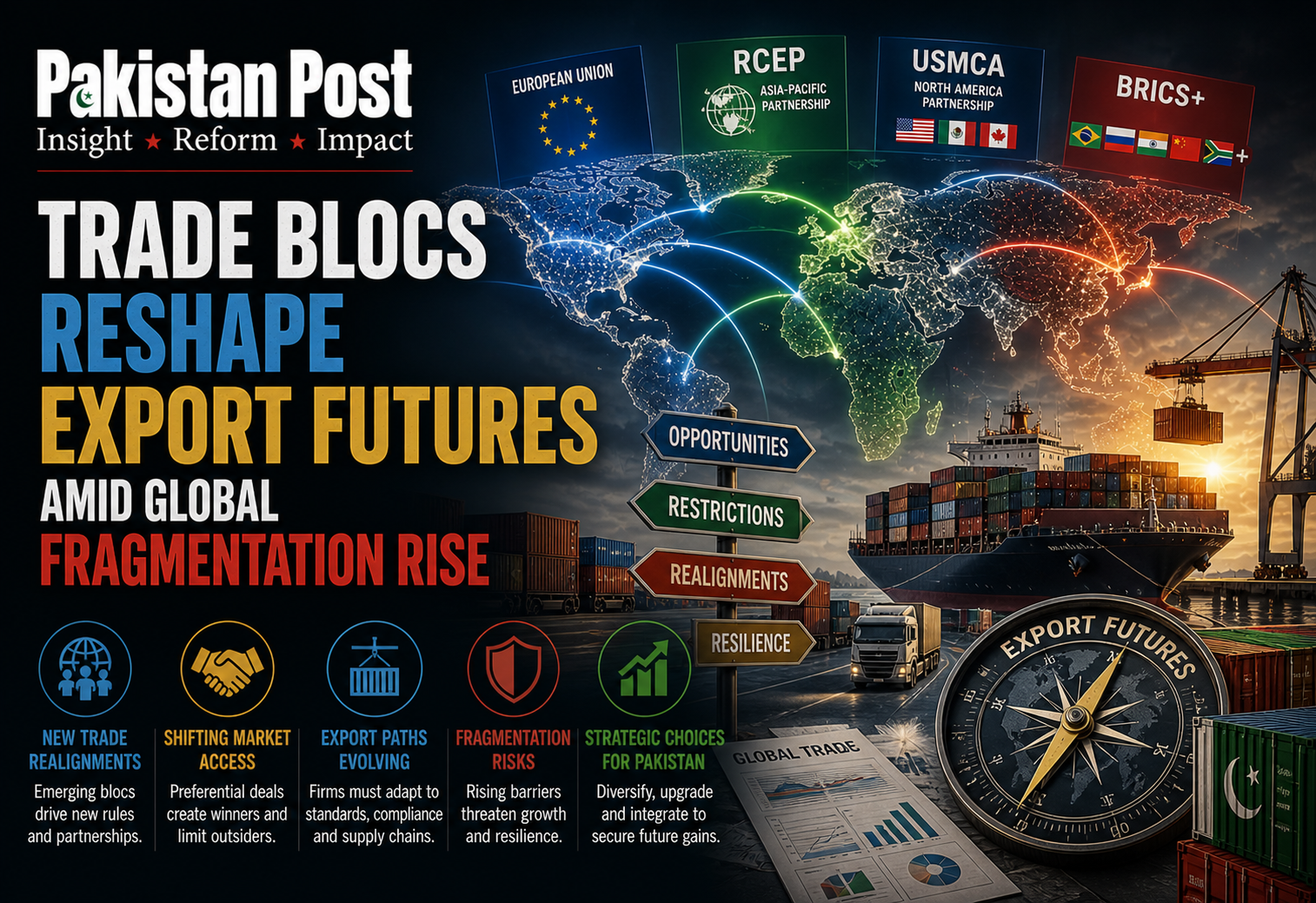
Trade blocs reshape export futures amid global fragmentation rise

The architecture of global trade is undergoing a quiet but decisive fragmentation, where the idea of a single integrated market governed by multilateral rules is giving way to overlapping regional blocs, strategic corridors, and regulatory ecosystems that increasingly reflect geopolitical alignments rather than
Debt governance in a fractured world order shaping Pakistan choices
The vocabulary of global finance is changing, and with it the grammar of power. What was once simplistically narrated as debt trap diplomacy has matured into a far more intricate contest over who writes the rules of financial survival, who enforces them, and

Digital Finance, Informal Economies, and the Struggle for Economic Visibility in Pakistan’s Transition to a Data-Driven Financial Order
The global economy is entering a phase where value is no longer measured solely through physical output, but increasingly through data, traceability, and digital financial footprints. In this emerging order, digital finance is not simply a technological upgrade to existing banking systems; it
Fragmented Globalization and Pakistan’s Search for Economic Relevance in a Security-Driven Trade Order
The global trading system that once revolved around the logic of efficiency, comparative advantage, and frictionless capital movement is undergoing a structural transformation that is neither cyclical nor temporary. It is increasingly being reorganized around strategic trust, geopolitical alignment, and security considerations. In
Inland Logistics Integration and the Efficiency of Coastal to Continental Trade Flows in Pakistan
The economic performance of maritime infrastructure is not determined solely at the point of coastal loading and unloading but is increasingly shaped by the efficiency of inland connectivity systems that link ports to production centers, consumption markets, and regional trade corridors. In the

Trade Continuity, Legal Compliance, and Port Efficiency in Pakistan’s Coastal Economic System
The economic function of maritime infrastructure in Pakistan is increasingly defined by the efficiency, predictability, and legal reliability of trade operations rather than by any security-based interpretation of coastal space. Within this framework, coastal assets such as Gwadar and Karachi are evaluated primarily

Gwadar as a Strategic Command Node in the Reconfiguration of Global Energy Flows
The evolution of strategic infrastructure in the contemporary international system is no longer confined to economic facilitation alone. It has expanded into a central instrument of geopolitical influence, particularly in regions where geography, commerce, and security intersect with high strategic sensitivity. Within this
Strategic Sequencing and Systemic Rivalry Rethinking Power in a Fragmenting Global Order

In moments of geopolitical tension it is tempting to interpret events as isolated crises wars as sudden eruptions economic downturns as failures and political polarization as dysfunction Yet such a reading often obscures a deeper structural logic Increasingly analysts are asking whether contemporary
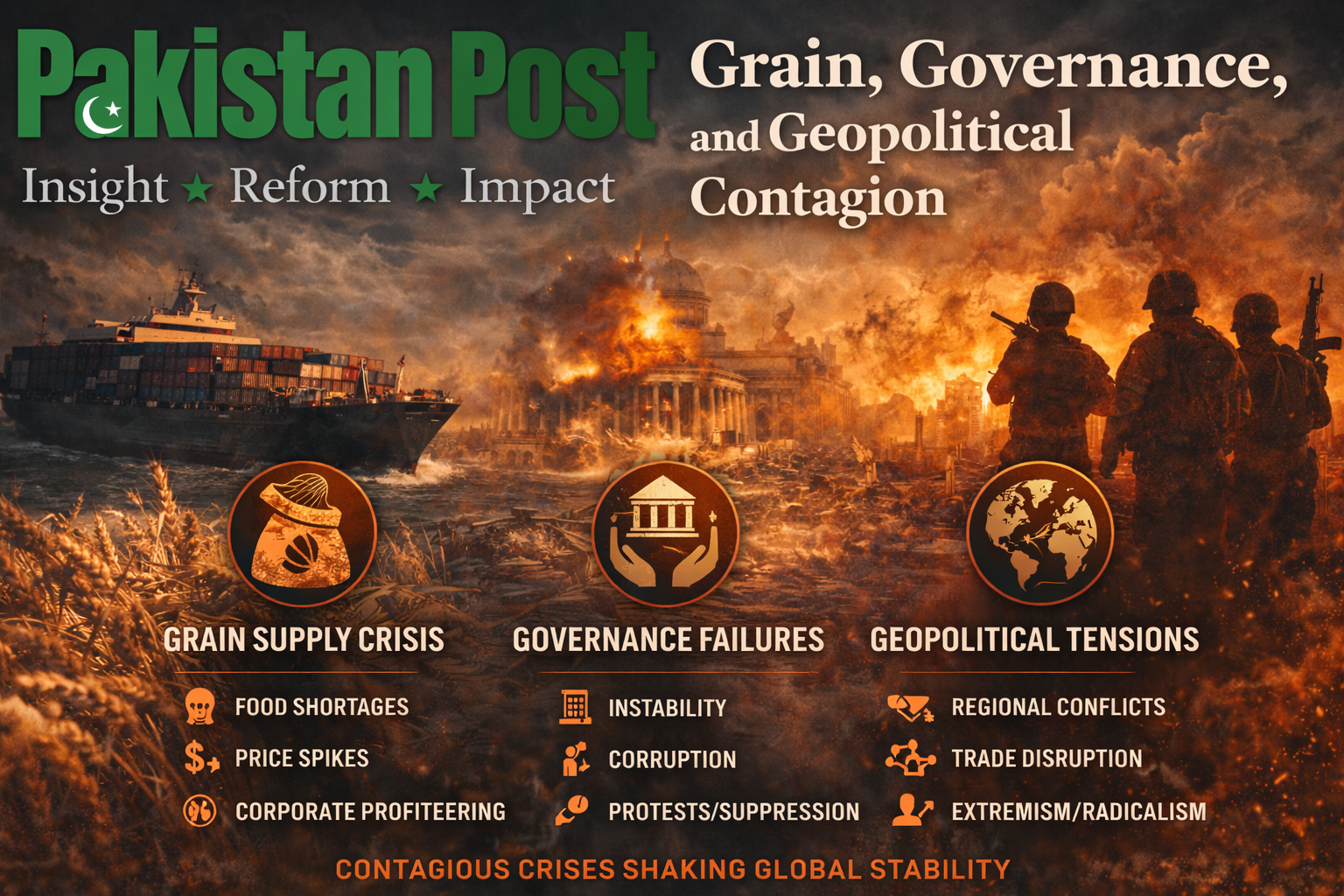
Grain, Governance, and Geopolitical Contagion
In the aftermath of systemic food collapse triggered by nuclear-induced agricultural failure, surviving national governments face immediate and severe decisions regarding the allocation of scarce resources. A hypothetical government confronted with near-total failure of staple crops issues a concise directive to its military
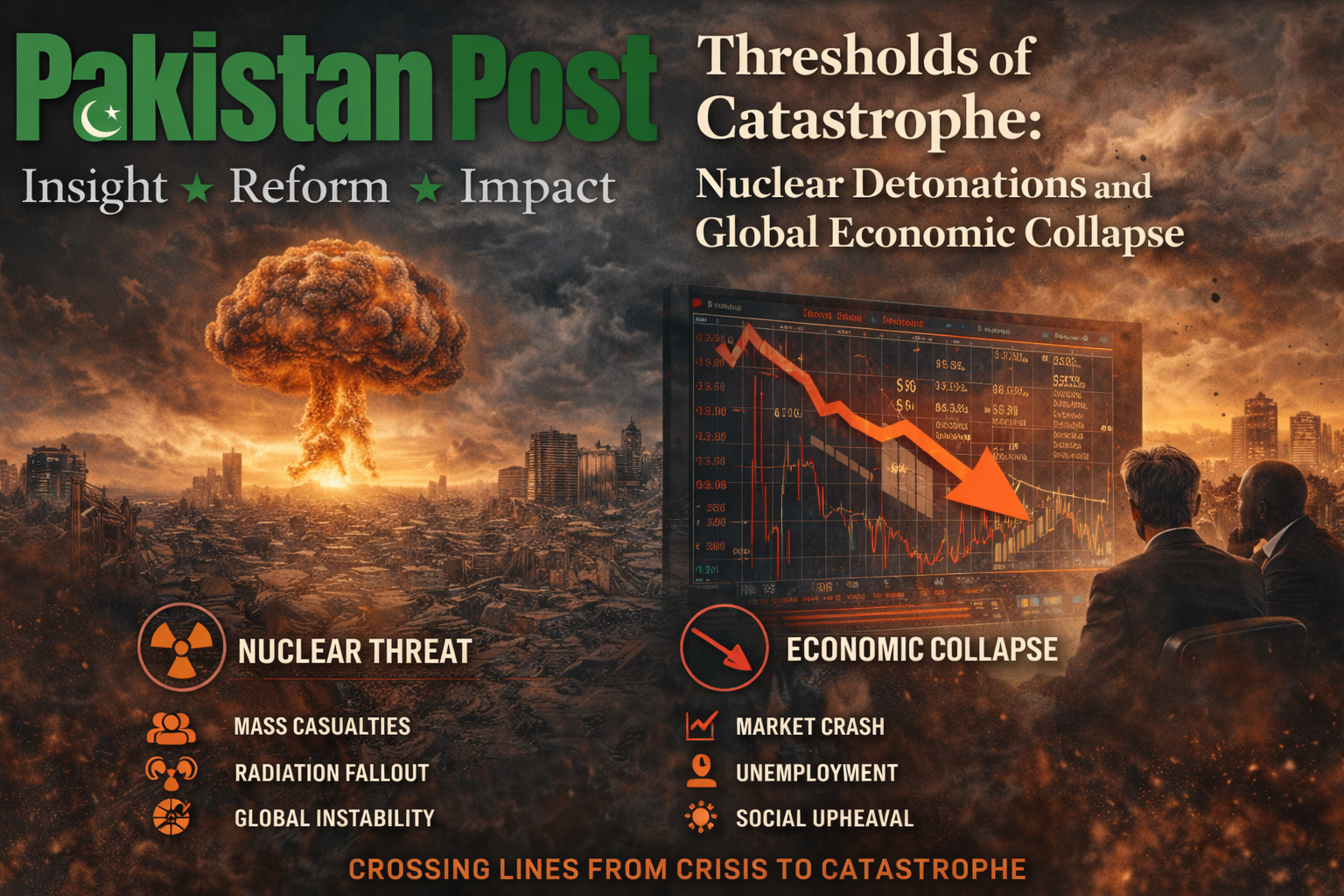
Thresholds of Catastrophe: Nuclear Detonations and Global Economic Collapse

The concept of a “limited nuclear war” collapses under the weight of empirical environmental and economic modeling. Each detonation, even if geographically constrained, injects particulate matter into the stratosphere, reduces solar insolation, and triggers abrupt cooling, with cascading consequences for agricultural productivity. Analysis