
Energy, Diplomacy, and Dollars: How Pakistan Can Pivot for Advantage in the Post–Iran War Economic Order


The end of a major war rarely restores the previous order; it exposes its fragility and accelerates its transformation. The conflict involving the United States, Israel, and Iran has already demonstrated this pattern with unusual clarity. What began as a regional confrontation has cascaded into a global economic shock, disrupting energy markets, unsettling financial systems, and forcing policymakers across continents to reconsider long-held assumptions about security, trade, and resilience. The scale of disruption—marked by what energy agencies describe as the largest supply shock in modern oil market history—has underscored a stark reality: the global economy is far more dependent on Middle Eastern stability than recent diversification efforts had suggested.
The immediate economic consequences have been severe. Oil flows through the Strait of Hormuz—one of the world’s most critical energy chokepoints—have been sharply curtailed, removing millions of barrels per day from global supply and triggering price surges that ripple through every sector of the economy. Inflationary pressures have intensified, central banks have been forced into defensive postures, and growth projections have been revised downward. The International Monetary Fund has warned that the conflict is already dimming economic prospects for vulnerable economies, particularly those dependent on energy imports. What is emerging is not a temporary disturbance but the outline of a broader structural shift—one that will define the post-war economic order.
In this environment, the strategic priorities of major powers are beginning to realign. For the United States, the economic costs of sustained instability are becoming increasingly difficult to absorb. Rising oil prices feed directly into domestic inflation, complicating monetary policy and eroding consumer confidence. The OECD has projected that prolonged conflict could push U.S. inflation significantly higher, while slowing growth in the coming years. Financial markets, though resilient in the short term, have exhibited growing sensitivity to developments in the conflict, with volatility in equities and commodities reflecting deeper uncertainties about the trajectory of the global economy.
This convergence of economic pressures is likely to push Washington toward a recalibration of its approach. The logic of containment, while politically durable, becomes economically costly when it restricts access to critical energy supplies. In the aftermath of war, the imperative shifts toward stabilization—reducing price volatility, restoring supply chains, and preventing a slide into stagflation. Analysts have already drawn parallels between the current energy shock and historical crises that triggered prolonged economic slowdowns, warning that sustained high oil prices could push parts of the global economy toward recession. Under such conditions, the partial reintegration of Iranian energy into global markets becomes not a strategic concession but an economic necessity.
For Iran, the post-war landscape presents a paradox of opportunity and constraint. While the state may retain its geopolitical posture, the economic damage inflicted by conflict and sanctions will require a pathway toward recovery. Historically, such pathways have been constructed through selective easing of restrictions, particularly in sectors where global demand aligns with national supply. Iran’s vast reserves of oil and gas position it as a central actor in any effort to stabilize energy markets. The lifting—or even partial relaxation—of sanctions would therefore function as both a form of economic compensation and a mechanism for restoring equilibrium to the global system.
The intersection of these dynamics creates a strategic opening for countries positioned between competing blocs. Pakistan, by virtue of its geography and diplomatic posture, stands out as one of the few states capable of navigating this space. It borders Iran directly, maintains working relations with the United States, and is integrated into China’s expanding economic network. This positioning allows Pakistan to operate not as a participant in conflict, but as a facilitator of post-conflict adjustment. The question is not whether this role is available, but whether Pakistan is prepared to seize it.
The most immediate avenue for such a pivot lies in energy. Pakistan’s chronic energy shortages have long constrained its economic development, forcing reliance on expensive imports and exposing the country to external shocks. The current crisis has only intensified these vulnerabilities, as rising global prices strain fiscal resources and undermine industrial competitiveness. At the same time, Iran’s energy resources remain underutilized due to sanctions and infrastructure limitations. The alignment of Pakistan’s demand with Iran’s supply presents a clear and compelling opportunity—one that becomes even more viable in a post-war context where restrictions may be eased.
Reviving the Iran–Pakistan gas pipeline must therefore be treated not as a peripheral project but as a strategic priority. The pipeline offers a direct and stable source of energy that could transform Pakistan’s economic trajectory. By reducing dependence on volatile global markets, it would provide a foundation for industrial growth, improve energy security, and alleviate pressure on foreign exchange reserves. For Iran, it would create a reliable export channel and facilitate re-entry into regional economic networks. For the broader system, it would contribute to the diversification of supply routes, enhancing resilience against future disruptions.
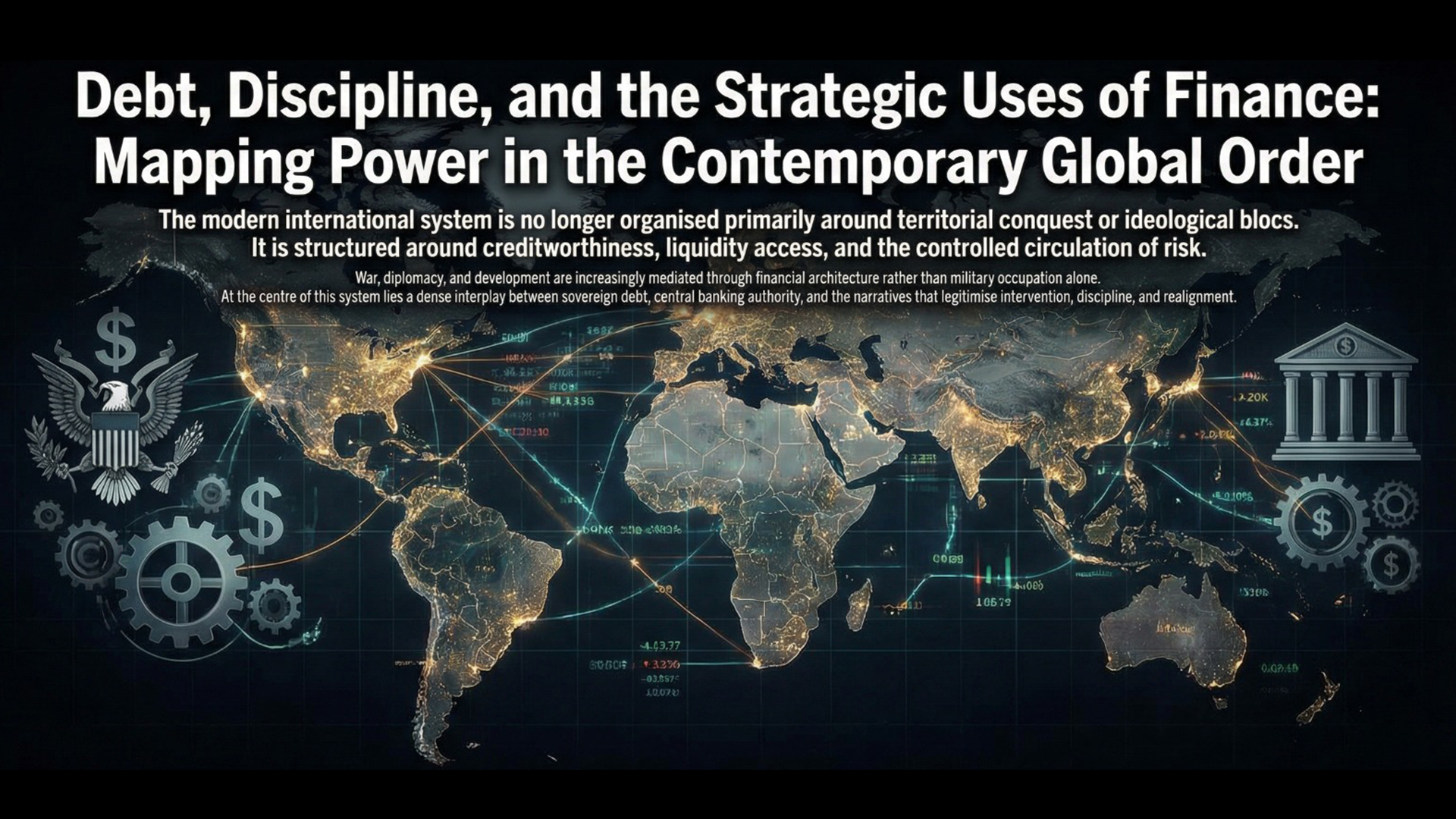
Yet the significance of this opportunity extends beyond bilateral energy trade. The post-war environment is likely to accelerate the emergence of alternative financial and trade mechanisms, particularly as countries seek to reduce exposure to geopolitical risks. Traditional dollar-based systems, while still dominant, are increasingly complemented by localized arrangements that allow for greater flexibility. In this context, Pakistan has the potential to serve as a hub for innovative financial structuring—facilitating transactions through currency swaps, regional settlement systems, and hybrid trade arrangements that bridge formal and informal networks.
China’s role in this evolving framework is critical. Its investments in infrastructure, its interest in securing diversified energy supplies, and its capacity to operate within alternative financial architectures position it as a key partner in any regional integration effort. The convergence of Chinese capital, Iranian resources, and Pakistani geography creates the foundation for a new economic corridor—one that could reshape trade patterns across Asia. This is not merely an extension of existing initiatives but a reconfiguration of regional connectivity in response to systemic shocks.
For Pakistan, the challenge is to align domestic policy with this emerging reality. This requires a shift from short-term crisis management to long-term strategic planning, with a focus on building the infrastructure and institutions necessary to support increased economic activity. Energy integration must be accompanied by investments in transmission networks, industrial zones, and logistics systems that can translate supply into productivity. Regulatory frameworks must be streamlined to attract investment and reduce uncertainty, while governance structures must be strengthened to ensure transparency and efficiency.
Diplomatically, Pakistan must navigate a complex and often contradictory set of relationships. Its ties with Gulf states remain economically significant, while its engagement with the United States continues to shape access to global financial systems. At the same time, its relationship with Iran offers immediate opportunities for economic integration. Balancing these relationships requires a pragmatic approach that prioritizes economic outcomes over ideological alignment. The objective is not to align with any single bloc, but to create overlapping zones of cooperation that enhance Pakistan’s strategic autonomy.
The broader regional implications of such a pivot are substantial. By positioning itself as a connector state, Pakistan can play a central role in shaping the post-war economic order. Energy corridors linking Iran to South Asia, trade routes connecting Central Asia to global markets, and financial mechanisms bridging diverse systems all contribute to a new pattern of interdependence. This interdependence, in turn, has the potential to moderate conflict dynamics by increasing the economic costs of instability.
At the same time, the risks associated with this strategy must be carefully managed. The post-war environment is inherently uncertain, with potential fluctuations in sanctions policy, regional security conditions, and global economic trends. Pakistan must therefore adopt a phased approach, prioritizing initiatives that offer clear economic benefits while minimizing exposure to geopolitical volatility. Early successes in energy integration and trade facilitation can build momentum, creating a foundation for more ambitious projects as conditions stabilize.
The global economy that emerges from this conflict is likely to be characterized by slower growth, higher volatility, and a greater emphasis on resilience. In such an environment, access to reliable energy and efficient trade networks becomes a decisive advantage. Pakistan’s ability to secure this advantage will depend on its capacity to act decisively in the immediate aftermath of war. The window of opportunity is narrow, defined by the intersection of economic necessity and political flexibility that follows major conflicts.
More fundamentally, the transformation underway reflects a broader shift in the nature of global power. In an interconnected world, influence is increasingly derived from the ability to facilitate flows—of energy, goods, capital, and information—rather than from the capacity to control territory or impose outcomes. States that can connect disparate systems become central to the functioning of the global economy. Pakistan’s geographic position provides a natural foundation for such a role, but its realization depends on strategic intent and policy coherence.
The post-war moment is therefore not merely a period of recovery but a phase of redefinition. It offers Pakistan the opportunity to move beyond a reactive posture and adopt a proactive strategy that leverages its unique position within the regional and global system. By prioritizing energy integration, developing alternative financial mechanisms, and positioning itself as a bridge between competing blocs, Pakistan can transform the disruptions of war into the foundations of long-term advantage.
In the final analysis, the question facing Pakistan is not whether the global order is changing—it clearly is—but whether it can adapt quickly enough to shape that change in its favor. The aftermath of the Iran war will reward those who can think beyond immediate constraints and recognize the deeper structural shifts at play. For Pakistan, the path forward lies in embracing its role as a connector, aligning its policies with the emerging logic of geo-economics, and acting with the clarity and urgency that such a moment demands.
A Public Service Message