
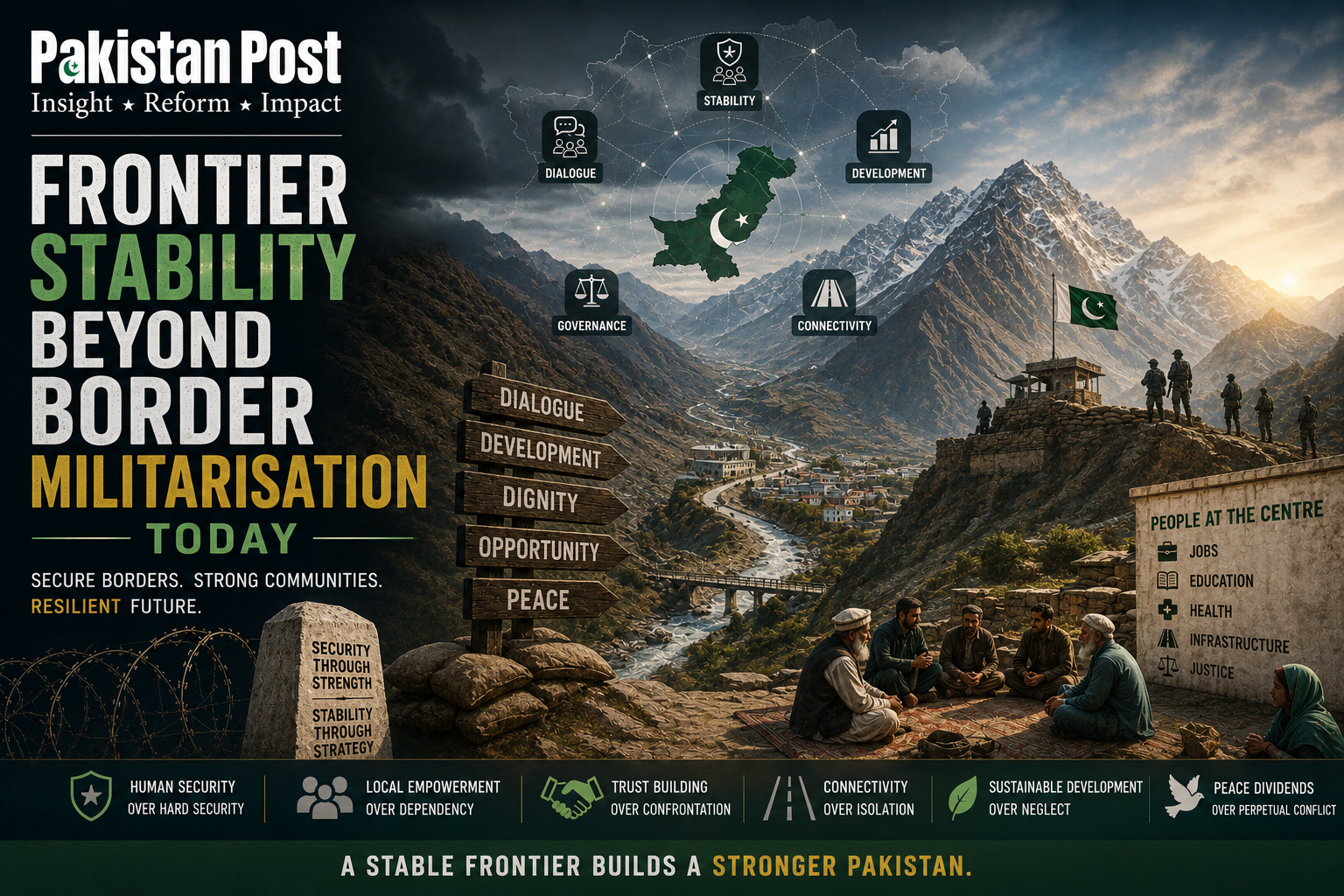
Frontier Stability Beyond Border Militarisation Today

The Pakistan Afghanistan frontier has moved beyond the classical definition of a border problem. What was once framed as a territorial management issue between two sovereign states has evolved into a layered governance challenge that sits at the intersection of security doctrine, demographic

Water Security Will Define Pakistan’s Governance Future Today

Pakistan’s water crisis is often narrated as an environmental warning, a climate vulnerability, or a hydrological stress point on the Indus basin system. That framing is no longer sufficient because it underestimates what is fundamentally a governance failure that is now accumulating into
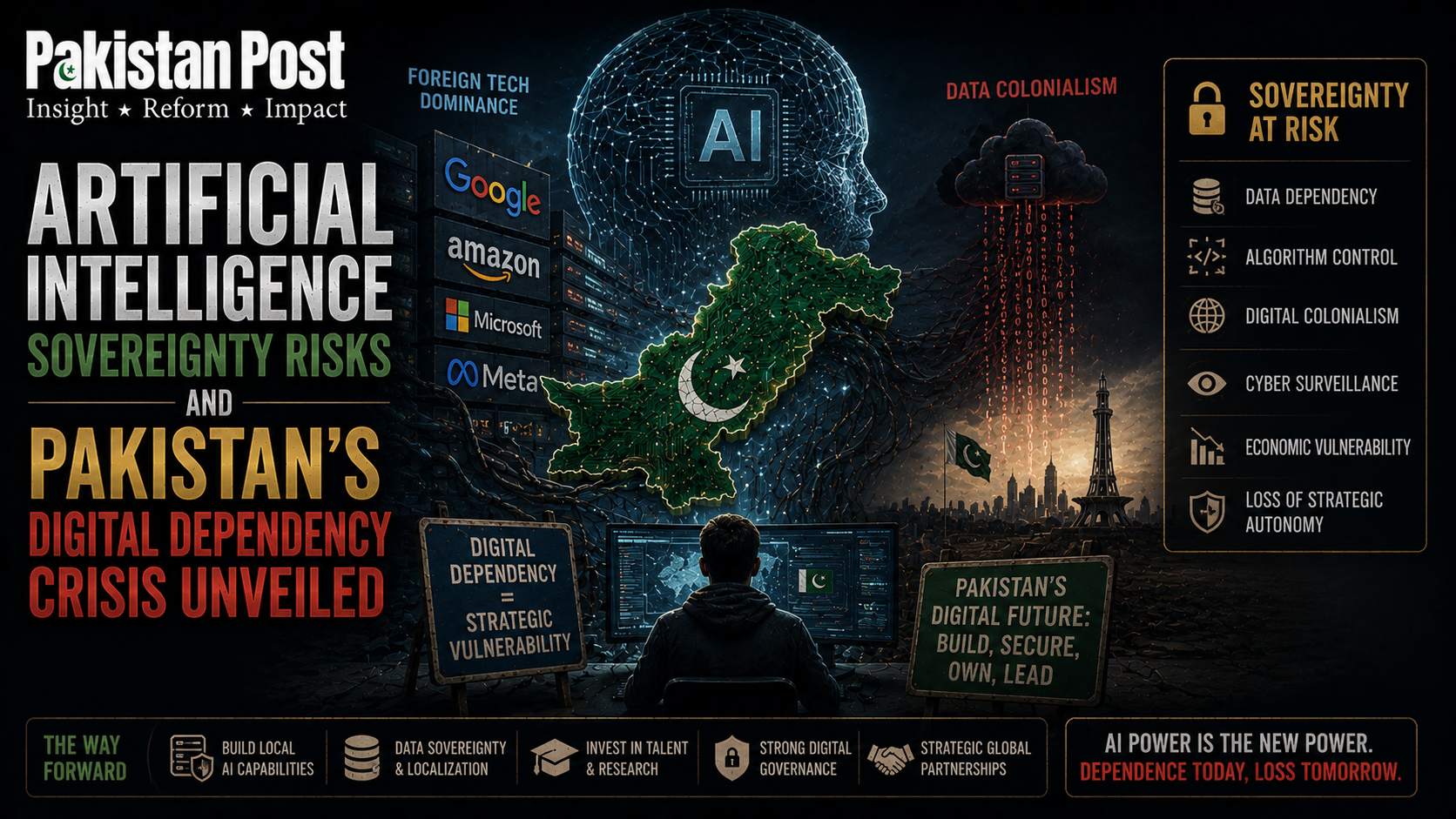
Artificial Intelligence Sovereignty Risks and Pakistan’s Digital Dependency Crisis Unveiled

Pakistan’s accelerating integration into global artificial intelligence ecosystems is no longer a peripheral technological adjustment but a structural transformation of governance cognition, institutional decision-making, and informational sovereignty. The state’s increasing reliance on foreign-developed AI systems, cloud-based inference engines, and proprietary machine learning architectures

Water Stress Climate Collapse and Internal Migration Shockwaves
Pakistan is entering a phase of hydrological volatility that can no longer be interpreted through the lens of cyclical droughts or seasonal variability. The emerging reality is one of structural water stress, where climatic, institutional, and demographic pressures converge to produce a sustained

Debt Entrapment and Sovereign Compression in Pakistan Economy
Pakistan stands at an inflection point where macroeconomic stabilization has ceased to function as a policy objective and has instead evolved into a permanent operating condition. The recurrent reliance on external financial lifelines, particularly through multilateral adjustment frameworks, has produced a structural dependency

Reimagining Madrasa Education for Economic Independence and Modern Relevance Pakistan

Across Pakistan, religious seminaries remain one of the most enduring educational institutions, shaping the moral, spiritual and intellectual outlook of millions of students. They are deeply rooted in society, often functioning as the earliest and sometimes the only structured educational environment available to

Food Inflation Threatens Stability Economic Pressure Deepens Pakistan Risk
Food inflation has increasingly moved from the margins of economic reporting to the centre of political stability analysis in developing states, where the price of basic consumption goods is no longer treated as a routine macroeconomic indicator but as a barometer of governance

Climate Displacement and Pakistan Emerging Security and State Fragility Imperative.
Climate displacement in Pakistan is no longer a humanitarian footnote in development reporting, nor a seasonal consequence of monsoon variability. It has become an increasingly central axis through which questions of state capacity, governance legitimacy, and national security are being reframed both domestically
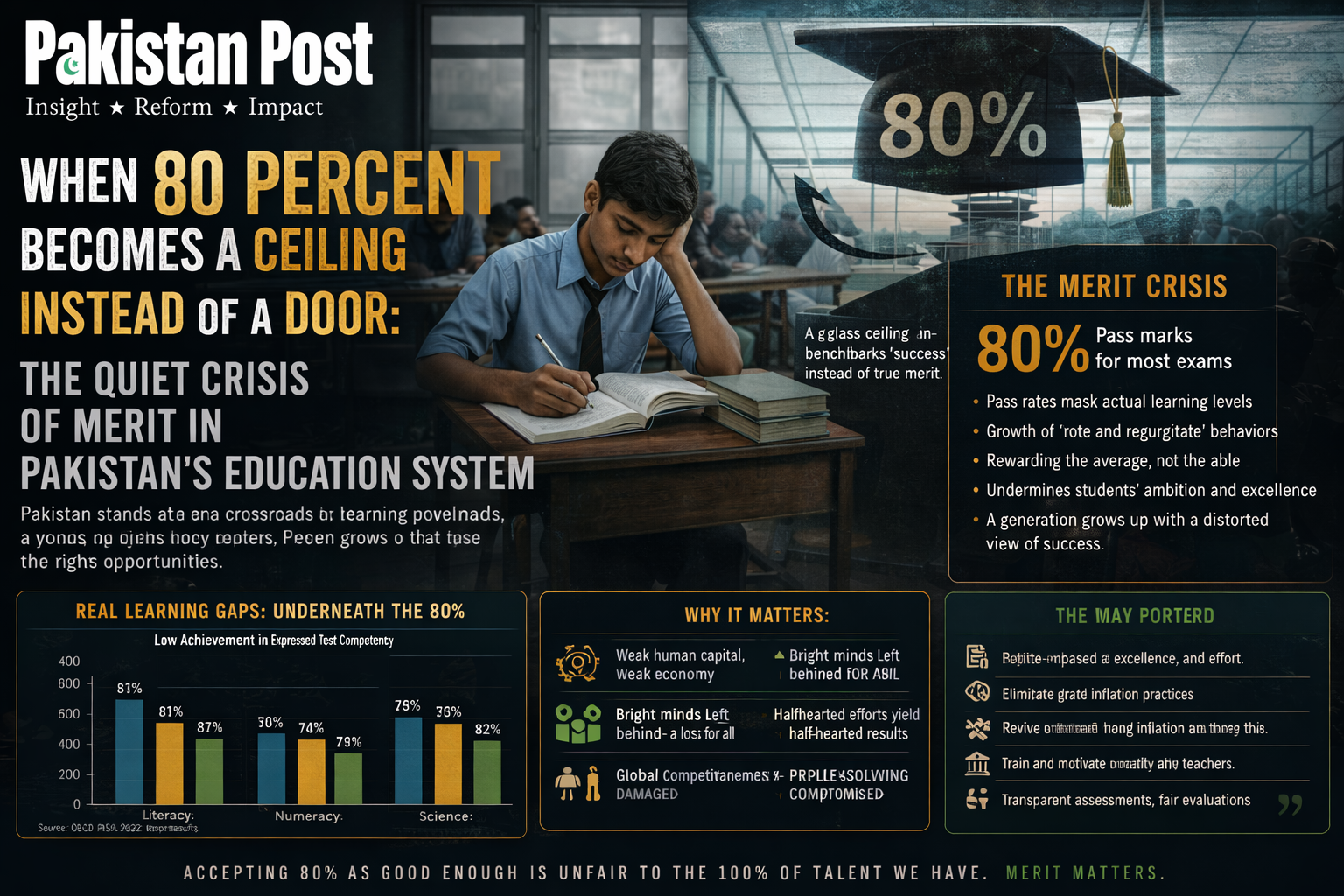
When 80 Percent Becomes a Ceiling Instead of a Door: The Quiet Crisis of Merit in Pakistan’s Education System
Merit is often presented as the purest expression of fairness in education, a simple promise that effort and ability will determine opportunity. In Pakistan, this promise is increasingly reduced to a numerical ritual, 80 percent, 70 percent, sometimes slightly more, sometimes slightly less
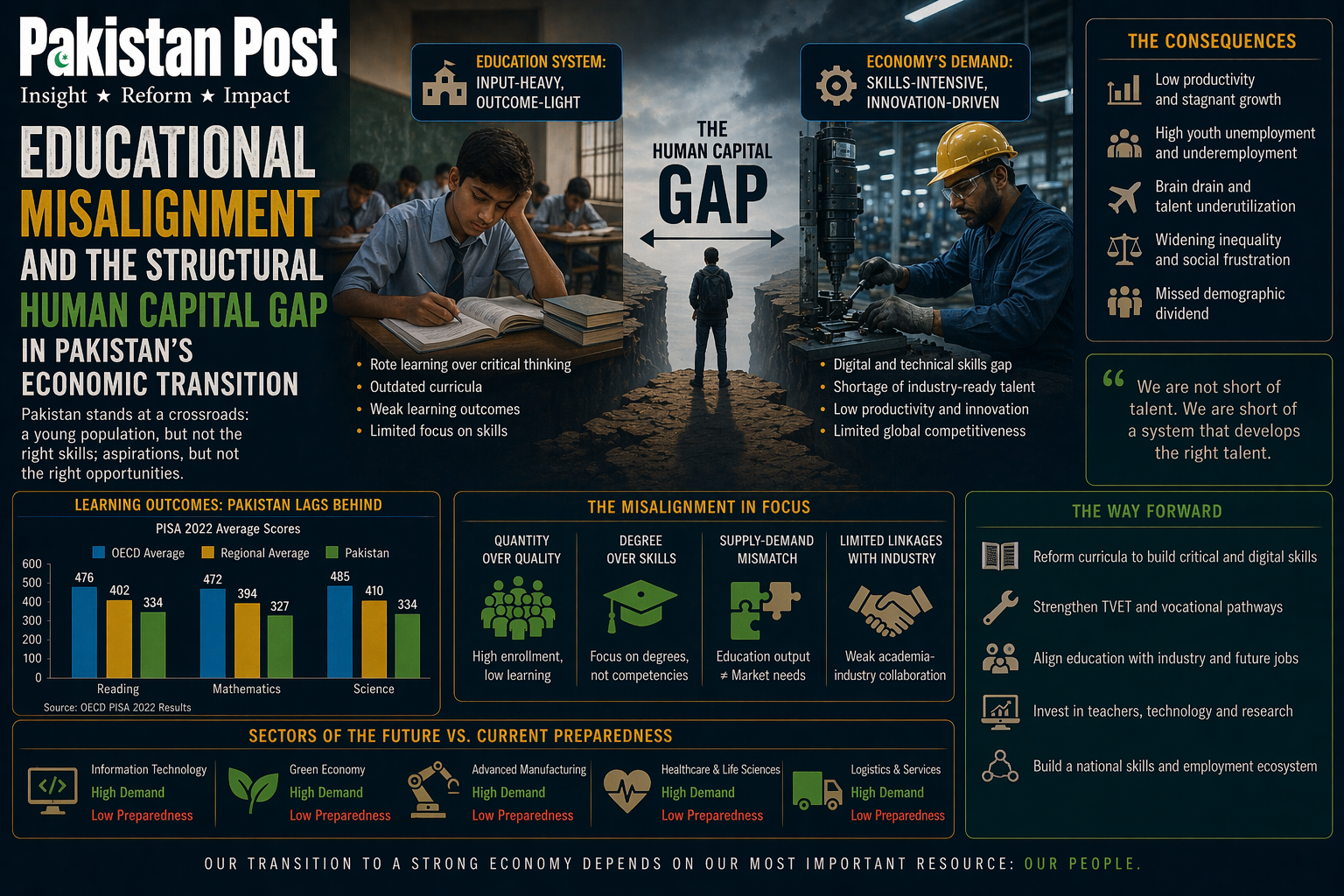
Educational Misalignment and the Structural Human Capital Gap in Pakistan’s Economic Transition
Pakistan’s education system stands at the centre of a widening structural contradiction: a rapidly changing global economy demanding advanced digital, analytical, and technical skills, and an institutional framework of learning that remains largely anchored in outdated curricula, fragmented governance, and uneven quality standards.