
Beyond Alignment: Pakistan and the Human Cost of the New World Order


In the current geopolitical epoch, conventional paradigms of power, sovereignty, and security are undergoing profound transformation. States like Pakistan no longer operate solely within frameworks of realism, liberalism, or constructivism. They are increasingly compelled to navigate a trans-normative environment in which the rules of engagement, legitimacy, and moral authority are neither universally accepted nor institutionally fixed. Trans-normative thinking entails moving beyond traditional disciplinary lenses to ask who defines the norms of security, sovereignty, and human dignity in the new order and under which logic states and non-state actors are compelled to conform, resist, or adapt.
Structural realism offers a starting point for understanding Pakistan’s condition. Kenneth Waltz and John Mearsheimer remind us that states operate in an anarchic international system where self-help and power balancing are imperatives. Pakistan, a medium power state, is simultaneously anchored in nuclear deterrence, conventional force posture, and border militarization, yet faces persistent war-like escalations along multiple fronts. The India-Pakistan dyad remains the core security dilemma, with recurrent drone-based probing, hybrid warfare operations, and intermittent border clashes sustaining high-alert postures. To the west, Pakistan contends with a quasi-war scenario in Afghanistan, where Taliban-linked insurgency, cross-border raids, and fluctuating trade leverage shape both threat perception and operational response. Realism frames these conditions as structural constraints, yet it leaves unexplored the ethical, social, and human ramifications of living under continuous securitized pressure.
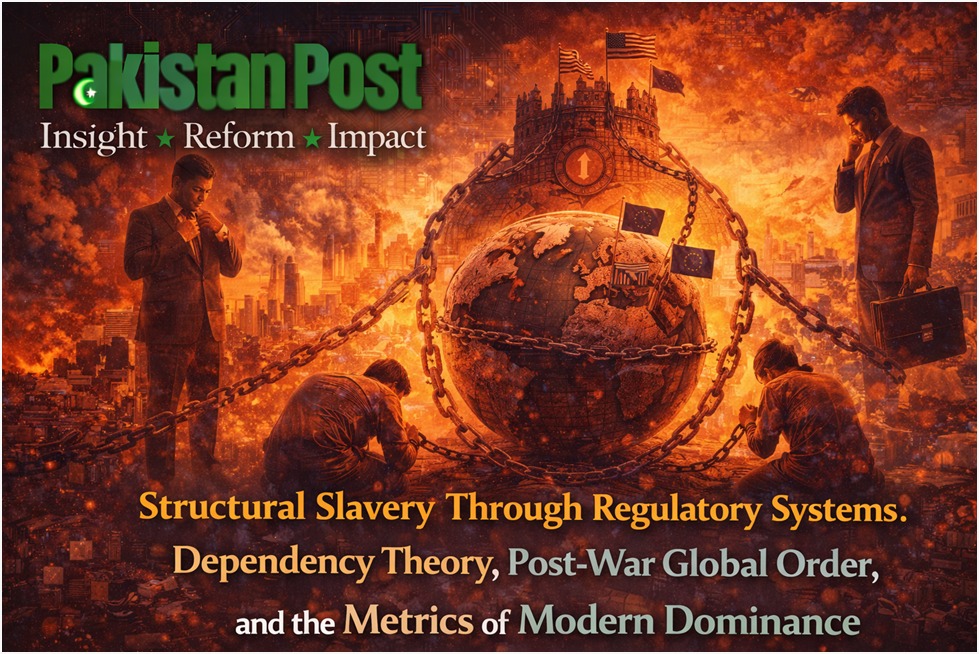
Neo-Gramscian perspectives deepen this analysis by situating Pakistan within a hegemonic order that legitimizes structural power through institutional narratives. Cox, Gill, and Strange demonstrate that material capabilities are reinforced by norms, practices, and what becomes accepted as common sense. Pakistan’s current engagement with China, Gulf Arab states, and the United States illustrates this logic. The China-Pakistan corridor under CPEC, for instance, is not merely a conduit for trade and infrastructure but a node through which hegemonic power is exercised, reproduced, and internalized. Security cooperation, joint military presence around Gwadar, and technological partnerships are presented as mutually beneficial arrangements, yet they also carry embedded expectations of compliance, alignment, and conditionality. Gulf Arab and U.S. partnerships, tied to trade access, financial instruments, and limited technology transfers, reinforce similar structures of influence. Hegemony, in this view, is not imposed by brute force alone but sustained through technocratic rationality, market discipline, and managerial norms that shape bureaucratic behavior and elite cognition.
Critical humanist ethics provide a necessary counterpoint, foregrounding the lived experiences of humanity under these conditions. Scholars such as Martha Nussbaum, Amartya Sen, Frantz Fanon, and Paul Ricoeur compel us to ask how border-zone communities, marginalized populations, and everyday citizens experience the intersection of coercion, war logic, and economic integration. In Pakistan, the securitization of border regions along Afghanistan, Balochistan, and former FATA territories has transformed communities into both subjects and objects of state power. Drone surveillance, restricted mobility, conditional trade access, and militarized development projects shape everyday lives, often marginalizing dignity and agency. Critical humanist ethics ask whether these populations are treated as moral agents with rights to mobility, livelihood, and voice, or as passive objects to be managed, monitored, and disciplined under the imperatives of state and market.
Pakistan’s position in the emerging new world order exemplifies the intersection of these three perspectives. The country operates as a state-in-war-mode, managing multiple escalatory pressures while simultaneously functioning as a geo-economic node and a strategic bridge between Indo-Pacific maritime coalitions and Eurasian BRI-linked land power networks. This positioning produces what can be described as a tripartite-asymmetric alignment: China anchors infrastructural and security integration, Gulf Arab states provide hedging options and financial leverage, and the U.S.-Western nexus offers selective engagement, technological access, and maritime connectivity. The critical question is whether this alignment constitutes strategic autonomy or whether it masks a new form of structural dependency, in which the façade of choice conceals real-time coercion and conditionality.
The interplay of truth and coercion in Pakistan’s present strategic context illuminates this dynamic. The facts of Pakistan-Afghanistan cross-border escalation, India-Pakistan drone confrontations, CPEC-linked security reconfiguration, and Gulf-Saudi regional security diplomacy are publicly documented, creating a visible field of evidence. At the same time, coercive mechanisms are employed with equal clarity: visa leverage, trade closure threats, conditional security aid, reputational blacklisting, and infrastructural dependencies. Yet these mechanisms operate within a broader technocratic-managerial rationality. Data-driven security logic and market-conditioning instruments claim neutrality but effectively reproduce hierarchies of power and obligation. Pakistan’s bureaucratic, military, and business elites, as well as civil society stakeholders, are compelled to learn the language of risk management, resilience, and compliance, sometimes at the expense of ethical reasoning or human dignity considerations. The trans-normative question asks whether these stakeholders can re-insert frameworks of morality, accountability, and respect for human rights into strategic thinking, policy design, and development practice.
A Pakistan-centric trans-normative framework offers one pathway for reconciling strategic imperatives with humanist and ethical concerns. The first criterion, sovereignty-with-accountability, addresses the balance between maintaining nuclear deterrence and alliance autonomy while ensuring domestic accountability for the beneficiaries of security spending, border regulation, and FDI-linked industrial policy choices. Without mechanisms to assess who gains, who bears the cost, and who is rendered invisible by securitized policy, sovereignty risks becoming a purely technical, coercive instrument divorced from societal legitimacy.
The second criterion, human dignity in border zones, foregrounds the ethical treatment of communities historically subjected to militarized governance, economic marginalization, or forced displacement. Afghan-linked, Baloch-linked, and former FATA populations must be recognized as moral agents entitled to mobility, livelihood, and political voice. Ethical statecraft requires that border security operations, trade and industrial projects, and surveillance technologies be designed and implemented with the principle of dignity central to their logic. Social-impact assessments, participatory consultation, and transparency in project governance are essential mechanisms to operationalize this principle.
The third criterion, ethical industrial policy, challenges a narrow focus on GDP growth or export metrics. CPEC-linked corridors, FDI-driven industrial initiatives, and public-private partnerships should be reframed around productive dignity, offering meaningful work, skill development, and participatory engagement for citizens rather than merely fulfilling macroeconomic targets. Industrial and geo-economic strategies must integrate ethical, social, and environmental considerations alongside market imperatives to ensure that growth is both sustainable and human-centered.
Balancing hegemony and emancipation is an unavoidable condition for Pakistan. The country operates under the influence of Chinese, U.S., and Gulf Arab forms of structural power, yet absolute enclosure is neither inevitable nor desirable. Counter-hegemonic pragmatism entails cultivating regional solidarity networks that contest securitized narratives and promote norms of cooperation, equity, and ethical engagement. Engagement with Afghan civil society, Central Asian regional actors, and Gulf Arab community networks can amplify alternative perspectives while mitigating the monopolization of strategic discourse by powerful external actors. Embedding ethical review mechanisms in CPEC, industrial policy, and security agreements, including human rights compliance, climate responsibility, and social impact assessments, enables Pakistan to operationalize ethical agency even within hegemonic constraints.
From a policymaker perspective, trans-normative thinking suggests that Pakistan must reimagine national interest as a tri-linked aggregate: national security, human dignity, and planetary sustainability. Strategic documents, including five-year development plans, national security policies, and CPEC-linked guidelines, must integrate ethical and dignity principles alongside economic and security imperatives. This requires institutionalizing review processes, accountability mechanisms, and participatory oversight to ensure that security, economic growth, and technological integration do not override human-centric considerations. Ethical statecraft in this context becomes a measure of Pakistan’s long-term sovereignty, resilience, and legitimacy.
The new world order, while coercive and asymmetrical, is not fully totalizing. Pakistan can hedge, critique, and partially reshape it from the margins. By foregrounding transparency, equity, and human dignity alongside conventional metrics of GDP growth, military capability, and alliance loyalty, the state can reconfigure the parameters of power in its favor. Trans-normative thinking thus provides a critical lens for assessing the evolving paradigms of governance, ethics, and human experience in border zones, industrial corridors, and strategic littorals. It enables a redefinition of sovereignty that is not merely defensive but reflective, accountable, and morally engaged.
Pakistan’s current navigation of war-like escalation, geo-economic recalibration, and great-power alignment offers both a cautionary tale and a potential model. The country’s strategic agency lies not in emulating hegemonic practices or acquiescing to coercive pressures but in demonstrating the capacity to integrate security, economic, and ethical considerations within a coherent and principled framework. Securitized autonomy need not be the sole guiding logic. By embedding dignity, accountability, and ethical review into its strategic calculations, Pakistan can negotiate a sovereignty that is both effective and humane.
The lessons of trans-normative engagement are clear. Conventional realism illuminates constraints but not ethical opportunity. Neo-Gramscian insights reveal structural hierarchies but not the possibility of moral resistance. Critical humanist ethics foreground lived experience but cannot alone ensure strategic survival. Together, these perspectives suggest a policy orientation that is pragmatic yet critical, operational yet ethically informed. Pakistan’s task, therefore, is to inhabit the new world order with awareness, adaptability, and moral intentionality, using tools of strategy not merely to manage risk but to redefine the conditions under which power and humanity co-exist.
In conclusion, Pakistan’s trans-normative navigation of its complex environment is both a challenge and a potential blueprint for ethical statecraft in a post-liberal order. Nuclear deterrence, industrial policy, CPEC-linked infrastructure, and regional security alignments provide instruments of power. Yet the legitimacy of these instruments will increasingly be judged by their ability to respect human dignity, foster accountability, and sustain ethical norms in border zones and industrial corridors. Pakistan’s strategic horizon over the next decade will depend less on unilateral capabilities and more on the capacity to act as a principled bridge within a structurally hegemonic but morally contestable new world order. By adopting a trans-normative lens, Pakistan can demonstrate that sovereignty, security, and human dignity are not mutually exclusive but mutually reinforcing principles, guiding the country toward a form of ethical statecraft that is simultaneously realistic, pragmatic, and humane.
A Public Service Message