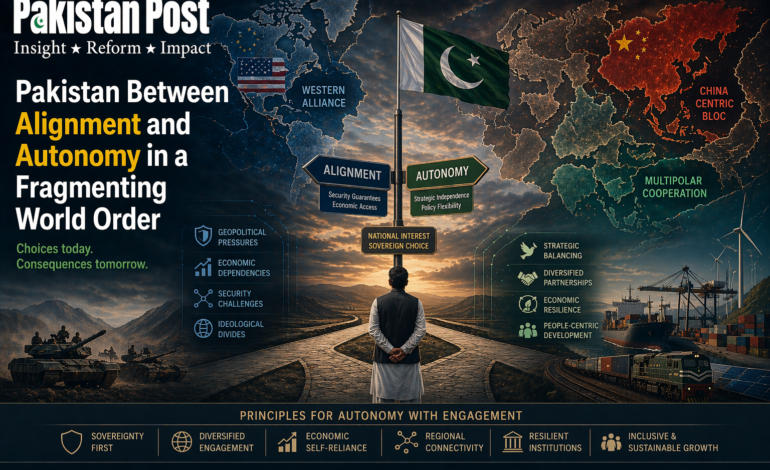
Pakistan Between Alignment and Autonomy in a Fragmenting World Order

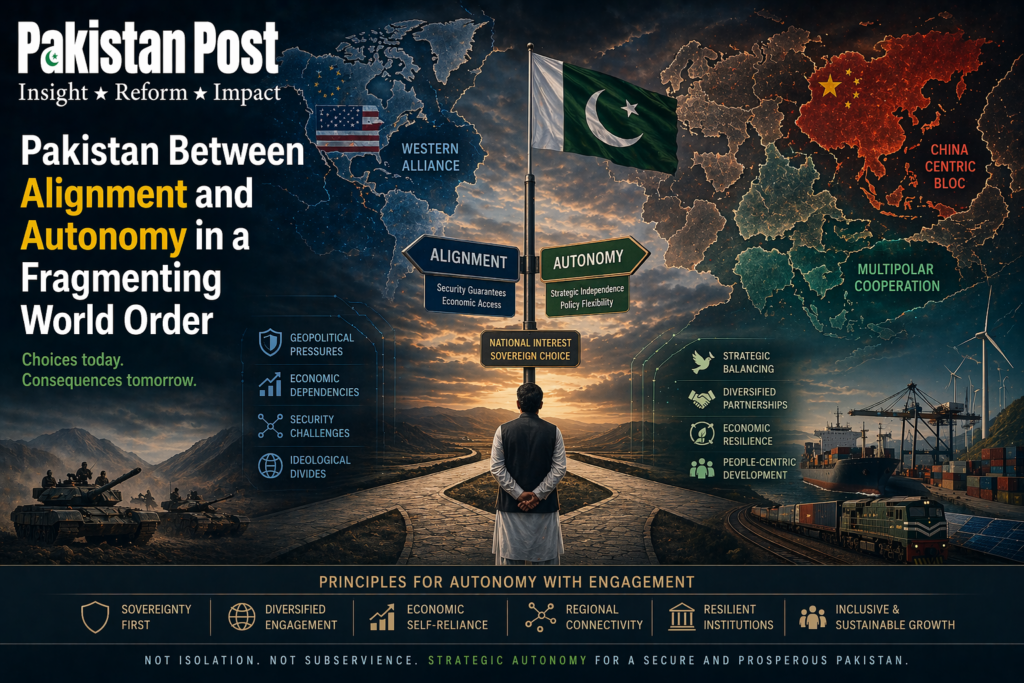
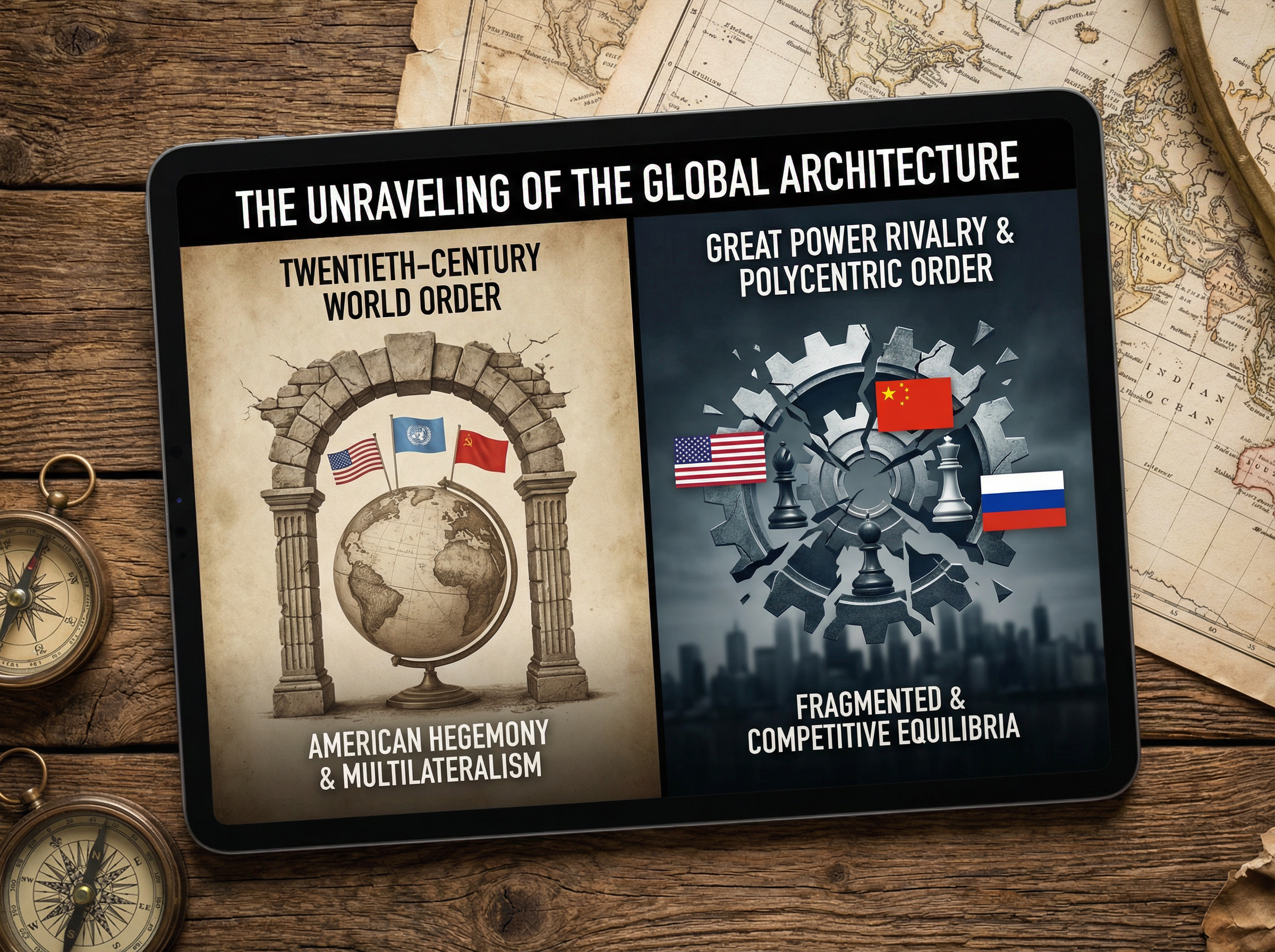
The slow unravelling of the post-Cold War order is no longer a matter of academic speculation but an observable reality, unfolding across trade corridors, security alliances, and diplomatic theatres with a clarity that even its architects can no longer obscure. The era in which the United States exercised unrivalled institutional dominance through Bretton Woods frameworks, security pacts, and normative regimes is giving way to a more fractured, contested landscape, where power is diffused, alliances are fluid, and the logic of globalization is increasingly subordinated to the imperatives of security and sovereignty. In this shifting terrain, Pakistan finds itself navigating not merely a transition in global order, but a deeper recalibration of its own strategic identity.
For decades, Pakistan’s foreign policy oscillated within a relatively predictable spectrum, anchored either in security dependence or economic necessity. During the Cold War, alignment with Western blocs was driven by military imperatives, while the post-9/11 era reinforced a transactional relationship with Washington, defined by counterterrorism cooperation and financial inflows. Yet the present moment resists such linear categorization. The emerging order is neither bipolar nor neatly multipolar, but rather what might be described as a system of overlapping spheres of influence, in which states are compelled to engage multiple centres of power simultaneously, often without the luxury of ideological consistency.
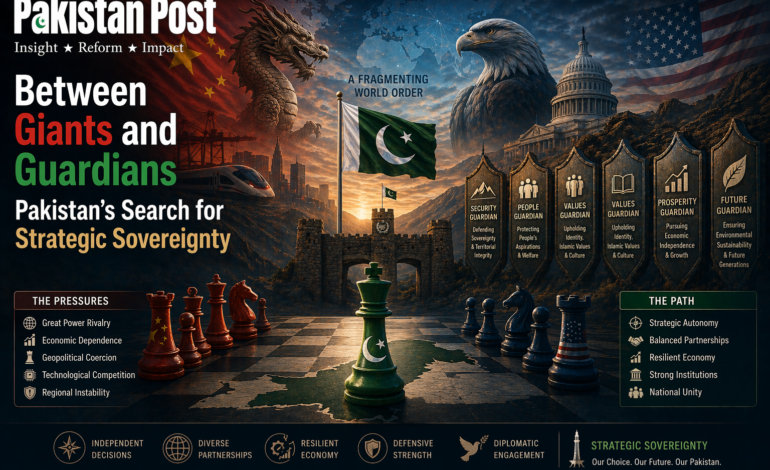
Within this context, Pakistan’s external posture increasingly reflects what policymakers describe as “multi-alignment,” a strategy that seeks to diversify partnerships across geopolitical divides while avoiding the rigid commitments that characterized earlier alliances. Its deepening engagement with China, particularly through infrastructure, energy, and connectivity projects, stands alongside a cautious re-engagement with Western capitals, where economic stabilization and financial credibility remain contingent upon cooperation with institutions historically shaped by American influence. Simultaneously, Pakistan’s ties with Gulf states have assumed renewed importance, not only as sources of financial support but as partners in an evolving Middle Eastern order that itself is undergoing significant transformation.
The question, however, is whether this apparent diversification constitutes a coherent strategic doctrine or merely a reactive adaptation to structural constraints. Multi-alignment, in its idealized form, implies agency, the capacity to engage multiple actors on one’s own terms, leveraging geography, demography, and institutional capacity to extract mutually beneficial outcomes. Yet in practice, the distinction between strategic choice and compelled accommodation is often blurred, particularly for states operating under acute economic pressures.
Pakistan’s economic realities cannot be disentangled from its geopolitical behaviour. Persistent balance-of-payments crises, reliance on external financing, and structural vulnerabilities in its export base have constrained its ability to exercise foreign policy autonomy. Engagement with international financial institutions, often perceived as extensions of Western economic governance, imposes conditionalities that shape domestic policy choices, from fiscal reforms to energy pricing. These constraints inevitably spill over into the diplomatic realm, where the need to maintain financial credibility can limit the scope for geopolitical manoeuvring.
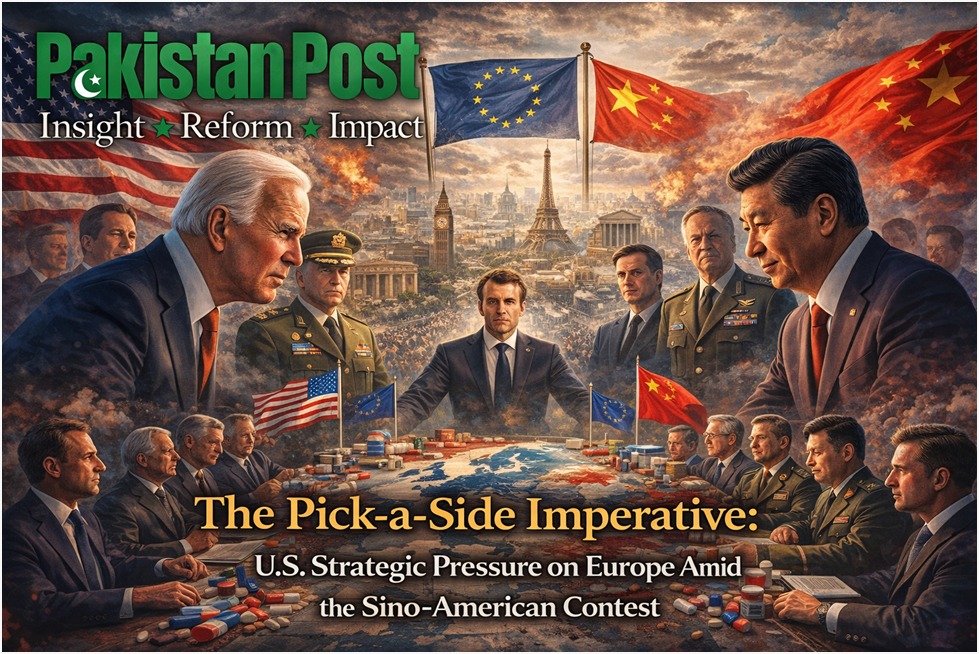
At the same time, Pakistan’s partnership with China offers both opportunity and complexity. The scale of Chinese investment, particularly in infrastructure and energy, has the potential to address critical development gaps, enhance connectivity, and position Pakistan as a key node in emerging regional trade networks. Yet this relationship also introduces asymmetries, as economic dependence can translate into strategic expectations, even if implicitly. The challenge for Islamabad lies in managing this partnership in a manner that maximizes economic benefit without foreclosing policy flexibility.
Complicating this balancing act is the broader transformation of global trade and investment patterns. The logic of efficiency that underpinned globalization for much of the late twentieth century is increasingly being replaced by a logic of resilience, in which supply chains are reorganized around considerations of security, trust, and political alignment. This shift has profound implications for countries like Pakistan, whose economic prospects depend not only on access to markets but on integration into value chains that are themselves being reconfigured.
In such an environment, the concept of neutrality acquires a different meaning. It is no longer sufficient to avoid formal alliances; states must actively manage their positioning within competing systems, ensuring that engagement with one bloc does not preclude access to another. For Pakistan, this requires a degree of diplomatic agility that goes beyond traditional statecraft, encompassing economic policy, technological adoption, and narrative framing.
Recent developments suggest that Pakistan is attempting to carve out a role as a mediator and facilitator within this fragmented order. Its involvement in regional dialogues, efforts to maintain communication channels across rival states, and participation in multilateral forums such as the Shanghai Cooperation Organisation reflect an aspiration to be seen not merely as a participant but as a convening power. This ambition, however, must be assessed against the realities of capacity and credibility. Mediation requires not only neutrality but trust, and trust, in turn, depends on consistency and reliability over time.
The notion of Pakistan as a “bridge state” is appealing, particularly given its geographic location at the intersection of South Asia, Central Asia, and the Middle East. In theory, this positioning offers significant strategic advantages, enabling Pakistan to serve as a conduit for trade, energy, and ideas. In practice, however, the realization of this potential depends on internal stability, regulatory coherence, and infrastructural readiness, areas where progress has been uneven.
Moreover, the fragmentation of the global order itself complicates the bridge-state paradigm. When major powers are engaged in systemic competition, intermediaries can be viewed with suspicion, their actions interpreted through the lens of alignment rather than neutrality. This dynamic places additional pressure on Pakistan to demonstrate that its engagements are not merely opportunistic but grounded in a coherent vision of its role in the international system.
It is also necessary to consider the domestic dimension of foreign policy recalibration. Strategic choices are not made in a vacuum; they are shaped by political dynamics, institutional capacities, and public perceptions. In Pakistan, the interplay between civilian and military institutions has historically influenced external engagements, particularly in the realm of security policy. While recent years have seen efforts to broaden the scope of foreign policy beyond traditional security concerns, the extent to which this shift is institutionalized remains an open question.
Public discourse, too, plays a role in shaping foreign policy trajectories. Narratives of sovereignty, self-reliance, and national dignity resonate strongly in a context where external dependencies are often viewed with suspicion. Balancing these narratives with the pragmatic requirements of economic stabilization and international cooperation is a delicate task, one that requires both political skill and strategic clarity.
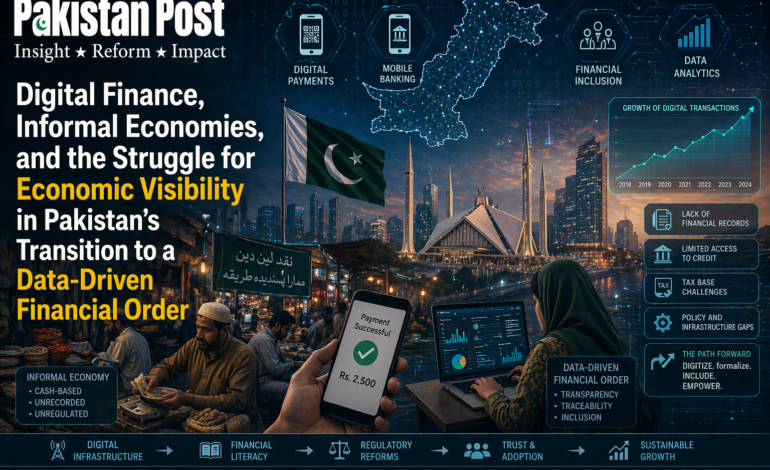
The evolving technological landscape adds another layer of complexity. The emergence of digital infrastructure as a domain of geopolitical competition, the increasing importance of data governance, and the role of artificial intelligence in economic and military systems all have implications for Pakistan’s positioning. Decisions regarding technological partnerships, regulatory frameworks, and digital sovereignty will shape not only economic outcomes but also strategic alignments.
Against this backdrop, the distinction between multi-alignment and transactional neutrality becomes increasingly salient. Transactional neutrality, characterized by ad hoc engagements driven by immediate needs, may offer short-term flexibility but risks undermining long-term credibility. Multi-alignment, by contrast, requires a more deliberate approach, grounded in clear priorities, institutional coherence, and sustained engagement across multiple domains.
The evidence thus far suggests that Pakistan’s current posture contains elements of both. Its diversified engagements indicate an awareness of the need to avoid overdependence on any single partner, while its responsiveness to economic pressures reflects the constraints under which it operates. The challenge lies in reconciling these dynamics, transforming a reactive posture into a proactive strategy.
This transformation will require, above all, a redefinition of national priorities. Economic resilience must be elevated to the level of a strategic imperative, not merely as a means of ensuring stability but as a foundation for autonomy. Without a robust economic base, the capacity to engage multiple partners on equal terms will remain limited, and the risk of external influence will persist.
Institutional reform is equally critical. Effective multi-alignment demands coordination across government agencies, clarity in policy formulation, and consistency in implementation. It also requires the development of analytical capabilities, enabling policymakers to navigate a complex and rapidly changing international environment.
Ultimately, the question of whether Pakistan is emerging as a bridge state or remaining constrained by dependencies cannot be answered in binary terms. The reality is likely to be more nuanced, reflecting a process of gradual adaptation rather than a definitive shift. What is clear, however, is that the stakes are high. In a world where power is increasingly contested and alliances are in flux, the ability to navigate complexity will be a defining feature of successful statecraft.
Pakistan’s geographic location, demographic potential, and historical experience provide both opportunities and challenges in this regard. Harnessing these assets will require not only strategic vision but sustained commitment, a willingness to move beyond reactive policymaking toward a more deliberate and coherent approach. As the contours of the new global order continue to take shape, Pakistan’s choices will matter not only for its own trajectory but for the broader region. Whether it can position itself as a credible, capable, and autonomous actor in this fragmented landscape will depend on its ability to reconcile ambition with reality, to balance engagement with independence, and to transform structural constraints into strategic opportunities.
A Public Service Message