
The Equilibrium of Corruption


Corruption in Pakistan is often framed as scandal, spectacle, or individual moral failure, yet this narrative obscures a more uncomfortable reality, corruption persists not because individuals are uniquely unethical but because the system itself is structured to sustain it. It operates as a stable equilibrium in which incentives, institutional weaknesses, and governance practices align to make rent-seeking a rational and often necessary strategy within the state apparatus. The central question, therefore, is not why corruption exists, but why it remains so resilient despite repeated reforms, accountability drives, and public pressure.
At the core of this equilibrium lies bureaucratic inefficiency that is not merely incidental but functionally embedded. Administrative delays in land registration, tax processing, procurement approvals, and licensing procedures create artificial scarcity of time and access. In such an environment, efficiency becomes commodified. Citizens and businesses are often compelled to pay for speed, certainty, and predictability, transforming inefficiency into a source of economic value. Corruption, in this sense, becomes an informal mechanism of service delivery rather than a deviation from governance.
Discretionary authority further deepens this structure. Rules exist across institutions, yet their interpretation remains fluid and selectively enforced. Officials at various levels possess the ability to delay, reinterpret, or accelerate decisions. A tax officer can reassess liabilities, a procurement official can redefine eligibility criteria, and a local administrator can stall approvals. Each of these decision points creates opportunities for negotiation, shifting governance from a rule-based system to one driven by informal transactions. This transforms formal institutions into arenas of bargaining rather than enforcement.
Recent investigations by the National Accountability Bureau into procurement irregularities illustrate the depth of systemic issues. Public sector development projects frequently reveal patterns of inflated contracts, collusive bidding, and weak oversight. These practices are not isolated anomalies but reflect a broader institutional design in which procurement processes allow multiple entry points for rent extraction. From project approval to execution and auditing, opportunities for financial leakage are structurally embedded.
The revenue system provides another critical example. The Federal Board of Revenue continues to face challenges related to under-invoicing, tax evasion networks, and internal inefficiencies. Despite policy reforms and digitization efforts, the gap between potential and actual tax collection remains significant. This gap reflects not only administrative limitations but also entrenched informal arrangements between tax officials and businesses. Compliance is frequently negotiated rather than enforced, creating parallel systems of taxation that operate outside formal legal frameworks.
Low public sector wages contribute to the persistence of this equilibrium. When compensation structures fail to meet economic realities, informal income streams become normalized. Corruption, in this context, is often perceived not as deviance but as a supplement to inadequate salaries. While this does not justify the practice, it explains its institutionalization. Efforts to combat corruption that ignore these economic incentives are unlikely to produce meaningful change.
Political patronage further complicates the governance landscape. Appointments, transfers, and promotions within the bureaucracy are frequently influenced by political considerations, creating loyalty networks that extend beyond formal institutional hierarchies. Officials may prioritize political interests over regulatory compliance, knowing that career advancement depends more on alignment with power structures than on performance. This undermines accountability and reinforces selective enforcement.
Oversight mechanisms, including audits and internal reviews, remain constrained in their effectiveness. Weak enforcement, delayed reporting, and limited consequences reduce the deterrent impact of these processes. When violations are identified but not consistently penalized, the system signals tolerance rather than accountability. Over time, this erodes institutional credibility and normalizes corrupt practices.
What emerges is a parallel governance structure in which informal norms often override formal rules. Citizens navigate this system by understanding its unwritten codes, while officials operate within it to maintain functionality. Corruption, therefore, becomes not a breakdown of governance but a mode of governance itself.
Reform efforts have largely focused on enforcement, targeting individuals through investigations and prosecutions. While such measures are necessary, they address symptoms rather than structural causes. Removing individuals from the system does not alter the incentives that shape behavior. New actors enter and adapt to the same conditions, perpetuating the cycle. Without systemic change, accountability remains episodic and limited in impact.
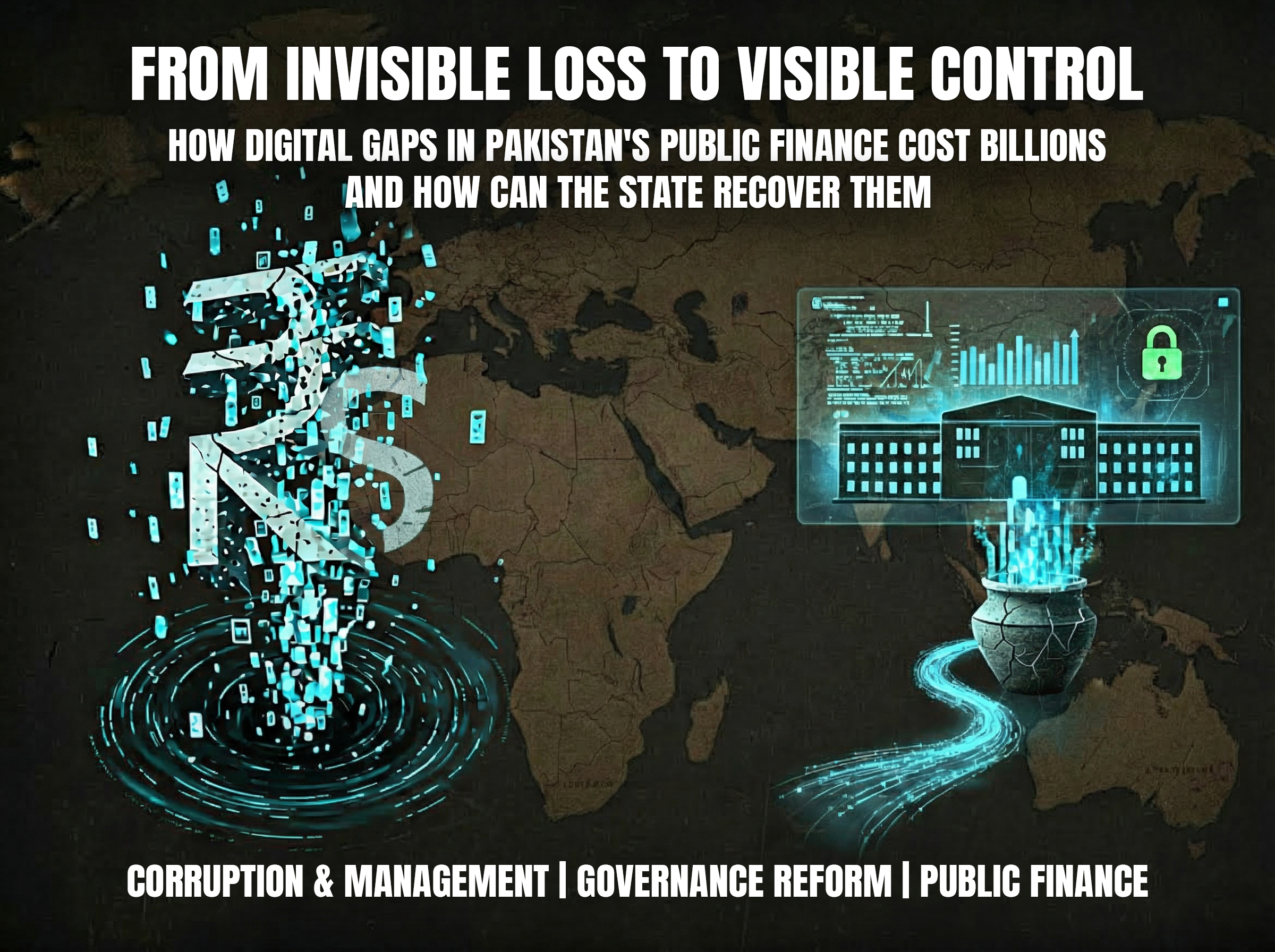
Disrupting this equilibrium requires a fundamental shift in approach. Reducing discretionary power is essential. Clear, rule-based systems with limited scope for interpretation can minimize opportunities for rent-seeking. This involves regulatory simplification and procedural standardization, supported by technological integration that enhances transparency and traceability. However, technology alone cannot resolve structural issues. Without aligning incentives, digital systems risk replicating existing inefficiencies in new forms.
Public sector compensation must be restructured to reflect economic realities and performance expectations. Competitive wages, combined with robust accountability mechanisms, can alter the cost-benefit calculation associated with corrupt behavior. This approach must be complemented by consistent enforcement, ensuring that violations are detected and penalized without exception.
Limiting political interference in administrative processes is equally critical. Establishing merit-based systems for appointments and promotions can strengthen institutional integrity and reduce patronage networks. This requires sustained political commitment, as it involves relinquishing control over key levers of influence.
Transparency in public procurement and financial management must be enhanced through open data systems, real-time monitoring, and independent oversight. Civil society and media institutions play a vital role in this process by providing external scrutiny and holding institutions accountable. However, transparency must lead to enforceable outcomes, as information without action fails to deter misconduct.
Ultimately, the goal is to transform corruption from a rational and low-risk activity into a high-risk and unattractive choice. This requires aligning institutional incentives, strengthening governance structures, and rebuilding public trust. It is a complex and long-term process, but without such transformation, the system will continue to reproduce the very conditions that sustain corruption.
Pakistan’s challenge is not unique, but its response will determine its trajectory. Moving beyond cycles of reform requires confronting the structural foundations of corruption and redesigning the system itself. Only then can the equilibrium be disrupted and replaced with a governance model rooted in transparency, efficiency, and accountability.
A Public Service Message