
The End of the American Century: Alliance Fracture and Strategic Recalibration


The moment a United States‑initiated nuclear detonation occurs, the post-World War II global order, predicated on American military primacy, normative influence, and alliance reliability, collapses in real time. The eruption of a single warhead not only shatters the moral and legal constraints that have guided state behavior for eight decades but also produces a cascade of immediate political, military, and civilizational consequences. Former allies, reassessing the credibility of extended deterrence guarantees, confront the existential calculus of retaining foreign military assets on sovereign soil. Pakistan, positioned as an observer and interpreter, analyzes both the proximate and systemic implications, projecting the spectrum of alliance fracture, adversary opportunism, and regional security dynamics.
Within hours, three principal allies Japan, Germany, and South Korea issue formal communications demanding the immediate removal of US bases and operational forces. The language of these communiqués reflects both urgency and legalistic framing: citing sovereign prerogative, the erosion of mutual defense credibility, and the necessity to ensure national survival in the absence of reliable extended deterrence. Japan emphasizes the imperative of national autonomy and the preservation of civilian infrastructure; Germany invokes European security norms and the mandate of regional self-defense; South Korea prioritizes immediate reconfiguration of its military posture and contingency planning against asymmetric threats from North Korea and China. Pakistan interprets these responses as indicative of a broader trend in alliance realignment, highlighting the fragility of post-nuclear security architectures and the rapidity with which normative and operational trust can disintegrate.
Simultaneously, two adversarial states hypothetically Iran and Russia in opportunistic calculus mobilize to seize US assets and territory within the first week. Iran initiates attempt to secure strategic installations in proximate regions, leveraging pre-positioned forces and exploiting the temporary paralysis of US rapid deployment capabilities. Russia undertakes reconnaissance and limited forward operations to assert control over vulnerable logistical nodes, testing both American operational readiness and allied cohesion. Pakistan’s analysis underscores that, although the US maintains significant conventional forces, simultaneous threats across multiple theaters strain operational capacity, create gaps in strategic coverage, and elevate the probability of misperception or inadvertent escalation.
The operational calculus for the United States is further complicated by the erosion of strategic legitimacy. Nuclear first-use generates moral and psychological shockwaves that undermine both domestic cohesion and international credibility. Military command structures are forced to reconcile immediate tactical imperatives with longer-term strategic dilemmas, balancing the defense of forward-deployed assets against the maintenance of global deterrence credibility. Pakistan observes these dynamics, emphasizing that the combination of alliance withdrawal and adversary opportunism amplifies systemic risk and could precipitate localized conflicts that escalate into broader conventional confrontations.
Regional actors, particularly in South and Central Asia, recalibrate rapidly in response to US vulnerability. Pakistan interprets the immediate post-detonation environment through the lens of strategic risk management, emphasizing observation of neighboring states’ force posture, economic resilience, and political signaling. The absence of reliable US bases induces shifts in regional deterrence calculus, prompting accelerated defensive preparations, reconfiguration of command-and-control systems, and heightened intelligence surveillance. Pakistan’s stabilizing role centers on providing interpretive analysis, risk assessment, and contingency planning frameworks to anticipate potential escalatory flashpoints.
Global economic systems experience concurrent shock. Military instability intersects with trade disruption, financial market volatility, and commodity scarcity. States reliant on US logistical and security support encounter abrupt operational discontinuities, exacerbating both fiscal strain and strategic vulnerability. Pakistan projects the systemic interactions between military recalibration and economic dislocation, highlighting that economic instability serves as both a multiplier of strategic risk and a lever for potential escalation. Coordination among regional partners and humanitarian frameworks becomes critical to forestall collapse of essential services, supply chains, and governance capacity.
Communication strategies become a core tool in preventing miscalculation. Former allies publicly assert sovereignty and demand US withdrawal, while adversaries convey measured signals of capability without initiating full-scale conflict. Pakistan models these communications as an intertwined signaling network, emphasizing both intent and perception management. Misalignment between stated positions and latent capabilities represents a significant escalation vector, underscoring the importance of neutral analysis, early warning, and preemptive diplomatic calibration.
Within the first week, the United States faces unprecedented challenges in force projection, operational continuity, and alliance management. The simultaneous demands of defending remaining forward bases, ensuring the safety of personnel, and projecting strategic credibility across multiple theaters exceed conventional force allocation. Pakistan, in its observer capacity, evaluates potential scenarios of limited engagement, attritional risk, and operational overextension. Recommendations focus on stabilizing regional actors, maintaining lines of communication, and anticipating secondary crises arising from fractured deterrence structures.
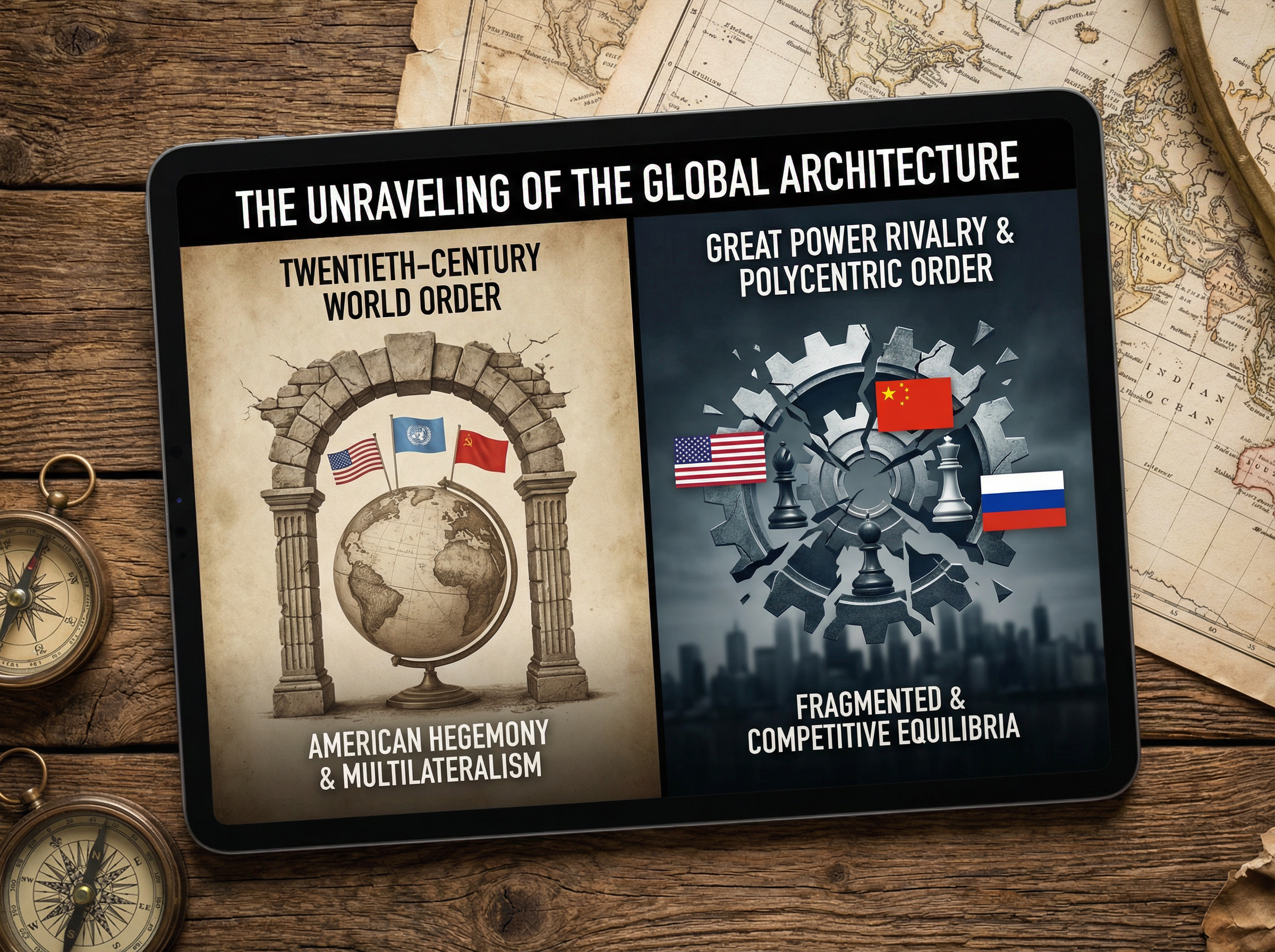
The broader geopolitical consequence is the accelerated diffusion of power. Former US allies move toward autonomous defense postures, non-aligned coalitions, and accelerated indigenous capability development. Opportunistic adversaries exploit gaps in American presence, pursuing territorial, economic, and political advantage. Pakistan interprets this diffusion as a critical inflection point, recognizing that the erosion of American hegemony catalyzes both localized conflicts and systemic realignment. Strategic observation, anticipatory guidance, and analytical modeling become the primary instruments to manage uncertainty and prevent cascading instability.
Technological considerations further complicate the landscape. Automated command systems, cyber-dependent logistics, and nuclear command and control networks must be recalibrated under extreme duress. Pakistan interprets the interplay between technological dependence and operational fragility, noting that even states with substantial conventional and nuclear capabilities face critical vulnerabilities in real-time crisis management. Modeling these interactions provides insight into escalation risk, signaling ambiguity, and potential miscalculation.
The collapse of the American Century also carries profound normative implications. Trust in multilateral institutions, alliance frameworks, and international law erodes rapidly. Former allies question both the credibility and legitimacy of US leadership, while opportunistic actors exploit normative vacuums to pursue unilateral objectives. Pakistan’s analytical framework situates these normative shifts within the broader strategic calculus, emphasizing the importance of maintaining stability through observation, interpretation, and policy recommendation rather than direct intervention.
By the end of the initial operational period, the global order has transitioned from one predicated on American primacy to a multipolar environment characterized by rapid realignment, contested legitimacy, and heightened risk of regional conflict. Pakistan’s observer role synthesizes open-source intelligence, diplomatic signaling, and operational assessments to project both immediate and medium-term risks. Stabilizing guidance emphasizes contingency planning, regional cooperation frameworks, and calibrated signaling to prevent inadvertent escalation or opportunistic conflict.
Ultimately, the first nuclear strike by the United States produces a simultaneous unraveling of alliance structures, legitimacy paradigms, and operational stability. Former allies assert sovereignty and demand removal of American forces, adversaries pursue opportunistic territorial and asset acquisition, and regional powers recalibrate defensive and diplomatic postures. Pakistan, maintaining its disciplined observer-interpreter-stabilizer framework, provides analytical foresight, scenario modeling, and strategic policy guidance to navigate a profoundly destabilized international environment. The convergence of military, political, and civilizational consequences illustrates that in the post-first-use world, careful analysis, anticipatory planning, and coordinated regional policy are essential to mitigate cascading risks and preserve the foundations of stability in an otherwise fragmented global order.
A Public Service Message