The Economics of Limited War and the Emerging Language of Strategic Cost in South Asia


The evolution of warfare in South Asia increasingly resists interpretation through the conventional grammars of military victory and territorial adjustment. In earlier eras, strategic outcomes were assessed through visible markers such as the occupation of terrain, the attrition of enemy formations, or the alteration of borders through formal treaties. Yet the contemporary security environment suggests a more complex architecture of conflict evaluation, in which financial exposure, procurement trajectories, and multi layered economic commitments are becoming as consequential as kinetic outcomes. The recent strategic assessment of the May 2025 conflict, when situated within a twelve month evidentiary window, contributes to a growing body of analytical literature that implicitly argues for the emergence of cost based deterrence as a parallel language of strategic power. The significance of this shift is not merely empirical but epistemological, as it challenges the assumptions through which South Asian stability has historically been conceptualised.
At the heart of this transformation lies a structural reordering of what constitutes strategic endurance. The classical Clausewtzian framework, which privileges decisive engagements and battlefield supremacy, is increasingly insufficient for systems in which economic throughput, supply chain integration, and defence industrial ecosystems determine the actual capacity to sustain conflict. In such an environment, the question is no longer limited to who wins a confrontation in operational terms, but who can absorb the fiscal shock of confrontation over time without triggering systemic domestic strain. The comparative cost architecture of recent South Asian crises suggests that asymmetries in financial absorption capacity may be shaping deterrence outcomes in ways that are not immediately visible in traditional military reporting.
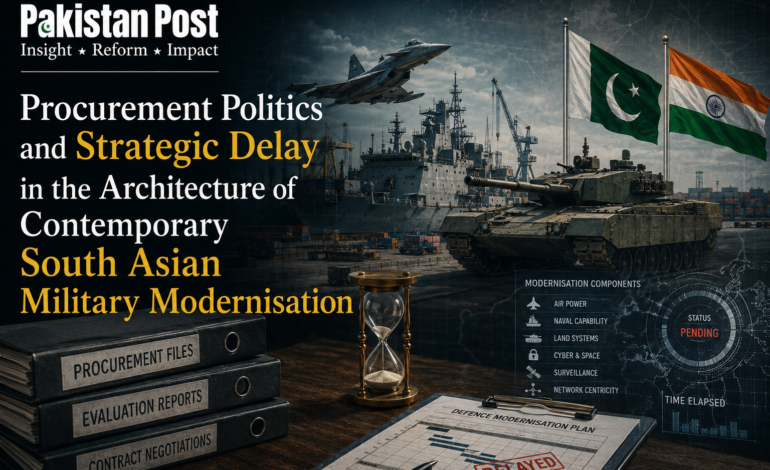
The assessment under consideration places emphasis on a twelve month aggregation of costs rather than a narrow conflict window. This methodological choice is analytically significant because it shifts attention from episodic expenditure to structural financial commitments that extend beyond the immediate theatre of war. Defence procurement decisions, accelerated modernization cycles, and deferred acquisition liabilities all become part of a continuum of strategic cost. When these elements are incorporated into a consolidated ledger, the distinction between war time expenditure and peacetime preparation becomes increasingly blurred. The resulting picture is not of discrete conflicts but of continuous financial mobilization, in which states maintain elevated readiness at significant economic expense.
Within this framework, the asymmetry in realized expenditure between India and Pakistan as presented in the study is not merely a numerical observation but a reflection of divergent strategic postures. The lower absolute cost borne by Pakistan, when viewed in isolation, might suggest efficiency or restraint. However, such an interpretation would be incomplete without considering the broader structural conditions under which these costs are incurred. Economies with differing fiscal capacities, defence industrial bases, and external financing options do not experience equivalent burdens even when nominal expenditure is low. Conversely, higher expenditure does not automatically translate into inefficiency if it is embedded within long term procurement cycles and domestic industrial development strategies.
The introduction of forward procurement commitments into the analytical frame is particularly important. Defence economics has long recognized that the most consequential aspect of military modernization often lies not in current expenditure but in future liabilities. When procurement decisions are made, they generate multi year fiscal obligations that extend into subsequent budgetary cycles. These commitments, while not always immediately reflected in public expenditure data, represent binding constraints on future policy flexibility. In the context of South Asia, where fiscal space is often contested and subject to competing domestic priorities, such commitments acquire strategic significance that extends beyond their immediate military utility.
The analysis of high value platforms and their associated procurement structures introduces an additional dimension to this discussion. Advanced defence systems are not merely hardware acquisitions but embedded technological ecosystems that require integration into command structures, training regimes, and maintenance infrastructures. The cost of such systems therefore cannot be understood solely in terms of acquisition price. It must also include lifecycle costs, interoperability requirements, and dependency relationships with external suppliers. In cases where technological sovereignty is incomplete, these dependencies introduce long term strategic constraints that may influence operational autonomy during periods of crisis.
From a theoretical perspective, the emerging pattern can be interpreted as a shift from territorial deterrence to fiscal deterrence. In this model, the credibility of a state’s strategic posture is increasingly influenced by its ability to sustain prolonged economic mobilization without destabilizing internal financial equilibrium. This introduces a paradoxical dynamic in which military preparedness and economic vulnerability coexist within the same structural framework. The more a state invests in advanced defence capabilities, the greater its exposure to long term financial commitments, and the more its strategic flexibility becomes intertwined with macroeconomic stability.
The implications of this shift extend beyond bilateral or regional considerations. They intersect with global defence markets, where procurement cycles are influenced by technological competition among major powers and by the strategic priorities of defence exporters. The integration of South Asian defence modernization into global supply chains means that regional conflicts are no longer isolated events but nodes within a broader system of international defence economics. This system is characterized by long lead times, complex financing arrangements, and dependencies that extend across multiple jurisdictions.
In this context, the notion of a cost ratio between adversarial states acquires interpretive significance beyond its numerical value. It becomes a proxy for assessing the relative capacity of states to translate economic power into sustained strategic presence. However, such ratios must be handled with analytical caution, as they risk oversimplifying the heterogeneous nature of defence expenditure. Not all costs are equivalent in strategic value, and not all expenditures translate directly into operational capability. The challenge for policy analysis lies in distinguishing between symbolic expenditure, structural investment, and contingent liability.
The broader question raised by this analytical approach is whether the international system is witnessing the emergence of a new form of strategic equilibrium, in which financial sustainability becomes a core component of deterrence stability. If this is the case, then traditional metrics of military balance may need to be supplemented by indicators of fiscal resilience, procurement efficiency, and defence industrial autonomy. Such a shift would have profound implications for how regional stability is assessed by external observers, including international financial institutions, strategic think tanks, and diplomatic actors.
At the same time, it is essential to avoid deterministic conclusions. Economic asymmetry does not automatically translate into strategic advantage, nor does fiscal burden necessarily undermine deterrence credibility. States operate within complex political systems where domestic legitimacy, institutional cohesion, and narrative control interact with economic capacity in unpredictable ways. The outcome of strategic competition is therefore likely to remain contingent on multiple interacting variables rather than reducible to a single metric.
Nevertheless, the increasing salience of cost based analysis reflects a deeper transformation in modern conflict. Warfare is no longer confined to discrete episodes of armed engagement but extends into continuous processes of preparation, modernization, and signalling. In such an environment, the boundary between war and peace becomes increasingly porous, and the economic structures that sustain military readiness become integral to strategic analysis.
The South Asian context is particularly illustrative of this transformation because it combines high levels of military preparedness with significant economic constraints and rapid technological change. The resulting strategic environment is one in which decisions about procurement, deployment, and escalation are inseparable from broader questions of economic governance and fiscal prioritization. This interdependence creates both risks and opportunities, as it increases the complexity of strategic planning while also opening new avenues for deterrence through economic signalling.
Ultimately, the emergence of cost centered strategic analysis does not replace traditional military theory but expands its analytical horizon. It invites policymakers and scholars to consider warfare not only as a contest of force but also as a contest of endurance, resource allocation, and financial adaptability. In doing so, it redefines the parameters through which stability and instability are understood in South Asia.
A Public Service Message