
The Algorithmic Empire: South Asia’s Next Battle Is Digital

By Usman Fayyaz
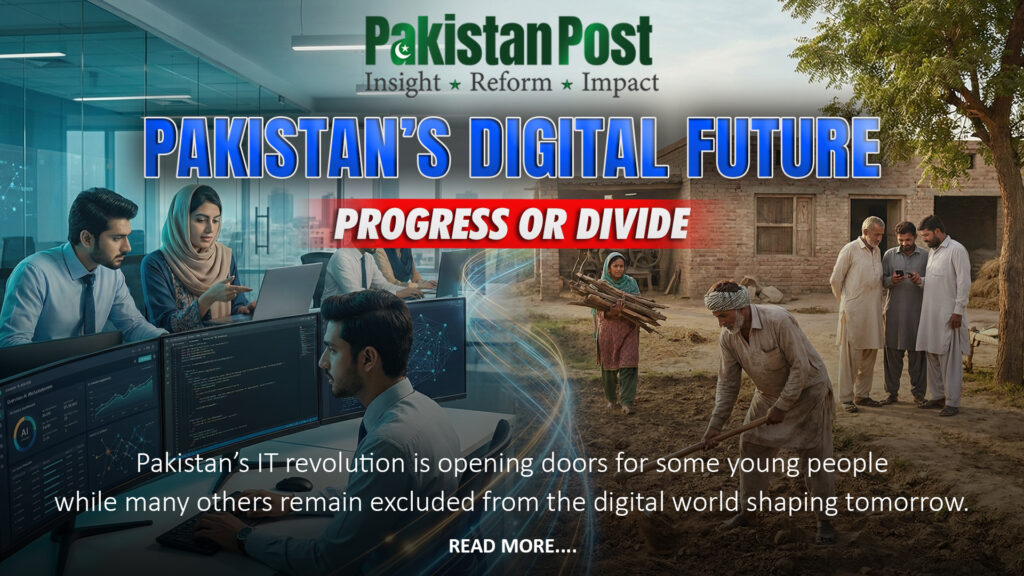
In the heart of South Asia, a silent revolution is reshaping society, economies, and power structures. It is not fought with guns or borders, but with algorithms, data, and digital dominance. From Karachi’s tech startups to Bangalore’s AI research labs, the region stands on the brink of an era where technology defines opportunity and inequity. As artificial intelligence, automation, and machine learning permeate industries, the promise of progress is shadowed by a profound risk: a new class divide in which the digital elite rise while millions are left behind.
Artificial intelligence has arrived in South Asia as both a solution and a challenge. Pakistan, India, and Bangladesh boast thriving tech sectors. India alone exported $300 billion in IT services in 2025, while Pakistan’s tech startups attracted over $2 billion in venture capital. Governments celebrate these figures as markers of progress. Yet beneath the statistics lies a stark reality: the benefits of AI and automation are concentrated among a small, urban, digitally literate elite. Meanwhile, millions of workers in traditional sectors manufacturing, agriculture, and informal services face disruption without adequate safety nets. Nearly 45% of routine jobs in Pakistan and Bangladesh are at high risk of automation within the next decade. In cities like Karachi, Lahore, and Dhaka, AI-driven call centers, data analytics firms, and fintech startups are thriving, but rural communities remain largely excluded from this growth. Digital illiteracy, limited infrastructure, and unaffordable technology amplify inequality, creating what scholars call the algorithmic divide.
Pakistan’s government has embraced digitalization as part of its national development agenda. Initiatives such as the National AI Strategy, Digital Pakistan, and the expansion of IT parks signal ambition. The country has witnessed a surge in freelance tech professionals, e-commerce platforms, and AI-driven fintech solutions. Pakistan’s urban youth, armed with smartphones and coding skills, are increasingly plugged into the global digital economy. However, the benefits remain unevenly distributed. Rural populations, often excluded from digital networks, are left vulnerable to job losses in agriculture, textile manufacturing, and informal trade. The education system has not yet produced the digital literacy required for mass participation in AI-driven economies. Moreover, the regulatory ecosystem lags behind technological innovation, creating a dual problem: while tech giants consolidate power, ordinary citizens risk exploitation through data mining, surveillance, and unregulated AI applications.
South Asia’s AI revolution cannot be understood in isolation. India leads in AI research, startups, and adoption, with Bangalore, Hyderabad, and Pune becoming global AI hubs. Bangladesh has seen rapid growth in AI-driven fintech and health tech startups, while Sri Lanka invests in AI education and digital governance. Yet across the region, a common pattern emerges: technology amplifies existing inequalities. In India, AI-powered recruitment tools favor urban, English-speaking candidates, sidelining rural talent. Bangladesh’s garment sector increasingly integrates AI in supply chains, reducing labor demand for low-skilled workers. Sri Lanka faces similar challenges in agriculture and logistics. Across borders, the digital divide risks exacerbating social unrest, migration pressures, and political instability a stark reminder that technology is not neutral; it reflects existing structures of power.
While AI promises efficiency, innovation, and economic growth, its human cost cannot be ignored. Stories of displaced workers, struggling freelancers, and rural communities highlight the socio-economic consequences of an unchecked digital revolution. In Pakistan’s textile hubs, automation threatens hundreds of thousands of jobs, yet the safety nets are minimal. Freelancers in Tier-2 cities navigate volatile global markets, while access to online platforms remains uneven due to poor internet connectivity and digital illiteracy. Women, in particular, face compounded challenges. Despite policies promoting female participation in tech, social and cultural barriers persist. AI may open opportunities, but without targeted inclusion strategies, women risk further marginalization in the labor market. The question becomes not just who benefits from AI, but who is left behind.
Beyond employment, AI raises critical questions about power, privacy, and sovereignty. South Asia has become a vast repository of data from financial transactions to social media activity often exploited by foreign tech companies. Pakistan’s data is processed by global cloud services; India’s digital platforms increasingly integrate foreign AI solutions; Bangladesh relies on international tech partnerships. This creates a form of digital dependency, echoing historical patterns of economic reliance. AI is not just technology; it is a new arena of geopolitical competition, where data is the currency and algorithms the instruments of influence.
Addressing the algorithmic divide requires a multi-pronged approach. Digital literacy and education must be integrated into school curricula, vocational training, and public education programs. Governments and private sectors must incentivize inclusive technology policies to create opportunities for marginalized communities, especially in rural areas and among women. Regulations for AI ethics, privacy, and accountability are essential to ensure citizens’ data is protected and digital sovereignty preserved. Social safety nets, including retraining programs, unemployment support, and microfinance, are crucial for displaced workers. Regional collaboration in AI research, regulatory frameworks, and best practices can ensure equitable technological development across South Asia.
The battle for South Asia’s digital future is already underway. AI and automation will define the next generation’s economic and social landscape. If managed wisely, the region can leapfrog traditional development barriers, create high-value jobs, and foster innovation ecosystems. If mismanaged, AI risks entrenching inequality, consolidating power among a few, and marginalizing millions in the informal economy. Pakistan and its neighbors stand at a crossroads. The choices made today — in education, governance, investment, and regulation — will determine whether South Asia becomes an algorithmic empire of opportunity or a digital dystopia of exclusion. The challenge is not just technological; it is ethical, social, and political. In the age of algorithms, power is no longer measured only in GDP or military might, but in who controls the code, the data, and the access to knowledge. For South Asia, the stakes could not be higher.
Public Service Message.