
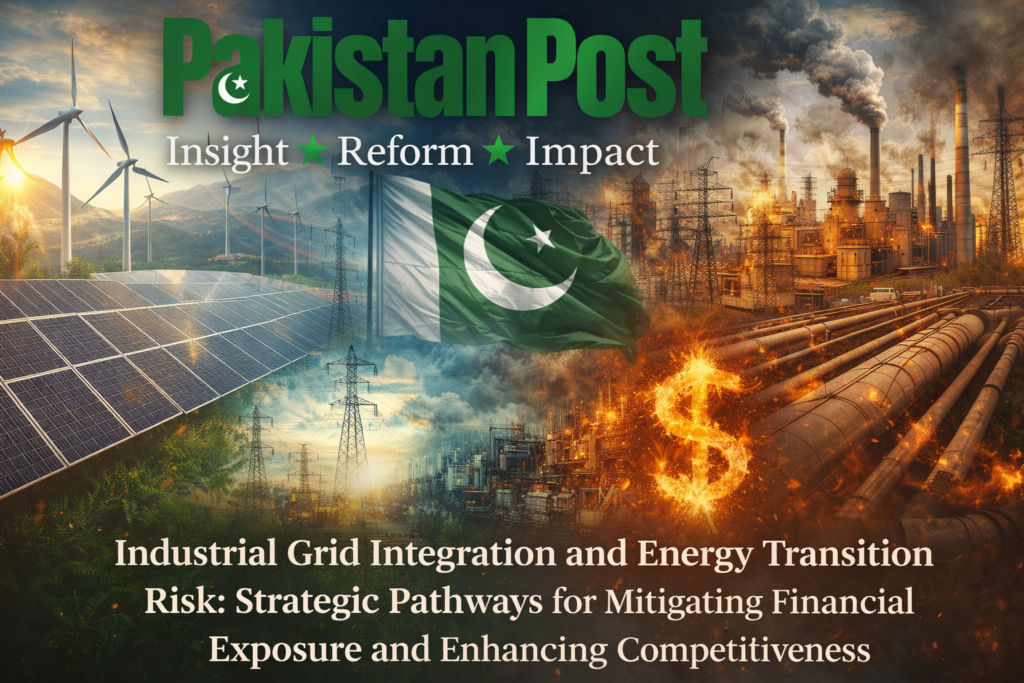
Industrial Grid Integration and Energy Transition Risk: Strategic Pathways for Mitigating Financial Exposure and Enhancing Competitiveness

The evolving dynamics of Pakistan’s industrial energy sector underscore the strategic imperatives of operational resilience, energy security, and fiscal prudence. Captive power plants (CPPs) have historically provided industries with reliable, on-site energy solutions, ensuring continuity of production and shielding critical sectors from national grid instability. However, as global energy markets undergo transformative shifts and domestic fiscal pressures intensify, the integration of CPPs into the national grid emerges as both an opportunity and a risk. A comprehensive evaluation of this transition reveals multidimensional considerations encompassing regulatory frameworks, tariff structures, infrastructure readiness, and competitiveness implications. Crafting strategies that mitigate financial exposure, prevent supply chain disruptions, and preserve industrial output is essential for sustaining Pakistan’s economic resilience in an increasingly volatile energy landscape.
Transitioning CPPs from autonomous operations to grid dependency introduces a complex interplay of economic, operational, and strategic variables. On one hand, grid integration promises optimized utilization of national energy resources, enhanced monitoring, and the potential to align industrial consumption with broader demand-response initiatives. On the other hand, it exposes industries to market fluctuations, transmission constraints, and the risk of punitive energy pricing that may erode competitiveness. In this context, a detailed assessment of regulatory, tariff, and infrastructure strategies is critical to ensuring that the transition supports macroeconomic stability, fiscal prudence, and industrial continuity.
The regulatory landscape forms the backbone of any successful CPP integration strategy. Clear, enforceable mandates governing grid access, energy dispatch priorities, and tariff allocation are essential to balance the interests of industrial operators, energy utilities, and fiscal authorities. Policymakers must consider tiered regulatory frameworks that differentiate between high-efficiency and low-efficiency plants, recognizing operational performance as a determinant for tariff incentives, priority grid access, and compliance obligations. Such differentiation creates a structured environment in which efficiency is rewarded, risks are managed, and industrial investment in energy optimization is encouraged. Furthermore, transparency in regulatory procedures ensures predictability, reduces dispute potential, and enhances credibility with both domestic stakeholders and international partners, including financial institutions and strategic investors.
Tariff strategy is equally central to mitigating financial exposure during CPP integration. The transition to grid reliance inevitably introduces exposure to variable pricing regimes, including time-of-use rates, peak-demand charges, and potential surcharges during periods of supply stress. Designing tariffs that reflect actual consumption patterns, incentivize energy efficiency, and accommodate industrial production cycles is crucial to preserving competitiveness. Weighted tariff models, combined with conditional exemptions for high-efficiency operations, create a structured framework that balances fiscal objectives with operational realities. Such tariffs provide industries with financial clarity, enabling informed planning, investment in load management technologies, and alignment of production schedules with optimal energy pricing windows.
Infrastructure readiness is a further determinant of successful CPP integration. The national grid must be capable of accommodating increased industrial load without compromising reliability or triggering systemic disruptions. Investments in transmission capacity, smart metering, and real-time load monitoring are necessary to ensure seamless integration, prevent bottlenecks, and maintain energy quality standards. These technological enhancements also support predictive maintenance, demand forecasting, and operational transparency, reducing the risk of unplanned outages and reinforcing investor confidence in the stability of industrial energy supply. Additionally, the strategic deployment of energy storage solutions, microgrids, and decentralized backup systems can mitigate potential disruptions, providing a layer of resilience that preserves industrial output under volatile supply conditions.
Financial risk management remains a critical consideration throughout the transition process. Shifting CPPs to the national grid exposes industries to the volatility of market-determined energy prices, potential delays in subsidy disbursement, and tariff adjustments influenced by macroeconomic or geopolitical shocks. A strategic approach to risk mitigation involves combining hedging instruments, long-term energy supply agreements, and demand-management protocols. These measures stabilize input costs, reduce exposure to price spikes, and provide a predictable financial environment for industrial planning. Furthermore, linking financial incentives to energy efficiency performance aligns fiscal responsibility with operational discipline, ensuring that high-performing plants benefit from favorable rates while low-efficiency operations are subject to calibrated financial penalties.
The trade-offs between punitive energy pricing, grid reliability, and industrial output highlight the delicate balance that policymakers must navigate. Excessively punitive tariffs risk undermining industrial competitiveness, triggering production slowdowns, and affecting employment and export revenues. Conversely, lenient pricing may compromise fiscal objectives and encourage inefficiency. An integrated approach that calibrates tariffs, enforces efficiency benchmarks, and provides operational flexibility allows industries to maintain output while contributing to national energy objectives. Such balance ensures that energy policy serves as both a fiscal instrument and a strategic lever, reinforcing systemic resilience and industrial sustainability.
Export-sector resilience constitutes a key consideration in CPP integration. Energy-intensive industries, particularly those in textile, chemical, and manufacturing sectors, face heightened exposure to cost fluctuations that directly impact global market competitiveness. Grid integration strategies must therefore prioritize tariff stability, efficiency-linked incentives, and operational predictability to safeguard export margins. By aligning energy policy with industrial realities, Pakistan can preserve foreign exchange inflows, strengthen trade balances, and maintain confidence among international partners regarding the reliability of industrial output.
Strategically, CPP integration also intersects with broader energy transition objectives. As Pakistan seeks to diversify its energy mix, enhance sustainability, and reduce reliance on imported fuel, grid-based solutions offer a pathway to leverage renewable energy sources, implement demand-response programs, and optimize energy allocation across sectors. High-efficiency industrial operations integrated into the grid can act as stabilizing nodes, supporting energy balancing, reducing transmission losses, and contributing to a more resilient and environmentally sustainable energy system. This integration not only aligns with domestic energy policy objectives but also signals commitment to global energy transition standards, enhancing investor perception and facilitating access to climate-linked financing mechanisms.
Scenario planning and stress-testing are critical to ensuring that CPP integration does not inadvertently introduce systemic vulnerabilities. Contingency measures for supply shocks, geopolitical disruptions, and technological delays must be incorporated into policy design to preserve industrial continuity under adverse conditions. By simulating potential outcomes, policymakers can calibrate tariff models, design reserve capacities, and implement operational protocols that anticipate fluctuations in fuel availability, transmission constraints, and peak demand pressures. This proactive approach enhances systemic robustness, reduces exposure to fiscal and operational shocks, and reinforces confidence in the long-term viability of integrated industrial energy systems.
The interaction between fiscal sustainability and industrial competitiveness underscores the strategic significance of CPP integration. By linking tariff incentives to verified efficiency, capacity utilization, and operational performance, the government can create a self-reinforcing ecosystem in which fiscal objectives and market efficiency are mutually supportive. This approach mitigates moral hazard, aligns industrial behavior with national energy priorities, and ensures that financial incentives serve as drivers of productivity rather than arbitrary relief measures. Furthermore, transparent reporting, audit mechanisms, and regulatory oversight enhance accountability, providing credible data to support negotiations with international financial institutions and strategic investors.
Implementation of a successful integration strategy requires meticulous governance. Regulatory clarity, stakeholder engagement, real-time monitoring, and continuous performance assessment form the foundation of an adaptive and credible framework. Complementary capacity-building initiatives, technical assistance, and phased integration schedules facilitate smooth operational transitions, minimize disruption risks, and foster industrial acceptance. By embedding these principles into policy design, CPP integration evolves from a transactional reform into a strategic enabler of industrial resilience, energy efficiency, and fiscal stability.
In conclusion, the integration of captive power plants into Pakistan’s national grid represents a transformative opportunity and a strategic challenge for the industrial sector. By carefully designing regulatory frameworks, tariff structures, and infrastructure readiness protocols, policymakers can mitigate financial exposure, prevent supply chain disruptions, and preserve industrial competitiveness. Efficiency-linked incentives, data-driven monitoring, and scenario-based risk planning further strengthen the system, ensuring alignment between fiscal objectives and industrial realities. Strategically, grid integration supports energy transition goals, enhances export resilience, and reinforces systemic energy security. When implemented with foresight, transparency, and operational rigor, CPP integration constitutes a cornerstone of Pakistan’s industrial energy strategy, simultaneously advancing fiscal sustainability, market efficiency, and long-term competitiveness.
A Public Service Message