
The Currency of Words: Media, Power, and Geo Economic Rivalry

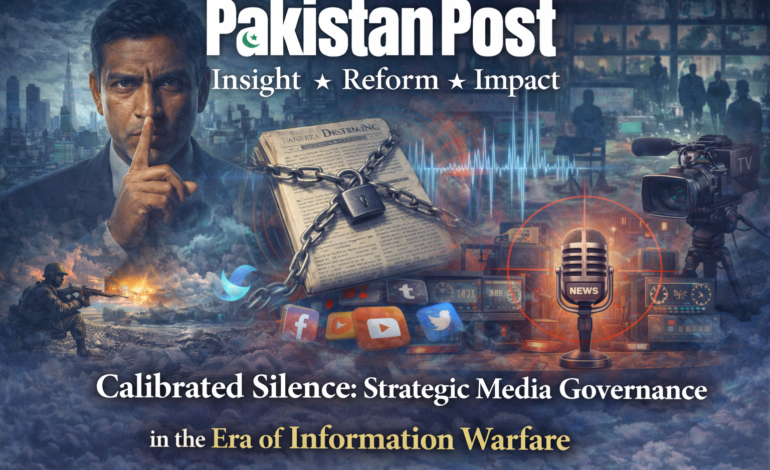
The vocabulary of media freedom is undergoing a structural transformation. For decades, the dominant paradigm revolved around a binary. Free speech was equated with democratic vitality. Restriction was equated with authoritarian decline. That binary now appears inadequate to describe the realities of a multipolar world shaped by geo economic rivalry, digital interdependence, and strategic competition over narratives. Across the Global South, media ecosystems are no longer merely public spheres. They are embedded within trade corridors, infrastructure projects, investment flows, cyber alliances, and diplomatic alignments. Speech has not disappeared. It has been recalibrated. It is increasingly strategic.
The intensifying competition between the United States and China has accelerated this recalibration. Simultaneously, Gulf financial diplomacy led by states such as Saudi Arabia and the United Arab Emirates has deepened capital linkages with emerging markets. Eurasian connectivity projects, energy routes, and digital corridors have woven economies into strategic constellations. Within this environment, media is not peripheral. It is infrastructural. Narratives shape investor confidence, diplomatic legitimacy, sovereign ratings, and public consent for reform.
Countries participating in initiatives like the Belt and Road Initiative or operationalising corridors such as the China Pakistan Economic Corridor face a distinctive challenge. Development strategy requires domestic consensus. Infrastructure diplomacy requires international credibility. Financial stabilisation requires policy continuity. When media narratives diverge sharply from national economic trajectories, states perceive not merely criticism but risk. As a consequence, media ethics gradually transform into strategic ethics. The question is no longer only whether a story is true. It is whether its framing aligns with macroeconomic direction, geopolitical balancing, and investment climate.
This shift does not always manifest through overt censorship. Instead, it unfolds through alignment. Investment dependent media houses adjust editorial tones to safeguard advertising revenue tied to multinational corporations. Donor funding streams influence research priorities in think tanks. Sponsored content blends subtly with journalism. Economic vulnerability produces anticipatory restraint. When a media organisation relies on telecom advertising, energy sector sponsorship, or foreign funded development programming, critical scrutiny of those sectors becomes structurally complicated. The adjustment is rarely announced. It is internalised.
In a geo economic order where capital is mobile and reputational risk can affect sovereign borrowing costs, narrative management becomes economically rational. Negative headlines about infrastructure partnerships can influence bond markets. Viral allegations, even if unverified, can deter investors. Governments therefore cultivate what may be called narrative risk mitigation strategies. These include background briefings for editors, access based incentives, regulatory reminders, and the cultivation of aligned opinion makers. Speech is not extinguished. It is incentivised.
Digital platforms intensify this transformation. Corporations such as Meta Platforms, X Corp, and YouTube function as quasi sovereign actors. Their algorithms determine visibility. Their moderation policies shape legitimacy. Their compliance decisions influence diplomatic relations. When a platform removes content, it can trigger domestic political controversy. When it resists regulatory demands, it can face fines or restrictions. These platforms operate transnationally yet negotiate locally. In doing so, they become embedded in national sovereignty debates.
Algorithmic influence has redefined agenda setting. Traditional editorial boards once decided headlines. Today, trending lists and recommendation engines amplify certain narratives while marginalising others. Engagement metrics reward emotional intensity. Polarising content often outperforms measured analysis. In the Global South, where institutional trust may already be fragile, algorithmic amplification can deepen ideological silos. Citizens inhabit curated information environments that reinforce pre existing biases. This fragmentation undermines shared civic discourse.
Platform compliance with local governments further complicates the picture. Some jurisdictions require data localisation. Others mandate rapid removal of content deemed unlawful. Platforms negotiate, sometimes resisting, sometimes complying. De platforming of political figures or media outlets can become geopolitical signalling. A restriction imposed in one jurisdiction may be interpreted internationally as evidence of democratic erosion or responsible governance, depending on perspective. The platform becomes a diplomatic intermediary.
Within this matrix emerges the concept of Strategic Speech Regimes. In such regimes, speech is not uniformly suppressed. It is guided, structured, and economically shaped to align with national development trajectories. Governments articulate red lines around security and sovereignty. Media organisations adapt to financial realities. Platforms calibrate algorithms and moderation practices. Civil society actors learn to frame demands in policy oriented language. The outcome is neither absolute freedom nor total closure. It is managed discursivity.
The ethical implications are profound. Classical media ethics emphasised truth, independence, and accountability. Strategic ethics introduce an additional variable. National interest. Journalists may confront dilemmas where exposing a governance lapse could undermine investor confidence during delicate negotiations. Editors may weigh the societal value of critical reporting against potential diplomatic fallout. The tension between watchdog journalism and developmental journalism intensifies.
Civil society experiences parallel transformation. Trust in journalism declines when audiences perceive alignment with state or corporate interests. Accusations of bias proliferate. Conspiracy narratives flourish in alternative digital spaces. Investigative reporting in sensitive sectors such as defence procurement, large scale infrastructure, or strategic energy projects becomes risk laden. Legal pressures, economic constraints, and reputational campaigns discourage deep inquiry. Meanwhile, digital influencers emerge as parallel civic authorities. They command loyal followings, bypass institutional filters, and often blend commentary with entertainment. Their accountability mechanisms are diffuse.
Fragmentation into ideological silos reduces deliberative capacity. When citizens no longer share a common informational baseline, democratic pluralism weakens. Debate becomes performative rather than constructive. Yet the rise of Strategic Speech Regimes is not solely negative. In contexts where disinformation campaigns are externally orchestrated, some degree of narrative coordination can safeguard stability. The challenge is proportionality. Over calibration suffocates dissent. Under calibration invites chaos.
The policy questions confronting the Global South are therefore intricate. Should states invest in independent digital infrastructure to reduce dependency on foreign platforms. Data centres, local cloud services, and regional social networks promise greater control but require significant capital and technical expertise. Is media literacy now a national security imperative. Citizens capable of discerning credible sources are less vulnerable to manipulation. Integrating critical digital literacy into educational curricula may prove as vital as military expenditure in defending sovereignty. Can strategic speech coexist with democratic pluralism. The answer depends on institutional design.
Institutional safeguards can mitigate the risks of strategic alignment. Independent regulatory bodies insulated from partisan influence can review content restrictions. Transparent criteria for platform compliance can prevent arbitrary enforcement. Public disclosure of government advertising expenditures can illuminate financial dependencies. Strengthening public broadcasting models funded through accountable mechanisms can provide alternative spaces less driven by commercial pressure. Encouraging diversified revenue streams for media houses can reduce vulnerability to single advertiser influence.
At the same time, civil society must cultivate strategic literacy. Activists and journalists need to understand the geo economic stakes shaping narrative sensitivities. Framing critiques within evidence based policy discourse rather than emotive rhetoric may enhance impact and reduce polarisation. Universities and think tanks can function as mediating institutions, translating complex infrastructure agreements into accessible analysis. By elevating debate, they counteract both propaganda and sensationalism.
Geo economic competition is unlikely to recede. Supply chains are reorganising. Energy transitions are accelerating. Digital currencies and fintech ecosystems are expanding. Each development carries narrative dimensions. As states negotiate trade agreements or defence partnerships, domestic media coverage influences bargaining power. Strategic speech becomes part of foreign policy toolkit. Soft power intertwines with economic leverage.
In this environment, the Global South faces a dual imperative. It must resist becoming a passive terrain where external powers contest narratives. Simultaneously, it must avoid constricting its own civic vitality in the name of strategic coherence. Achieving this balance demands a recalibration of normative frameworks. Free speech remains foundational, yet it cannot operate in isolation from sovereignty and development. Strategic speech acknowledges context without abandoning principle.
Ultimately, the transformation from free speech to strategic speech reflects a broader shift in global order. Power is increasingly informational. Economic corridors are also communication corridors. Investment agreements carry reputational clauses implicit within them. Media conglomerates, technology platforms, state regulators, advertisers, and civil society actors form a complex ecosystem where incentives shape expression. Recognising this ecosystem is the first step toward governing it responsibly.
The future of civil discourse in the Global South will hinge on whether Strategic Speech Regimes evolve into accountable systems or ossify into opaque controls. Transparency, proportionality, and institutional independence are not luxuries. They are stabilisers. If strategic alignment becomes indistinguishable from suppression, trust will erode irreversibly. If it matures into a conscious balancing of security, development, and pluralism, it may offer a pragmatic pathway through a turbulent era.
Speech has always been political. In a geo economically contested world, it is also strategic capital. The task before policymakers, media leaders, and civil society is not to romanticise an unregulated past nor to entrench a controlled future. It is to design communicative architectures that recognise competition without extinguishing conscience. The Global South possesses the intellectual resources and historical resilience to pioneer such a model. Whether it does so will determine not only the credibility of its media but the coherence of its development trajectory in an age where narratives move markets and meaning shapes power.
A Public Service Message