
Disciplined Contention: Recalibrating Pakistan’s Public Sphere

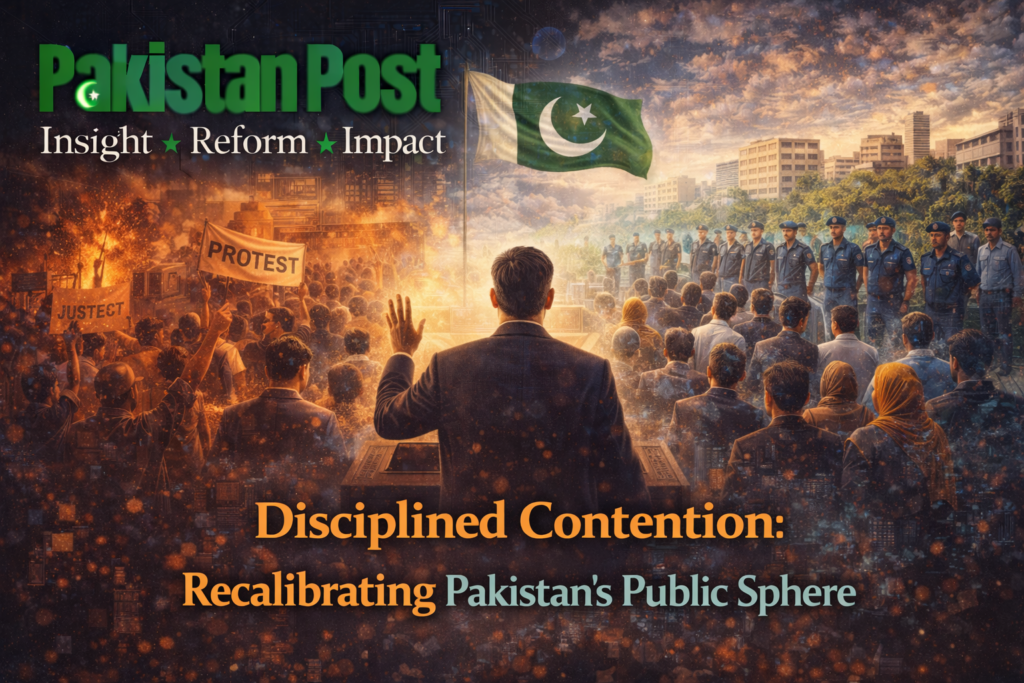
Pakistan’s contemporary communicative landscape reflects a profound democratic paradox. The technological democratization of speech has multiplied voices, yet it has simultaneously intensified antagonism. Segments of the public sphere increasingly function not as arenas of deliberative exchange but as theatres of ideological mobilization. Hate speech, performative outrage, and rhetorical absolutism circulate with algorithmic velocity, transforming political disagreement into moral denunciation. In this environment, contempt becomes normalized, hostility becomes habitual, and the distinction between critique and dehumanization grows dangerously blurred.
For policymakers and media think tanks, the central challenge is not episodic controversy but cumulative transformation. Democratic erosion rarely manifests through dramatic ruptures alone. More often, it advances incrementally. When everyday speech acts habituate contempt, desensitization sets in. Language that once shocked gradually acquires bureaucratic normalcy. Dehumanizing metaphors directed at political opponents, minorities, journalists, or dissenters reshape the moral architecture of civic life. What begins as rhetorical exaggeration may end as institutional distrust.
The cumulative impact of normalized verbal aggression extends beyond individual harms. It corrodes democratic cohesion by weakening civic trust. When public discourse persistently depicts institutions as conspiratorial or illegitimate, citizens internalize suspicion. Electoral bodies, courts, regulatory authorities, and media councils become objects of reflexive denunciation. This steady delegitimation erodes the shared confidence necessary for democratic governance. Polarization ceases to be a matter of divergent policy preferences and becomes an existential struggle framed in absolutist terms.
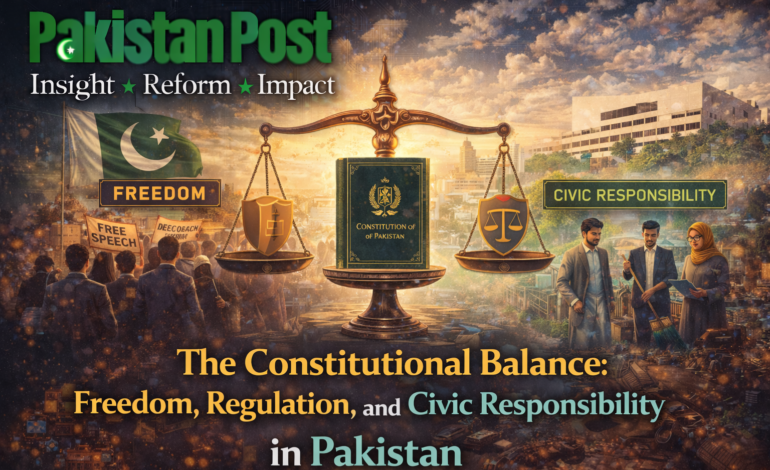
Within Pakistan’s constitutional architecture, freedom of expression is protected under Article 19, subject to reasonable restrictions grounded in public order, morality, security, and related considerations. Complementary statutory frameworks, including the Prevention of Electronic Crimes Act, aim to regulate harmful digital conduct. Yet persistent ambiguities complicate enforcement. A coherent democratic order requires conceptual clarity among three categories: protected dissent, offensive yet lawful expression, and speech that materially contributes to discrimination, intimidation, or violence. Failure to distinguish among these risks either underreach, allowing systemic toxicity to flourish, or overreach, chilling legitimate political disagreement.
Normative precision is therefore essential. Hate speech within Pakistan’s constitutional framework should be defined by four interrelated criteria: the targeting of an identifiable group based on protected characteristics; the deployment of dehumanizing or exclusionary narratives; demonstrable intent or reckless disregard for foreseeable harm; and a credible likelihood of contributing to discrimination or violence within the relevant context. These criteria protect vigorous dissent against policies, parties, and institutions while drawing principled boundaries against dehumanization. Criticism of state decisions, ideological argumentation, and even caustic satire remain constitutionally protected so long as they do not cross into targeted hostility that undermines equal civic standing.
Enforcement models must also be context-sensitive. Identical phrases can carry radically different implications depending on speaker influence, audience reach, historical context, and the vulnerability of targeted communities. Algorithmic amplification magnifies the societal impact of high-reach influencers, rendering virality itself a factor in assessing harm. Regulatory institutions must therefore adopt multi-factor analytical frameworks that account for intent, context, impact, and historical patterns. Transparent guidelines, independent oversight, and procedural safeguards are indispensable to maintain legitimacy and prevent politicized application.
Yet punitive approaches alone are insufficient to address radicalization dynamics. Excessive criminalization may reinforce narratives of suppression, driving hostile discourse into more opaque digital enclaves. Moreover, no regulatory apparatus can comprehensively police the velocity of online content. Long-term resilience requires structural investment in civic infrastructure. Independent journalism, pluralistic debate platforms, and cross-ideological engagement forums cultivate norms of disciplined contention. The goal is not to suppress passion but to channel it into reasoned argument rather than dehumanizing denunciation.
The philosophical stakes are considerable. When hostility becomes routinized, moral indifference gradually acquires social acceptability. Dehumanizing language diminishes empathy. Repeated exposure to exclusionary narratives recalibrates collective moral thresholds. Bureaucratic actors may unconsciously internalize such narratives, enabling discriminatory practices to appear administratively neutral. Democratic coexistence depends upon recognition of equal moral worth. When discourse undermines that recognition, democratic institutions hollow from within.
Simultaneously, the structural features of contemporary media ecosystems inhibit deliberative standards. Algorithmic systems privilege emotionally charged content because it generates engagement. Engagement translates into revenue. In such incentive structures, outrage becomes economically rational. Partisan fragmentation deepens echo chambers, reinforcing identity-based affirmation over persuasion. Influencer-driven economies reward hyperbolic denunciation as a visibility strategy. Public reasoning is displaced by performative identity assertion; the signaling of allegiance becomes more valuable than careful argumentation.
If democratic legitimacy rests upon reasoned argument, reciprocal respect, and inclusive dialogue, then structural reform must address these incentive distortions. Media ethics bodies should strengthen editorial standards that explicitly prohibit dehumanizing language and conspiratorial insinuation. Transparent correction mechanisms and robust fact-checking units can enhance credibility. Debate formats should incentivize substantive engagement rather than theatrical confrontation. Professional associations must reinforce norms that prize analytical rigor over sensationalist framing.
Institutional partnerships offer another avenue for recalibration. The state, civil society organizations, media councils, and technology platforms should collaborate to develop preventative interventions. Early warning mechanisms for coordinated hate campaigns, context-aware content moderation protocols, and localized expertise within technology companies can reduce harm before escalation. Transparency regarding algorithmic amplification patterns would further enable evidence-based policy responses.
Education constitutes the most durable form of prevention. Media literacy curricula should cultivate critical reasoning, logical analysis, and recognition of rhetorical manipulation. Citizens equipped to distinguish argument from agitation are less susceptible to mobilization through hostility. Universities and schools can host structured cross-ideological dialogues that model respectful disagreement. Youth engagement is particularly critical; early exposure to pluralistic norms fosters resilient civic sensibilities.
The question of whether a society can legislate civility admits only a partial answer. Law can delineate boundaries and deter demonstrable harm, but it cannot by itself instill respect. Cultural reform must accompany regulatory refinement. Civility emerges from habituated practices of listening, reasoning, and recognizing adversaries as legitimate participants in shared governance. These practices require sustained reinforcement through institutions that embody them.
A recalibrated governance architecture for Pakistan’s public sphere should therefore rest upon five integrated pillars: normative clarity in defining hate speech; procedural integrity in enforcement; sustained investment in civic infrastructure; algorithmic accountability within digital platforms; and comprehensive civic education. None of these pillars alone is sufficient. Together, they form a framework capable of protecting expansive expression while mitigating dehumanization.
Political competition is intrinsic to democracy, but it must not mutate into social fragmentation. Pakistan’s pluralistic social fabric—religious, ethnic, ideological—constitutes both a strength and a vulnerability. Speech that systematically erodes mutual recognition threatens that fabric. Protecting freedom of expression does not require tolerating speech that undermines equal civic standing. At the same time, safeguarding social harmony does not justify suppressing robust critique of policy or leadership. The equilibrium demands disciplined stewardship rather than binary choices.
The objective is to transform the public sphere from a domain of ideological siege into a forum of disciplined contention. Disciplined contention signifies passionate yet evidence-based argumentation, adversarial yet humane engagement, and competition bounded by constitutional respect. It acknowledges that disagreement is inevitable and even desirable, provided it remains anchored in shared commitments to democratic coexistence.
Pakistan’s communicative crossroads presents both peril and possibility. The same technologies that amplify hostility can disseminate informed debate. The same platforms that reward outrage can elevate reasoned voices if incentive structures shift. Policymakers must resist fatalism. Structural recalibration is attainable through coordinated effort and principled design.
Ultimately, freedom of expression in Pakistan can remain expansive yet responsible. Dissent can remain vigorous yet humane. Democratic resilience depends upon collective recognition that speech is not merely expressive but constitutive; it shapes the moral climate within which institutions function. When language habituates contempt, institutional trust falters. When discourse disciplines disagreement, democratic legitimacy endures. The task before policymakers is to construct governance frameworks and civic cultures that ensure the latter prevails over the former.
A Public Service Message