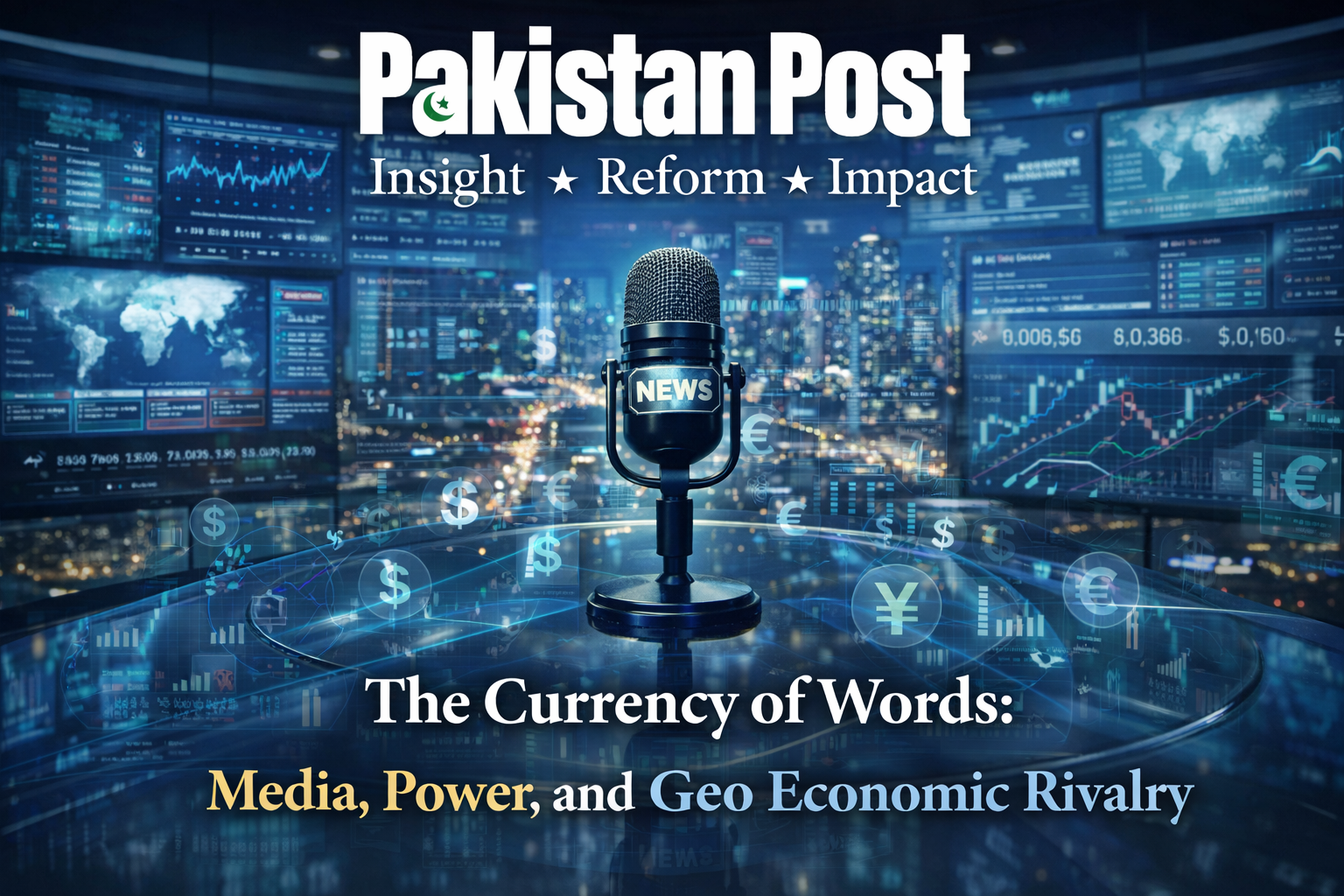
The Currency of Words: Media, Power, and Geo Economic Rivalry

The vocabulary of media freedom is undergoing a structural transformation. For decades, the dominant paradigm revolved around a binary. Free speech was equated with democratic vitality. Restriction was equated with authoritarian decline. That binary now appears inadequate to describe the realities of a

Pakistan’s War Embedded Grand Strategy: Navigating a Dual‑Front Security Dilemma in an Era of Persistent Conflict
In the realm of strategic studies, the concept of a “war embedded grand strategy” describes a state whose external security environment is not episodically hostile but constitutively warfare‑like. Pakistan exemplifies this condition as a medium power state locked within a persistent, dual‑front security
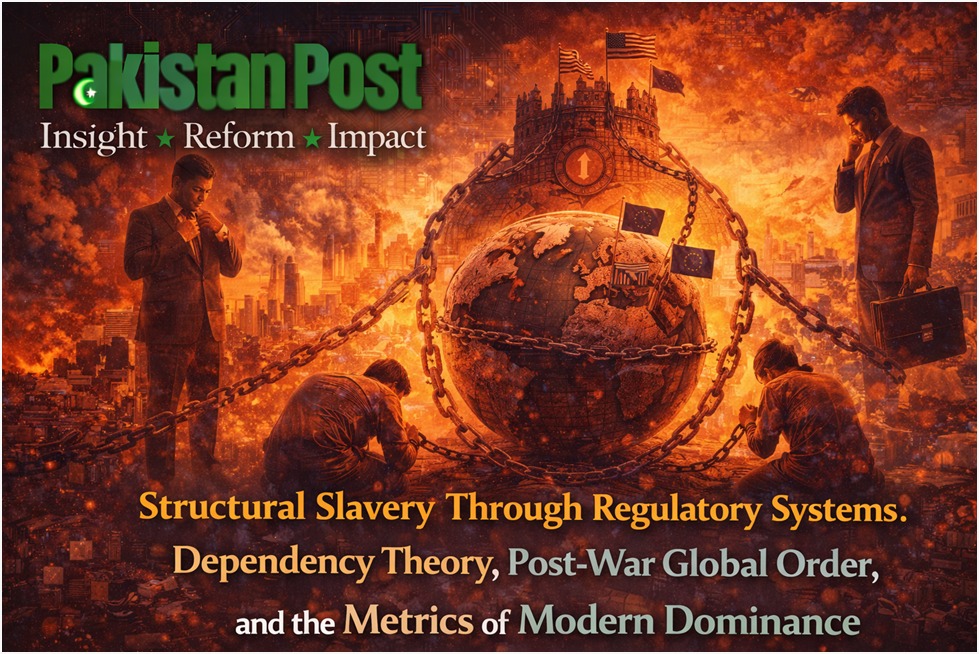
Structural Slavery Through Regulatory Systems: Dependency Theory, Post-War Global Order, and the Metrics of Modern Dominance
The architecture of the post-Second World War international order was presented as a moral and institutional corrective to the violence of empire. The devastation of Europe and Asia demanded reconstruction; the collapse of old empires required new frameworks of governance; and the specter
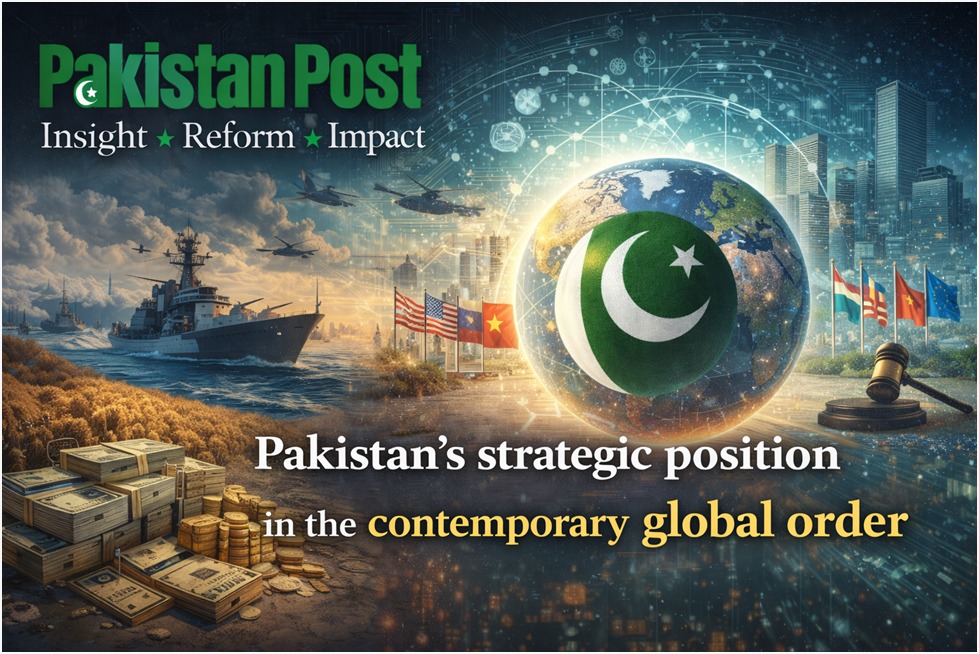
Pakistan’s strategic position in the contemporary global order
Pakistan’s strategic position in the contemporary global order is simultaneously a product of geography, history, and emergent systemic shifts. The post-World War II international system, anchored by U.S. unipolar dominance, dollar hegemony, and Western-led multilateral institutions, is increasingly strained by the rise of

When Education Stops Building Nations and Starts Sorting Citizens: How Pakistan’s Schooling Model Converted Learning into a Class-Producing
Education serves as one of the most powerful vehicles for social development and national cohesion. Historically, countries like Finland, South Korea, post-war Germany, and early China leveraged their education systems to equalize cognitive capital, prioritizing inclusivity and collective advancement over monetization. However, Pakistan
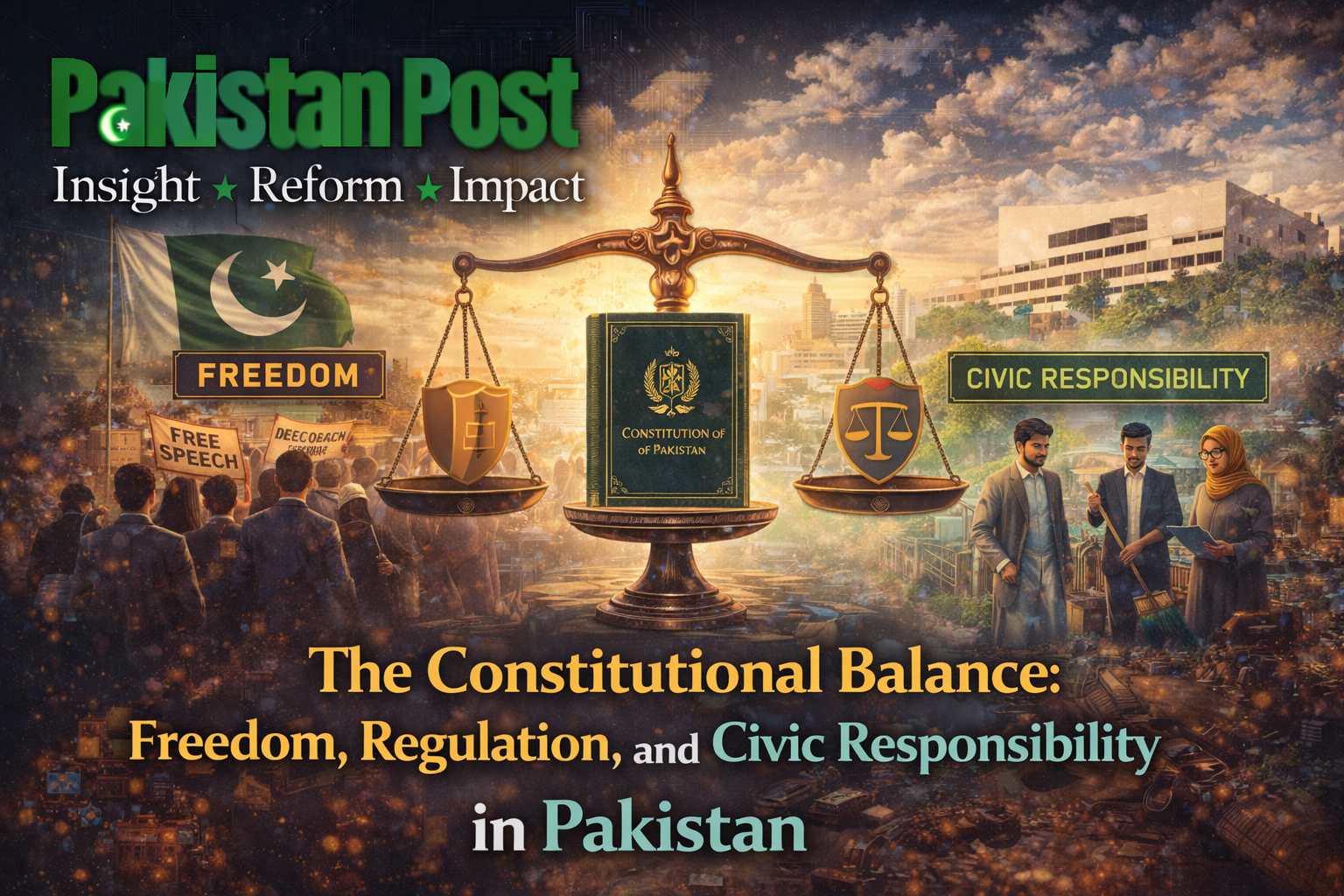
The Constitutional Balance: Freedom, Regulation, and Civic Responsibility in Pakistan
In the evolving architecture of Pakistan’s digital media ecosystem, regulation is no longer a narrow legal instrument; it is a structural determinant of how the state, civil society, and media coexist within the digitized public sphere. The expansion of connectivity, platform dependency, algorithmic