
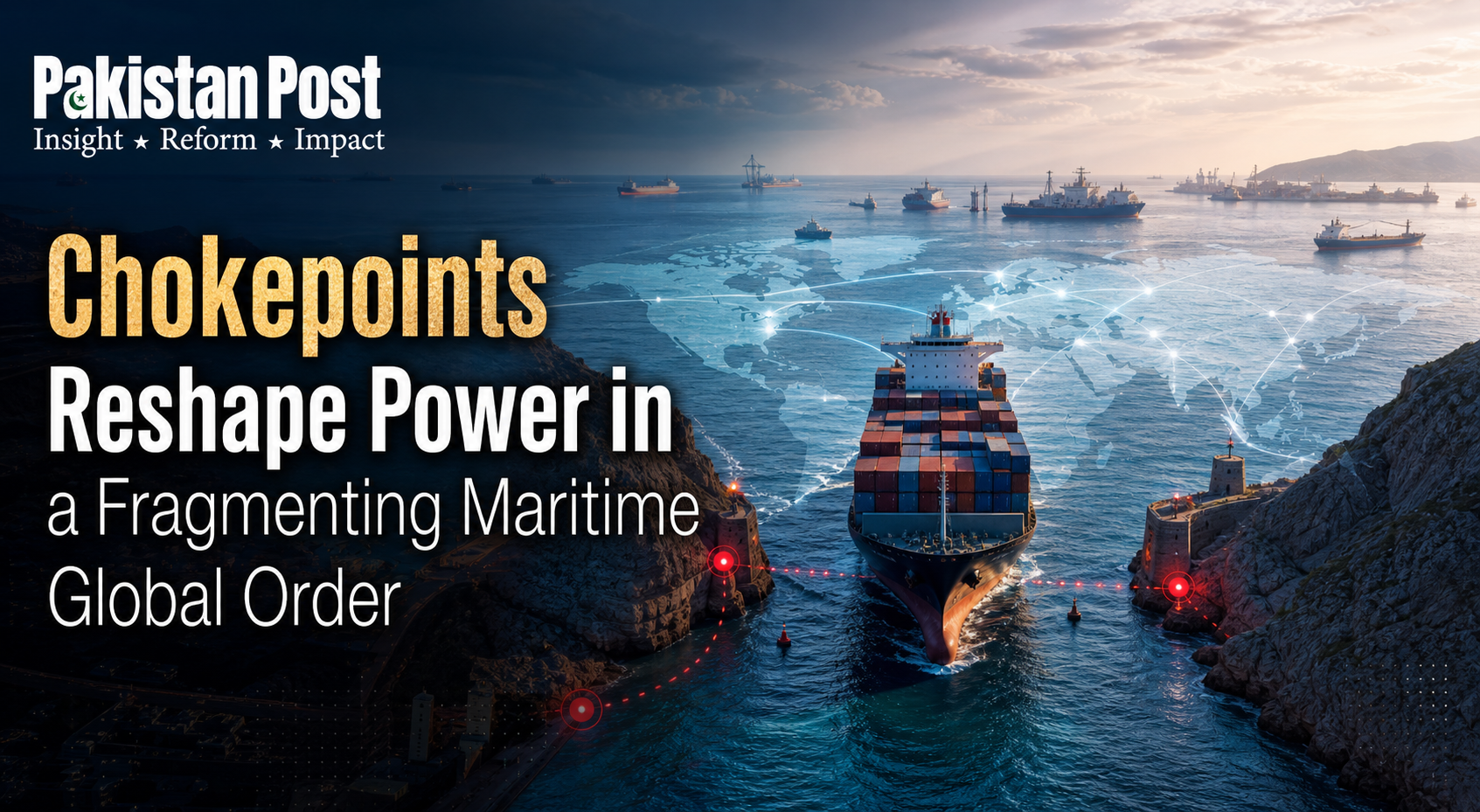
Chokepoints Reshape Power in a Fragmenting Maritime Global Order

The map of globalization has always been maritime, but the meaning of the sea is changing. Where once the oceans were imagined as connective tissue, frictionless corridors binding distant markets, they are now increasingly experienced as sites of pressure, delay and selective denial.

From Treason Acts to Digital Thrones: The Making of Legal Myths in the Information
In contemporary digital information ecosystems, the boundary between legal interpretation, historical scholarship, ideological narrative, and conspiratorial reconstruction has become increasingly porous. A growing genre of content attempts to reframe constitutional legitimacy through selective readings of historical statutes, particularly those originating in medieval and

ALGORITHMIC POLITICS: HOW SOCIAL MEDIA IS RECONFIGURING POLITICAL IDENTITY IN PAKISTAN
Pakistan’s political identity formation is increasingly being shaped not in party offices, parliamentary debates, or traditional broadcast studios, but within algorithmically governed digital environments where visibility is engineered, attention is monetized, and political meaning is continuously reassembled through user interaction. The shift is
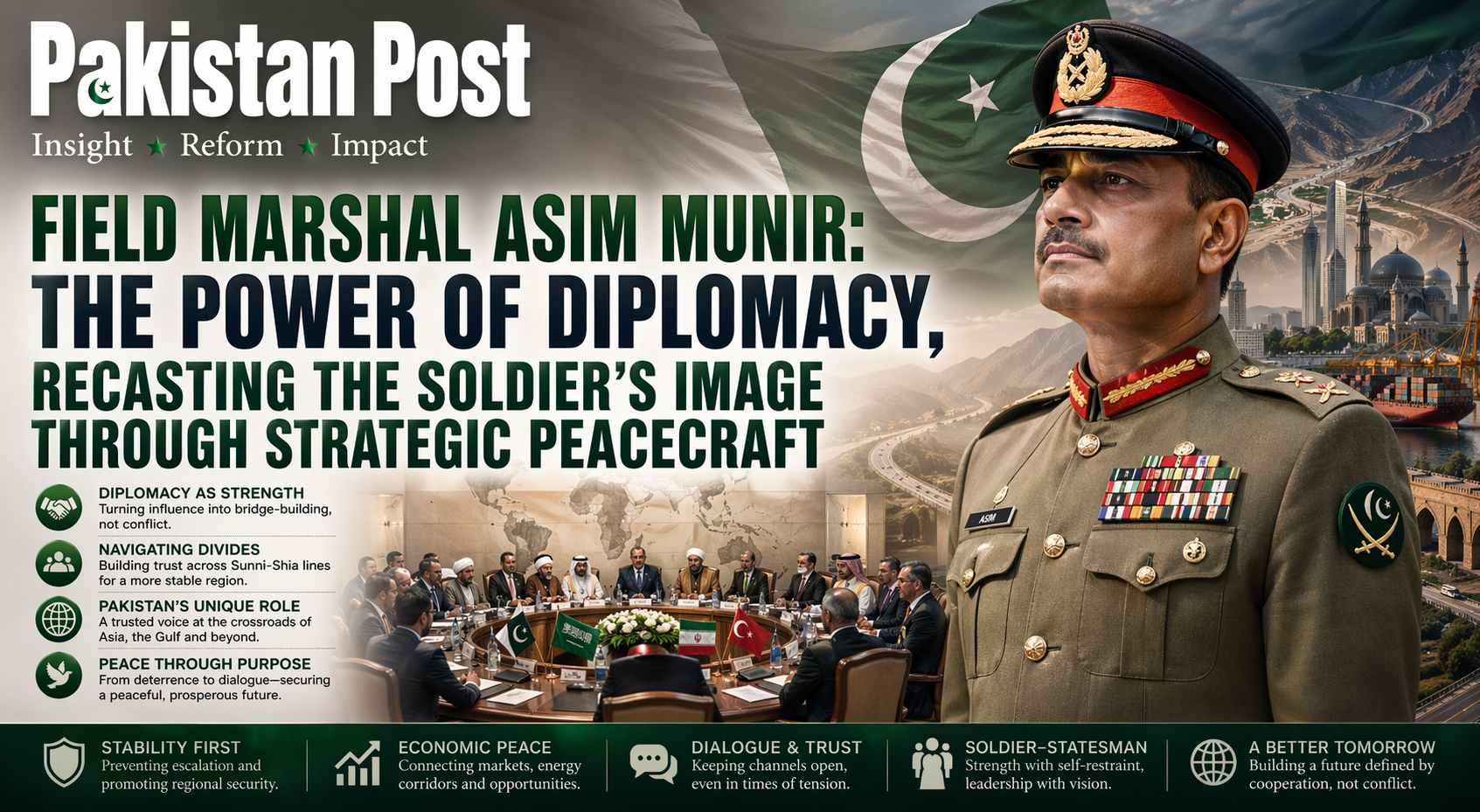
Field Marshal Asim Munir: The Power of Diplomacy, Recasting the Soldier’s Image Through Strategic Peacecraft
Power, in the classical imagination of states, was measured in divisions, missiles, and the capacity to impose cost upon an adversary. In the twenty first century, however, power has become a more intricate currency. It now includes the ability to reassure markets, calm

Between Giants and Guardians Pakistan’s Search for Strategic Sovereignty
The geometry of power in the twenty-first century is no longer defined by singular dominance but by intersecting axes of influence, where economic leverage, security guarantees, ideological affinity, and financial dependency converge in ways that defy traditional alliance structures. For Pakistan, this evolving
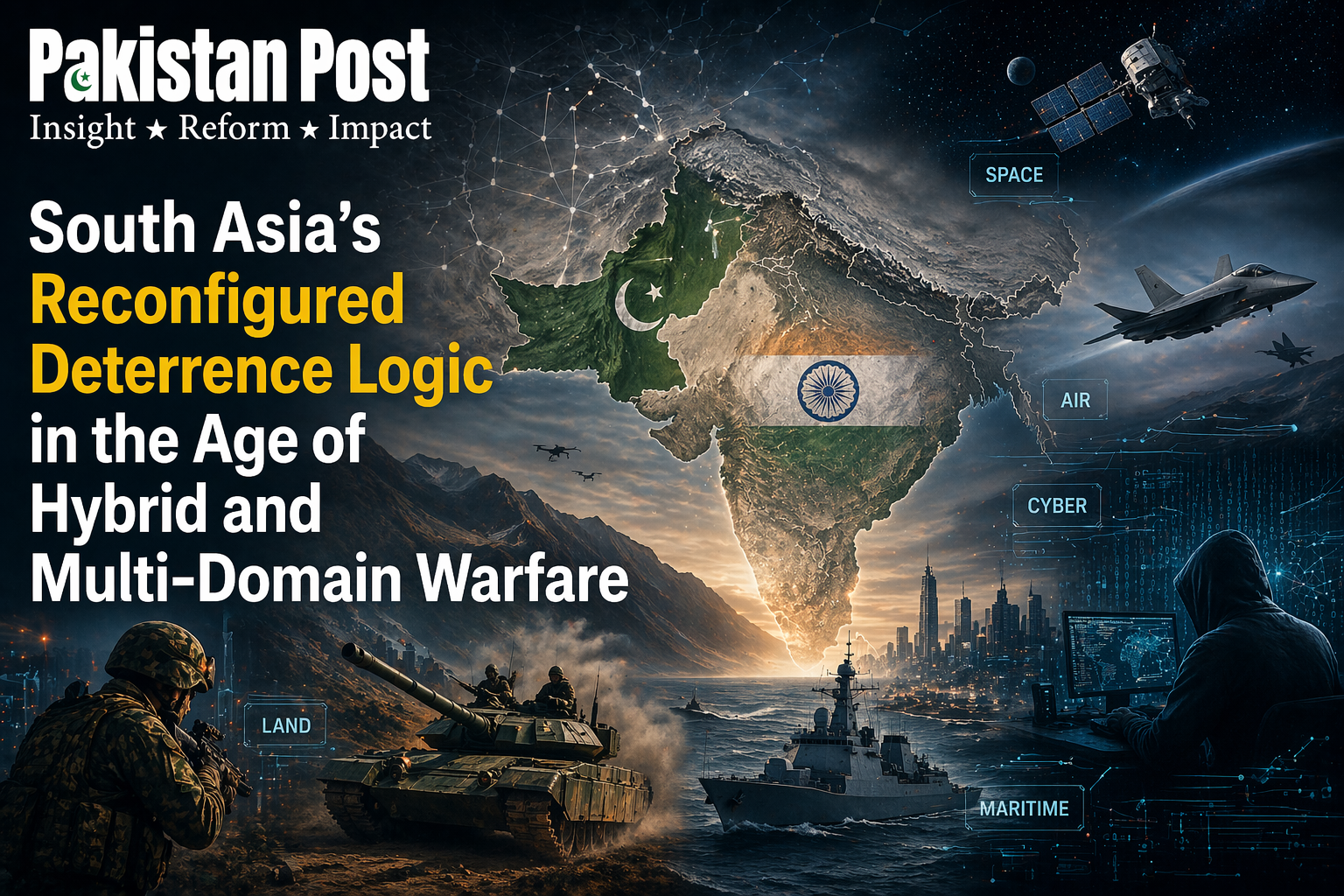
South Asia’s Reconfigured Deterrence Logic in the Age of Hybrid and Multi-Domain Warfare
Deterrence in South Asia is no longer anchored solely in the classical grammar of tanks, territory, and nuclear signaling. It is increasingly shaped by a far more diffuse and continuous form of competition in which cyber intrusions, drone operations, satellite surveillance, economic pressure,
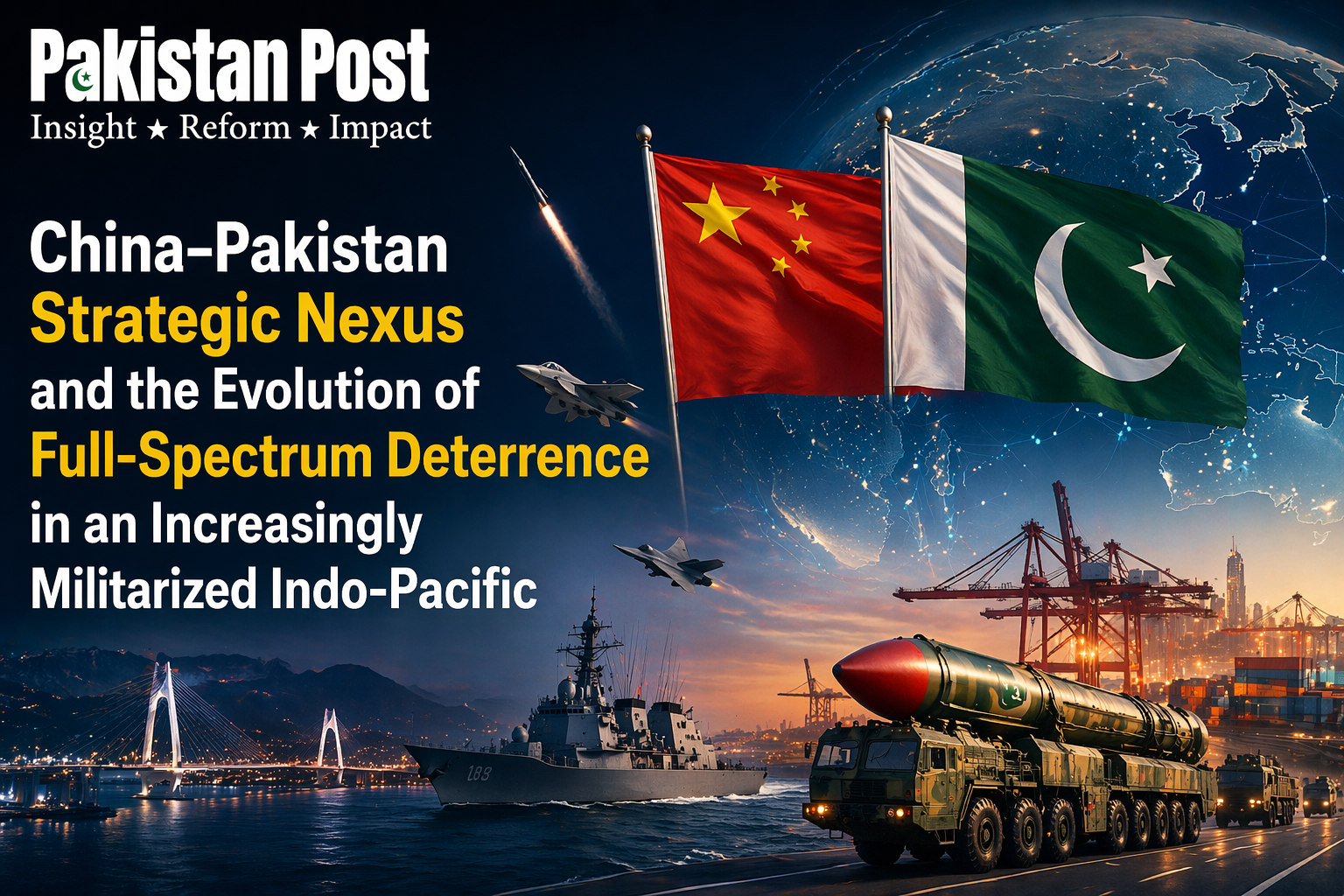
China–Pakistan Strategic Nexus and the Evolution of Full-Spectrum Deterrence in an Increasingly Militarized Indo-Pacific
The strategic relationship between the Islamic Republic of Pakistan and the People’s Republic of China has long been described in shorthand as “all-weather,” a diplomatic phrase that once captured political trust and transactional alignment without necessarily implying deep structural military integration. That description
Pakistan and the Emerging Iran–Saudi–Pakistan Security Triangle in a Post-Retrenchment West Asia
The strategic landscape of West Asia is entering a phase of controlled fluidity, shaped by shifting alignments, episodic détente, and the gradual redefinition of external guarantees. In this environment, the Islamic Republic of Pakistan is increasingly being viewed not as a peripheral observer
Pakistan as a Hinge State in the Reordering Eurasian Security Architecture
The geopolitical identity of the Islamic Republic of Pakistan is undergoing a subtle but consequential redefinition. Once treated largely as a buffer zone between competing great powers and regional blocs, it is increasingly being interpreted by strategists as a “hinge state” embedded within

Pakistan and the Emergence of System Shaping Statecraft in Contemporary Geopolitics
The evolving contours of international diplomacy are increasingly challenging the traditional understanding of power as direct control exercised through military dominance, coercive bargaining, or formal treaty-based alliances. A growing body of state behavior suggests a transition toward a more complex model of influence