

Terrorism as a Systemic Outcome of Alliances, Rivalries, and Border Politics in the Global Order

By Ijaz Naser The global manifestation of terrorism over the past half-century cannot be adequately explained through ideological extremism, religious motivation, or isolated state failure alone. Rather, terrorism has emerged as a systemic by-product of the international order itself—shaped by alliance structures, geopolitical
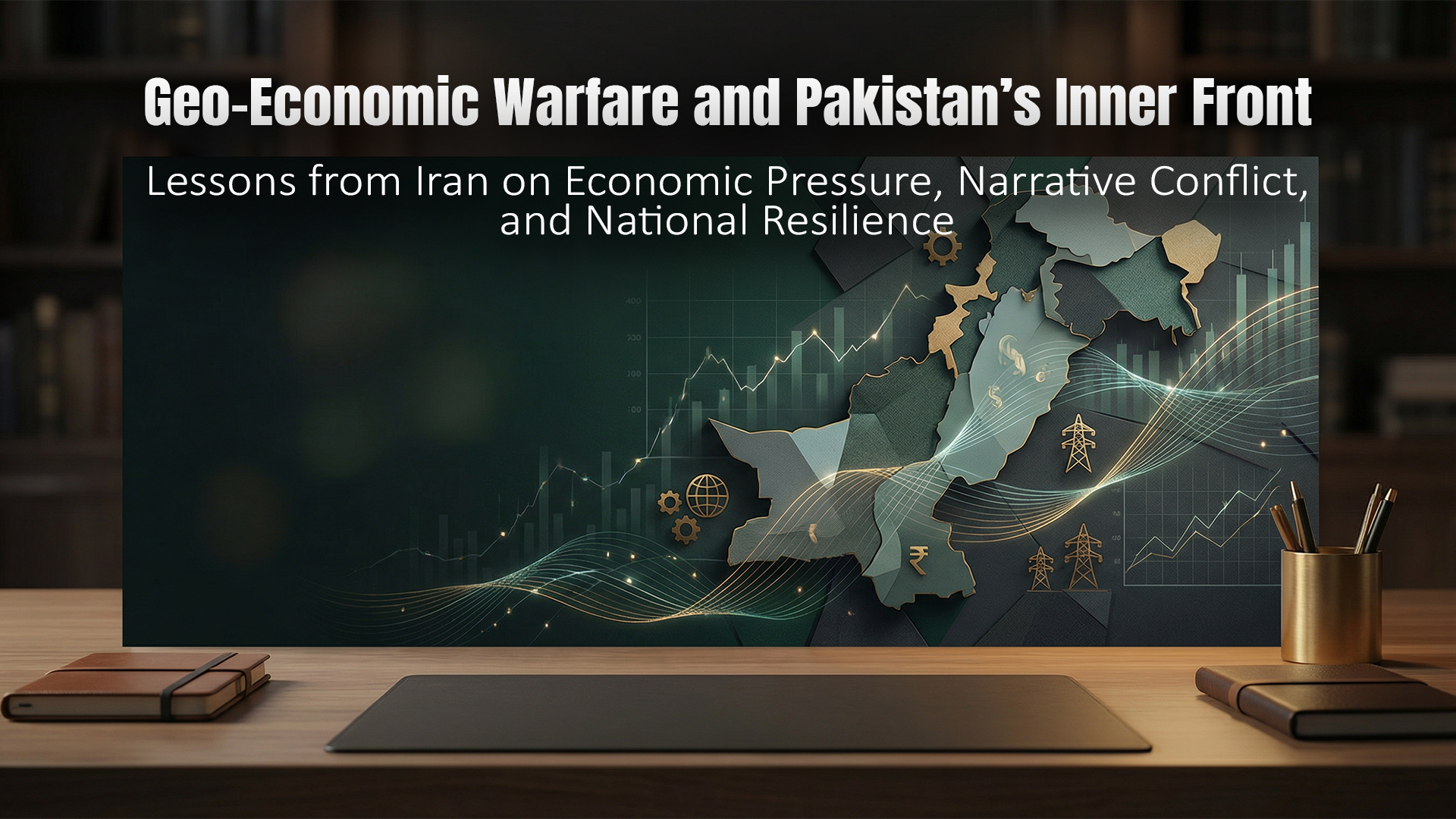
Geo-Economic Warfare and Inner-Front Destabilization — Lessons from Iran for Pakistan
By Hesham Sultan Ijaz The recent internal crisis in Iran is increasingly examined in global strategic discourse as a revealing case study of how modern geo-economic warfare and hybrid pressure mechanisms can converge to generate large-scale internal instability, even within states that possess
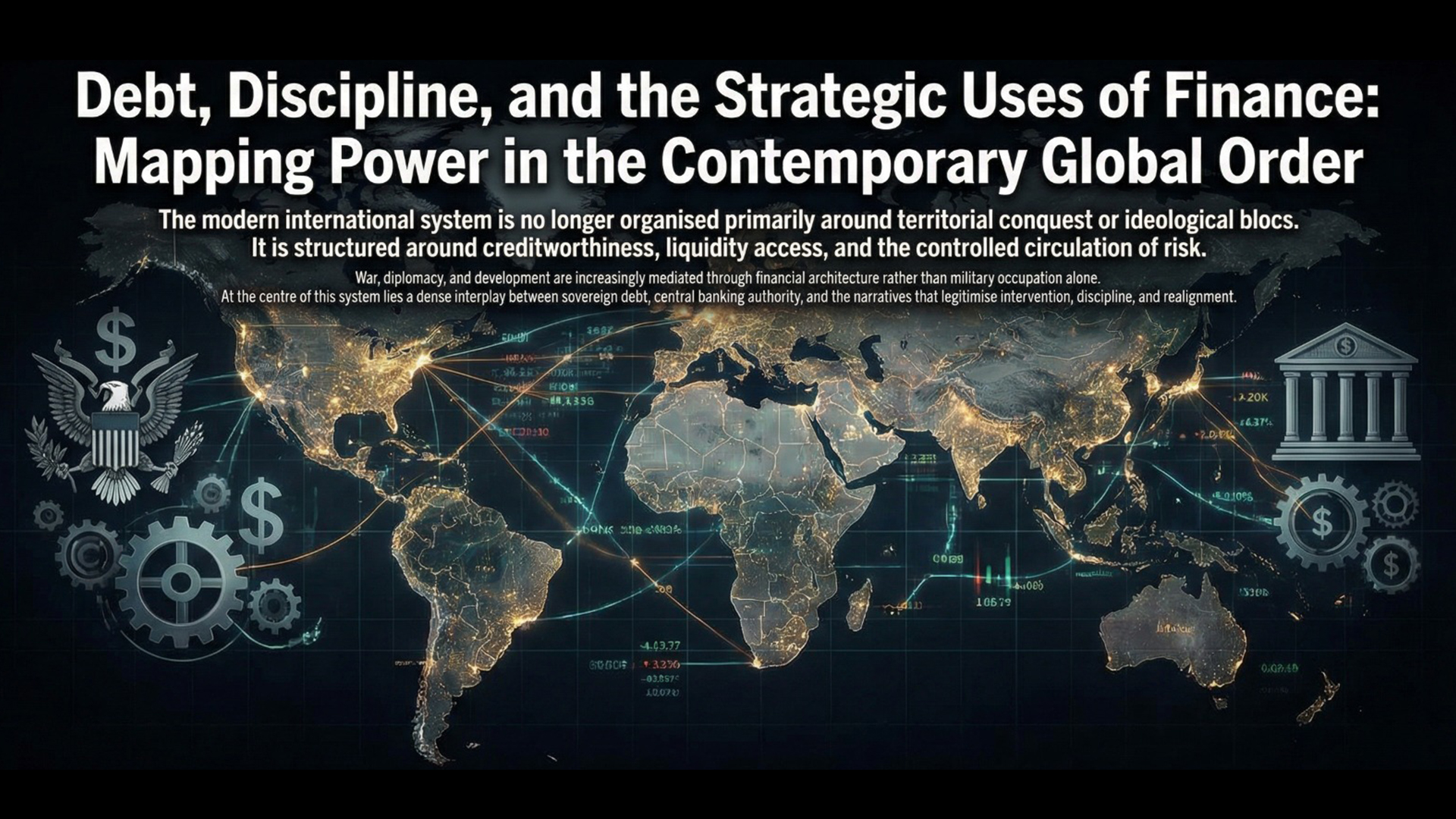
Debt, Discipline, and the Strategic Uses of Finance: Mapping Power in the Contemporary Global Order
By Ijaz Naser The modern international system is no longer organised primarily around territorial conquest or ideological blocs. It is structured around creditworthiness, liquidity access, and the controlled circulation of risk. War, diplomacy, and development are increasingly mediated through financial architecture rather than

CEO’s Editorial Note
Geo-economic weakness is often explained as a consequence of global inequality, adverse terms of trade, or geopolitical disadvantage. These pressures are real, but they do not fully explain why economic instruments routinely undermine one another. Trade policy signals openness while regulatory behavior signals

Broken Academic Calendars, Learning Loss, and the Urgent Need for Systemic Reform in Punjab
By Mahrukh Ijaz Punjab’s academic calendar has become a tool of disruption rather than learning. Well-intentioned closures to protect children from smog, heat waves, elections, or security concerns have repeatedly translated into cumulative learning loss, undermining both classroom instruction and the future potential

Pakistan Is Not Polarized—It Is Governed Without a Social Contract
By Yahya Sultan Ijaz Pakistan’s recurring political volatility is frequently interpreted as evidence of deep ideological polarization, an entrenched division between competing political camps, or an increasingly emotional electorate. Such readings, while convenient, obscure a more structural explanation. The persistence of protest cycles,

Why Winter Energy Stress Repeats in Pakistan—Every Year
By Sadia Majeed Pakistan’s recurring winter gas shortages and LPG price volatility are commonly described as crises, often framed as sudden supply disruptions or unavoidable external shocks. Yet the persistence, timing, and internal consistency of these episodes suggest a different diagnosis. Winter energy
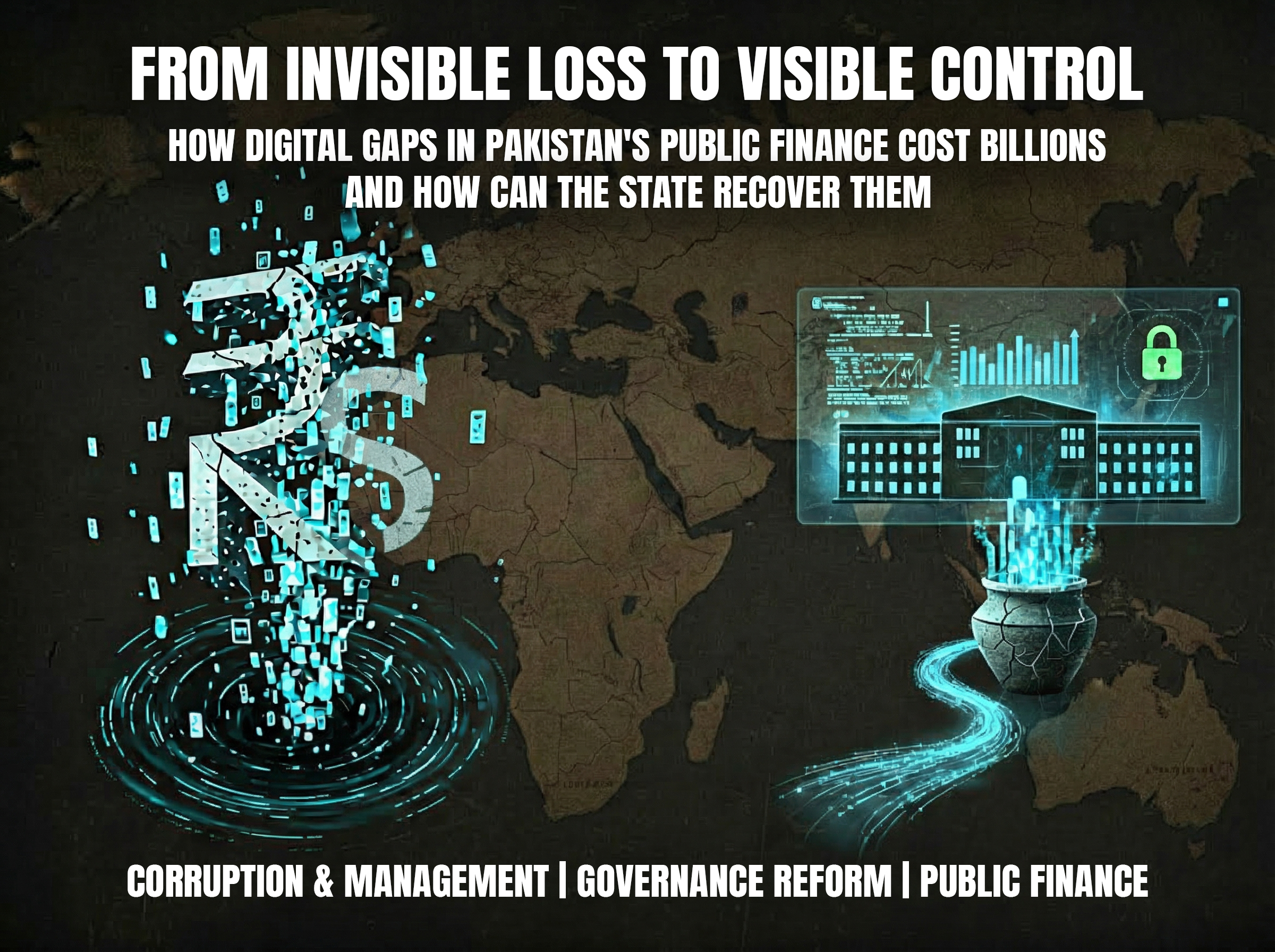
From Invisible Losses to Visible Control: How Digital Gaps in Public Financial Management Cost Pakistan Billions—and How the State Can Recover Them(Corruption & Management | Governance Reform | Public Finance)
By Dr. M. Ahsan Sardar Pakistan’s fiscal debate is most often framed around taxation shortfalls, debt sustainability, and external financing pressures. These issues are visible, measurable, and frequently debated. Less visible, but no less consequential, is a structurally embedded challenge that quietly erodes
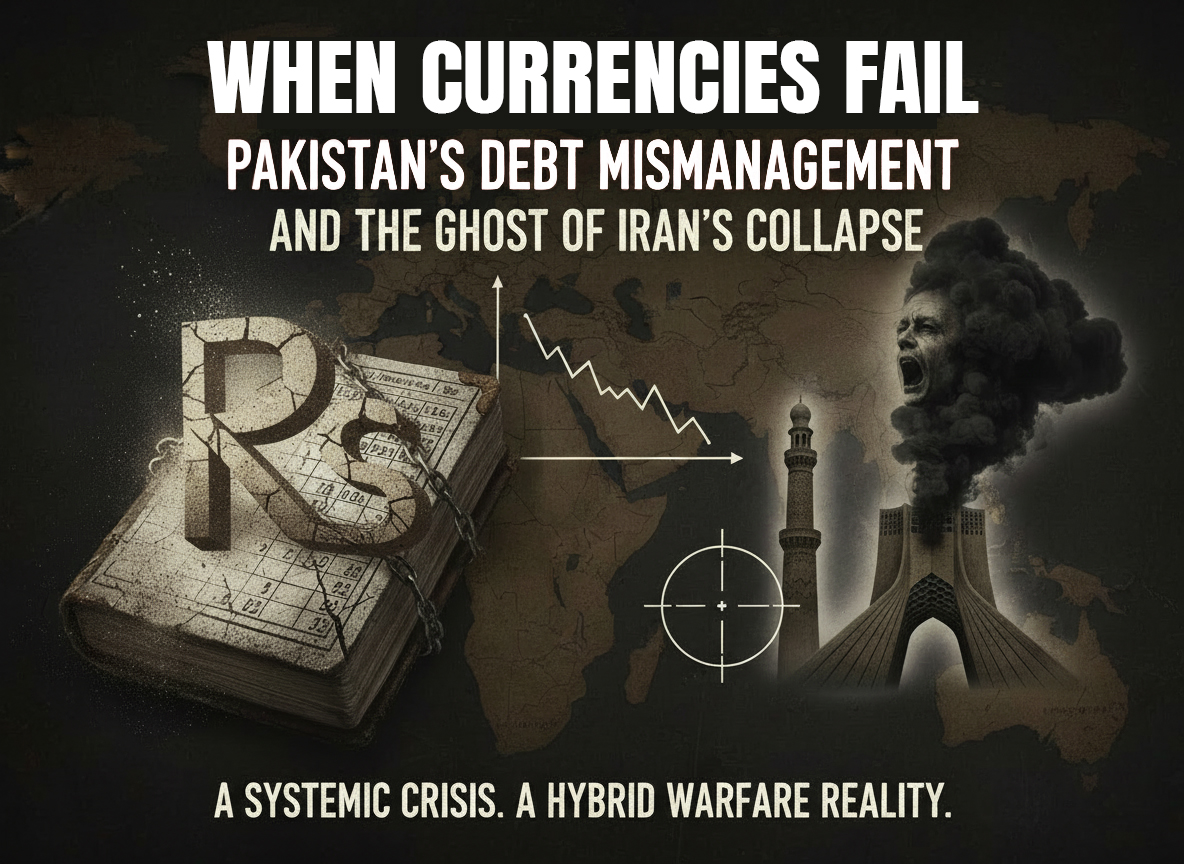
When Currencies Fail: Pakistan’s Debt Mismanagement and the Ghost of Iran’s Collapse
By Hafeez Amjad Pakistan is no longer confronting a routine economic cycle; it is enduring a systemic crisis that has shifted from balance-sheet stress into a full-spectrum national security concern. The collapse of currency value, recurring balance-of-payments emergencies, and the normalization of austerity
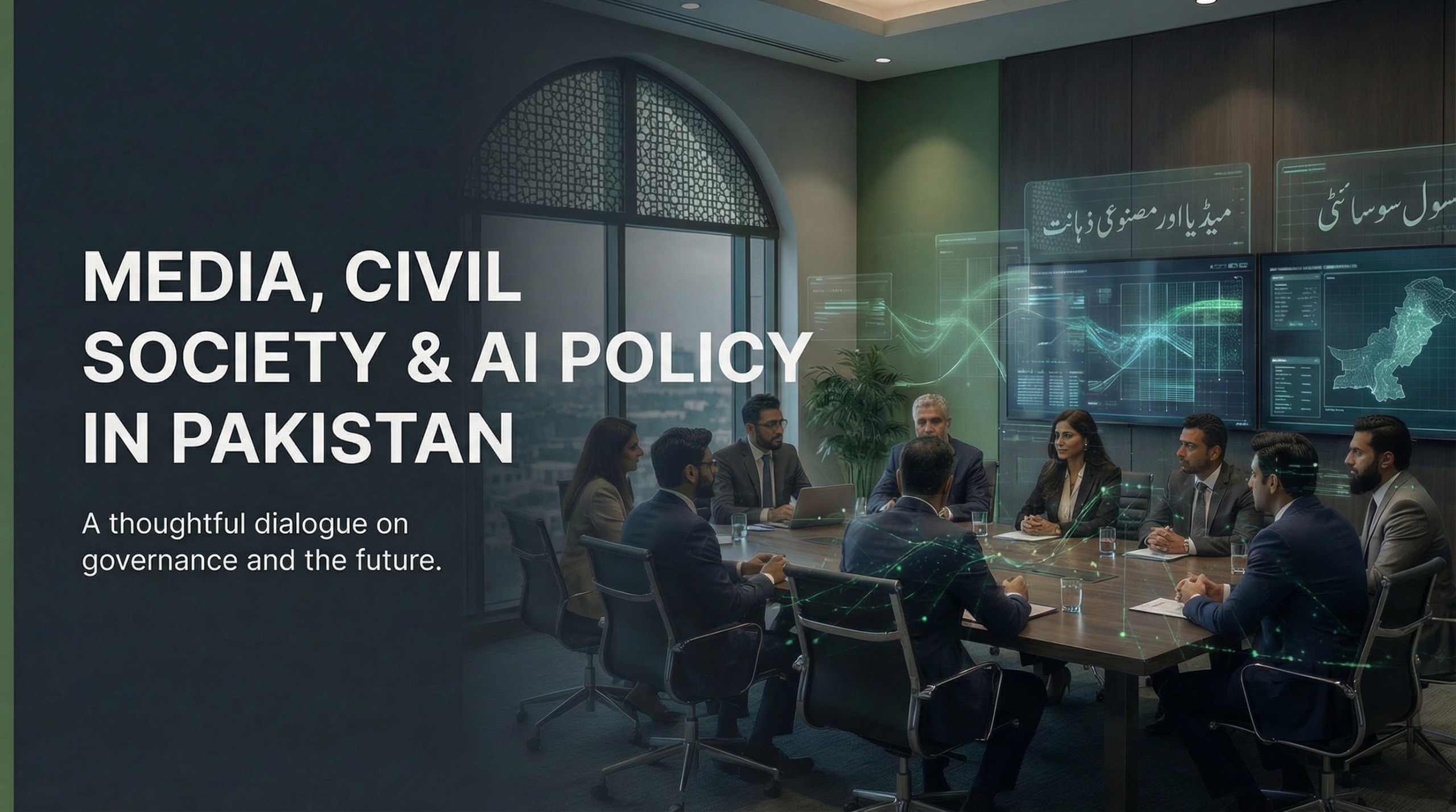
The Governance Signal in the Noise: Media’s Role in Shaping AI Policy and Civil Society’s Strategic Response
By Sadia Majeed In an era where artificial intelligence is rapidly transforming economies, social life, and institutional decision‑making, the media has emerged as both a prism and a governor of public policy discourse. Media coverage does not merely reflect developments in technology; it