
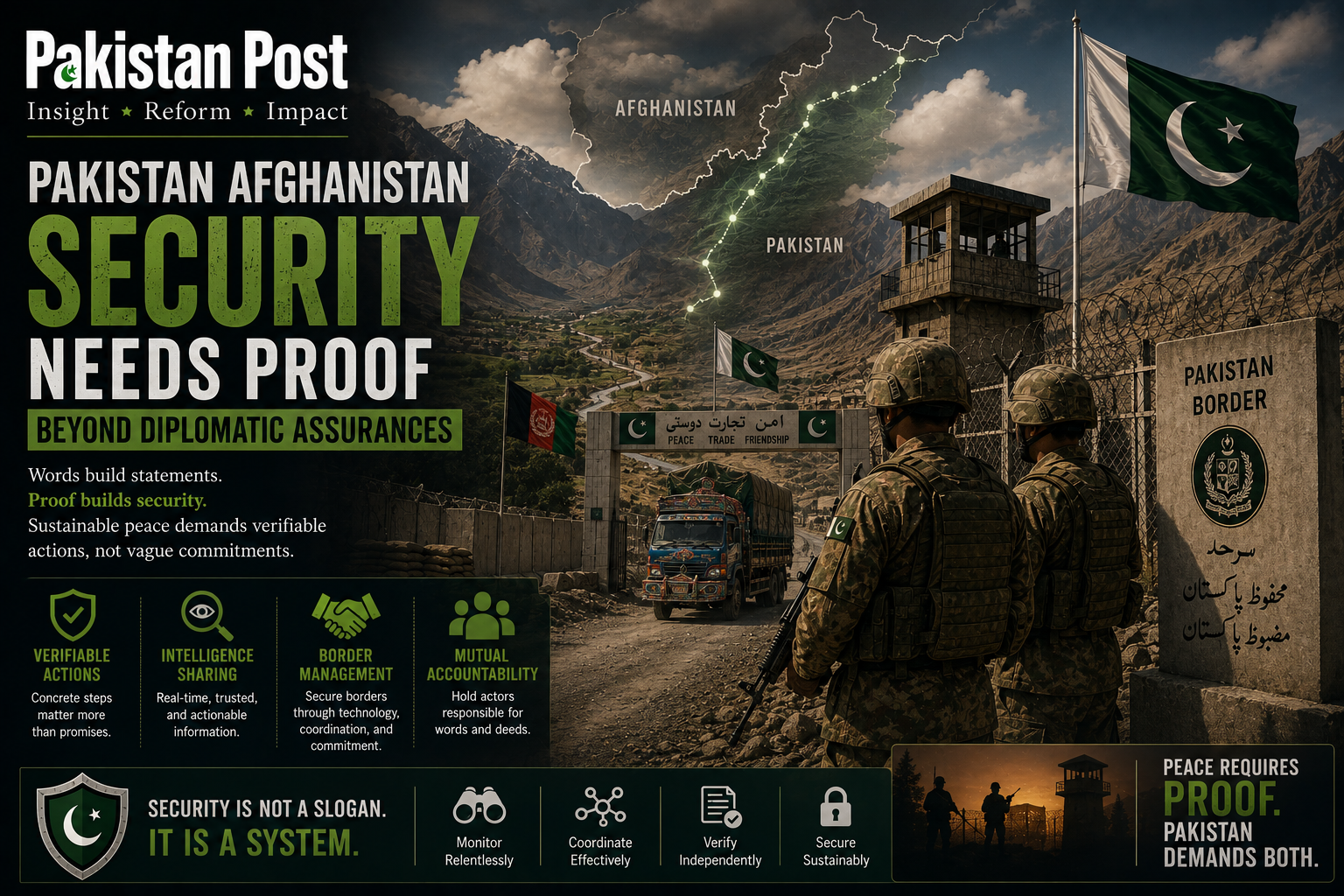
Pakistan Afghanistan Security Needs Proof Beyond Diplomatic Assurances

Pakistan Afghanistan relations have repeatedly demonstrated a familiar weakness in regional security diplomacy: agreements can be reached, assurances can be exchanged, channels can be reopened, and yet the underlying security dispute remains substantially intact. The central problem is no longer the absence of
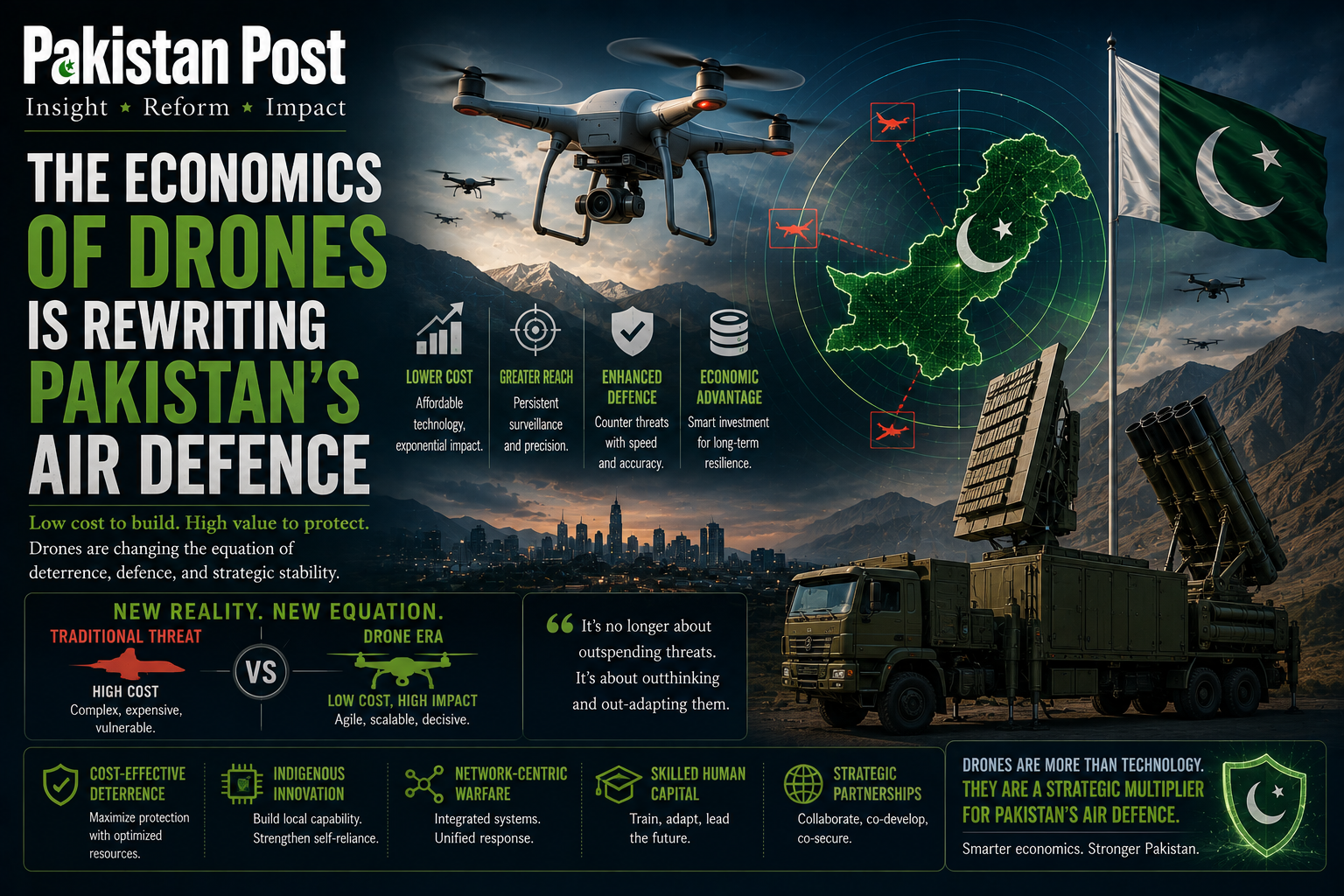
The Economics of Drones Is Rewriting Pakistan’s Air Defence
The central problem confronting Pakistan’s air defence planners is no longer whether the country possesses sophisticated systems capable of detecting and engaging aerial threats. It is whether those systems can remain economically, operationally and doctrinally viable when the attacker can manufacture uncertainty at
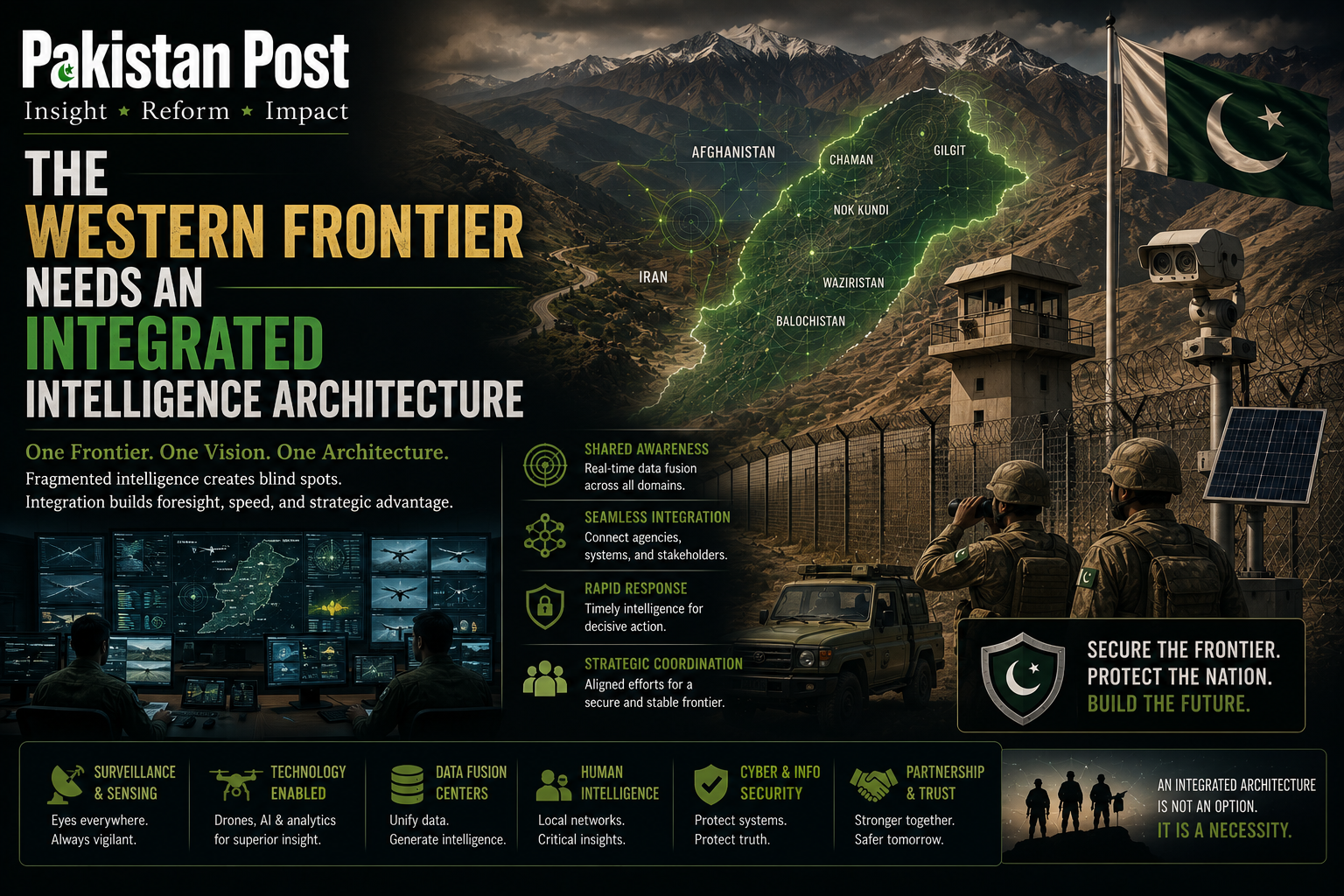
The Western Frontier Needs an Integrated Intelligence Architecture
approaches Pakistan’s approach towards western frontier is not as a line on a map, but as a continuously moving security environment in which people, information, money, commodities, weapons and influence cross administrative jurisdictions with very different speeds and levels of scrutiny. The central
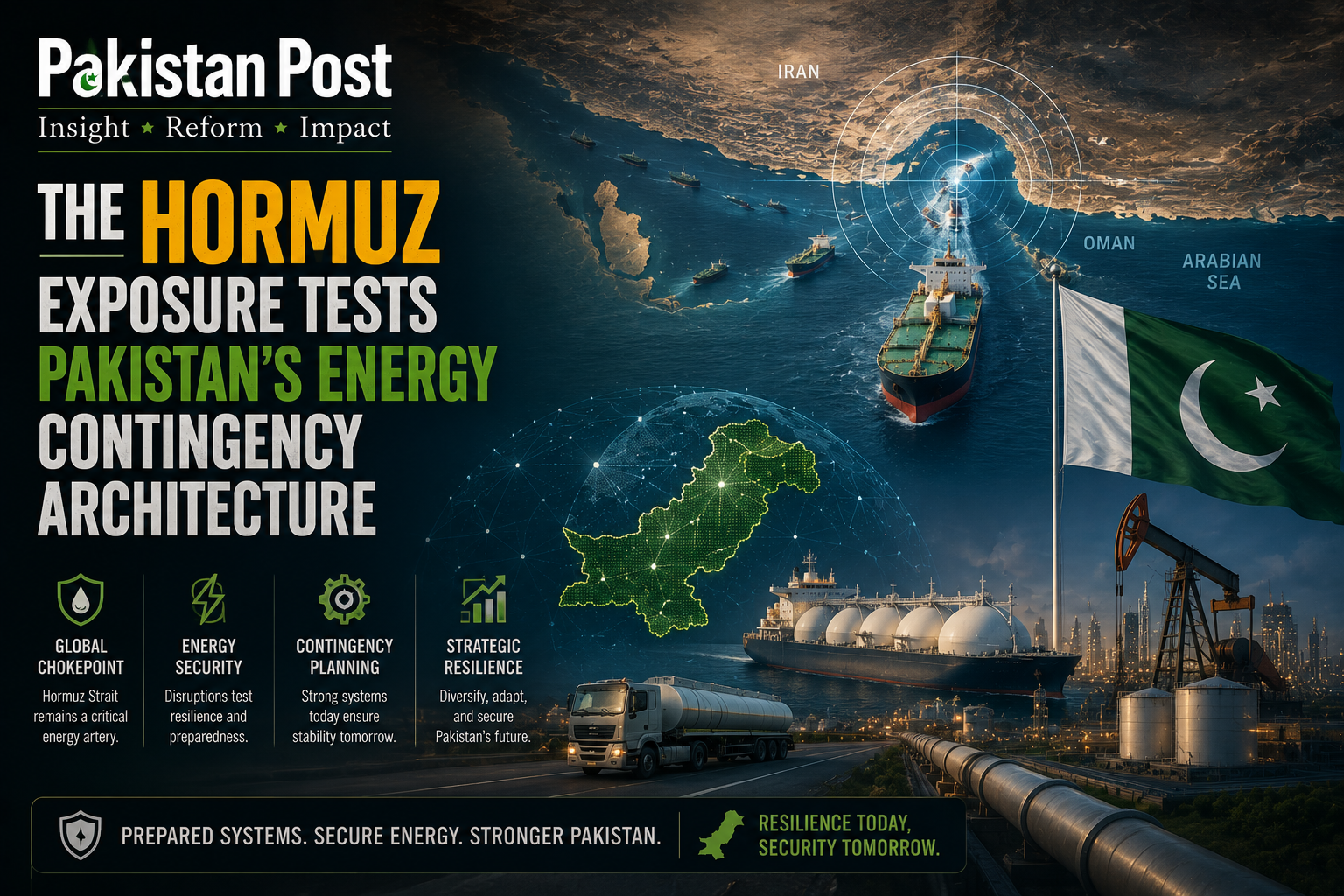
The Hormuz Exposure Tests Pakistan’s Energy Contingency Architecture
Pak Post views the Strait of Hormuz not as a distant maritime vulnerability but as a live stress test of Pakistan’s national economic security architecture. The disruption experienced during 2026 has already demonstrated how quickly a maritime chokepoint can migrate from naval geography

Pakistan Between Idea And Lived Political Reality
Pakistan is a country that often speaks in one language and lives in another. The dissonance is not merely administrative or economic; it is philosophical. It is a state where the grammar of official ideology promises coherence, unity, and moral direction, while the

Securing Undersea Networks Before Strategic Stability Quietly Fractures Forever
The most consequential strategic contest unfolding across the world’s oceans is not taking place between aircraft carriers, submarines or missile fleets. It is unfolding thousands of metres beneath the sea, where slender fibre optic cables, power links, sensors and seabed infrastructure quietly sustain

Logistics Defines the New Geometry of Strategic National Preparedness
The geography of military power is undergoing one of the most consequential transformations since the end of the Cold War. For decades, strategic influence was measured by the visibility of overseas military bases, permanent troop deployments, and the territorial footprint of great powers.

Financial Pressure Quietly Reshapes Economic Sovereignty Across Developing Nations
The architecture of international economic influence has undergone a profound transformation. The traditional image of sanctions, embargoes and overt economic coercion is increasingly being replaced by a sophisticated network of financial signalling mechanisms capable of shaping sovereign behaviour without the formal declaration of

Securing Undersea Networks Before Strategic Stability Quietly Fractures Forever
The most consequential strategic contest unfolding across the world’s oceans is not taking place between aircraft carriers, submarines or missile fleets. It is unfolding thousands of metres beneath the sea, where slender fibre optic cables, power links, sensors and seabed infrastructure quietly sustain

Logistics Defines the New Geometry of Strategic National Preparedness
The geography of military power is undergoing one of the most consequential transformations since the end of the Cold War. For decades, strategic influence was measured by the visibility of overseas military bases, permanent troop deployments, and the territorial footprint of great powers.